Lina Irawan
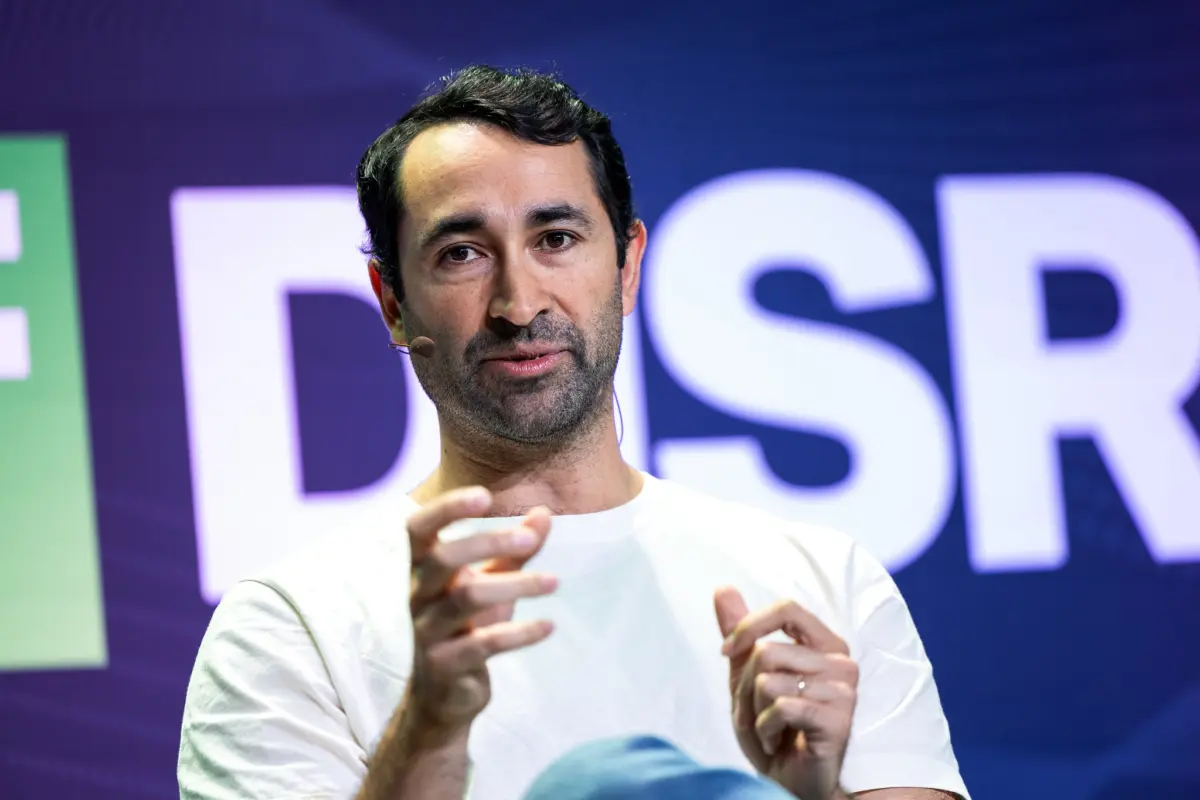
The rapid evolution of artificial intelligence in software engineering has ushered in an era of "agentic coding," where autonomous AI models generate vast quantities of source code at unprecedented speeds. However, this shift has introduced a critical challenge: ensuring the logical correctness of systems that are increasingly too complex for manual human review. Gabriela Moreira, CEO of Quint, recently addressed these concerns on the Stack Overflow podcast, advocating for a resurgence of formal verification methods—specifically through the use of TLA+ and its modern, programmer-friendly derivative, Quint—to provide a rigorous mathematical foundation for AI-driven development.
The Mathematical Foundation of Software Reliability
At the heart of the discussion is TLA+ (Temporal Logic of Actions), a formal specification language designed by Turing Award winner Leslie Lamport. Lamport, renowned for his foundational work in distributed systems and the creation of the LaTeX document preparation system, developed TLA+ to provide a precise, unambiguous language for defining algorithms and protocols. Unlike traditional programming languages, which focus on execution, TLA+ is rooted in discrete mathematics and logic.
"TLA+ was born to be a precise language to define algorithms and protocols, especially in the distributed systems area," Moreira explained. She noted that Lamport created the language after discovering imprecisions in his own academic papers, concluding that if experts could make logical errors in written descriptions, the industry required a shared, formal language to eliminate ambiguity.
In a formal specification, there is no room for interpretation. Every state and transition within a system is defined mathematically, allowing engineers to verify that a design meets its requirements before a single line of executable code is written. Lamport famously compared this to the construction industry: no one would build a skyscraper without first drawing a blueprint and performing structural calculations. Formal verification provides that blueprint for software.
The Evolution from TLA+ to Quint
While TLA+ is powerful, it has historically suffered from a steep learning curve. Its syntax is heavily mathematical, utilizing symbols and concepts that can be intimidating to software engineers accustomed to modern programming languages like Python, Rust, or TypeScript. This "intimidation factor" has often relegated formal methods to academia or high-stakes environments like aerospace and medical device manufacturing.
To bridge this gap, Moreira and her team developed Quint. Quint serves as a surface syntax on top of TLA+, retaining the mathematical rigor of the original language while adopting a format more familiar to developers. It emphasizes "executability" and interactivity, allowing engineers to simulate behaviors and receive immediate feedback.
"You want programmers to adopt it, and programmers are much more used to writing words and calling functions than typing mathematical symbols," Moreira said. "Quint is an open-source, executable specification language and toolchain based on TLA+ that enables engineers to model, simulate, and verify system behaviors using an intuitive, programmer-friendly syntax."
Chronology of Formal Methods in Industry
The journey of formal verification from academic theory to industrial necessity has spanned several decades:
- 1990s: Leslie Lamport develops TLA+ to formalize distributed algorithms.
- 1999: The TLC model checker is released, allowing computers to automatically verify TLA+ specifications by Exhaustively searching the state space.
- 2011: Amazon Web Services (AWS) begins using TLA+ to verify the design of complex distributed systems like S3 and DynamoDB.
- 2015: AWS engineers publish "How Amazon Web Services Uses Formal Methods," a landmark paper revealing that TLA+ helped find subtle, critical bugs that traditional testing could not detect.
- 2022-2023: The explosion of Generative AI and Large Language Models (LLMs) leads to "vibe coding," where code is generated based on natural language prompts rather than rigorous specifications.
- 2024: The launch of Quint and Quint Studio aims to integrate formal verification into the AI-assisted development lifecycle, providing a "ground truth" for agentic coding.
Supporting Data: The Cost of Logic Errors
The industry’s move toward formal verification is driven by the escalating cost of software failures. According to a 2022 report by the Consortium for Information & Software Quality (CISQ), the cost of poor software quality in the United States reached approximately $2.41 trillion. A significant portion of these costs stems from architectural and logic errors—the exact types of flaws that formal methods are designed to prevent.
The AWS experience provides the most compelling data for the efficacy of TLA+. In their 2015 paper, AWS engineers reported that formal methods were "surprising feasible" and provided better ROI than traditional testing for complex systems. They noted that TLA+ allowed them to implement "aggressive optimizations" that they would otherwise have been too fearful to attempt, knowing that the model checker would verify that the optimizations did not break the system’s core behavior.
Case Study: Verifying Kubernetes Deployments with Quint
Moreira highlighted a recent real-world application involving OpenHands, a project that encountered a persistent race condition in its Kubernetes deployment. The bug was elusive, triggering alerts sporadically and often taking weeks to manifest after a potential fix was applied.
Using Quint, the team modeled the deployment logic. When they tested their proposed fix against the Quint model, the tool immediately identified that the fix was insufficient. "Quint said, ‘No, this is not enough. This case is not covered by your fix,’" Moreira recounted. "They saw the actual problem that Quint reported happen in production later on." By iterating within the formal model, the team was able to verify a robust solution and ship it with confidence, ending the cycle of failed patches.
The AI Paradox: "Vibe Coding" vs. Formal Proofs
The rise of AI-assisted coding has created a paradox. Tools like GitHub Copilot and ChatGPT can write code in seconds, but they lack an inherent understanding of logic. This has led to the term "vibe coding," where developers rely on the "vibe" or general appearance of the code rather than a deep understanding of its execution.
"The problem with AI is that it will tell you you’re absolutely right, even when you’re wrong," Moreira noted. "Formal method tools, they’ll tell you you’re absolutely wrong."
As AI agents begin to take over more of the coding process, the role of the human engineer shifts from "writer" to "specifier" and "reviewer." However, reviewing thousands of lines of AI-generated code is a Herculean task. Formal verification offers a solution: instead of reviewing the code, the engineer writes a formal specification of the behavior they want. The AI then generates code to match that specification, and automated tools verify that the code adheres to the formal model.
Analysis of Implications: Behavior-Centric Development
The transition toward formal methods suggests a broader shift in software engineering toward "Behavior-Centric Development." In this paradigm, the primary artifact of value is not the source code itself—which may be ephemeral and generated by AI—but the formal specification of the system’s behavior.
This approach has several implications for the future of the industry:
- Precision in Requirements: Formal languages like Quint force engineers to be precise. For example, Quint requires every
ifstatement to have anelsebranch. This constraint forces developers to consider "edge cases" and "failure modes" that are often ignored in traditional coding. - Trace Validation: By taking logs from production (traces) and running them against a formal specification, companies can verify that their live systems are behaving exactly as designed. This "trace validation" acts as a continuous audit of system integrity.
- Optimization Safety: As seen with AWS, formal models allow for radical performance optimizations. Engineers can refactor core systems with the mathematical certainty that they are not introducing regressions.
- Accessibility of Logic: Tools like Quint are democratizing formal methods. By removing the mathematical syntax barrier, more organizations can adopt rigorous verification without needing a PhD in computer science on staff.
Official Responses and Industry Outlook
While the adoption of formal methods is growing, it remains a specialized field. However, the tech giants are doubling down. Microsoft has long utilized formal methods for driver verification, and companies like Meta and Google employ them for core infrastructure.
The consensus among experts like Moreira is that the industry is at a crossroads. As software systems manage increasingly critical aspects of human life—from autonomous vehicles to global financial ledgers—the "move fast and break things" mentality is becoming untenable.
"I think a little bit of formal specification understanding is going to become important for everybody," Moreira concluded. By focusing on behaviors rather than just lines of code, and by utilizing tools that provide mathematical certainty in an age of AI-generated uncertainty, the software industry may finally achieve the level of engineering rigor found in older, more established disciplines.
Quint and TLA+ represent more than just tools; they represent a philosophical shift toward a more disciplined, reliable, and ultimately safer digital future. As agentic coding continues to accelerate, these formal "blueprints" may be the only thing standing between a robust digital infrastructure and a landscape of increasingly complex, unfixable bugs.