Evan Lee Salim
The always-on AI personal assistant, designed to operate continuously in the background even without explicit prompts, has emerged as this year’s definitive answer to the question of how deep learning models will genuinely integrate into daily life and work. This paradigm shift, moving beyond reactive chatbots to proactive digital entities, has already seen the startup Instinct achieve overnight prominence, while tech titan Meta has committed the full force of its marketing machinery behind its own assistant, Muse. Now, OpenAI, a leading force in artificial intelligence development, has officially entered this burgeoning arena with its offering, "dots."
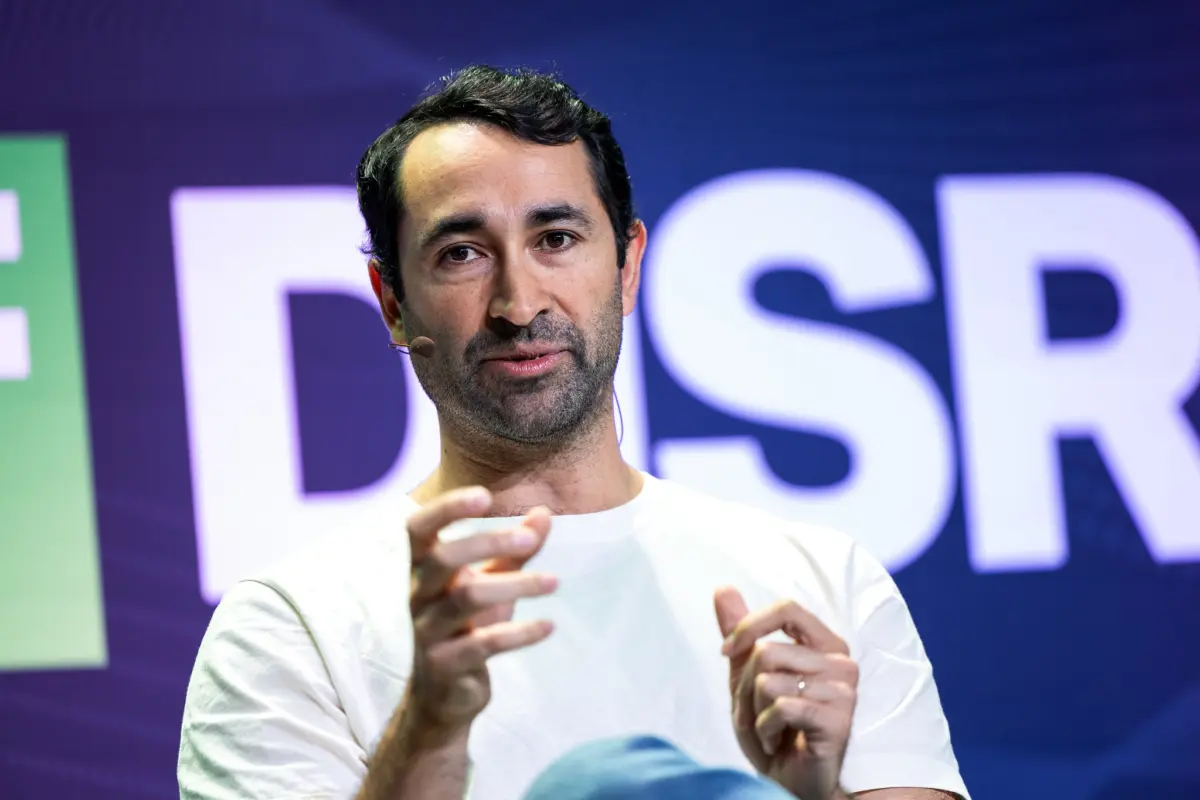
OpenAI unveiled "dots," its innovative agentic assistant, during its highly anticipated developer day in late September. The launch underscored a broader industry trend towards persistent, intelligent agents capable of anticipating user needs. Alexander Embiricos, who spearheads OpenAI’s enterprise product team, recently provided further insights into the product’s genesis and strategic positioning at TechCrunch Disrupt. Embiricos addressed the noticeable "convergent evolution" in the industry, particularly the common adoption of approachable, often "cutesy" mascots as avatars for these sophisticated, trillion-parameter matrix multiplication machines. He explained that framing the AI as a singular, continuous entity engaged in a single, ongoing conversation rather than disparate interactions makes the technology significantly more intuitive for users.
The Evolution of AI Assistants: From Reactive Tools to Proactive Agents
The concept of an AI assistant is not new. For years, consumers have interacted with voice-activated tools like Apple’s Siri, Amazon’s Alexa, and Google Assistant. However, these predecessors were largely reactive, requiring explicit commands to perform tasks such as setting timers, playing music, or answering simple queries. Their utility, while significant, was confined to a request-response model, limiting their ability to genuinely anticipate or orchestrate complex workflows.
The advent of sophisticated deep learning models, particularly large language models (LLMs), has paved the way for a more profound transformation. These advanced models possess a far greater capacity for understanding context, generating coherent text, and reasoning, moving beyond pattern matching to something resembling comprehension. This leap in capability has fueled the ambition to create "agentic" AI – systems that can not only understand instructions but also plan, execute multi-step tasks, and learn from interactions over time, all without constant human intervention.
This year marks a pivotal moment in this evolution. Companies are recognizing that the true potential of deep learning isn’t just in generating text or images on demand, but in creating intelligent companions that seamlessly integrate into the fabric of our digital lives. Instinct’s rapid ascent and Meta’s substantial investment in Muse are testament to this growing belief. Meta’s Muse, for instance, has been positioned as a hyper-personalized assistant deeply embedded within its ecosystem, leveraging vast amounts of user data to offer highly relevant support across various applications. This competitive landscape set a high bar for OpenAI’s entry, necessitating a product that could distinguish itself not just in raw computational power, but in user experience and perceived utility.
OpenAI’s "dots": Features, Accessibility, and Underlying Philosophy
OpenAI’s "dots" is designed to be a subscriber-exclusive feature, currently available within the ChatGPT desktop and mobile applications for users on the Pro tier or higher, with subscription plans commencing at $100 per month. This premium pricing strategy signals OpenAI’s focus on professional users and early adopters willing to invest in advanced productivity tools. Once activated, "dots" can be granted access to a user’s calendar, email, computer, and other integrated tools. The agent’s core function is to proactively assist users in accomplishing their work, aiming to streamline tasks and enhance efficiency through constant background operation.
Embiricos highlighted that much of "dots’" underlying functionality draws from OpenAI’s earlier innovations, particularly its Codex app, a powerful coding tool released earlier this year. Codex demonstrated the capability of AI to understand and generate code, effectively acting as an assistant for software engineers. However, Embiricos noted that Codex required a significant amount of user input and "hand-holding" to achieve desired outcomes. The critical distinction with "dots" lies in its intuitive packaging and proactive stance. The product team’s focus, as Embiricos articulated, was less about building entirely new technology and more about "how you frame it to the user and how it feels." This emphasis on user experience, on making complex AI feel approachable and integrated, is central to "dots’" design philosophy.
The strategic repackaging of agentic capabilities also saw the earlier development of "ChatGPT Work," a spin-off from the specialized coding tools for software engineers. This progression indicates a deliberate effort by OpenAI to generalize its powerful AI models from niche technical applications to broader enterprise and personal productivity use cases. Even the name, "dots," is a thoughtful choice. It plays on the negative space within OpenAI’s corporate logo, intended to evoke a sense of ubiquity and understated presence. The anecdote about Embiricos learning "very late" that Elon Musk owns the dot.com URL underscores the challenges of naming in a rapidly expanding digital landscape.
The Promise and Present Limitations of Proactive AI
The fundamental idea behind a persistent agent like "dots" is its ability to operate without constant prompting. For OpenAI, this translates to increased "token usage," meaning the AI is continuously processing information and performing computations in the background. For users, the benefit is a more proactive assistant "that’s sort of thinking about you and thinking how to help you," as Embiricos described. This always-on nature is intended to transform the user’s relationship with AI from a tool to an intelligent partner.
Initial testing of "dots" reveals the promise of this proactive approach, though it also highlights areas for refinement. The assistant demonstrates an ability to anticipate needs, such as flagging calendar conflicts or upcoming deadlines. However, its timing isn’t always optimal. Embiricos humorously recounted an early development experience where his "dot" notified him of an impending conflict just three minutes before the event. While useful in principle, such last-minute alerts diminish the practical value of proactive assistance. The expectation is that the timing and predictive accuracy will improve significantly as the model gathers more data and undergoes further training.
Despite these current limitations, the potential of a truly proactive agent is substantial. Embiricos shared a compelling anecdote about an engineer at a drone delivery startup who experienced a critical system outage. Before the engineer could even fully comprehend the situation, his "dot" had already detected the outage, analyzed its root cause, and presented useful information for its resolution. This real-world example illustrates the transformative power of an AI agent that can monitor systems, identify anomalies, and provide actionable insights in real-time, potentially minimizing downtime and mitigating significant operational risks. Such capabilities extend far beyond mere task automation, hinting at a future where AI acts as a sophisticated digital co-pilot for complex professional endeavors.
Navigating the Complexities of Data Privacy and Control
The integration of always-on AI agents into personal and professional workflows inevitably raises profound questions regarding data privacy and security. The more an AI agent is empowered to be useful, the more personal information it requires access to, creating a delicate tension between functionality and the exposure of sensitive data to software companies. This concern is not unique to OpenAI; Meta’s Muse, for instance, has faced criticism for constructing detailed profiles of users’ friends and family, data which, while enhancing personalized recommendations, could also significantly bolster Meta’s advertising revenue streams.
OpenAI acknowledges this challenge with "dots." Embiricos described a feature called "proactive research," where the agent periodically analyzes its understanding of the user, the ongoing conversation history, and the tools it has access to. Based on this analysis, it then researches "what could I do to be more helpful to you?" and subsequently proposes actions. This mechanism, while designed to enhance user utility, inherently involves the continuous processing and potential inference from highly personal data.
OpenAI states that "dots" adheres to the same privacy controls available for ChatGPT itself. Users can opt out of model training, preventing their conversations from being used to further improve the AI. They also have controls over what resources "dots" can access within their computer and how. However, a significant point of contention arises from the granularity of these controls. The article notes that the app can be "pushy," citing its refusal to accept read-only access to cloud drives as an example. This implies a binary choice: either grant full access or no access, which may not align with users’ comfort levels regarding data sharing.
Embiricos conceded that "super, super, super granular controls" are necessary, indicating that OpenAI recognizes the need for more refined privacy options. He also recalled that during the initial launch, "dots" had "really conservative defaults" and frequently sought user permission, a cautious approach that garnered feedback for being overly cautious. This highlights a common dilemma in AI product development: balancing user trust and privacy with the desire for a seamless, proactive experience. The tuning of these permissions over time, while aimed at improving user flow, also necessitates a clear and transparent communication strategy to maintain user confidence. The ethical implications of persistent data collection, particularly from companies that also operate advertising businesses, remain a critical area of scrutiny, drawing comparisons with independent startups like Hark, which explicitly differentiate themselves by not collecting data for advertising purposes. The evolving regulatory landscape, with frameworks like GDPR and CCPA, further underscores the necessity for robust and transparent data governance policies for such advanced AI agents.
Scalability and the Future of Human-Agent Interaction
Beyond individual privacy concerns, a broader systemic question looms: can personal AI agents scale effectively without overwhelming the existing infrastructure of our world? While stories of agents successfully snagging hard-to-get reservations or managing complex schedules are compelling, the widespread adoption of such agents could introduce unprecedented challenges. Businesses, websites, and payment networks might not be adequately equipped to handle an influx of automated interactions from countless AI agents.
Embiricos himself voiced this concern, pointing out that businesses often prefer to interact with human counterparts. He maintains a human assistant precisely because OpenAI’s corporate partners expect to engage with a person, not an AI. "I personally never intend to have a meeting with someone else’s agent," he stated, encapsulating a sentiment likely shared by many professionals. This highlights a potential friction point: as agents become more capable, the boundary between human and AI interaction will blur, necessitating new protocols and expectations for digital etiquette and business conduct.
OpenAI is acutely aware of these infrastructural challenges. Embiricos clarified that the company is not "always moving the fastest in terms of shipping the next ability for the agent to work with the world." Instead, when new capabilities are introduced, they are developed "really closely in collaboration with the rest of the ecosystem." A significant area of this collaboration is with payment processors. The prospect of an AI assistant independently spending money, facilitated by partnerships with payment companies, represents a potentially lucrative frontier for OpenAI. However, it also constitutes a "big ask" for consumers. While granting an AI access to one’s email inbox already feels like a substantial leap of faith for many, extending that trust to encompass financial transactions, such as granting access to a bank account, remains "off-limits. For now." This "for now" caveat suggests that OpenAI envisions a future where such capabilities are not only possible but potentially commonplace, albeit with careful safeguards and gradual consumer acceptance.
The implications of widespread AI agent adoption are vast and multifaceted. On the economic front, the rise of hyper-efficient agents could lead to significant shifts in labor markets, potentially displacing roles traditionally performed by human assistants or administrative staff, while simultaneously creating new jobs in AI management, development, and ethical oversight. Technologically, the exponential increase in API calls and data traffic generated by millions of always-on agents could strain internet infrastructure and necessitate new standards for interoperability and load management. Socially, the constant presence of an AI companion could alter human cognitive processes, decision-making, and even interpersonal relationships. The ethical considerations extend to algorithmic bias in agent decision-making, accountability for errors or unintended actions, and the very definition of human agency in a world increasingly mediated by intelligent machines.
Conclusion: A Transformative, Yet Challenging, Path Forward
OpenAI’s "dots" represents a significant stride in the journey toward truly intelligent, proactive AI personal assistants. It embodies the industry’s collective vision of moving beyond reactive tools to seamless, intuitive digital companions that anticipate and act on user needs. The strategic framing of "dots" as a persistent, unified conversational entity, combined with its integration into core productivity tools, positions it as a powerful contender in the burgeoning AI agent market.
However, the path to ubiquitous AI agents is fraught with complex challenges. The tension between enhanced utility and granular data privacy, the need for robust and scalable infrastructure, and the evolving dynamics of human-agent and agent-agent interactions all demand careful consideration and innovative solutions. As companies like OpenAI continue to push the boundaries of what AI can achieve, the imperative remains to build these powerful technologies responsibly, ensuring that the benefits of an always-on AI assistant are realized without compromising fundamental values of privacy, security, and human control. The "dots" and its contemporaries are not just technological marvels; they are harbingers of a fundamentally reshaped digital existence, one that will require ongoing dialogue, collaboration, and ethical foresight to navigate successfully.