Sonny Valindra
Amulya Vishwanath, a seasoned leader who spent seven years at the helm of product marketing for NVIDIA’s pioneering robotics platforms, has articulated a compelling perspective on the current state of the robotics industry. Vishwanath, now the founder and managing partner of early-stage investment firm Techable VC, posits that robotics is presently in its "Lego era." This analogy signifies a foundational period where the essential building blocks of robotic systems—such as actuators, sophisticated robotic end-effectors, robust software architectures, and stringent safety standards—are still undergoing significant development and refinement.
This viewpoint stands in contrast to a burgeoning narrative within the tech community that anticipates a "ChatGPT moment" for robotics, driven by the advent of powerful general foundation models. Proponents of this optimistic outlook believe that a single, all-encompassing model could revolutionize robotics, potentially rendering much of the current specialized development redundant. This perspective was notably echoed by Pim de Witte, CEO of General Intuition, who in an earlier interview suggested that such a model could serve as a watershed moment for the industry, akin to the transformative impact of OpenAI’s ChatGPT upon its late 2022 release. The expectation is that these advanced models will imbue robots with unprecedented general intelligence and adaptability, accelerating their deployment across a wider array of applications.
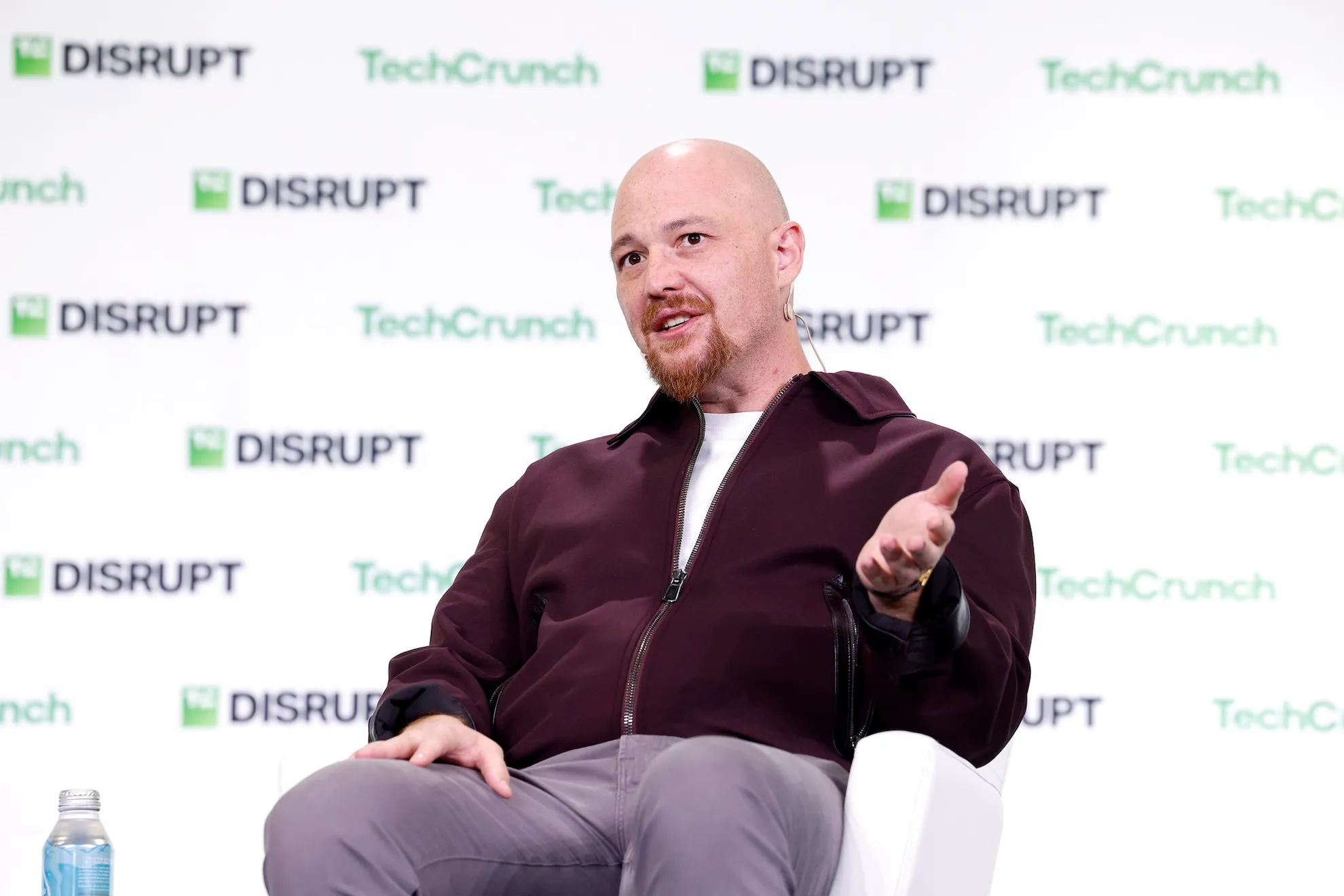
Vishwanath’s insights were shared during a recent episode of TechCrunch’s prominent podcast, "Equity," hosted by Dominic-Madori Davis. In their conversation, Davis, a senior venture capital and startup reporter at TechCrunch, delved into Vishwanath’s transition from a high-profile executive role at NVIDIA to launching her own venture capital firm. Techable VC, under Vishwanath’s leadership, is focused on making initial investments in the burgeoning field of "physical AI," a domain that encompasses robotics, advanced materials science, and cutting-edge life sciences. The discussion also provided an opportunity for Vishwanath to share her experiences and lessons learned as one of the first women executives to depart NVIDIA and establish her own early-stage investment entity.
The "Lego Era" of Robotics: A Foundation Under Construction
Vishwanath’s "Lego era" metaphor for robotics is not a dismissal of the industry’s progress but rather a grounded assessment of its developmental stage. She suggests that while individual components and sub-systems are advancing rapidly, the cohesive integration and standardization required for widespread, sophisticated robotic applications are still in their nascent phases. This includes the development of more versatile and cost-effective actuators capable of a wider range of motion and force control, the creation of highly dexterous and adaptable robotic hands, and the establishment of mature software frameworks that facilitate seamless integration and programmability. Furthermore, the critical area of safety standards, essential for the deployment of robots in human-centric environments, is an ongoing area of intensive research and development.
The rapid advancements in artificial intelligence, particularly in large language models (LLMs) and multimodal AI, have indeed fueled optimism about a near-term revolution in robotics. The ability of models like GPT-4 to understand and generate human language, process visual information, and even reason about physical scenarios has led many to believe that a similar leap in robotic capabilities is imminent. The argument is that a sufficiently powerful general foundation model could, in theory, learn to control a robot arm, navigate an environment, and perform complex tasks with minimal task-specific training, simply by being provided with instructions in natural language or through demonstrations.
However, Vishwanath’s perspective emphasizes the significant hardware and integration challenges that remain. Unlike software, which can be iterated upon and deployed virtually, physical robots require tangible components that must be manufactured, assembled, and rigorously tested. The cost, reliability, and dexterity of robotic hardware—from the motors and sensors to the end-effectors—are still limiting factors for many potential applications. Moreover, ensuring that these complex physical systems operate safely and predictably in dynamic, unstructured environments is a monumental undertaking that requires more than just advanced AI algorithms.
The "ChatGPT Moment" Hypothesis and Counterarguments
The concept of a "ChatGPT moment" for robotics suggests that a single AI model could unlock a new era of widespread adoption, similar to how ChatGPT democratized access to advanced language AI. This hypothesis is predicated on the idea that general foundation models can learn a broad range of skills and adapt to new tasks with remarkable efficiency. For instance, a model trained on vast datasets of human interaction, physical manipulation, and environmental understanding could potentially generalize its knowledge to control a robot performing tasks it has never explicitly been trained for.
Pim de Witte’s earlier remarks to TechCrunch’s "Equity" podcast highlighted this perspective, arguing that the development of a single, comprehensive foundation model would indeed render much of today’s specialized robotics work redundant. He suggested that the ability of such a model to learn from diverse data sources, potentially including video game simulations, could accelerate the training process and lead to more robust and versatile robots. The implication is that instead of developing bespoke AI for each robotic task, a generalized AI would be capable of handling a multitude of tasks with minimal adaptation.
Vishwanath’s "Lego era" perspective offers a counterpoint, suggesting that the current limitations are not solely in the intelligence of the AI but also in the physical embodiment and the integrated systems that bring AI to life. Building robots that can safely and reliably interact with the physical world requires advancements in areas like:
- Actuation: Developing motors and drives that are more precise, powerful, efficient, and cost-effective.
- End-Effectors (Robotic Hands): Creating grippers and manipulators that can handle a wide variety of objects with varying shapes, textures, and fragility.
- Sensing and Perception: Enhancing robots’ ability to perceive and understand their environment through advanced sensors and fusion of data from multiple sources.
- Software Integration: Building robust middleware and operating systems that can seamlessly integrate hardware, AI, and control systems.
- Safety and Reliability: Establishing rigorous testing protocols and safety standards to ensure that robots can operate without causing harm to humans or property.
The analogy of the "Lego era" implies that the industry is in the process of creating and perfecting these fundamental building blocks. Once these components are more mature and standardized, the integration of advanced AI models, including general foundation models, will likely lead to the more rapid and widespread deployment of capable robotic systems.
Amulya Vishwanath’s Journey: From NVIDIA to Techable VC
Vishwanath’s departure from NVIDIA, a company at the forefront of GPU technology and AI, to establish Techable VC, signifies a strategic pivot towards actively shaping the future of physical AI through investment. Her seven years leading product marketing for NVIDIA’s robotics platforms provided her with an intimate understanding of the technological landscape, the market dynamics, and the challenges facing roboticists and AI developers. This experience has undoubtedly informed her investment thesis and her vision for the future of the sector.
Her decision to focus on "physical AI" reflects a growing recognition that the next frontier of AI development lies in its integration with the physical world. While much of the recent AI discourse has centered on generative models and their impact on digital content creation and information processing, the real-world applications of AI in robotics, advanced manufacturing, logistics, healthcare, and scientific research hold immense transformative potential.
Techable VC’s focus on robotics, materials science, and life sciences suggests a belief in the synergistic potential of these fields. Advancements in materials science, for example, can lead to lighter, stronger, and more adaptable robotic components. Similarly, breakthroughs in life sciences can inform the design of more bio-inspired robots and create new applications for robotic assistance in areas like surgery and drug discovery.
The Role of Venture Capital in Shaping the Future of Robotics
As the founder and managing partner of Techable VC, Vishwanath is now in a position to directly influence the trajectory of innovation in physical AI. Early-stage venture capital plays a critical role in nurturing nascent technologies and supporting ambitious entrepreneurs. By identifying promising startups and providing them with the necessary capital, mentorship, and strategic guidance, VCs can accelerate the development and commercialization of groundbreaking technologies.
Vishwanath’s experience at NVIDIA likely equips her with a unique ability to assess the technical feasibility and market potential of robotics startups. Her understanding of the underlying hardware and software challenges, coupled with her insights into market needs and competitive landscapes, can be invaluable in identifying companies that are well-positioned to succeed.
The investment landscape for robotics has seen a surge of interest in recent years, driven by advancements in AI, increased automation needs across industries, and a growing recognition of robotics’ potential to address labor shortages and improve efficiency. However, the capital-intensive nature of hardware development and the longer development cycles compared to pure software ventures mean that investors in this space often require a different set of criteria and a longer-term perspective.
Broader Implications and Future Outlook
The differing perspectives on the pace of robotics advancement highlight a crucial ongoing debate within the tech industry. While the promise of general AI and its transformative potential is undeniable, the practical realities of developing and deploying complex physical systems remain significant hurdles.
If Vishwanath’s "Lego era" assessment holds true, it suggests that we can expect continued incremental progress in robotics, with ongoing improvements in hardware capabilities, software integration, and safety standards. This period of foundational development is essential for building the robust infrastructure upon which more advanced AI applications can be deployed.
Conversely, if the proponents of the "ChatGPT moment" are correct, we could witness a more rapid and disruptive evolution, driven by the rapid advancements in general foundation models. This scenario would likely involve a quicker convergence of AI and robotics, leading to faster adoption and a more profound impact on society.
The reality is likely to be a combination of both. Advancements in foundation models will undoubtedly accelerate the development of intelligent control systems for robots. However, these intelligent systems will still need to be integrated with increasingly sophisticated and reliable physical hardware. The success of companies in the physical AI space will depend on their ability to bridge this gap between advanced AI and robust, practical robotic solutions.
Vishwanath’s new role at Techable VC positions her to play a significant part in this bridging process. By investing in companies that are tackling the fundamental challenges of robotics, she is contributing to the construction of the "Lego bricks" that will eventually enable the industry’s next major leap forward. The insights gained from her tenure at NVIDIA, combined with her entrepreneurial drive, suggest that Techable VC is poised to be a key player in shaping the future of physical AI, moving the industry beyond its foundational "Lego era" towards more sophisticated and impactful robotic applications. The ongoing dialogue between optimists anticipating a rapid AI-driven revolution and pragmatists emphasizing foundational development will continue to define the path forward for robotics, a field poised to reshape industries and aspects of daily life in the coming decades. The interplay between software intelligence and hardware capability will be the defining characteristic of this evolution, and investors like Vishwanath will be instrumental in navigating this complex landscape.