admin
admin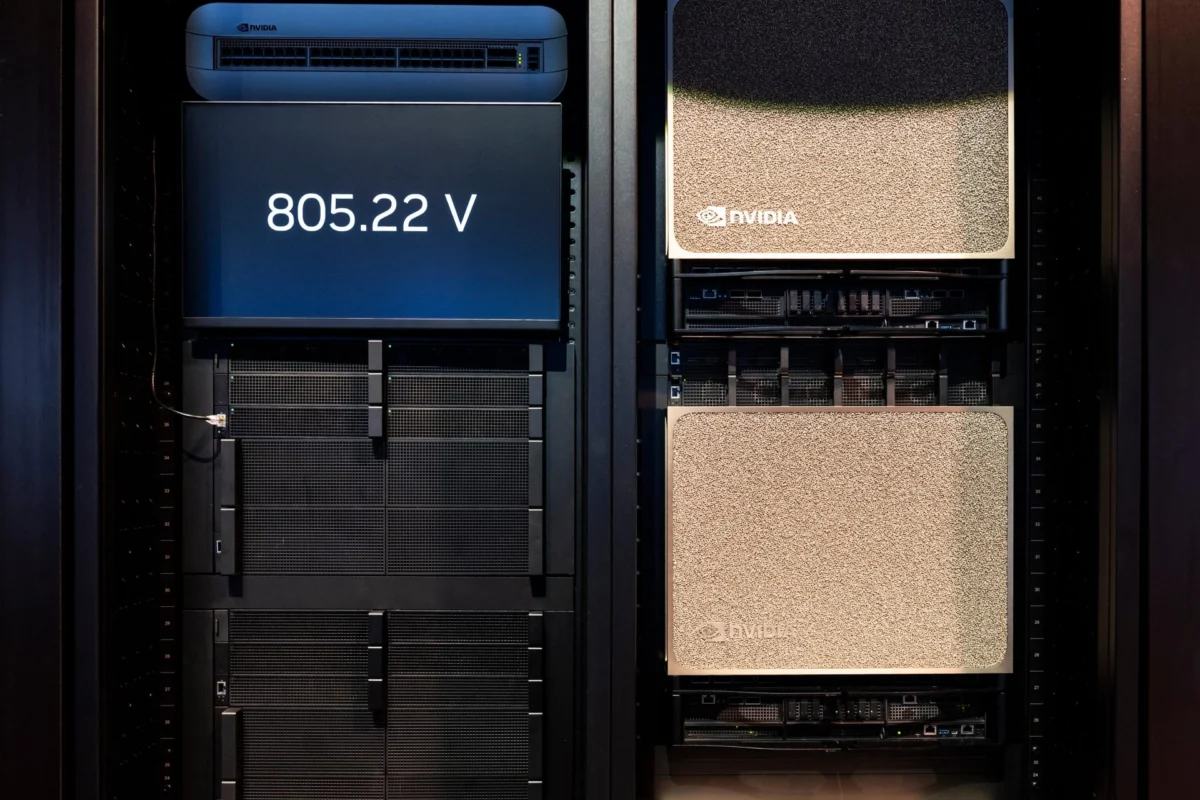
The Rubin architecture, codenamed after the pioneering astronomer Vera Rubin, is designed to succeed the Blackwell (GB200) series. While Blackwell already pushed the boundaries of memory integration, accounting for approximately 53% of total server BOM, the Rubin platform elevates this share to 62%. This shift underscores a broader industry trend: as AI models grow in complexity and parameter count, the "memory wall"—the bottleneck created by the speed and capacity of data retrieval—has become the primary hurdle for hardware designers. To overcome this, NVIDIA has doubled down on memory density and bandwidth, albeit at a cost that is now reshaping the fiscal landscape of the semiconductor industry.
The Architectural Anatomy of the Vera Rubin NVL72 Rack
The flagship configuration for the Rubin era is the NVL72 rack, internally designated by the codename "Oberon." This massive computing cluster is engineered to operate as a single, cohesive unit, housing 72 Rubin GPUs and 36 Vera CPUs. The system is structured around the "Superchip" motherboard concept. Each Superchip is a high-density compute node containing one Vera CPU and two Rubin GPUs. In a full Oberon rack, 36 of these Superchips are interconnected via NVIDIA’s proprietary NVLink sixth-generation interconnects, creating a unified pool of compute and memory resources.
The specifications of the individual components reveal the sheer scale of the hardware. Each Rubin GPU is equipped with 288 GB of HBM4 (High Bandwidth Memory 4), which provides a transformative bandwidth of up to 22 TB/s. This represents a generational leap over the HBM3e utilized in Blackwell. Complementing the GPU power, the Vera CPU is paired with a SOCAMM2 (Compression Attached Memory Module) LPDDR5X solution. This allows each CPU to access up to 1.5 TB of memory. When aggregated across a full NVL72 rack, the total memory capacity reaches an unprecedented 74.7 TB—comprised of 20.7 TB of HBM4 and 54 TB of LPDDR5X. To put this in perspective, a single server rack now contains the equivalent DRAM capacity of approximately 4,500 high-end smartphones.

Dissecting the Bill of Materials: A Financial Breakdown
The UBS report provides a granular look at why the Vera Rubin platform is the most expensive enterprise hardware ever conceived. The $38,902 price tag for a single Superchip is divided between the GPU-heavy Rubin section and the memory-intensive Vera section.
The Rubin GPU component itself is estimated to cost $9,247. This figure encompasses the silicon die, the HBM4 stacks, advanced packaging (likely TSMC’s CoWoS-L or an evolved variant), the interposer, and various peripheral components. Within this $9,247 sub-total, the HBM4 memory alone accounts for $4,943, or roughly 53.4% of the GPU’s cost. While significant, the most lopsided cost ratio is found in the Vera CPU section.
The Vera CPU module carries an estimated cost of $20,059. However, the silicon logic of the Vera CPU is surprisingly affordable, estimated at just $704. The remaining $19,355 is dedicated almost entirely to the 1.5 TB of SOCAMM2 LPDDR5X memory and associated board components. This means that for the CPU portion of the Superchip, memory accounts for approximately 96.4% of the total manufacturing cost. When viewing the Superchip as a whole, the $24,297 memory bill represents 62.4% of the total $38,902 cost. This is a sharp increase from the Blackwell generation, where memory costs were high but did not dominate the BOM to this extreme degree.
From Blackwell to Rubin: The Chronology of Cost Escalation
The trajectory of NVIDIA’s data center hardware over the last three years illustrates an aggressive pursuit of memory bandwidth. In 2023, the Hopper H100 utilized HBM3 memory, which was already a scarce and expensive resource. By 2024, the Blackwell B200 transitioned to HBM3e, offering 192 GB to 288 GB per GPU. During this phase, memory accounted for just over half of the server’s BOM.

The jump to Rubin, scheduled for a late 2025 or early 2026 rollout, sees the overall platform cost increase by 2.1 times compared to Blackwell. However, the cost of the memory components has outpaced the general price hike, surging by 2.5 times. This disproportionate increase is driven by two factors: the higher unit price of the newer HBM4 standard and the massive increase in total capacity per node. HBM4 requires more complex manufacturing processes, including 12-layer and 16-layer vertical stacks and more precise Through-Silicon Via (TSV) technology, which keeps yields lower and prices higher than previous generations.
Market Implications and the Global DRAM Shortage
The massive memory requirements of the Vera Rubin platform are exerting significant pressure on the global DRAM market. The "Big Three" memory manufacturers—Samsung Electronics, SK Hynix, and Micron Technology—have all signaled that the demand for high-performance memory for AI is cannibalizing the supply of standard DRAM used in consumer electronics and traditional servers.
Industry analysts and chairmen of major memory firms, such as ADATA, have warned that these shortages could persist for the next several years, potentially lasting into the next decade. The primary reason is that HBM manufacturing requires significantly more wafer capacity than standard DDR5 memory. For every bit of HBM produced, roughly three times the wafer area is required compared to traditional DRAM. As NVIDIA, AMD, and other AI chip designers move toward HBM4, the strain on global fab capacity will only intensify.
Furthermore, NVIDIA is not the only player demanding these resources. AMD’s recently unveiled Helios platform features the MI325X and upcoming MI350 series, which offer up to 432 GB of HBM4 memory per GPU. With both industry leaders competing for the same limited supply of HBM4 and LPDDR5X, memory vendors are increasingly prioritizing AI customers through long-term agreements (LTAs). These multi-billion dollar contracts, such as the recent $3 billion agreement involving China’s CXMT and other international players, ensure that the largest AI providers—Meta, Microsoft, Google, and Amazon—receive priority, often at the expense of the broader PC and mobile markets.

Technical Analysis: Why HBM4 and SOCAMM2?
The decision to utilize HBM4 and SOCAMM2 is not merely a marketing choice but a technical necessity for the "Agentic AI" era. Agentic AI refers to systems capable of autonomous reasoning and multi-step task execution, which require massive context windows and near-instantaneous data access.
- HBM4 Integration: By moving the memory stacks closer to the GPU and utilizing a wider interface, HBM4 achieves 22 TB/s of bandwidth. This is essential for training the next generation of Large Language Models (LLMs), which are expected to exceed 10 trillion parameters.
- SOCAMM2 LPDDR5X: The shift to SOCAMM2 for the CPU side allows for a more compact design while maintaining high capacity. Traditional DIMM slots are too bulky for the dense thermal environment of an NVL72 rack. SOCAMM2 provides the signal integrity and space efficiency needed to pack 1.5 TB of memory onto a motherboard that also houses two massive GPUs.
Broader Impact on the AI Ecosystem
The sheer expense of the Vera Rubin platform suggests that the barrier to entry for "frontier" AI development is rising. With a single Superchip costing nearly $39,000 to manufacture—and likely retailing for significantly more once NVIDIA’s margins and R&D costs are factored in—a full NVL72 rack could easily carry a price tag in the millions of dollars.
This financial reality favors "Hyperscalers" and well-funded national AI initiatives, potentially leading to a further centralization of AI compute power. However, the efficiency gains promised by Rubin are equally significant. NVIDIA claims a 10x uplift in AI performance compared to Blackwell, suggesting that while the racks are more expensive, the cost-per-token of inference or cost-per-petaflop of training may actually decrease for those who can afford the initial capital expenditure.
As the industry prepares for the Rubin era, the focus of the semiconductor supply chain has shifted definitively. The era of the "processor-centric" data center is being replaced by the "memory-centric" era. The Bill of Materials for the Vera Rubin NVL72 is the clearest evidence yet that in the race for artificial intelligence supremacy, silicon logic is no longer the most precious commodity—memory is. The ability of the "Big Three" memory makers to scale HBM4 production will now dictate the pace of AI evolution just as much as NVIDIA’s architectural innovations.