Sonny Valindra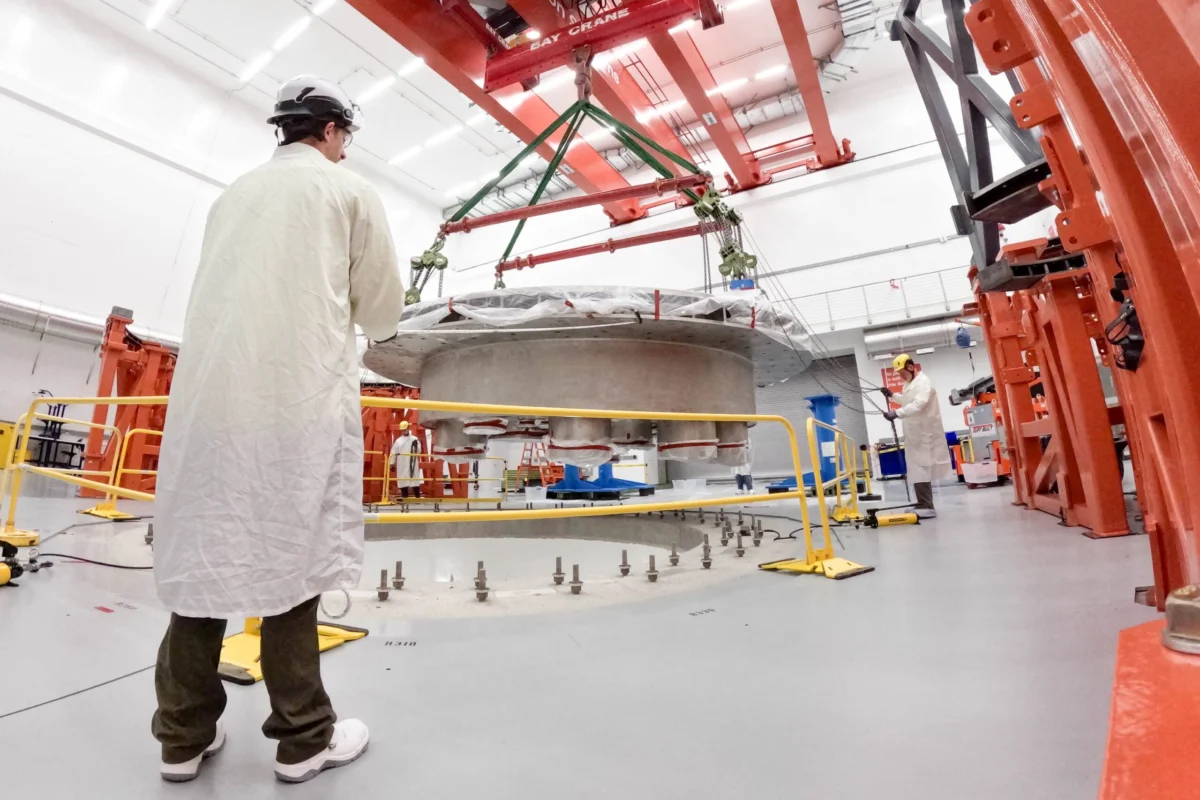
Commonwealth Fusion Systems (CFS), a company long recognized as the best-funded fusion power startup, has significantly extended its financial lead with the announcement of a new $1 billion funding round. This substantial investment, which the company revealed on Thursday, includes a diverse array of institutional investors, notably pension funds, sovereign wealth funds, and corporate partners from the infrastructure and industrial sectors. While CFS declined to name specific investors when queried by TechCrunch, the infusion of capital brings the company’s total raised funds to an impressive $4 billion to date.
This latest funding surge arrives at a critical juncture for CFS, as the company ramps up its expenditures on two key projects: Sparc, its demonstration reactor, and Arc, the design of its inaugural commercial fusion power plant. The new capital infusion is explicitly earmarked for the commercialization of fusion energy. Bob Mumgaard, CEO of CFS, has also indicated that the company anticipates further fundraising endeavors to support its ambitious growth trajectory.
While CFS has not publicly disclosed the precise cost projections for either Sparc or Arc, the scale of these undertakings is considerable. In 2024, former Virginia Governor Glenn Youngkin characterized the Arc project as a "multi-billion-dollar fusion power plant," underscoring the significant financial commitment required for such advanced energy infrastructure.
This $1 billion round represents CFS’s largest fundraising effort since its significant $1.8 billion raise in 2021. The company’s most recent funding announcement prior to this, made in August, brought in $863 million from a notable group of investors including Nvidia, Google, Khosla Ventures, and Breakthrough Energy Ventures, highlighting the growing confidence from both technological giants and prominent venture capital firms in CFS’s fusion approach.
The Science Behind CFS’s Approach: Magnetic Confinement Fusion
CFS is advancing a specific method of fusion known as magnetic confinement. This technique relies on the creation of powerful magnetic fields to contain and control a superheated plasma. The plasma, a state of matter where electrons are stripped from atoms, must be maintained at extreme temperatures and densities for fusion reactions to occur. In magnetic confinement fusion, these intense magnetic fields act as an invisible bottle, preventing the plasma from touching the reactor walls and dissipating its energy.
The core principle of fusion is the merging of atomic nuclei. In the case of fusion power, typically isotopes of hydrogen such as deuterium and tritium are used as fuel. When these nuclei fuse under the extreme conditions within the reactor, they release an enormous amount of energy, far exceeding that released by chemical reactions like combustion. CFS’s strategy is to capture the heat generated by these fusion reactions and use it to produce steam, which then drives a turbine to generate electricity, mirroring the operational principles of conventional thermal power plants.
Key Milestones and Project Developments
CFS has reported significant progress on its Sparc reactor, a critical experimental facility designed to prove the viability of their magnetic confinement approach at a scale that can achieve net energy gain. The company now anticipates that Sparc will reach scientific breakeven in 2027.
Scientific Breakeven: A Pivotal Benchmark
Scientific breakeven is a crucial milestone in fusion research. It signifies the point at which a fusion experiment produces more energy than is required to initiate and sustain the fusion reaction. While achieving scientific breakeven does not immediately translate to electricity generation for the grid, it serves as a powerful validation of the underlying physics and engineering. For investors, this demonstration is a key indicator that the technology is on a path to commercial viability. To date, only one fusion device, the National Ignition Facility at Lawrence Livermore National Laboratory, has demonstrably achieved scientific breakeven, underscoring the significance of CFS’s anticipated achievement.
Advancing Towards Commercialization: The Arc Reactor
Concurrently with the development of Sparc, CFS has been meticulously finalizing the design of Arc, its planned commercial-scale fusion power plant. The selection of Virginia as the site for the first Arc plant reflects the state’s supportive regulatory environment and commitment to advanced energy technologies. The economic implications of Arc are substantial. Italian energy company Eni has committed to purchasing over $1 billion worth of electricity from Arc, demonstrating a significant market appetite for fusion-generated power. Furthermore, Google has entered into an agreement to purchase 200 megawatts of electricity from Arc, which represents half of the plant’s projected total output, signaling confidence from a major technology player in the reliability and scalability of fusion energy.
A Timeline of Growth and Investment
The journey of Commonwealth Fusion Systems has been marked by consistent and substantial investment, reflecting the high stakes and long-term vision associated with fusion energy development.
- Early Stages and Seed Funding: CFS emerged from the Massachusetts Institute of Technology (MIT) in 2017, building upon decades of fusion research. Initial funding rounds provided the foundational capital for the company to establish its core team and begin developing its proprietary high-temperature superconducting (HTS) magnets, a key enabling technology for compact and powerful fusion devices.
- 2021: A Landmark $1.8 Billion Raise: This year marked a significant inflection point for CFS, with a substantial $1.8 billion funding round. This capital injection allowed the company to accelerate the construction of its Sparc demonstration reactor and further refine the design of its commercial Arc plant. The investors at this stage included a mix of established venture capital firms and strategic corporate partners, signaling growing industry interest.
- August 2025: Continued Momentum with $863 Million: Demonstrating sustained investor confidence, CFS secured another significant funding round of $863 million in August 2025. This round attracted prominent investors such as Nvidia, Google, Khosla Ventures, and Breakthrough Energy Ventures. The involvement of tech giants like Nvidia and Google suggested a forward-looking strategy to integrate fusion energy into future technological ecosystems and potentially power their massive data centers.
- Thursday’s Announcement: $1 Billion to Power Commercialization: The most recent $1 billion funding round reinforces CFS’s position as a leader in the fusion sector. The participation of institutional investors like pension funds and sovereign wealth funds indicates a growing maturity of the fusion investment landscape, moving beyond early-stage venture capital to larger, long-term capital commitments.
This consistent stream of significant funding underscores the perceived potential of CFS’s technology and its strategic importance in the global transition towards clean energy.
The Broader Implications for the Energy Landscape
The successful securing of $1 billion in new funding by CFS has profound implications for the future of energy. It not only bolsters the company’s ability to achieve its ambitious technological milestones but also sends a powerful signal to the broader energy industry and policymakers.
Accelerating the Fusion Timeline: With substantial financial resources, CFS can expedite its research, development, and construction timelines. The expected achievement of scientific breakeven at Sparc in 2027 and the continued progress on the Arc design bring the prospect of commercial fusion power closer to reality. This acceleration could significantly shorten the period before fusion energy contributes to the global energy mix, a critical factor in combating climate change.
Validation of Private Sector Innovation: CFS’s consistent ability to attract massive investments from both venture capital and institutional investors validates the role of the private sector in driving innovation in complex, capital-intensive fields like fusion energy. It suggests that the market is increasingly recognizing the potential for fusion to provide a clean, reliable, and virtually inexhaustible energy source.
Attracting Further Investment and Talent: The success of CFS in securing such large funding rounds can catalyze further investment in other fusion startups and research initiatives. It also plays a crucial role in attracting top scientific and engineering talent to the field, which is essential for overcoming the remaining technical challenges.
Geopolitical and Economic Considerations: The development of commercially viable fusion power has significant geopolitical and economic implications. Nations and regions that successfully harness fusion energy could achieve greater energy independence, reduce reliance on fossil fuels, and gain a competitive advantage in the global economy. The establishment of fusion power plants like Arc in Virginia could also stimulate local economies through job creation and technological development.
A Competitive Landscape: While CFS stands out for its funding levels, it operates within a dynamic and increasingly competitive fusion landscape. Numerous other companies and research institutions worldwide are pursuing different approaches to fusion, including inertial confinement and other variations of magnetic confinement. The ongoing progress and significant financial backing of CFS will likely spur further innovation and competition within the sector, ultimately benefiting the global pursuit of fusion energy.
The continued success of CFS in securing substantial funding is a testament to the growing belief in the potential of fusion energy. As the company progresses from demonstration to commercialization, its achievements will be closely watched as a bellwether for the future of clean energy production. The $1 billion infusion marks a critical step forward, propelling CFS and the broader fusion industry closer to realizing the promise of an energy revolution.