admin
admin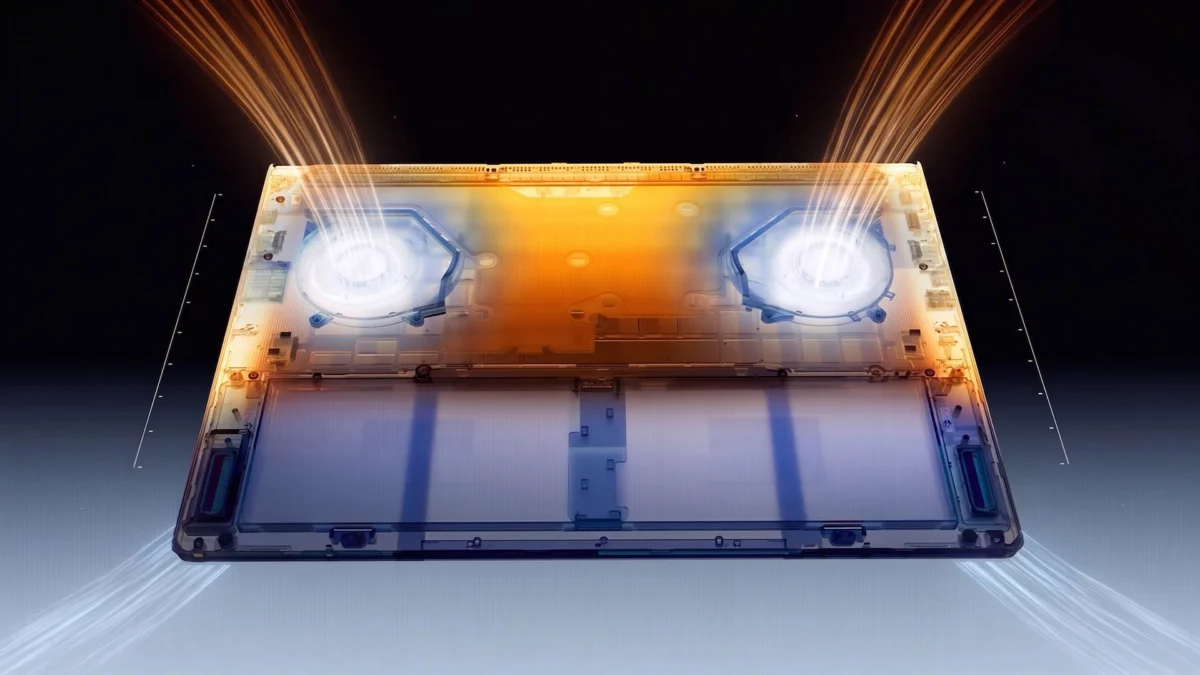
The delicate balance between high-end performance and ultra-portable design has long been the primary challenge for engineers in the gaming laptop sector. While manufacturers like ASUS have made significant strides with the ROG Zephyrus G16, the physical constraints of a thin-and-light chassis often necessitate strict power caps to prevent hardware failure. Recently, however, the enthusiast community has attempted to bypass these factory-set limitations, revealing both the untapped potential and the severe physical boundaries of modern mobile hardware. A recent experimental modification using a third-party utility has successfully pushed the Zephyrus G16 to a total power draw of 215W, but the results highlight why these safeguards exist in the first place.
The Conflict Between Portability and Performance Limits
The ASUS ROG Zephyrus G16 is marketed as a premium, thin-and-light gaming machine designed for users who require mobility without sacrificing the aesthetics of a high-end device. To maintain its sleek profile, ASUS typically caps the Total Graphics Power (TGP) and the Central Processing Unit (CPU) wattage to a combined threshold—often around 175W in various configurations. This ceiling is dictated by the thermal mass of the cooling solution and the power delivery capabilities of the onboard Voltage Regulator Modules (VRMs).
In standard operation, modern laptops utilize dynamic power sharing, such as NVIDIA’s Dynamic Boost technology, which shifts wattage between the CPU and GPU based on the immediate workload. However, enthusiasts have frequently noted that in GPU-heavy titles, the system can "starve" the CPU of necessary power, leading to performance bottlenecks. In the case of the Zephyrus G16 equipped with an NVIDIA GeForce RTX 5090 and an Intel Core Ultra 386H, users have reported that the GPU can consume up to 160W, leaving the CPU with a meager 13W. This disparity can cause stuttering or lower-than-expected frame rates in CPU-intensive sections of modern games.
The Experimental Utility: NvpwrControl and the 215W Breakthrough
To address this perceived power starvation, a Redditor identified as “Firm-Age4730” utilized an experimental software tool known as "NvpwrControl." Hosted on GitHub, this utility is designed to unlock or modify the power limits of NVIDIA laptop GPUs, allowing them to draw more current than the manufacturer’s firmware (vBIOS) typically permits. By overriding these safety protocols, the user was able to push the system’s total power consumption to 215W.
In this modified state, the RTX 5090 was observed drawing 185W, while the Intel Core Ultra 386H was allocated 31W. This represents a significant shift from the factory-balanced settings. The testing was conducted using Cyberpunk 2077, a title widely regarded as a benchmark for high-end PC hardware due to its heavy utilization of real-time ray tracing and complex crowd AI, both of which stress the GPU and CPU simultaneously.
The modification effectively resolved the CPU power starvation issue. By providing the Intel Core Ultra 386H with 31W—more than double its "starved" 13W state—the system achieved a more harmonious balance between the two primary processing units. However, this performance gain was immediately met with the harsh realities of thermodynamics.

Thermal Consequences and Hardware Risks
While the power increase yielded higher theoretical performance, the thermal data captured during the experiment paints a concerning picture for long-term hardware health. The RTX 5090 reached a peak temperature of 84°C. In the context of NVIDIA’s mobile architecture, thermal throttling typically begins at approximately 87°C. This leaves a razor-thin margin of only 3°C before the system begins to forcefully downclock the GPU to protect itself from heat damage.
The CPU fared even worse under the increased load. The Intel Core Ultra 386H touched 95°C during the Cyberpunk 2077 session. With a maximum operating temperature (T-junction) of 100°C, the processor was within 5°C of its critical shutdown point. Operating a silicon chip at these temperatures for extended periods can accelerate electromigration and lead to premature component failure.
Furthermore, the heat generated by these components does not exist in a vacuum. The internal components of a laptop, including the VRMs, capacitors, and memory modules, are all subjected to the ambient heat within the chassis. ASUS utilizes high-quality components in its ROG Zephyrus line, but even premium VRMs have efficiency curves that drop sharply as heat increases. Pushing 215W through a power delivery system designed for lower thresholds increases the risk of a catastrophic "pop" or circuit failure, which would render the motherboard useless.
The Acoustic Cost: Jet-Level Fan Speeds
To combat the massive heat output of a 215W load in a 16-inch chassis, the Zephyrus G16’s cooling system was forced to operate at its absolute physical limit. The data revealed that the CPU fan reached a staggering 6,700 RPM, while the GPU fan operated at 6,800 RPM.
In the world of laptop cooling, these speeds are exceedingly high. For comparison, most high-end gaming laptops under heavy load operate their fans between 4,500 and 5,500 RPM. The jump to nearly 7,000 RPM creates an acoustic profile that many users would find intolerable. The high-pitched whine of small fans spinning at such velocities is often compared to the sound of a miniature jet engine. Without the use of high-quality noise-canceling headphones, the gaming experience is significantly degraded by the sheer volume of the cooling system attempting to prevent a thermal meltdown.
Historical Context of Laptop Overclocking and Power Modding
The practice of "shunting" or software-modding laptop power limits is not new, but it has become increasingly dangerous as laptops have become thinner. In the early 2010s, "desktop replacement" laptops like those from Alienware or Clevo featured massive heatsinks and multiple fans, providing enough thermal headroom for enthusiasts to overvolt their components.
However, the modern trend toward "thin-and-light" performance, pioneered by the Razer Blade and followed by the ASUS Zephyrus series, has moved the industry toward highly integrated, thermally constrained designs. Manufacturers now use liquid metal thermal interfaces and vapor chambers to squeeze every possible watt of performance out of limited space. When a user bypasses these limits via software like NvpwrControl, they are essentially operating outside the engineering envelope that the cooling hardware was designed to handle.

Market Implications and the Future of Mobile Hardware
This experiment serves as a case study for the current state of mobile silicon. The RTX 50-series and the latest Intel Core Ultra processors are incredibly efficient, but they still generate significant heat when pushed to their maximum clock speeds. The fact that an RTX 5090 can even function at 185W in a chassis as thin as the Zephyrus G16 is a testament to modern engineering, but it also suggests that we have reached a point of diminishing returns for air-cooled portables.
Industry analysts suggest that this "power starvation" issue is one of the reasons why we are seeing an increase in AI-driven power management. Technologies like NVIDIA’s Max-Q fourth-generation and Intel’s Thread Director are designed to make these 13W vs. 160W decisions in real-time to optimize the user experience without requiring dangerous manual overrides.
Conclusion: An Experiment, Not a Recommendation
The results of the 215W Zephyrus G16 mod provide a fascinating look at what high-end mobile hardware can do when the "shackles" are removed. It proves that the RTX 5090 and Core Ultra 386H have significantly more performance headroom than manufacturers are willing to expose to the average consumer. However, the trade-offs—dangerous internal temperatures, extreme noise, and the risk of permanent hardware degradation—make it clear why those power limits are implemented.
For the vast majority of users, the factory settings provided by ASUS represent the optimal balance of longevity, noise, and speed. While tools like NvpwrControl offer a glimpse into a higher tier of performance, they also serve as a reminder that the laws of physics cannot be bypassed by software alone. Unless a user is operating in a sub-zero ambient environment or has rigged a custom external cooling solution, the 215W power limit remains an impressive, albeit impractical, feat of enthusiast experimentation.
As the gaming laptop market continues to evolve, the industry may look toward even more advanced cooling solutions, such as integrated water loops or solid-state active cooling, to bridge the gap between the 175W "safe zone" and the 215W "performance zone." Until then, the Zephyrus G16 remains a pinnacle of thin-and-light design, best left within the boundaries set by its creators.