admin
admin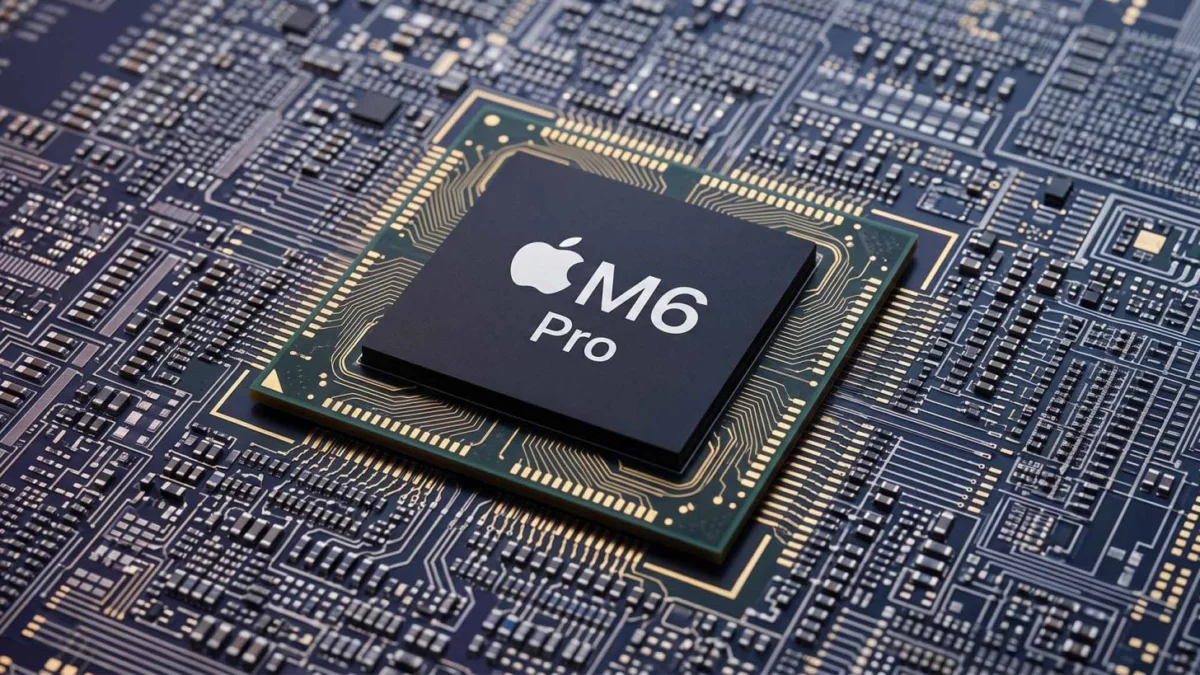
The global technology community was recently sent into a fervor following the appearance of purported benchmark results for Apple’s unannounced M6 Pro chipset on the Geekbench 7 database. The listing, which showcased unprecedented single-core and multi-core performance metrics, suggested a generational leap in processing power that would redefine the capabilities of the MacBook Pro and Mac mini lineups. However, following a rigorous investigation by industry experts and direct intervention from the creators of the benchmarking software, these results have been categorized as highly suspect, if not outright fabrications. The controversy arrives at a critical juncture for Apple Silicon, as internal reports suggest the company may be re-evaluating its chip release cadence, potentially bypassing the M6 Pro and M6 Max iterations entirely in favor of an accelerated transition to the M7 architecture.
The Anatomy of the Alleged M6 Pro Benchmark
The specific Geekbench 7 listing that triggered the industry-wide discussion presented a profile of a chip identified as the "Apple M6 Pro." The data indicated a single-core score approaching the 5,000-point threshold, a figure that would represent a staggering 30% to 35% increase over the current industry-leading performance of the Apple M4 and M4 Pro variants. In the multi-core category, the alleged M6 Pro delivered results that eclipsed the projected performance of the M5 Max, the chipset expected to debut in Apple’s high-end professional hardware in the coming year.
Initial analysis of the listing did not immediately reveal the standard "red flags" typically associated with spoofed benchmarks. The technical specifications listed in the entry appeared superficially plausible. For instance, the clock speeds for the high-performance "super cores" were marginally higher than those anticipated for the M5 series, following the historical trend of Apple’s incremental frequency boosts with each successive generation of the "M" series. Furthermore, the core count of the alleged M6 Pro aligned with Apple’s recent transition toward "Fusion Architecture." This packaging technology, first introduced in the M5 development cycle, allows "Pro" and "Max" variants to share a unified CPU core count while differentiating performance through GPU scaling and memory bandwidth.
Verification Challenges and the Verdict from Geekbench
The legitimacy of the M6 Pro scores was officially challenged when John Poole, the founder and lead developer of Geekbench, contacted industry analysts to report significant discrepancies within the raw data of the submission. According to reports first surfaced by MacRumors, Poole identified "internal inconsistencies" that suggested the system information had been manipulated or "spoofed" to misrepresent the hardware under test.

While the public-facing results of a Geekbench test provide a high-level overview of performance, the internal logs contain detailed metadata regarding instruction set execution, cache latency, and system identifiers. In the case of the M6 Pro listing, the metadata reportedly failed to align with the architectural signatures expected from a next-generation Apple Silicon chip. This type of falsification is often achieved by modifying system files on existing hardware to trick the benchmarking software into reporting a different model name or processor ID.
The debunking of the M6 Pro scores serves as a cautionary tale regarding the "leak culture" that surrounds Apple’s supply chain. While Geekbench is a vital tool for assessing hardware performance, its open-submission nature makes it a frequent target for enthusiasts or bad actors looking to generate viral headlines through falsified data.
Contextualizing the Apple Silicon Roadmap
The skepticism surrounding the M6 Pro benchmarks is reinforced by recent reports from Bloomberg’s Mark Gurman, a journalist with an extensive and highly accurate track record regarding Apple’s internal hardware roadmaps. Gurman has previously indicated that Apple’s long-term strategy for its professional-grade chips may involve a strategic pivot. Specifically, Apple is rumored to be considering a skip of the M6 Pro and M6 Max versions, moving directly from the M5 series to the M7 series for its high-end workstations.
This potential shift in the roadmap is likely tied to the development cycles of Apple’s primary semiconductor partner, TSMC (Taiwan Semiconductor Manufacturing Company). Apple’s silicon strategy is inextricably linked to TSMC’s lithography advancements. The current M4 series and the upcoming M5 series are built on variations of the 3-nanometer (3nm) process. However, the transition to the 2-nanometer (2nm) node, which promises a paradigm shift in power efficiency and transistor density, is expected to align with the production window of the M7 generation.
By potentially skipping the M6 "Pro" and "Max" iterations, Apple may be aiming to synchronize its most powerful professional hardware with the debut of the 2nm process. This would prevent a scenario where a mid-cycle M6 Pro provides only marginal gains over an M5 Pro, instead allowing the company to market a massive "double-generation" leap with the M7 Pro.

Historical Performance Trends and Comparative Data
To understand why a 5,000-point single-core score for an M6 Pro is viewed with such skepticism, one must look at the historical progression of Apple Silicon since the transition from Intel began in 2020.
- M1 Series (5nm): Established the baseline for high-performance ARM-based computing, with single-core scores in the 2,300–2,500 range.
- M2 Series (Enhanced 5nm/N5P): Provided a roughly 10-15% boost, pushing single-core scores toward 2,600–2,800.
- M3 Series (3nm/N3B): Represented a major architectural shift, bringing single-core scores to approximately 3,000–3,100.
- M4 Series (Second-gen 3nm/N3E): Currently the pinnacle of Apple’s mobile silicon, the M4 reaches single-core scores of 3,700–3,900, largely due to significant improvements in branch prediction and the inclusion of ARMv9 instructions.
For an M6 Pro to hit 5,000 points, it would require a jump of over 1,000 points from the M4, effectively bypassing the expected gains of the M5. While Apple has surprised the industry before, a leap of this magnitude usually requires a fundamental change in transistor technology or a massive increase in thermal envelopes—the latter being unlikely for the efficiency-focused MacBook Pro line.
Technical Analysis: The Role of Fusion Architecture
The fake benchmark listing cleverly utilized the term "Fusion Architecture," a concept that has gained traction in recent technical leaks. This architecture refers to a modular design approach where Apple can more easily scale its silicon by "fusing" different chiplets or blocks.
In previous generations, the Pro and Max chips had distinct physical layouts. The M3 Pro, for example, had a different core configuration than the M3 Max. With Fusion Architecture, the "Pro" chip is essentially a "Max" chip with certain components (like GPU cores or memory controllers) disabled or binned. This allows for higher manufacturing yields and more consistent CPU performance across the professional lineup. The fact that the fake M6 Pro listing showed a high CPU core count was intended to make it appear as though it were a fully enabled "fused" chip, lending a thin veneer of technical legitimacy to the fraudulent post.
Market Implications and Consumer Impact
The proliferation of fake benchmarks has tangible effects on the technology market and consumer behavior. For professional users—such as video editors, software developers, and 3D artists—hardware purchasing decisions are often deferred in anticipation of upcoming performance leaps. If consumers believe an M6 Pro with "God-tier" performance is only months away, sales of current M4-based hardware could stagnate.

For Apple, these leaks create a PR challenge. While the company famously never comments on speculation, the existence of "fake news" regarding its products can lead to inflated expectations. When the actual product eventually launches with more modest, realistic gains, it can be perceived as a disappointment by the market, despite being a technical marvel in its own right.
Furthermore, the volatility of these leaks can influence the stock market. Apple’s valuation is closely tied to its perceived lead in the "AI PC" era. Benchmarks that suggest Apple is maintaining a multi-year lead over competitors like Qualcomm (with its Snapdragon X Elite) and Intel (with Lunar Lake) bolster investor confidence. Conversely, the debunking of such scores can lead to short-term skepticism regarding the pace of Apple’s innovation.
Chronology of the M6 Pro Hoax
- Early September 2026: The first "Apple M6 Pro" entries appear on the Geekbench 7 browser, originating from an anonymous uploader.
- September 15-17, 2026: Tech enthusiasts and hardware influencers circulate screenshots of the scores, highlighting the near-5,000 single-core result.
- September 18, 2026: Analysts begin questioning the validity of the scores based on Mark Gurman’s previous reports about the M6 roadmap.
- September 19, 2026: John Poole of Geekbench confirms "internal inconsistencies" to MacRumors, effectively flagging the listing as a spoof.
- Present: The industry pivots back to focusing on the upcoming M5 series, which is expected to be the legitimate next step for the Mac lineup.
Looking Ahead: The Road to M5 and Beyond
With the M6 Pro scores debunked, the focus of the tech industry returns to the highly anticipated M5 series. Expected to debut in late 2025 or early 2026, the M5 will likely focus on enhancing the Neural Engine for on-device AI tasks, further integrating Apple Intelligence into the macOS ecosystem.
The M5 is expected to utilize TSMC’s N3P process, which offers better performance-per-watt than the N3E process used in the M4. While it may not reach the 5,000-point single-core milestone fabricated by the M6 Pro hoax, it will undoubtedly solidify Apple’s position at the top of the consumer silicon market.
As for the M6 and M7, the path remains obscured by Apple’s legendary secrecy. Whether Apple chooses to skip the M6 Pro/Max or simply delay them to align with 2nm production, one thing remains clear: benchmarks should always be viewed with a high degree of skepticism until verified by multiple independent sources or official product launches. In an era where digital manipulation is increasingly sophisticated, the "internal inconsistencies" found by John Poole serve as a vital reminder that in the world of high-performance computing, if a number looks too good to be true, it almost certainly is.