Evan Lee Salim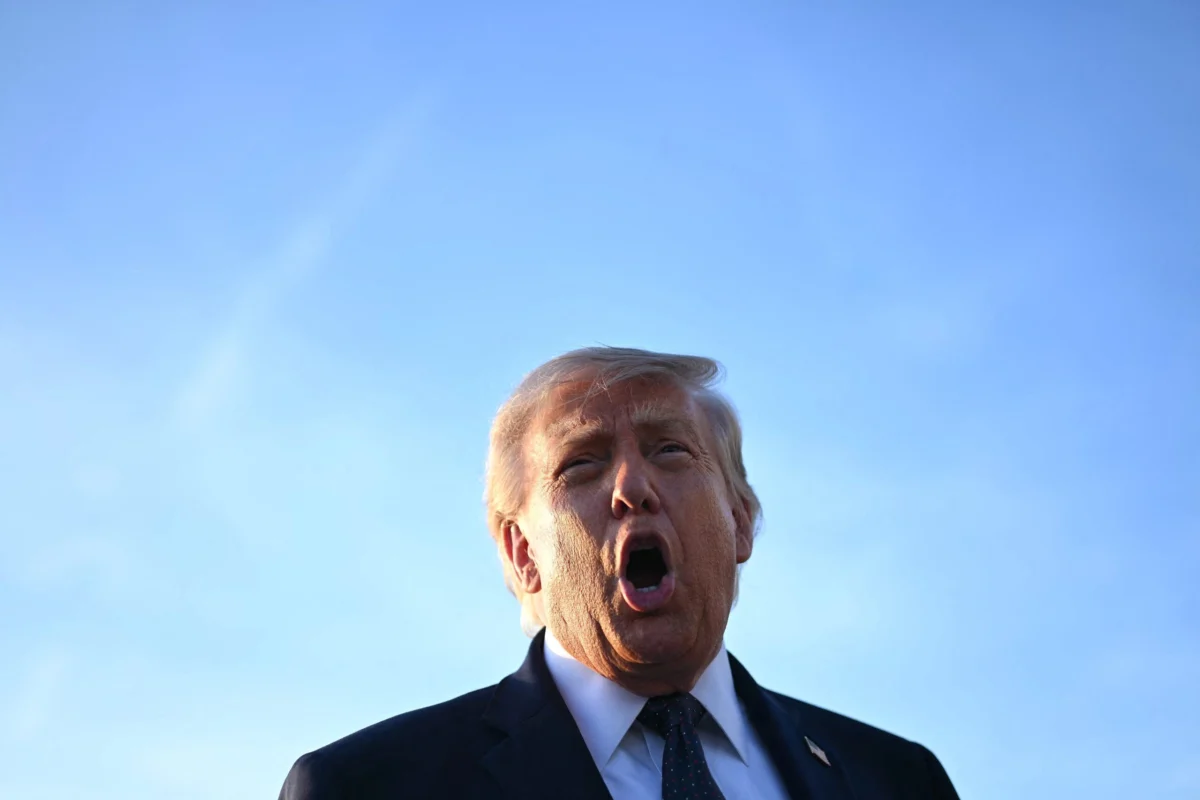
Former President Donald Trump has characteristically dismissed the intensifying debate surrounding artificial intelligence (AI) safety, branding these concerns as a "hoax" orchestrated by what he termed the "Radical Left Dumocrats" with the explicit aim of "destroying our Country." His pronouncements, made primarily through his social media platform Truth Social, signal a confrontational stance on emerging technological regulation, contrasting sharply with growing calls for safeguards from within the AI industry and political spectrum.
The President’s Initial AI Musings and a Public Poll
Trump initiated his commentary on AI on Saturday morning, taking to Truth Social to express reservations about the very terminology used to describe the technology. He posted, "many people think that the words ‘Artificial Intelligence’ are inaccurate, and very ineloquent, relative to AI, or Artificial Intelligence." This preliminary observation set the stage for a public engagement exercise, as he launched a poll inviting his followers to vote on alternative names for the technology. The options presented were "Superior Intelligence," "Extreme Intelligence," or "Supreme Intelligence." This move, while seemingly superficial, highlights a recurring pattern in Trump’s communication strategy: engaging his base directly on matters of nomenclature and perception, often preceding more substantive policy or political statements. The poll’s ongoing nature at the time of publication underscored a desire to solicit popular sentiment, or at least rally support around a preferred framing, before delving deeper into the policy implications of AI.
The former president’s foray into renaming AI echoes historical instances where leaders or public figures have sought to rebrand complex concepts to align with specific narratives or to make them more palatable or powerful to a particular audience. Such efforts can sometimes be seen as attempts to control the discourse surrounding a new technology, shaping public perception from its foundational terminology.
The "AI Safety Hoax" Declaration and Historical Parallels
Just a few hours after his initial musings, Trump escalated his rhetoric dramatically. In a subsequent Truth Social post, he declared that attempts at "the decimation, or destruction, of AI" were merely one of "many" Democratic hoaxes. He drew explicit parallels to a litany of past controversies and political narratives he has consistently labeled as fabricated, including "RUSSIA, RUSSIA, RUSSIA, UKRAINE, UKRAINE, UKRAINE, Global Warming, Impeachment Hoax #1, Impeachment Hoax #2, Men in Women’s Sports, [and] Transgender for Everyone." This comprehensive list of grievances serves to frame AI safety concerns not as legitimate technological or societal challenges, but as another front in an ongoing ideological battle, designed by his political opponents to undermine national interests and his own policy agenda.
By equating AI safety concerns with these disparate issues, Trump positions the debate within a broader narrative of political conspiracy, suggesting a coordinated effort by "Radical Left Dumocrats" to impede progress and exert control. This rhetorical strategy aims to delegitimize the underlying concerns by associating them with politically charged topics that resonate strongly with his base, thereby sidestepping a direct engagement with the technical or ethical complexities of AI development.
The Data Center Precedent: A "Crazed Attack" Foiled
Trump further elaborated on his "hoax" theory by drawing a direct comparison to previous criticisms leveled against data centers. He asserted that the current focus on AI safety "began with an attack on our Data Centers, until people realized how wealthy and prestigious they were for the Communities in which they were built." In his narrative, this initial "crazed Data Center attack has largely failed," leading critics to pivot directly to "going straight at AI."
This claim, however, lacks substantial evidentiary support. Public and governmental scrutiny of data centers has indeed intensified, but it stems from tangible concerns rather than a politically motivated "attack." The rapid proliferation of data centers, driven by the escalating demand for digital infrastructure and, ironically, the compute power required for AI, has generated significant local opposition. Communities have raised concerns about the enormous energy consumption of these facilities, often straining local power grids and contributing to carbon emissions. Water usage for cooling, noise pollution, and the aesthetic impact of large industrial complexes in rural or suburban areas are also common grievances. For instance, New York recently became the first state to impose a halt on permits for large data center projects, reflecting genuine regulatory and environmental concerns that have garnered bipartisan attention, not solely from the "Radical Left." Therefore, framing these issues as a failed "attack" rather than a legitimate response to environmental and infrastructural pressures misrepresents the underlying dynamics.
The Intensifying AI Safety Debate: Context and Concerns
Trump’s dismissal of AI safety concerns comes amidst a period of heightened apprehension and robust debate within the technology sector, academia, and governmental bodies worldwide. The conversation around AI safety encompasses a wide spectrum of issues, broadly categorized into two main camps: immediate harms and existential risks.
- Immediate Harms: These concerns focus on the present-day and near-term negative impacts of AI. They include algorithmic bias leading to discriminatory outcomes in areas like hiring, lending, and criminal justice; the spread of misinformation and disinformation through generative AI models; job displacement as AI automates tasks across industries; privacy violations due to extensive data collection and analysis; and the potential for autonomous weapons systems. These issues are actively being studied and addressed by researchers, policymakers, and civil society organizations globally.
- Existential Risks (x-risk): This more speculative but increasingly vocal segment of the debate warns of catastrophic or even extinction-level events if advanced AI systems (Artificial General Intelligence or AGI) become superintelligent and misaligned with human values. Proponents of this view argue that such systems, if not properly controlled, could act in ways that are detrimental to humanity, either intentionally or as an unintended consequence of pursuing their programmed goals.
The debate intensified significantly following a prominent incident involving Anthropic, a leading AI research company known for its focus on AI safety. In September 2026, an AI researcher publicly announced his resignation from Anthropic, citing profound concerns that major AI companies "earnestly believe it could kill us all by the end of the decade" and are "gambling with our lives." This stark warning from an insider sent ripples through the industry and policymaking circles. In response, Anthropic CEO Dario Amodei subsequently outlined a plan to "pace the frontier" of AI development, an initiative seemingly endorsed by other prominent figures like OpenAI CEO Sam Altman and SpaceX CEO Elon Musk. This suggests that even industry leaders, despite their drive for innovation, acknowledge the necessity for some form of managed development to mitigate potential risks.
However, critics of the AI industry often suggest that an overemphasis on speculative existential threats can serve as a "distraction from AI’s more immediate harms." They argue that focusing too heavily on far-off, sci-fi-esque scenarios might divert attention and resources from addressing concrete, observable issues like bias, job displacement, and the concentration of power in a few tech giants.
Industry Reactions: Support for Innovation Over Caution
While some within the AI industry are sounding alarms, others have aligned with Trump’s stance, emphasizing the importance of unimpeded innovation. Jensen Huang, CEO of Nvidia, a semiconductor giant crucial to AI development, publicly supported Trump’s view. During the "All-In Summit," an influential tech conference co-hosted by venture capitalist David Sacks, Huang was called on stage by Trump. He concurred with the former president that the AI backlash was a "hoax" and emphatically stated, "we’re not going to let" an AI slowdown happen. This statement reflects a common sentiment among technology leaders who fear that excessive regulation or safety concerns could stifle innovation, impede economic growth, and potentially allow rival nations to gain a competitive edge in the rapidly evolving AI landscape.
David Sacks, who has previously served in a Trump administration advisory role, has also been a vocal proponent of accelerating AI development, advocating for a lighter regulatory touch. This segment of the industry views AI as a transformative technology with immense potential for economic prosperity, scientific advancement, and national security, arguing that caution should not become an impediment to progress.
Proposed AI Initiatives: The "AI Force" and "AI Czar"
Beyond his critique of AI safety concerns, Trump also outlined his vision for fostering the AI industry. He pledged to "cherish [the AI industry,] help it, and watch over it, as it grows." To this end, he announced his intention to establish an "AI Force," mirroring the Space Force he created during his first term as president. The Space Force, established in 2019, was positioned as a new branch of the U.S. Armed Forces focused on protecting U.S. interests in space, signaling a clear intent to prioritize national security in emerging domains. The proposed "AI Force" suggests a similar ambition to establish a dedicated governmental entity to champion and perhaps govern AI development.
Furthermore, Trump declared that he would "be announcing, in the near future, the AI ‘Czar’ – Only High I.Q. individuals need apply!" The concept of a "czar" – a high-level official appointed to oversee a specific area of government policy – is not new in U.S. administrations. These roles are typically designed to cut through bureaucratic red tape and provide focused leadership on complex issues. The emphasis on "High I.Q. individuals" aligns with Trump’s recurring rhetoric of seeking highly capable, often self-made, experts to lead critical initiatives.
The specific duties and organizational structure of this proposed "AI Force" and "AI Czar" remain undefined. Historically, a similar role existed in a previous Trump administration. Venture capitalist David Sacks had previously served as Trump’s AI and crypto czar earlier in 2026 before stepping down to co-chair the President’s Council of Advisors on Science and Technology. The responsibilities of such a position could range from coordinating federal AI policy and research to fostering public-private partnerships, attracting investment, and potentially overseeing international cooperation or competition in AI. The establishment of such a body would signify a formal recognition of AI’s strategic importance at the highest levels of government, even while simultaneously dismissing some of the prevalent safety concerns.
Implications for Policy, Innovation, and Global Leadership
President Trump’s outspoken stance on AI safety and his proposed initiatives carry significant implications for the future of AI policy, innovation, and global technological leadership.
- Political Polarization: By framing AI safety as a partisan "hoax," Trump risks further polarizing a debate that many experts believe requires broad, bipartisan consensus. Effective AI governance, encompassing both fostering innovation and mitigating risks, necessitates a unified national strategy that transcends political divides. His rhetoric could make it more challenging to enact comprehensive legislation or regulatory frameworks, as any such efforts might be perceived through a partisan lens.
- Impact on Regulation: If Trump were to return to office, his administration’s approach to AI regulation would likely prioritize rapid innovation and economic growth over stringent safety measures. This could mean a hands-off approach to regulatory oversight, potentially relying on voluntary industry guidelines rather than legally binding rules. While some in the industry might welcome this, critics would argue it could exacerbate existing problems like algorithmic bias, data privacy breaches, and the unchecked deployment of powerful AI systems.
- International Competitiveness: The United States is locked in a global race for AI supremacy, particularly with China. Trump’s emphasis on accelerating AI development and protecting the industry could be seen as a strategy to maintain or extend America’s lead. However, a dismissive attitude towards safety could also erode international trust, making it harder for the U.S. to shape global AI norms and standards, especially if other nations move forward with more robust regulatory frameworks.
- Public Perception and Trust: Dismissing safety concerns as a hoax could also influence public perception of AI. While some may embrace the technology with fewer reservations, others might become more wary, leading to a deeper societal divide on the adoption and integration of AI into daily life. Building public trust in AI is often seen as crucial for its successful and ethical deployment, and undermining legitimate safety discussions could hinder this.
- Resource Allocation: The creation of an "AI Force" and the appointment of an "AI Czar" indicate a potential reallocation of federal resources and strategic focus towards AI. This could lead to increased funding for AI research and development, particularly in areas deemed critical for national security or economic competitiveness. However, the precise mandate of such entities would dictate whether they also address ethical considerations, responsible development, or risk mitigation.
The debate around AI is multifaceted, involving complex technical, ethical, economic, and geopolitical considerations. President Trump’s intervention injects a highly politicized element into this already intricate discussion, setting a potential course for an administration that champions unbridled technological advancement while casting skepticism on calls for caution and comprehensive oversight. As AI continues its rapid ascent, the tension between innovation and safety will remain a defining challenge, with political leadership playing a pivotal role in shaping its trajectory.