admin
admin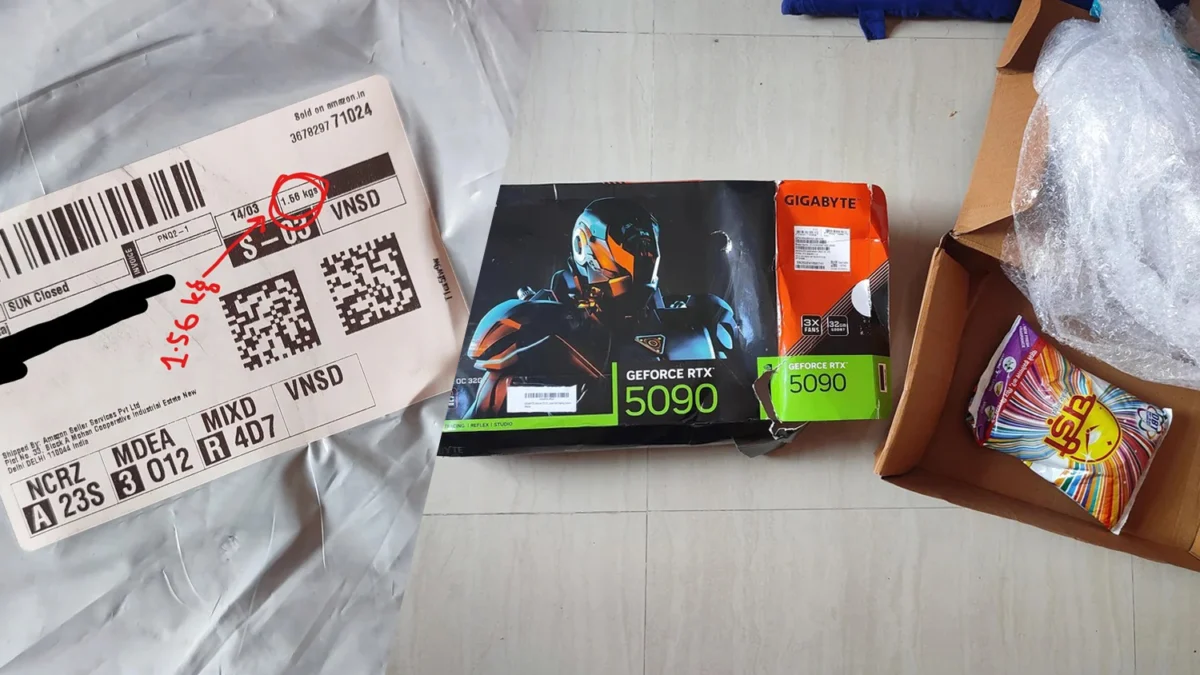
The e-commerce landscape in 2026 has been marked by a sophisticated rise in high-value electronics fraud, but a recent incident involving a flagship NVIDIA graphics card has highlighted a concerning gap in consumer protection and corporate accountability. A customer in India, identified by the social media handle u/void_SW, has reported a significant financial loss after purchasing a GIGABYTE GeForce RTX 5090 WindForce OC 32G for ₹2,99,995 (approximately US$3,260). Rather than receiving the state-of-the-art hardware, the consumer discovered a 1kg packet of Ghadi detergent powder inside the manufacturer’s packaging. Despite video evidence and clear logistical discrepancies, Amazon India has reportedly denied the refund request, sparking a broader debate regarding the safety of third-party marketplaces for luxury tech items.
The Mechanics of the RTX 5090 Transaction
The incident began in early March 2026, when the consumer and a friend placed an order for the GIGABYTE RTX 5090, currently one of the most expensive and sought-after components in the PC gaming and AI development market. The product was listed by a third-party seller operating under the name "FAB World Point."

Upon delivery on March 14, the recipient, wary of the increasing frequency of "empty box" scams, took the precaution of recording a continuous unboxing video. The external Amazon shipping bag appeared intact and sealed. However, the internal GIGABYTE product box showed immediate signs of tampering. According to the victim’s report, the manufacturer’s seals had been sliced and crudely resealed with clear tape. Furthermore, a non-standard, aftermarket barcode ("X002IVLPDX") had been applied to the box.
Inside the GPU box, the high-end graphics card—which features a massive triple-fan cooling system and 32GB of VRAM—was absent. In its place was a single packet of Ghadi detergent, a common household cleaning product in India retailing for less than $2.
A Chronology of Corporate Inaction
The subsequent interaction between the consumer and Amazon’s Executive Customer Relations team reveals a timeline characterized by procedural delays and a eventual summary dismissal of the claim.

- March 14 (Delivery Day): The consumer immediately contacted Amazon support to report the fraud, providing the unboxing video and photographs of the tampered packaging.
- March 15–18: The case was escalated to a specialized investigative team. The consumer was initially informed that a resolution would be reached by March 18 or 19.
- March 19: Amazon unilaterally extended the investigation deadline to March 25, citing the need for a "thorough" review by multiple internal departments, including logistics and seller risk management.
- March 22: After eight days of receiving no substantive updates, the consumer contacted the Executive Customer Relations team via telephone. Frustrated by the lack of progress and the perceived stalling tactics, the consumer informed the representatives of their intent to escalate the matter to the National Consumer Helpline and the Consumer Court.
- March 22 (Post-Call): Exactly 15 minutes after the legal threat was made, the consumer received a final email from a representative named Ganesh. The email stated that following a "comprehensive review," Amazon determined the correct product had been shipped and delivered, and therefore, no refund or replacement would be authorized.
The speed of the final denial following the mention of legal action has led to allegations that the ticket was closed in retaliation or as a means of mitigating corporate liability before formal legal proceedings could begin.
Forensic Evidence and Logistical Discrepancies
A critical aspect of this case lies in the physical and digital evidence that contradicts Amazon’s internal "comprehensive review."
1. The Weight Discrepancy
The shipping label attached to the package clearly indicated a weight of 1.56 kg. This figure is physically impossible for a genuine GIGABYTE RTX 5090 WindForce OC. The RTX 5090, with its substantial heatsink, triple fans, and reinforced PCB, typically weighs between 2.8 kg and 3.2 kg, excluding the weight of the retail box and external shipping materials. A 1kg packet of detergent combined with standard packaging aligns almost perfectly with the 1.56 kg recorded on the label, providing empirical proof that the GPU was never inside the box when it was weighed by the carrier.

2. Tax and Invoice Irregularities
The invoice provided by the seller, "FAB World Point" (listed on the bill as "MOHD KHALID"), contained a glaring legal anomaly. The document showed 0% Integrated Goods and Services Tax (iGST). Under Indian tax law, computer hardware and electronic components are subject to a mandatory 18% GST. A transaction of nearly ₹3,00,000 with 0% tax suggests either a fraudulent invoice designed to evade taxes or a seller operating outside the legal framework of the Amazon marketplace.
3. Patterns of Seller Fraud
Further investigation by the consumer and the online community revealed that "FAB World Point" had a history of similar complaints. At least one other user reported receiving the exact same brand of detergent (Ghadi) instead of a high-end GPU just days prior to this incident. The recurrence of the specific detergent brand suggests a centralized scam operation rather than an isolated warehouse error.
Broader Implications for the E-commerce Ecosystem
This incident reflects a growing crisis in the "platform economy," where the line between a service provider and a neutral intermediary becomes blurred. Amazon’s "A-to-z Guarantee" is marketed as a safety net for customers purchasing from third-party sellers, yet cases like this suggest that the burden of proof is increasingly shifted onto the consumer, even when video evidence is provided.

The Failure of Automated Investigations
Industry analysts suggest that Amazon’s investigative process may be overly reliant on internal logistics data—such as "scanned as delivered" status—while ignoring external evidence like unboxing videos or weight discrepancies. In many instances, if the system shows that a box of a certain weight left a facility, the investigation is closed regardless of what was actually inside that box.
The Rise of "Box-Swapping" in the Supply Chain
The RTX 5090 scam highlights vulnerabilities in the "middle mile" of delivery. Somewhere between the seller’s warehouse and the customer’s doorstep, the product was intercepted. The presence of fake barcodes and sliced seals indicates a sophisticated level of tampering. This suggests that organized retail crime rings may be operating within or alongside legitimate logistics networks, targeting high-value SKUs (Stock Keeping Units) identified through shipping manifests.
Legal Avenues and Consumer Protection in India
Under the Consumer Protection Act, 2019, Indian consumers have significant rights regarding "unfair trade practices" and "deficiency in service." The act holds e-commerce entities accountable for the products sold on their platforms if they are involved in the fulfillment process.

Legal experts suggest that u/void_SW has a strong case for the Consumer Court. The evidence—specifically the weight recorded on the shipping label versus the known weight of the product—constitutes a "preponderance of evidence" that the contract of sale was not fulfilled. Furthermore, the lack of GST on the invoice could trigger an investigation by the Central Board of Indirect Taxes and Customs (CBIC), placing additional pressure on the platform to vet its sellers more rigorously.
Recommendations for High-Value Tech Purchases
As e-commerce scams become more frequent, industry experts recommend several steps for consumers purchasing high-ticket items like the RTX 5090:
- Check Seller Ratings: Avoid new or unrated sellers, especially those offering prices that seem marginally lower than the MSRP.
- Verify GST Compliance: If an invoice shows 0% tax on an item that should be taxed at 18%, it is a red flag for fraud.
- The "Open Box" Delivery: Where available, opt for "Open Box" delivery services where the agent must open the package in front of the customer before the delivery is confirmed via OTP (One-Time Password).
- Continuous Unboxing Videos: As demonstrated in this case, a continuous video starting from the shipping label to the final product is essential, though as u/void_SW discovered, it may not be enough to satisfy corporate customer service bots.
- Credit Card Protections: Using a credit card offers an additional layer of protection through the "chargeback" process, which allows the bank to reverse the transaction if the merchant fails to provide the agreed-upon goods.
Conclusion
The case of the ₹3-Lakh detergent powder serves as a cautionary tale for the digital age. While e-commerce offers unparalleled convenience, the infrastructure for resolving high-value disputes appears to be lagging behind the sophistication of modern scammers. For Amazon India, the reputational damage from such high-profile failures in customer service may eventually outweigh the costs of honoring its "A-to-z Guarantee." As the consumer moves toward a legal battle in the Consumer Court, the tech community continues to watch closely, demanding greater transparency and security in the hardware marketplace.