Sisilia Frederika
The global community of metrologists and physicists has reached a historic consensus to fundamentally alter how humanity tracks time, effectively ending the half-century-long practice of inserting "leap seconds" into the world’s clocks. This landmark decision, finalized during the 28th General Conference on Weights and Measures (CGPM) in Versailles, France, signals a transition toward a more stable and uniform timekeeping system that prioritizes the requirements of modern digital infrastructure over the traditional alignment of clocks with the Earth’s rotation. Under the new resolution, the International Bureau of Weights and Measures (BIPM) will allow Coordinated Universal Time (UTC) to diverge from astronomical time (UT1) by a significantly larger margin than previously permitted, increasing the tolerance from 0.9 seconds to as much as 3,600 seconds, or one full hour. This policy change is scheduled to take effect on May 20, 2027, marking a pivotal shift in the history of chronometry.
The Technical Divergence of UT1 and UTC
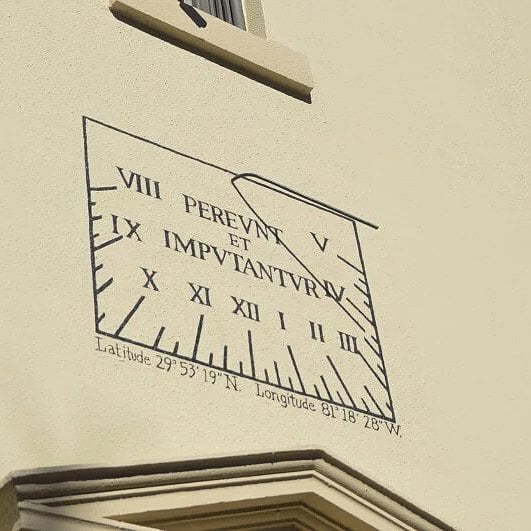
To understand the magnitude of this decision, one must distinguish between the two primary methods used to measure time. Universal Time (UT1) is an astronomical time scale based on the rotation of the Earth. Historically, this was the gold standard; noon was defined by the moment the Sun reached its highest point in the sky. However, the Earth is an imperfect timekeeper. Its rotation is influenced by a variety of unpredictable factors, including tidal friction caused by the Moon, shifts in the Earth’s molten core, tectonic activity, and even the melting of polar ice caps.
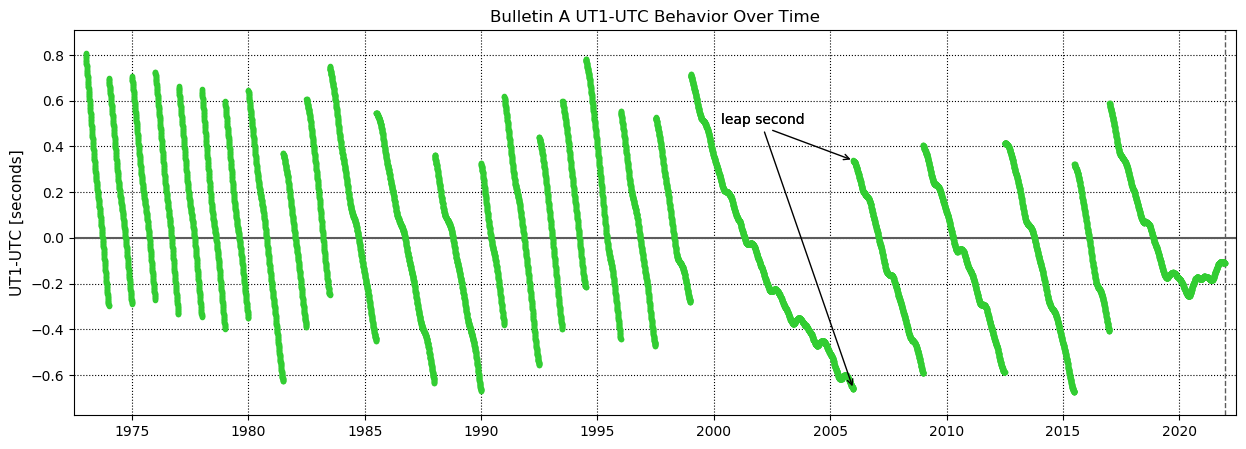
In contrast, Coordinated Universal Time (UTC) is maintained by a network of hundreds of ultra-stable atomic clocks around the world. These clocks utilize the vibrations of atoms—most notably the caesium-133 atom—to define the second with incredible precision. Since 1972, the international community has attempted to keep these two systems in sync by adding an occasional "leap second" to UTC whenever the difference between atomic time and the Earth’s rotation approached 0.9 seconds. While this kept our clocks aligned with the heavens, it created immense challenges for the digital systems that underpin the modern global economy.
A Chronology of Timekeeping Milestones
The journey toward this resolution has been decades in the making, reflecting the evolution of human technology and our increasing reliance on precision.
- 1967: The 13th CGPM officially defined the SI second based on the vibrations of the caesium-133 atom, moving away from definitions based on the Earth’s orbit or rotation.
- 1972: The leap second system was formally introduced. The goal was to ensure that UTC remained within 0.9 seconds of UT1, preserving the link between human time and solar time.
- 1972–2016: A total of 27 leap seconds were added to the global clock. These were typically inserted on June 30 or December 31. The frequency was roughly once every 18 to 21 months.
- 2012: A leap second caused significant technical disruptions across the internet, leading to outages for platforms like Reddit, LinkedIn, and Gizmodo, and grounding flights for Qantas Airlines due to server synchronization failures.
- 2015: The World Radiocommunication Conference debated the abolition of the leap second but postponed a final decision until more research could be conducted.
- 2016: The most recent leap second was added on December 31. Since then, the Earth’s rotation has slightly accelerated, leading to the first-ever serious discussions about a "negative leap second."
- 2022–2026: Leading tech firms, including Meta, Google, and Amazon, intensified lobbying efforts to abolish the leap second, citing the risks to critical infrastructure.
- October 2026: The 28th CGPM passed Resolution 4, officially decoupling UT1 and UTC and setting the stage for the 2027 implementation.
The Catalyst for Change: Digital Fragility and the "Negative" Leap Second
The primary driver behind the abandonment of the leap second is the instability it introduces into high-speed computing and telecommunications. In an era of nanosecond-precision trading, global satellite navigation (GNSS), and synchronized power grids, the sudden insertion of an extra second can cause "clock skew," leading to data corruption or system crashes.
Major technology companies have long struggled with "leap second bugs." When a leap second occurs, some systems see the same second twice (e.g., 23:59:60 appearing before 00:00:00), while others simply freeze. To mitigate this, companies like Google and Meta developed "leap smearing," a process where they gradually add milliseconds to their system clocks over the course of 24 hours. However, because different companies used different smearing techniques, the lack of a standardized approach created further synchronization risks.
The prospect of a "negative leap second"—subtracting a second because the Earth is rotating faster—was viewed by experts as a potential catastrophe. Most software is written with the assumption that time only moves forward; the logic required to handle a "missing" second is largely untested in the wild. By allowing the gap between UT1 and UTC to grow, the CGPM has effectively neutralized the threat of these sudden, manual adjustments.
Expert Perspectives and Astronomical Implications
The transition to a strictly uniform time scale has been met with mixed emotions in the scientific community, though the consensus is one of pragmatic necessity. David Herald of the International Occultation Timing Association notes that for many astronomical applications, this change is a net positive.
"At the technical level, the change does not affect the underlying issue of the fact that the Earth’s rotation is not constant," Herald explained. He noted that in the past, Universal Time was the reference, requiring corrections for planetary positions. With the new arrangement, time will be strictly uniform, allowing the timing of astronomical events—such as the occultation of stars or the movement of Jupiter’s moons—to be predicted with absolute certainty years in advance.
However, for events dependent on a specific location on the Earth’s surface, such as solar eclipses, the decoupling introduces a new layer of calculation. While the path of an eclipse can be calculated on a geometric model of the Earth, determining exactly which longitudes will be under the shadow at a specific atomic time will now require a variable correction factor for the Earth’s orientation. Essentially, the "irregularity" of the Earth has been moved from the clock to the coordinate system, where astronomers argue it more logically belongs.
Supporting Data: The Irregularity of Earth’s Rotation
Data from the International Earth Rotation and Reference Systems Service (IERS) highlights why the leap second became such an unpredictable tool. While the long-term trend of Earth’s rotation is slowing—primarily due to tidal friction, which adds about 2.3 milliseconds to the length of a day every century—short-term fluctuations are common.
Between 2020 and 2022, the Earth recorded some of its shortest days since the invention of the atomic clock. On June 29, 2022, the Earth completed one rotation in 1.59 milliseconds less than 24 hours. These variations are attributed to complex interactions between the Earth’s layers, including the "Chandler Wobble" (a small deviation in the Earth’s axis of rotation) and the conservation of angular momentum as polar ice melts and redistributes mass toward the equator. Because these changes are not linear, the IERS could never predict more than six months in advance when a leap second would be needed, making long-term digital planning impossible.
Future Horizons: Deep Space and the "Leap Hour"
The decision to allow a gap of up to one hour between atomic and solar time effectively kicks the can down the road for future generations. Scientists estimate it could take several centuries, or perhaps even a millennium, for the discrepancy to reach a full hour. When that moment arrives, the global authorities of that era will likely implement a "leap hour," a move far less disruptive to digital systems than the frequent insertion of single seconds.
This shift also aligns with the requirements of the burgeoning space economy. As NASA and other space agencies prepare for permanent lunar bases through the Artemis program, the need for a "Lunar Time Standard" has become apparent. Clocks on the Moon run slightly faster than those on Earth due to general relativity (approximately 56 microseconds per day). By moving Earth toward a strictly atomic-based UTC, it becomes easier to synchronize time across different celestial bodies without being tethered to the specific rotational quirks of our home planet.
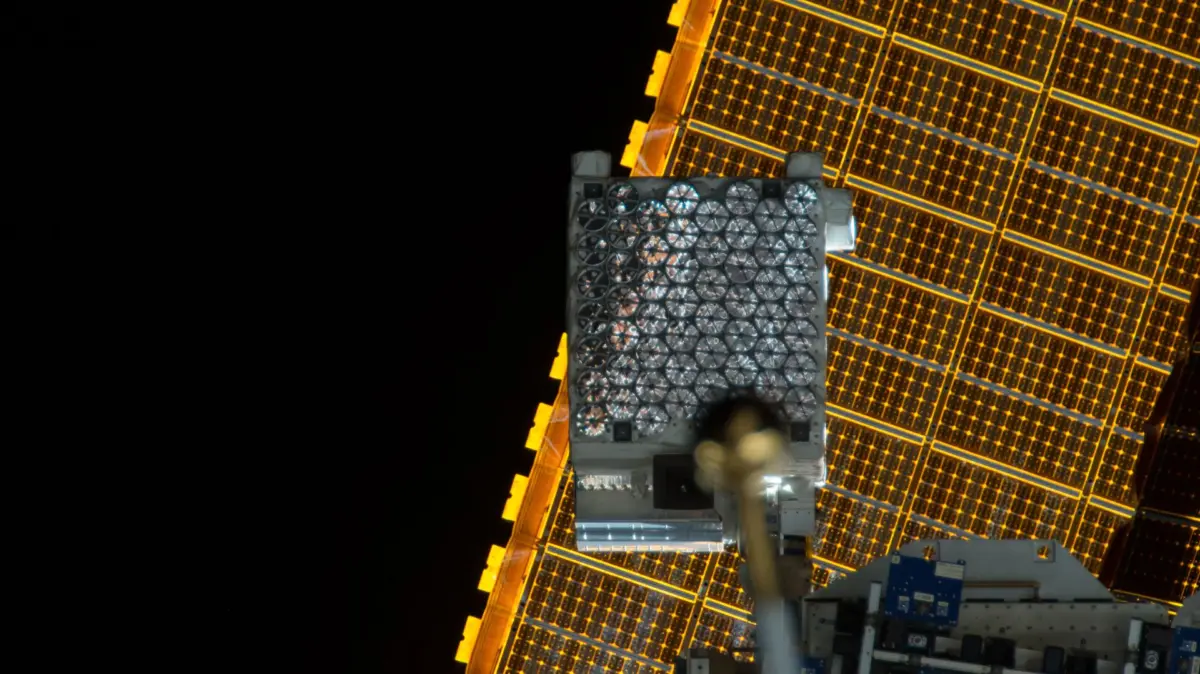
Furthermore, missions to Mars already operate on "Mars Time," where a "sol" is roughly 40 minutes longer than an Earth day. Instruments like NASA’s NICER (Neutron star Interior Composition Explorer) on the International Space Station are already testing the use of pulsars—highly magnetized, rotating neutron stars—as galactic "GPS" beacons. These pulsars provide a time reference that is entirely independent of any planetary rotation, representing the ultimate future of universal chronometry.
Conclusion and Global Impact
The move to abolish the leap second by 2027 represents a victory for the telecommunications and computing industries, ensuring the stability of the systems that manage everything from financial markets to social media. While the "fall back" and "spring forward" of Daylight Saving Time will continue to affect the lives of billions, the subtle, invisible adjustment of the leap second will soon become a relic of the past.
As the resolution takes effect next year, the BIPM and NIST (National Institute of Standards and Technology) will continue to monitor the Earth’s rotation with precision, but the "observed time" of our planet and the "accounted time" of our machines will begin their slow, multi-century drift apart. Humanity has chosen the unwavering vibration of the atom over the majestic but irregular spin of the Earth, prioritizing the digital synchronization of the present over the astronomical traditions of the past.