Sisilia Frederika
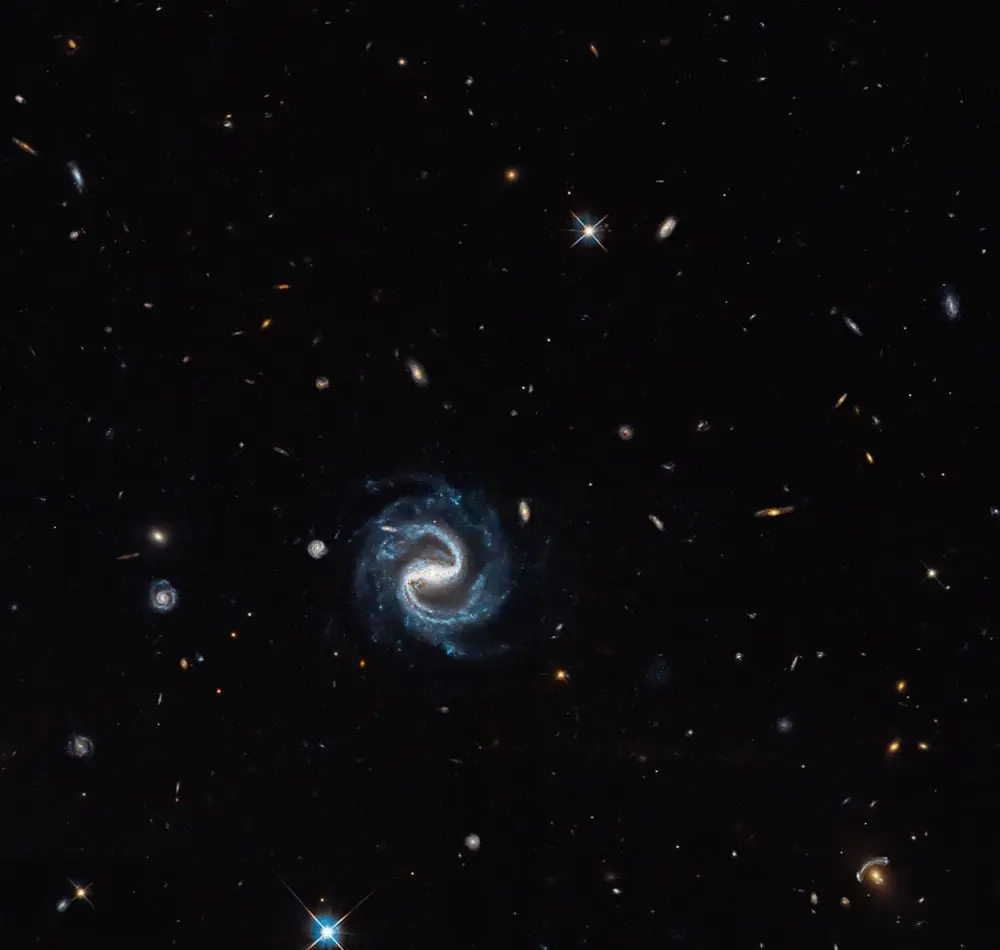
The Nancy Grace Roman Space Telescope (NGRST) is currently transitioning toward its operational orbit at the Sun–Earth Lagrange Point 2 (L2), a gravitational stable point located approximately 1.5 million kilometers from Earth. From this vantage point, the observatory is slated to begin a foundational five-year primary mission designed to reshape the current understanding of the cosmos. By investigating the elusive nature of dark energy, the historical growth of cosmic structures, and the consistency of Albert Einstein’s General Relativity across billions of years of cosmic time, the NGRST represents the next great leap in wide-field infrared surveying. Central to this ambitious scientific endeavor is the phenomenon of gravitational lensing, a cosmic optical effect that allows astronomers to "weigh" the invisible components of the universe.
The Mechanics of Cosmic Magnification
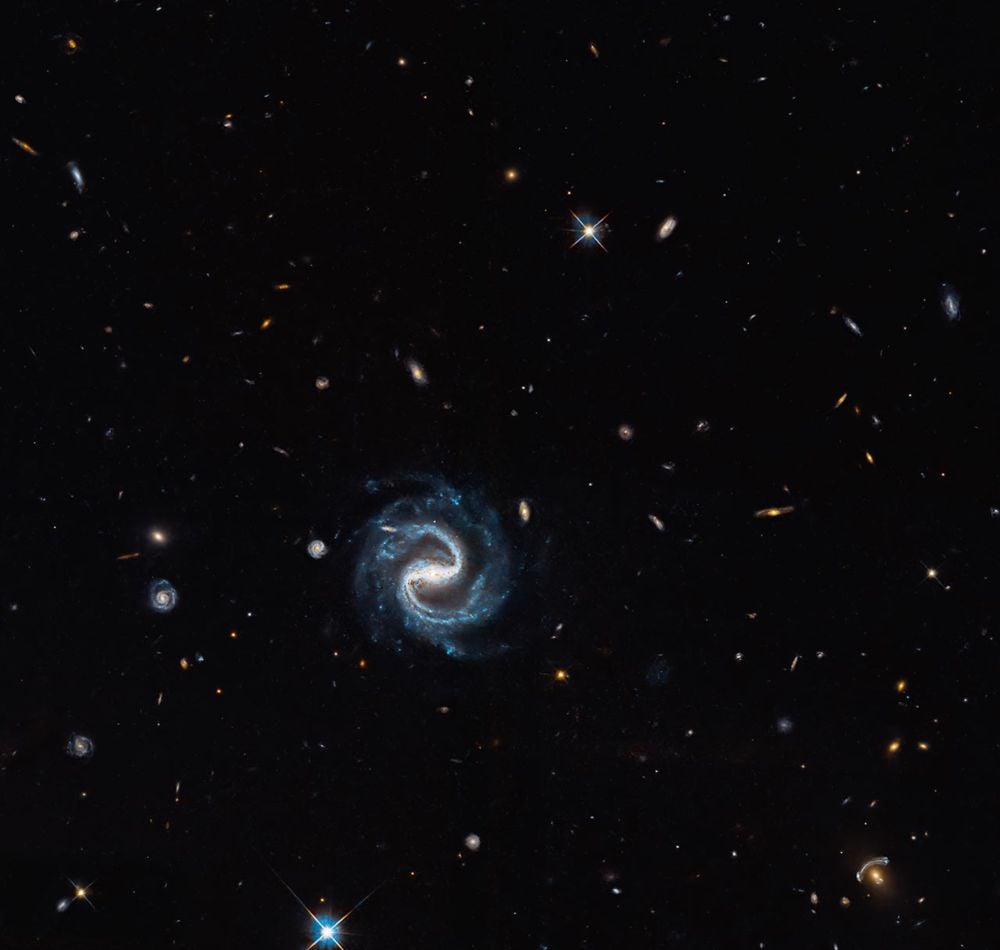
Gravitational lensing occurs when a massive foreground object—such as a galaxy, a cluster of galaxies, or a concentration of dark matter—acts as a natural telescope. According to the principles of General Relativity, mass warps the fabric of spacetime, causing the path of light from more distant background objects to bend and distort as it passes the foreground "lens." Scientists categorize this phenomenon into two primary types: strong and weak gravitational lensing.
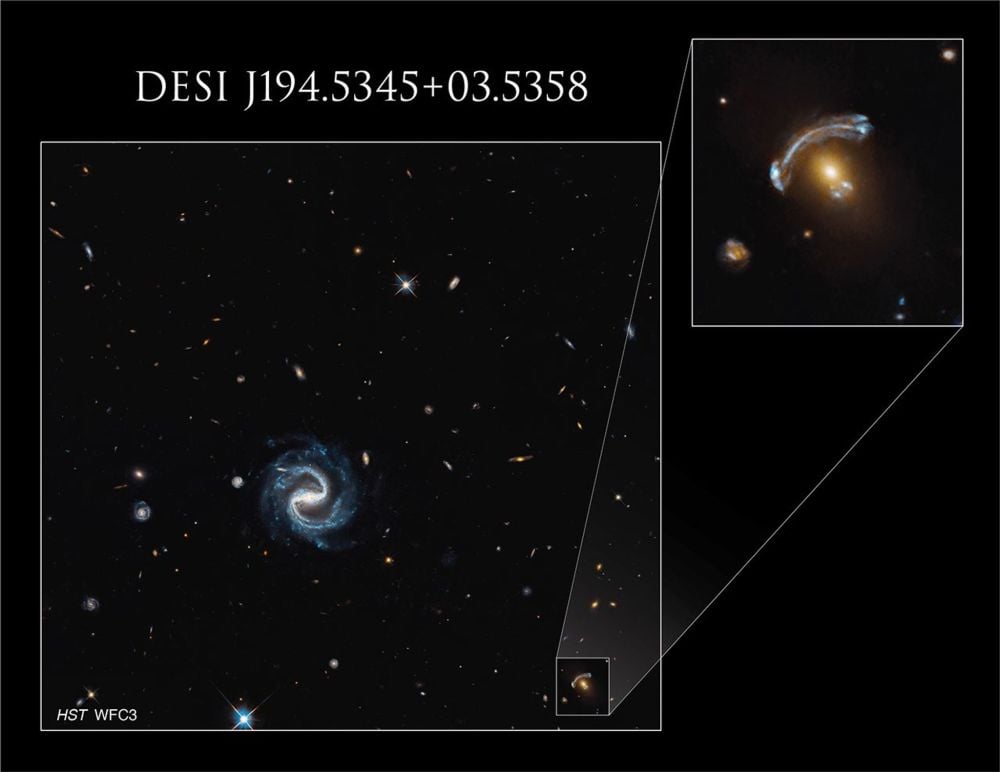
In the regime of strong gravitational lensing, the alignment between the background source, the foreground lens, and the observer is nearly perfect. This alignment results in dramatic visual distortions, including the creation of "Einstein rings," elongated arcs, and multiple redundant images of the same background galaxy. These magnified views provide a unique window into the early universe, allowing researchers to observe distant objects that would otherwise be too faint for even the most powerful modern instruments to detect.
Beyond mere magnification, these distortions serve as a precise diagnostic tool for measuring the mass of the foreground lens. Observations frequently reveal that the visible matter within a galaxy—stars, gas, and dust—is insufficient to produce the observed degree of light bending. This discrepancy allows astrophysicists to calculate the exact distribution of dark matter, the invisible substance that constitutes approximately 85% of the matter in the universe. By mapping this dark matter, the NGRST will provide critical data on how dark energy influences the expansion of the universe and how large-scale structures have evolved since the Big Bang.
A Tale of Two Telescopes: Precision vs. Panorama
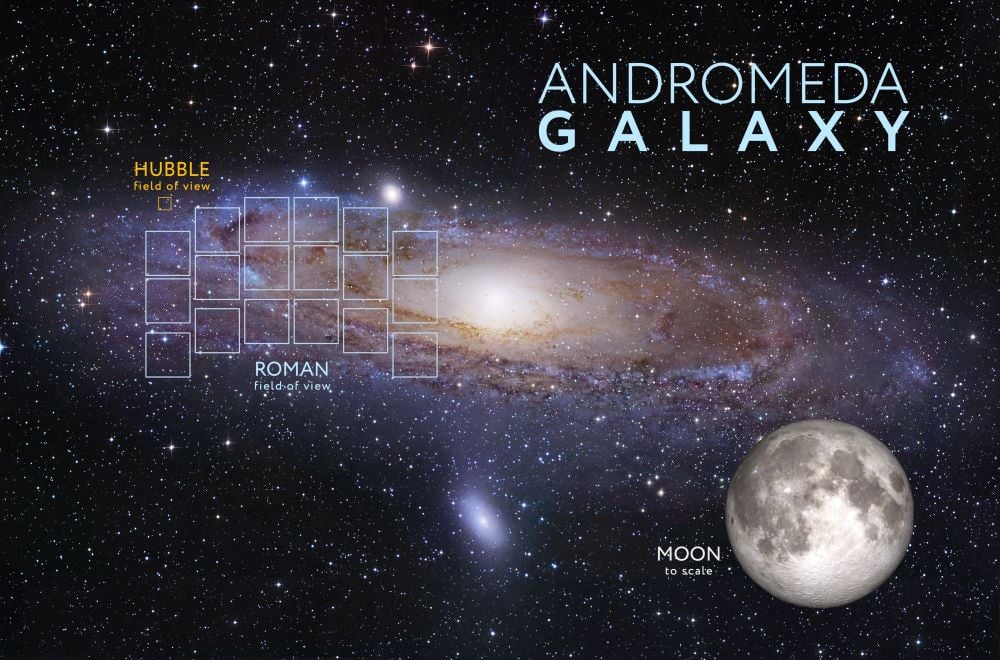
While the NGRST is often compared to its predecessor, the Hubble Space Telescope, the two observatories are designed to function as complementary partners rather than direct competitors. Hubble, which has been operational since 1990, specializes in high-resolution, "deep-field" observations. It views the universe primarily in the ultraviolet and visible light spectrums, with limited infrared capabilities. Its narrow field of view is ideal for scrutinizing individual celestial objects in exquisite detail, providing a "telephoto" perspective on the cosmos.
In contrast, the Nancy Grace Roman Space Telescope is a wide-field survey instrument. It observes the universe primarily in the near-infrared spectrum, allowing it to peer through cosmic dust and see more distant, redshifted galaxies. The most striking difference, however, is the scale of its vision. The NGRST possesses a field of view 100 to 200 times larger than Hubble’s Wide Field Camera 3. This "panoramic" capability allows the Roman telescope to map the sky at a speed and scale previously unattainable, effectively performing a "census" of the universe rather than a series of individual portraits.
The Challenge of the Point Spread Function
The vast difference in the operational modes of these two telescopes creates a unique technical challenge regarding the Point Spread Function (PSF). In optical physics, the PSF describes how an imaging system responds to a point source of light. Because of the inherent nature of telescope optics, a distant star or galaxy is never imaged as a perfect, infinitesimal point; instead, it appears as a blurred pattern influenced by diffraction spikes, optical aberrations, and the specific architecture of the detector.
For Hubble, accounting for the PSF is a relatively straightforward process. Because Hubble focuses on individual targets using a single detector, astronomers can precisely model the PSF for each specific observation. This precision allows for the highly accurate deconvolution of images, ensuring that the measurements of gravitational lenses are as clean as possible.
The NGRST faces a more complex scenario. As a survey telescope, Roman will detect its primary haul of gravitational lenses during the High Latitude Wide Area Survey (HLWAS). This survey is expected to cover approximately 5,000 square degrees—roughly 12% of the entire sky. To achieve this, the Roman telescope utilizes a mosaic of 18 separate detectors. Because the telescope captures 15 or more strong gravitational lenses in a single exposure, these objects are often spread across different regions of the focal plane, each subject to slightly different optical distortions and PSF variations.
Supporting Data and Mission Projections
According to a 2025 research paper forecasting the NGRST’s yield, the telescope is expected to revolutionize the statistical study of gravitational lensing. Using a fiducial model based on 146-second exposures, researchers predict that the HLWAS will identify approximately 160,000 detectable strong lenses. This represents an exponential increase over the current catalog of known lenses.
However, the study also highlights a crucial distinction in data quality. Of those 160,000 lenses, only about 500 are expected to possess a signal-to-noise ratio high enough for "detailed substructure characterization." This substructure analysis is vital for identifying "clumps" of dark matter within galaxies, which provides clues about the temperature and nature of dark matter particles. To make sense of this massive influx of data, astronomers are leveraging Hubble’s existing observations. By using Hubble’s high-resolution, single-target PSFs as a "ground truth," researchers are building sophisticated computer models to calibrate and interpret the more complex, wide-field data coming from Roman.
Chronology of a Cosmic Handover
The relationship between Hubble and Roman represents a strategic timeline of space-based observation:
- 1990: Hubble Space Telescope launches, beginning the era of high-resolution space astronomy.
- 2000s–2010s: Hubble identifies several hundred strong gravitational lenses, providing the foundational data for dark matter models.
- 2020s: NASA develops the Nancy Grace Roman Space Telescope (formerly WFIRST) to address the "Big Questions" of dark energy and wide-field surveying.
- Mid-2020s: Roman launches to L2. Hubble begins its "support phase," providing follow-up imaging for the most promising lenses discovered by Roman’s wide-area surveys.
- Late 2020s: As Hubble’s hardware—specifically its stabilizing gyroscopes—continues to age, its role shifts toward high-precision calibration for Roman and the James Webb Space Telescope (JWST).
Implications for General Relativity and Dark Energy
The collaboration between these two missions has profound implications for the future of physics. By using Hubble to "teach" Roman how to interpret its data, scientists can ensure the accuracy of their measurements of the growth of structure in the universe. If Roman observes that the way matter clumps together over time deviates from the predictions of General Relativity, it could signal that Einstein’s theory needs modification on cosmological scales.
Furthermore, the sheer volume of lenses Roman will detect allows for a statistical rigor that was previously impossible. Instead of studying a handful of "special" cases, astronomers will be able to analyze dark matter distribution across different epochs of cosmic history, providing a dynamic look at how dark energy has fought against the pull of gravity to shape the universe we see today.
The Final Act of a Legend
While the Nancy Grace Roman Space Telescope represents the future of the field, the Hubble Space Telescope is undeniably in its twilight years. Recent reports from NASA indicate that Hubble is operating with a diminishing number of functional gyroscopes, which are essential for pointing the telescope at specific targets. With no shuttle-era repair missions possible and no current plans for a private servicing mission, Hubble is expected to eventually transition to a single-gyroscope mode, which will limit its efficiency but allow it to continue some level of scientific output.
Despite these mechanical hurdles, the astronomical community views this period as a "passing of the baton." Hubble is not merely fading away; it is actively training its successor. By providing the high-fidelity observations needed to model the Roman telescope’s complex wide-field views, Hubble ensures that its three decades of service will continue to bear fruit long after its own mirrors go dark.
The synergy between the two observatories underscores a fundamental shift in modern astronomy: the move from individual discovery to massive, data-driven statistical analysis. As the Roman telescope prepares to open its wide-field eyes at L2, it does so standing on the shoulders of the giant that preceded it, ready to turn the "gold mine" of gravitational lensing into a map of the invisible universe.