George Chandra Eka
The increasing integration of smart technology into modern homes promises unparalleled convenience and enhanced living, from automated lighting and climate control to advanced security systems. However, this growing reliance also brings to light a significant vulnerability: the susceptibility of these interconnected ecosystems to internet outages and power failures. While the convenience of voice commands and remote control is undeniable, the potential for a "smart" home to revert to a "dumb" or even dysfunctional state during network disruptions is a concern for many homeowners. Recent developments, such as Apple’s renewed focus on smart home products, underscore the industry’s continued evolution, but also serve as a timely reminder to address these inherent risks proactively.
The Connectivity Conundrum: Why Smart Devices Go "Dumb"
At the heart of the problem lies the predominant method of connectivity for many consumer-grade smart devices: direct Wi-Fi connection to cloud servers. This architecture, while simplifying initial setup, creates a critical single point of failure. When internet access is interrupted, or even if the local Wi-Fi router experiences a temporary hiccup, these cloud-dependent devices lose their communication link to the external servers that host their operating instructions and automation logic. The result is often a cessation of functionality, with devices either maintaining their last known state indefinitely or becoming completely unresponsive.
Consider the common smart bulb: designed to be controlled via an app or voice command, it typically communicates directly with a manufacturer’s cloud server. If the internet goes down, scheduled automations, such as turning lights on at dusk, may fail. More critically, essential commands like switching lights off or on might become impossible, leaving occupants in inconvenient or potentially unsafe conditions. Similarly, smart thermostats, while often retaining their last programmed schedule, might lose the ability to be adjusted remotely or adapt to real-time external data, such as local weather forecasts, which could lead to suboptimal energy usage or discomfort. For health and security devices, this loss of functionality can escalate from an inconvenience to a genuine crisis, rendering alarms inoperable or critical health monitoring systems unresponsive. The smart home market, valued at over $100 billion globally in 2023 and projected to grow significantly, necessitates robust solutions that extend beyond mere connectivity to ensure continuous, reliable operation.
Harnessing the Power of Local Hubs and Mesh Networks
The most effective strategy for building an internet-resilient smart home involves pivoting away from solely cloud-dependent Wi-Fi devices towards systems that leverage local processing and robust communication protocols. This is where smart home hubs and mesh networks become indispensable.
Dedicated Local Hubs: The Brains of an Autonomous Smart Home
Dedicated smart home hubs act as centralized controllers that can store and execute automations locally, independent of an active internet connection. These hubs typically connect to the home network but maintain direct, local communication with compatible smart devices using various radio protocols. This allows for commands and routines to be processed and triggered within the home environment, ensuring functionality even if the internet goes offline. Brands like SmartThings, Hubitat, and Homey offer comprehensive hub solutions that support a wide array of devices and protocols. For instance, a routine set to turn on specific lights when a motion sensor is triggered can be stored and executed entirely within the hub, ensuring it works seamlessly regardless of internet availability, provided the devices themselves have power. This architecture significantly enhances reliability, transforming what might otherwise be "dumb" devices into components of an intelligent, self-sufficient system.
Ecosystem Hubs: Leveraging Existing Devices

Beyond dedicated hubs, many popular smart home ecosystems offer devices that can function as a "home hub" to enable local automations and remote access. Apple HomeKit, for example, allows devices like HomePods, HomePod minis, and Apple TVs to serve as home hubs. When configured, these devices can process HomeKit automations locally, meaning your smart lights, locks, and sensors can continue to interact with each other based on predefined rules even without an internet connection. Similarly, Amazon Echo and Google Nest smart speakers and displays possess varying degrees of local processing capabilities. While these platforms often prioritize cloud-based interactions for advanced features and voice commands, many basic automations can be executed locally. However, practical experience often reveals that their local capabilities are not as robust or consistently exploited as those of dedicated hubs, sometimes requiring an internet connection for seemingly simple tasks. This discrepancy underscores the importance of carefully researching the offline capabilities of any ecosystem hub before committing.
The Backbone of Reliability: Thread, Zigbee, and Z-Wave
For truly bulletproof local control, the most reliable hubs often rely on low-power, low-bandwidth mesh networking protocols such as Thread, Zigbee, and Z-Wave, rather than standard Wi-Fi. These protocols offer several distinct advantages for smart home devices:
- Mesh Network Architecture: Unlike traditional Wi-Fi, where devices connect directly to a central router, mesh networks allow devices to communicate with each other, relaying signals across the network. This extends the effective range and creates a more robust, self-healing network. If one device goes offline, others can route around it, maintaining connectivity.
- Low Power Consumption: Designed for energy efficiency, these protocols enable battery-powered devices (like sensors and smart locks) to operate for months or even years on a single battery, reducing maintenance and ensuring prolonged functionality during power outages.
- Reduced Wi-Fi Congestion: By operating on different radio frequencies (e.g., 2.4 GHz for Zigbee/Thread, 908.42 MHz for Z-Wave), these protocols avoid saturating the home’s Wi-Fi network, which is often burdened by bandwidth-intensive devices like streaming media players and computers.
- Local Control: Devices communicating via these protocols are typically managed by a local hub, which processes commands and automations without needing to send data to the cloud.
Thread: This IP-based mesh networking protocol is gaining significant traction due to its inherent compatibility with Wi-Fi and its role in the new Matter interoperability standard. Thread-enabled devices can act as "border routers," allowing other Thread devices to connect to the wider home network, making it a highly flexible and scalable solution. Its IP-addressability simplifies integration with existing network infrastructure and enables seamless device-to-device communication.
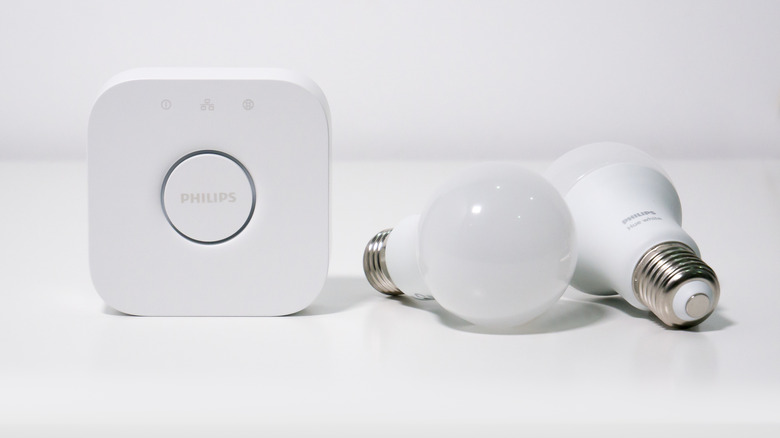
Zigbee: A widely adopted mesh protocol, Zigbee powers many popular smart home products, including Philips Hue lighting systems. A Philips Hue Bridge, for instance, is a Zigbee hub that allows Hue bulbs to operate locally, even if the internet is down. Zigbee networks are known for their reliability and broad device compatibility, supporting a vast ecosystem of lights, sensors, and switches.
Z-Wave: Operating on a different frequency band (908.42 MHz in the US) than Wi-Fi and Zigbee, Z-Wave avoids interference, making it a very stable and reliable choice. It has a slightly longer range than Zigbee and is particularly popular for security devices like smart locks and sensors. While Z-Wave devices tend to be slightly more expensive, their robust performance and strong security features make them a preferred choice for critical applications.
The primary limitation of these low-bandwidth protocols is their suitability for devices that require only small packets of data, such as on/off commands, sensor readings, and lock statuses. They are not designed for high-bandwidth applications like video streaming, which still necessitates Wi-Fi. However, for the core functions of a resilient smart home—lighting, security, and environmental sensing—they are ideal. The emergence of Matter, a new open-source connectivity standard built on IP, is poised to unify these disparate protocols. Matter devices will communicate over Thread, Wi-Fi, and Ethernet, promising enhanced interoperability and simplifying the creation of locally controlled, resilient smart homes.
Mitigating Power Outages: Ensuring Continuous Operation
While local hubs and mesh networks address internet outages, the ultimate test of a resilient smart home comes with a power failure. Without electricity, even the most sophisticated local automation system will cease to function.
The Ideal Scenario: Whole-Home Power Backup

The most comprehensive solution to power outages is a whole-home power backup system, such as a natural gas or propane generator, or a solar energy system paired with battery storage (e.g., Tesla Powerwall, Generac PWRcell). These systems can automatically kick in when grid power is lost, providing electricity to the entire home for extended periods. While offering unparalleled peace of mind, the upfront cost, often ranging from thousands to tens of thousands of dollars, makes this option unrealistic for many households. It is typically considered a worthwhile investment if job functions depend on continuous power, if critical medical equipment requires electricity, or if frequent, prolonged outages are common.
Strategic Uninterruptible Power Supplies (UPS): Protecting the Core
A more practical and cost-effective compromise involves using Uninterruptible Power Supplies (UPS) for critical network equipment. A UPS is essentially a battery backup that provides temporary power when the main electricity supply fails. Connecting your internet modem, Wi-Fi router, and smart home hub to a UPS can keep your local network and core smart home system operational for several hours during a power outage. This allows local automations to continue running, and critically, enables any battery-powered smart devices (like sensors or locks) to remain connected to the hub. For example, a standard UPS unit can typically power a modem, router, and hub for 2-4 hours, providing ample time for short outages or to manage the situation until power is restored.
Device-Level Redundancy: Built-In Safeguards
Beyond system-wide solutions, strategically selecting smart devices that incorporate their own redundancy is crucial. Many devices are designed with integrated battery backups or manual override capabilities:
- Smart Locks: Most smart locks include traditional key access or a battery compartment that allows for manual operation if power is lost or the smart features fail. Some even offer external terminals for a 9V battery to provide temporary power for electronic access.
- Security Cameras: While cloud storage might be inaccessible during an internet outage, many smart security cameras offer local storage options (e.g., an SD card slot) that allow them to continue recording footage, even if alerts cannot be sent. Battery-powered cameras further enhance resilience by operating independently of grid power.
- Smart Smoke/CO Detectors: These life-saving devices almost universally come with long-life battery backups to ensure continuous operation, even if home power is lost.
- Smart Thermostats: While advanced features might be compromised, most smart thermostats retain their last programmed schedule and continue to control the HVAC system as long as the HVAC unit itself has power. Some even have small internal batteries to retain settings during very brief power interruptions.
- Portable Smart Lights: Devices like the Philips Hue Go exemplify device-level redundancy. It connects to a Hue Bridge for smart control but also includes an internal battery, allowing it to function as a portable lamp for several hours after losing AC power. It can even cycle through basic lighting effects using an onboard button or via Bluetooth commands if the hub is offline.
Critical Communications: The Role of Cellular Backup
For essential services like smart security systems, internet and power resilience are paramount. Many professional security systems offer cellular backup as a standard feature. This means that if the internet connection is lost, the system automatically switches to a cellular network to transmit alerts to monitoring centers or directly to your smartphone. This redundancy is vital for ensuring that security breaches or emergencies are communicated effectively, even in adverse conditions.
Building a Resilient Smart Home: A Strategic Approach
Creating a truly resilient smart home requires a thoughtful, multi-faceted strategy rather than a piecemeal approach.
Assessing Your Current Setup and Identifying Vulnerabilities: Begin by inventorying all your smart devices. Identify which ones rely solely on Wi-Fi and cloud services versus those that support local control or mesh protocols. This audit will highlight the most vulnerable components of your system.
Prioritizing Functions for Uninterrupted Operation: Determine which smart home functions are absolutely critical. Is it security? Heating and cooling? Essential lighting? This prioritization will guide your investment in resilient solutions. For instance, critical lighting in hallways or bedrooms might warrant battery-backed smart bulbs or traditional switches, while ambient decorative lighting might be less of a concern.
The Layered Defense: A Multi-faceted Strategy: A robust smart home combines several layers of defense. This includes utilizing a dedicated local hub or a robust ecosystem hub, integrating devices that use Thread, Zigbee, or Z-Wave, employing UPS units for core network equipment, and selecting devices with built-in battery backups or manual overrides. For critical security, cellular backup is non-negotiable.
The Future Landscape: Matter and Enhanced Interoperability: As the Matter standard gains wider adoption, it promises to simplify the creation of resilient smart homes. By providing a unified language for devices across different manufacturers and over various network technologies (Thread, Wi-Fi), Matter aims to ensure greater local control and interoperability, making it easier for consumers to build systems that function reliably, regardless of internet connectivity. Manufacturers are increasingly integrating Matter support, which will gradually shift the industry towards more robust and user-friendly offline capabilities.
Industry Perspective and Consumer Impact
The smart home industry is increasingly recognizing the importance of offline resilience. Industry experts frequently advocate for the development and adoption of open standards like Matter, which inherently promote local control and device-to-device communication without constant reliance on the cloud. "The future of the smart home isn’t just about connectivity; it’s about reliability and privacy," stated a prominent smart home analyst at a recent tech conference. "Consumers want assurance that their homes will function as expected, even when external services fail. Local processing and robust mesh networks are key to delivering that promise."
Consumer advocacy groups have also highlighted concerns regarding the reliability and data privacy implications of overly cloud-dependent smart home systems. The potential for a manufacturer’s server to go offline, or for service to be discontinued, leaving devices inoperable, is a legitimate concern. Therefore, the market trend is gradually shifting towards offering more resilient solutions, driven by both consumer demand and technological advancements. This shift empowers consumers with greater control over their devices and enhances the overall user experience, ensuring that smart homes truly live up to their "smart" designation, even in challenging circumstances.
Conclusion: Empowering Your Smart Home for Any Eventuality
Building a smart home that remains functional during internet outages and power failures is not an insurmountable challenge, nor does it necessarily require the custom, high-cost systems found in luxury mansions. It demands a strategic approach to device selection, network architecture, and power redundancy. By prioritizing devices that communicate via local hubs and mesh networks like Thread, Zigbee, or Z-Wave, and by incorporating strategic power backups for critical components and individual devices, homeowners can significantly enhance the resilience of their smart ecosystems. This thoughtful planning ensures that the convenience and security promised by smart home technology are delivered consistently, empowering residents with a truly intelligent and reliable living environment, regardless of external disruptions.