Sisilia Frederika
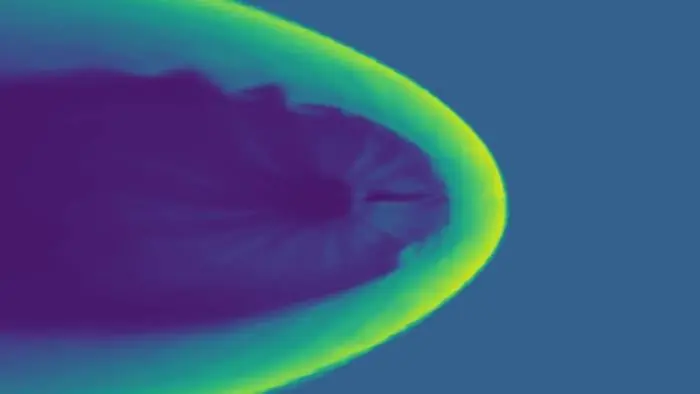
The Earth’s magnetic field, an invisible yet formidable barrier stretching tens of thousands of kilometers into space, serves as the primary defense mechanism against the relentless bombardment of solar and cosmic radiation. While this magnetosphere has long been understood as a shield that prevents the solar wind from stripping away the planetary atmosphere, new research suggests that this protection is not uniformly distributed. A collaborative study conducted by researchers from the University of Oulu in Finland and several institutions in the United States has uncovered significant asymmetries in how the magnetic field responds to solar stress. Published in the journal Geophysical Research Letters, the study highlights how specific regions of the magnetosphere experience higher levels of turbulence and energy transfer, a finding that challenges previous assumptions of a more balanced planetary defense system.
The Mechanics of the Magnetospheric Shield
To understand the significance of these findings, one must first consider the nature of the space environment surrounding Earth. The Sun constantly emits the solar wind, a stream of charged particles—primarily electrons and protons—traveling at speeds of approximately 400 to 800 kilometers per second. When this plasma hits the Earth’s magnetic field, it creates a boundary known as the magnetopause. This boundary acts as a buffer, redirecting the majority of the solar wind around the planet.
However, the protection is not absolute. Some energy and particles manage to penetrate the magnetopause, fueling geomagnetic storms and auroral displays. The primary mechanism for this energy transfer, as identified in the recent study, is the Kelvin-Helmholtz instability (KHI). These are wave-like structures that form at the interface between two fluids moving at different velocities. In the context of space physics, KHI waves occur when the fast-moving solar wind flows past the relatively stationary plasma inside the Earth’s magnetosphere. These waves act as "gates," allowing solar material to breach the magnetic boundary and enter the near-Earth environment.
Identifying Asymmetry in Kelvin-Helmholtz Waves
The research team, led by Dr. Lauri Holappa, an Academy Research Fellow at the University of Oulu, utilized advanced computer modeling to simulate the interaction between the solar wind and the magnetosphere. The goal was to determine if these KHI waves formed symmetrically across the planet’s hemispheres and along its longitudinal sides. The results revealed a complex pattern of "abundant asymmetry."
The study found that the intensity and frequency of KHI waves are heavily influenced by seasonal changes and the orientation of the Interplanetary Magnetic Field (IMF). Most notably, the researchers discovered that the winter hemisphere experiences significantly stronger wave activity than the summer hemisphere. This seasonal discrepancy suggests that the tilt of the Earth’s axis plays a critical role in how the magnetic field absorbs solar stress.
Furthermore, the research identified a "dawn-dusk asymmetry." Depending on the direction of the solar wind’s magnetic field, either the dawn side (the side of the Earth rotating into the sunlight) or the dusk side (the side rotating into darkness) will experience more violent wave activity. This non-mirror-like behavior indicates that the magnetosphere is in a constant state of flux, with different regions bearing the "brunt" of space weather at different times of the day and year.
The Evolution of Space Weather Science: A Chronology
The realization that our magnetic field is a dynamic and asymmetrical entity is the latest milestone in a scientific journey that spans centuries. The study of space weather has evolved from primitive observations to high-precision satellite modeling.
- The 1600s: Galileo Galilei and his contemporaries used early telescopes to document sunspots. While they did not yet understand the connection to Earth’s magnetic field, these observations laid the groundwork for solar cycle theory.
- 1843: German astronomer Heinrich Schwabe, after 17 years of meticulous observation, discovered the 11-year solar cycle, proving that solar activity waxes and wanes with predictable regularity.
- 1859: The "Carrington Event," the most intense geomagnetic storm in recorded history, occurred. It caused telegraph systems worldwide to fail and produced auroras as far south as the Caribbean, providing the first major evidence of how solar activity can impact human technology.
- 1958: Physicist Eugene Parker theorized the existence of the solar wind. Shortly thereafter, the Soviet probe Luna 1 and the American Mariner 2 provided the first direct measurements of this plasma stream.
- The 1990s: The term "space weather" gained formal recognition as a scientific discipline, as society’s increasing reliance on satellites and global positioning systems (GPS) made understanding solar impacts a matter of national security and economic stability.
- 2020: Dr. Lauri Holappa, during a postdoctoral residency at NASA, noticed unusual patterns in magnetospheric simulations. These observations eventually led to the current study and the discovery of the specific KHI wave asymmetries.
Supporting Data and Methodology
The researchers arrived at their conclusions by employing sophisticated magnetohydrodynamic (MHD) simulations. These models allow scientists to visualize the magnetosphere in three dimensions and observe how it reacts to varying solar wind conditions. By inputting data regarding the Earth’s dipole tilt and the IMF’s vector, the team could isolate the variables that cause asymmetry.
The data indicated that when the IMF is oriented in a specific direction, it creates a magnetic shear that favors the growth of KHI waves on one side of the planet over the other. The "winter" effect is attributed to the angle at which the solar wind strikes the magnetospheric boundary; in the winter hemisphere, the geometry allows for a more efficient transfer of kinetic energy into wave motion. This finding is particularly important because it suggests that the northern and southern lights, as well as the associated geomagnetic disturbances, may not always occur with equal intensity in both hemispheres simultaneously.
Official Perspectives and Scientific Reactions
Dr. Holappa noted that the discovery was the result of a "long process of thinking through" peculiar visual data. His observations at NASA provided the spark, but the subsequent collaboration with Finnish researchers allowed for the deep-dive analysis required to confirm the asymmetry. "I later realized that they showed Kelvin–Helmholtz waves at the edge of the magnetosphere, and that the different behavior of the waves on different sides was part of the same phenomenon," Holappa stated in a release following the publication.
The scientific community has responded to the study with significant interest. Experts in heliophysics suggest that these findings will necessitate a revision of current space weather prediction models. Most existing models assume a degree of symmetry that the new data suggests simply does not exist. By incorporating these asymmetries, predictive software can become more accurate, providing better warnings for satellite operators and power grid managers.
Broader Implications for Technology and Space Exploration
The implications of this research extend far beyond academic curiosity. As human civilization becomes increasingly dependent on orbital infrastructure, the ability to predict localized stress on the magnetosphere is vital.
1. Satellite Longevity and Communications: Satellites orbiting in the upper atmosphere are susceptible to "atmospheric drag" caused by the heating and expansion of the atmosphere during geomagnetic events. Understanding which regions of the magnetosphere are under the most stress can help operators maneuver satellites or put them into "safe modes" more effectively.
2. Power Grid Stability: Geomagnetically induced currents (GICs) are a major threat to ground-based power grids. In 1989, a solar storm caused a nine-hour blackout in Quebec, Canada. The discovery that the winter hemisphere experiences more KHI wave activity could mean that high-latitude regions in the winter are at a higher risk for GICs than previously calculated.
3. Planetary Science: The findings are not limited to Earth. Every planet with a magnetic field—such as Jupiter, Saturn, Uranus, and Neptune—interacts with the solar wind. The models developed by the US-Finnish team can be adapted to study these gas giants, providing insight into the magnetospheric dynamics of other worlds.
4. Future Space Missions: As NASA and other agencies plan for long-term lunar bases and Mars missions, understanding the nuances of the "magnetic shield" is essential for astronaut safety. Knowing where and when radiation leaks are most likely to occur through the magnetospheric boundary is a key component of mission planning.
Conclusion and Future Directions
The study published in Geophysical Research Letters marks a significant shift in our understanding of the Earth-Sun connection. By identifying the specific conditions—season, time of day, and magnetic orientation—that cause the Earth’s shield to "flicker" or weaken in certain areas, scientists are moving toward a more granular and accurate map of space weather.
Future research will likely focus on gathering in-situ data to verify these computer simulations. Missions such as NASA’s Magnetospheric Multiscale (MMS) mission, which uses four identical spacecraft to study magnetic reconnection, may be tasked with flying through these asymmetric KHI wave regions to provide real-time measurements. As the Sun approaches its solar maximum in the current 11-year cycle, the opportunity to observe these instabilities under high-stress conditions will provide a wealth of data for the next generation of space physicists. For now, the discovery of abundant asymmetry serves as a reminder that the Earth’s relationship with the Sun is far more complex and dynamic than a simple shield against the dark.