Galang Taruna

Following three days of mounting user reports and photographic evidence depicting cracked internal displays, Apple has officially acknowledged a significant hardware issue affecting a "small number" of its newly launched iPhone Duo foldable smartphones. The tech giant, which typically maintains a tight-lipped stance on product defects, broke its silence on Monday, October 26, inviting affected owners to contact AppleCare for immediate replacements. This rapid admission marks a crucial moment for Apple’s nascent entry into the foldable market, as it navigates a challenge reminiscent of early stumbles faced by competitors in this innovative, yet complex, smartphone category.
The Unfolding Crisis: Initial Reports and Public Reaction
The first signs of trouble for the iPhone Duo emerged almost immediately after the device began shipping to early adopters on Friday, October 23. Within hours, social media platforms, tech forums, and dedicated online communities were inundated with images and videos showcasing alarming cracks on the internal folding display. These reports consistently highlighted a particular failure pattern: a distinct point of impact located precisely under the middle of the phone’s central hinge, from which bright, radiating lines emanated across the screen. This consistent visual signature quickly led to the coinage of the term "CrackGate" by some observers, drawing parallels to previous high-profile hardware controversies in the smartphone industry.
The sheer volume of these early complaints, coupled with the premium pricing of the iPhone Duo, which starts at €2,339, ignited a rapid debate within the tech community. The central question revolved around whether these were isolated incidents, perhaps attributable to user mishandling, or indicative of a more systemic design or manufacturing flaw. The absence of an immediate official statement from Apple during the initial 72 hours only intensified speculation, fueling anxieties among new owners and prospective buyers alike. The images circulated online were stark, showcasing brand-new, high-end devices rendered partially unusable within days, if not hours, of activation.
Apple Breaks Silence: Official Acknowledgment and Response
The period of silence concluded on Monday, October 26, when Apple issued a statement to various American media outlets, including Bloomberg’s Mark Gurman. In its communiqué, Apple stated it was "aware of a problem affecting the internal display on a small number of iPhone Duo units" and directed concerned users to contact AppleCare for a replacement. Notably, the company prefaced its acknowledgment by commending the "incredibly positive" reception from early buyers, a common corporate practice aimed at mitigating negative perceptions while addressing a defect.
Apple’s statement also clarified two critical points: first, that the vast majority of iPhone Duo units are not affected by this issue, reinforcing the "small number" claim. Second, it noted that the defect, when present, tends to manifest shortly after the device is put into service, suggesting a potential inherent weakness rather than wear and tear over time. This swift response, albeit after a three-day delay, is seen by some analysts as a strategic move to prevent the "CrackGate" narrative from spiraling out of control, as sustained negative publicity could significantly damage consumer confidence in Apple’s first foldable device. The company further confirmed to 9to5Mac that customers would not require the paid AppleCare+ extended warranty to receive a free replacement for units affected by this specific issue, ensuring that the defect is covered under the standard warranty.
Delving Deeper: Potential Technical Causes
While Apple’s official statement acknowledged the problem, it remained conspicuously silent on the underlying cause of the display cracking. However, independent investigations and teardowns had already offered compelling hypotheses. The most prominent theory emerged from iFixit, the renowned electronics repair guide website. Their detailed teardown of the iPhone Duo had revealed a subtle yet potentially critical design element: a component of the hinge’s pivot mechanism was found to protrude slightly at the very center of the hinge. Crucially, this protrusion was located at the exact spot where the user-reported cracks were consistently originating.
iFixit’s analysis suggested that this slightly misaligned or protruding element could either be poorly synchronized during the folding and unfolding motion or create a concentrated stress point on the delicate foldable display material when the device is closed. The inherent fragility of foldable screens, which rely on flexible polymers rather than rigid glass, makes them particularly susceptible to such localized pressures. While iFixit did not definitively conclude the cause, their findings provided the most robust technical explanation available, aligning perfectly with the observed failure pattern. A defect appearing rapidly and on a limited number of units often points towards a specific faulty manufacturing batch or a design flaw that only becomes apparent under certain mechanical stresses or material imperfections.
Manufacturing Hurdles and Supply Chain Whispers
Adding another layer of context to the "CrackGate" saga are reports from the supply chain. According to the Chinese media outlet Jiemian, the components for the iPhone Duo’s complex hinge mechanism had reportedly faced significant manufacturing challenges. These challenges included low production yields and delays in component deliveries. Jiemian’s report further indicated that as recently as mid-September, barely more than 60% of iPhone Duo units assembled by Apple’s primary manufacturing partner, Foxconn, were deemed compliant with quality standards.
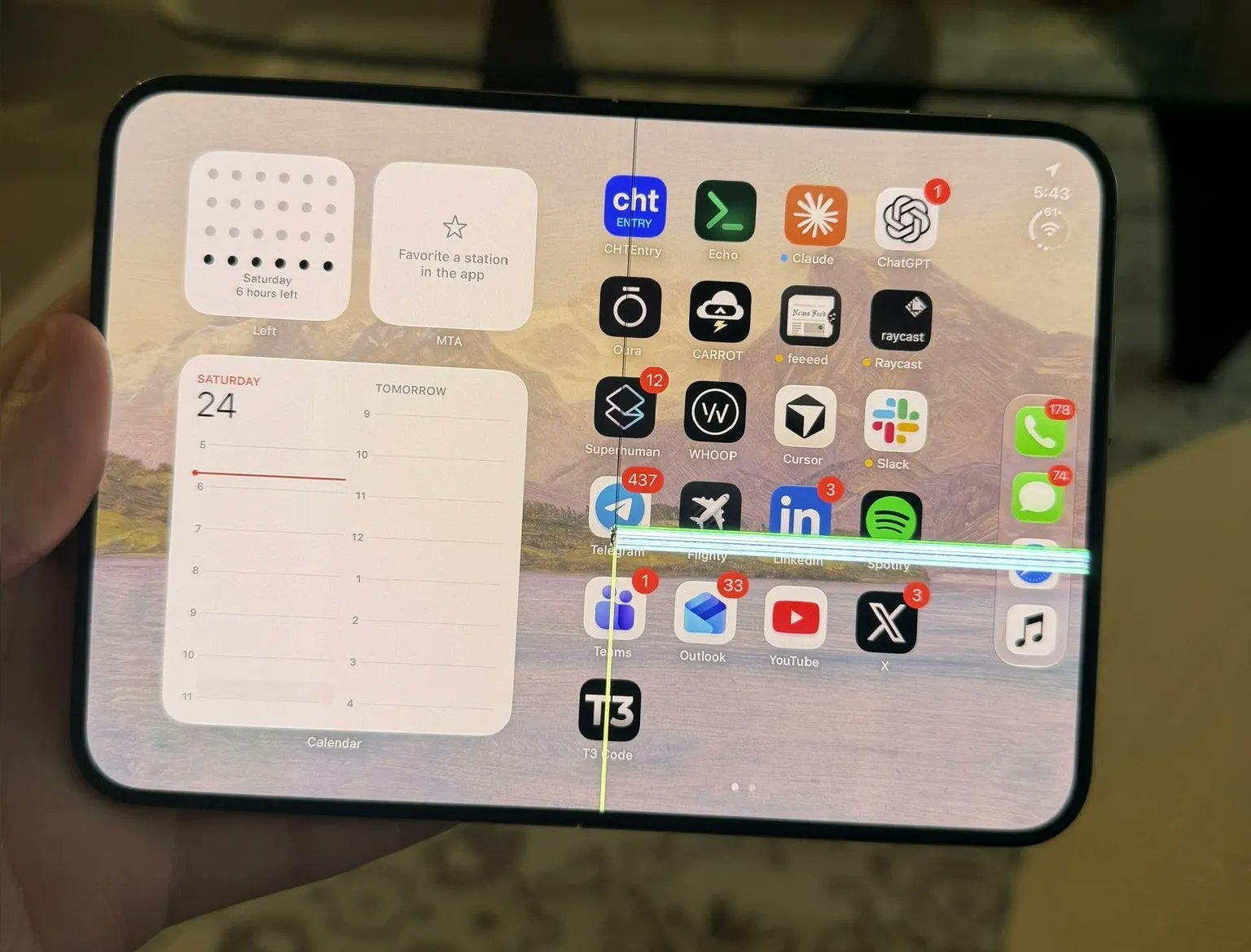
Such low conformity rates during pre-production or early production phases are a strong indicator of underlying issues, either in component quality, assembly processes, or design tolerances. If these issues were not fully resolved before mass production ramped up for the October 23 launch, it could explain why a "small number" of devices from specific batches might exhibit the hinge-related display defect. The pressure to meet launch deadlines for a highly anticipated product like Apple’s first foldable could have led to a less-than-perfect initial production run, despite Apple’s typically rigorous quality control. This also underscores the inherent difficulties in scaling the manufacturing of sophisticated new technologies like foldable displays and their intricate hinge systems.
A Familiar Narrative: Echoes of the Galaxy Fold
The iPhone Duo’s early troubles draw an undeniable parallel to the tumultuous launch of Samsung’s first foldable smartphone, the Galaxy Fold, in April 2019. At that time, several review units, including one provided to Mark Gurman, failed within days due to display issues. Samsung initially attributed some failures to users removing a protective layer that was not meant to be peeled off, but a more significant portion was linked to design flaws, particularly around the hinge’s impact on exposed screen areas.
The fallout for Samsung was substantial. The company was forced to delay the commercial launch of the Galaxy Fold by several months, undertaking a comprehensive redesign that included reinforcing the hinge area, sealing gaps, and making the protective layer an integral part of the display. The corrected version finally arrived in September 2019, five months after its initial planned release. Apple’s proactive, albeit delayed, admission and offer of replacements demonstrate a potential learning from Samsung’s experience, aiming to address the problem quickly to prevent a full-blown crisis and a similar prolonged delay. However, the very occurrence of "CrackGate" serves as a stark reminder that even industry giants like Apple are not immune to the complexities and potential pitfalls of pioneering new form factors.
The Cost of Innovation: Repair Policies and Consumer Assurance
For iPhone Duo owners experiencing display issues, Apple’s directive is clear: contact AppleCare support or visit an Apple Store. The company’s confirmation that a paid AppleCare+ subscription is not necessary for a replacement of this specific manufacturing defect is a crucial relief for consumers. Without AppleCare+, replacing a damaged foldable screen on an iPhone Duo can be prohibitively expensive, costing €1,149. With the AppleCare+ extended warranty, which covers accidental damage, the cost drops significantly to €99. This policy ensures that early adopters who invested heavily in the device are not penalized for a manufacturing flaw.
However, reports from MacRumors indicate that while replacements are being offered, some customers are facing delays due to stock shortages, highlighting the logistical challenges of replacing a high-demand, newly launched device. This situation can be particularly frustrating for users who have paid a premium for the iPhone Duo and are left with a compromised device while awaiting a replacement. The high price point of the iPhone Duo, starting at €2,339, means that buyers expect flawless performance and robust reliability from the outset.
Impact on Apple’s Foldable Future and Brand Image
The "CrackGate" controversy, even if limited to a "small number" of units, carries significant implications for Apple’s long-term strategy in the foldable market. Apple’s reputation for meticulous engineering, seamless user experience, and premium quality sets a very high bar. Any deviation from this standard, especially on a flagship product introducing a new form factor, risks eroding consumer trust. While Apple has handled the immediate crisis with a relatively swift acknowledgment and clear replacement policy, the incident still introduces a degree of doubt into the minds of potential buyers.
The foldable phone segment is still in its nascent stages, with consumer confidence being a critical factor for wider adoption. Early setbacks, even if promptly addressed, can linger in public perception. For Apple, which typically enters new product categories only when the technology is mature and refined, the iPhone Duo’s early display issues could be seen as an uncharacteristic misstep. It highlights the immense technical challenges associated with foldable displays and hinges, even for a company with Apple’s vast resources and engineering prowess. The incident will likely prompt an even more rigorous internal review of design, material science, and manufacturing processes for future foldable iterations.
Looking Ahead: Unanswered Questions and Next Steps
Despite Apple’s acknowledgment, several key questions remain unanswered. The exact cause of the cracks, specifically whether iFixit’s hinge hypothesis is correct, has not been confirmed by Apple. Furthermore, the precise number or percentage of affected units remains undisclosed, leaving consumers to rely on Apple’s vague "small number" descriptor. Understanding the root cause is crucial not only for consumer confidence but also for Apple to implement permanent fixes in subsequent production batches.
The coming weeks will reveal how effectively Apple manages the replacement process and whether the "CrackGate" issue truly remains isolated to an initial batch or if new reports emerge. The incident serves as a critical test for Apple’s customer service and supply chain agility. For those considering the iPhone Duo, it underscores the importance of weighing early adoption risks against the allure of cutting-edge technology. Prospective buyers may wish to monitor further reports and reviews, or even revisit comprehensive analyses like initial impressions and durability tests, before making a significant investment in Apple’s pioneering foldable device. The success of the iPhone Duo, and Apple’s future in the foldable space, will ultimately depend on its ability to quickly and comprehensively resolve these early challenges and restore unwavering confidence in its innovative hardware.