Sisilia Frederika
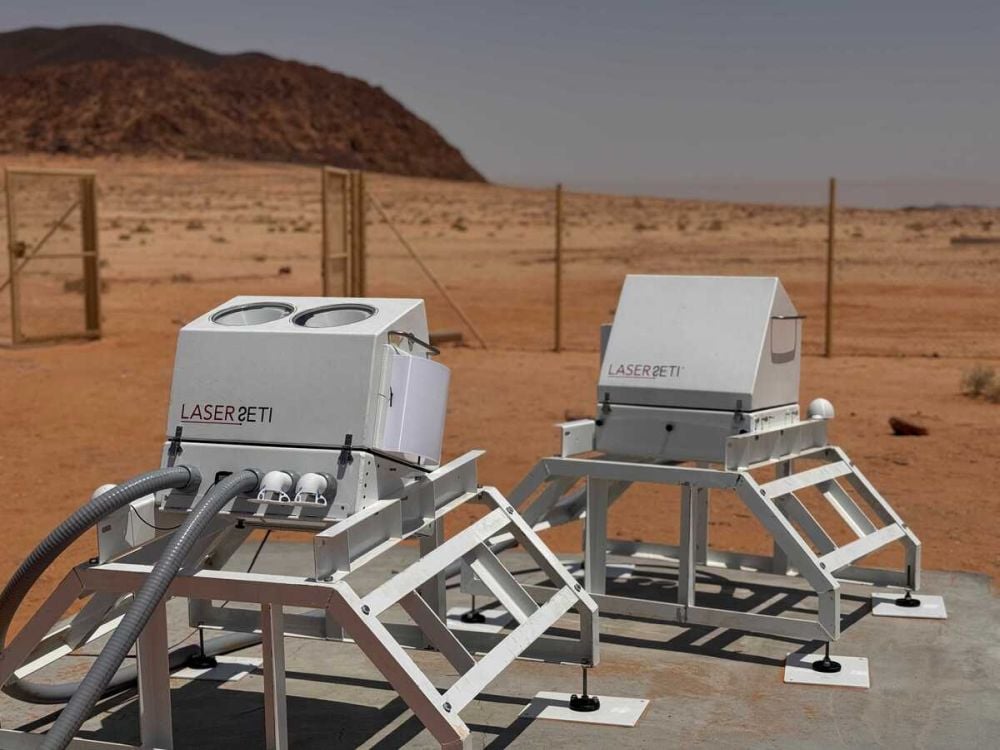
The Kingdom of Saudi Arabia has officially entered the international scientific race to detect signals from extraterrestrial civilizations, marking a significant expansion of the Search for Extraterrestrial Intelligence (SETI) through a new partnership at AlUla Manara. On August 19, 2026, the SETI Institute, a prominent non-profit research organization based in California, successfully commissioned and activated two specialized optical detectors in the AlUla region. This installation represents the fifth node in the LaserSETI global network and, notably, the first of its kind on the Asian continent. By integrating Saudi Arabia into this sophisticated monitoring grid, the SETI Institute has bridged a critical geographic gap, enhancing the world’s ability to monitor the night sky for transient optical signals that could indicate the presence of advanced technology beyond Earth.
A New Frontier in Optical SETI Technology
The search for extraterrestrial intelligence has traditionally been dominated by radio astronomy, utilizing massive installations like the Allen Telescope Array or the now-defunct Arecibo Observatory to listen for narrow-band radio signals. However, LaserSETI introduces a paradigm shift by focusing on the optical spectrum. The underlying hypothesis is that advanced civilizations might utilize high-powered lasers for interstellar communication or propulsion, which would appear to an observer as brief, intense flashes of monochromatic light.
Unlike traditional telescopes that focus on a tiny fraction of the sky at high magnification, LaserSETI devices are designed for breadth and persistence. The detectors installed at AlUla Manara utilize wide-angle lenses capable of monitoring approximately 75 degrees of the sky simultaneously. This wide-field approach is essential for capturing "transient" events—phenomena that occur only briefly and unpredictably. While radio SETI often requires "pointing and following" a specific star system, LaserSETI watches the entire sky all the time, ensuring that if a signal does flash across the cosmos, it is recorded regardless of where it originates.
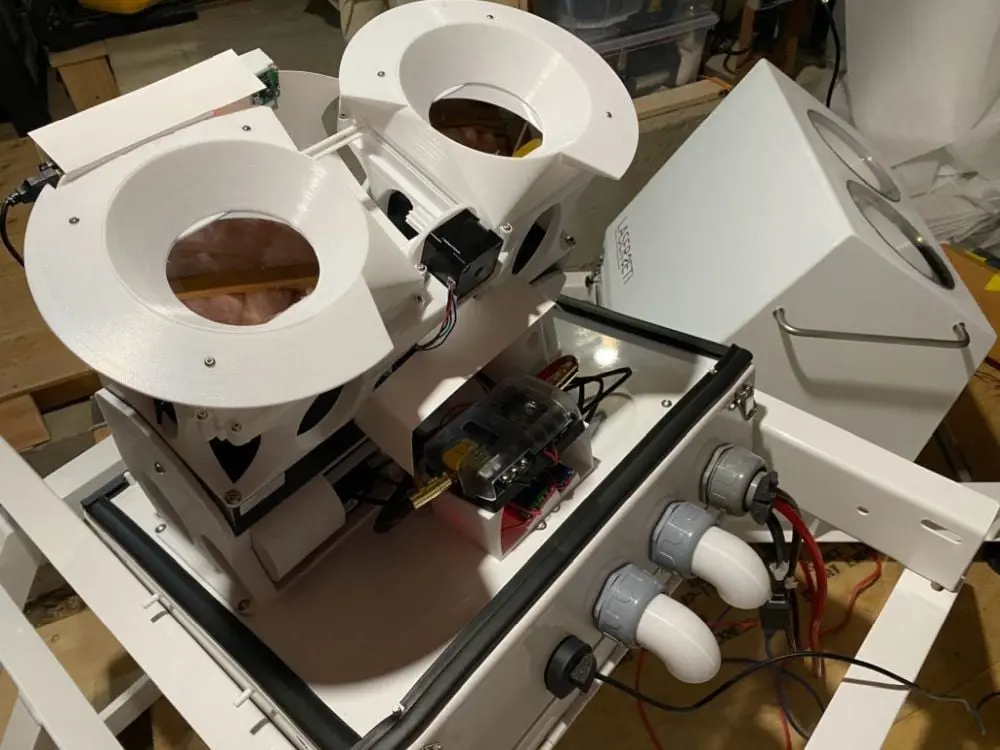
The technical architecture of these devices is a study in efficient engineering. To maintain a global network on a non-profit budget, the LaserSETI units utilize a combination of commercially available components and custom innovations. Each detector consists of a high-sensitivity camera equipped with a solid-state sensor. The critical component is a transmission grating placed behind the lens. This grating acts as a prism, dispersing incoming light into its component colors. When the camera captures starlight, the grating produces a full rainbow spectrum from blue to red. Conversely, if a laser signal were to enter the lens, it would appear as a distinct, single-colored dot or a characteristic wavelength signature, much like a laser pointer. This allows the system’s backend to instantly differentiate between natural celestial bodies and potential artificial signals.
The Strategic Importance of AlUla Manara
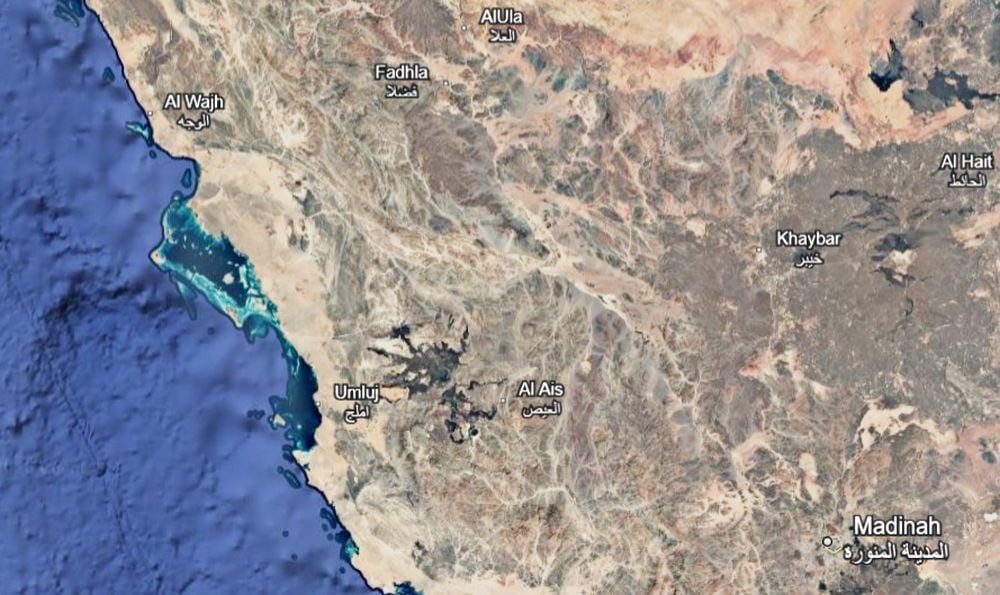
The selection of AlUla as the fifth LaserSETI site is no coincidence. Located in the northwestern quadrant of Saudi Arabia, the region offers some of the most pristine atmospheric conditions for astronomy in the Middle East. AlUla Manara, situated on a remote plateau approximately 74 kilometers north of the main AlUla township, serves as the centerpiece of the Kingdom’s burgeoning astronomical infrastructure.
The site is roughly 380 kilometers from the holy city of Medina, positioned far enough from urban light pollution to maintain its status as a recognized Dark Sky Park. This designation is vital for optical SETI, as it reduces the "noise" of human-made light, allowing the detectors to pick up much fainter signals from deep space. The AlUla Manara project is envisioned as a premier observatory that will eventually house a 4-meter class telescope alongside two 2-meter telescopes, positioning Saudi Arabia as a regional leader in space observation.
Geographically, the addition of the Saudi site is a milestone for the SETI Institute. The existing LaserSETI nodes are located in California, Hawaii, Puerto Rico, and Arizona. While these provide excellent coverage over the Western Hemisphere and parts of the Pacific, the addition of an Asian site allows for a more continuous "hand-off" of observations as the Earth rotates. With instruments distributed globally, the network can maintain a 24-hour vigil, ensuring that the search never sleeps.
Chronology of the Project and Implementation
The path to the August 2026 activation began two years prior, when the SETI Institute and Saudi astronomical authorities first announced their intent to collaborate. The timeline of the project reflects a rapid deployment strategy:
- 2024: Development of the LaserSETI network expands, with the SETI Institute seeking international partners to fill longitudinal gaps in sky coverage.
- Late 2024: Negotiations conclude between the SETI Institute and the AlUla Manara Executive Program, identifying the AlUla plateau as the ideal site for the first Asian expansion.
- 2025: Logistics and site preparation at AlUla Manara commence. This includes the installation of high-speed data uplinks and power infrastructure necessary for real-time analysis.
- August 19, 2026: Technical teams complete the installation and commissioning of the two detectors. The instruments begin their first official observation run, feeding data into the global LaserSETI processing hub.
Dr. Franck Marchis, Senior Planetary Astronomer and Director of Citizen Science at the SETI Institute, emphasized the importance of this timeline. "Two years ago, we announced our intention to bring LaserSETI to AlUla. Today, the instruments are installed, commissioned, and observing the sky," Marchis stated. He noted that the site provides a "remarkable astronomical vantage point" that is essential for the continuous monitoring required by the project.
Technical Specifications and Real-Time Analysis
One of the most innovative aspects of the LaserSETI project is its approach to big data. Traditional astronomical surveys often generate massive amounts of data that must be stored and analyzed weeks or months later. LaserSETI bypasses this bottleneck through the use of powerful dedicated computers at each site.
These on-site computers are programmed to analyze incoming frames in real-time. By processing the data at the source, the system can immediately discard "empty" frames or known interference (such as satellite passes or atmospheric reflections) and focus only on anomalies. This real-time capability is crucial for the "alert" system; if an unusual event is detected in AlUla, the system can theoretically notify other observatories around the world to pivot their instruments toward the same coordinates within seconds.
The hardware itself balances sophistication with cost-effectiveness. By utilizing 3D-printed parts and off-the-shelf lenses, the project minimizes costs without sacrificing the precision of the solid-state detectors. The only custom-made components are the specialized transmission gratings and the rugged stainless-steel enclosures designed to protect the sensitive electronics from the harsh desert environment of the Saudi plateau.
Official Responses and Scientific Collaboration
The activation of the AlUla site has been met with enthusiasm from both the international scientific community and Saudi officials. Naif Al Malik, the Executive Program Head for AlUla Manara, highlighted the partnership as a bridge between Saudi Arabia’s ancient history and its scientific future.
"The commissioning of LaserSETI at AlUla Manara marks an important milestone in our collaboration with the SETI Institute, translating our shared ambition into scientific capability on the ground," Al Malik said. He further noted that by connecting AlUla’s dark skies to a global network, the Kingdom is creating "new opportunities for scientific research, international collaboration, and knowledge exchange."
Eliot Gillum, the Director of LaserSETI who also designed and built the units, reiterated the global vision of the project. "LaserSETI was designed from the beginning as a global observatory rather than a single telescope," Gillum explained. "Adding AlUla extends the network into an entirely new geographic region. Every new location improves our ability to monitor the sky continuously and to compare observations of unusual events from different parts of the world."
Saudi Arabia’s Broader Scientific Transformation
The hosting of LaserSETI is a visible indicator of a broader shift within the Kingdom of Saudi Arabia. Historically characterized by an economy almost entirely dependent on oil and a society that prioritized traditional values over scientific exploration, the Kingdom has spent the last two decades pivoting toward a knowledge-based economy.
This transformation is perhaps most evident in the establishment of the King Abdullah University of Science and Technology (KAUST) in 2009. KAUST has quickly become the highest-ranked university in the Arab world and is home to some of the most advanced laboratory facilities and supercomputers globally. The Kingdom’s recent foray into international sports, tourism, and high-tech urban development—such as the "Vision 2030" initiative—aligns with the goals of AlUla Manara.
AlUla itself is a site of immense historical depth, having hosted civilizations ranging from the Neolithic and Nabataean to the Roman and Ottoman eras. By placing a cutting-edge SETI observatory in a UNESCO World Heritage site, Saudi Arabia is signaling a synthesis of its cultural heritage with a forward-looking commitment to the "final frontier."
Implications for the Fermi Paradox and Human Discovery
The search for extraterrestrial intelligence is more than just a hunt for "aliens"; it is a fundamental scientific inquiry into the "Fermi Paradox"—the contradiction between the high probability of extraterrestrial life and the lack of evidence for it. By expanding the LaserSETI network, scientists are systematically checking one of the potential modes of communication that humanity has previously overlooked.
If the AlUla detectors were to identify a signal, the implications would be profound. Such a discovery would not only answer the age-old question of whether we are alone in the universe but would also provide a massive boost to the scientific prestige of the host nation. Even in the absence of a signal, the data collected regarding cosmic transients—such as distant supernovae or pulsar activity—will contribute significantly to our understanding of high-energy astrophysics.
The integration of AlUla into the SETI Institute’s network is a testament to the "democratization" of space science. It shows that the search for answers to the universe’s greatest mysteries is no longer the exclusive domain of a few Western superpowers, but a truly global endeavor that requires the cooperation of diverse nations, the utilization of unique geographic locations, and the marriage of ancient history with future technology. As the detectors at AlUla Manara begin their long watch over the desert sky, the global scientific community moves one step closer to potentially hearing—or seeing—a voice from the stars.