Clarissa Hana
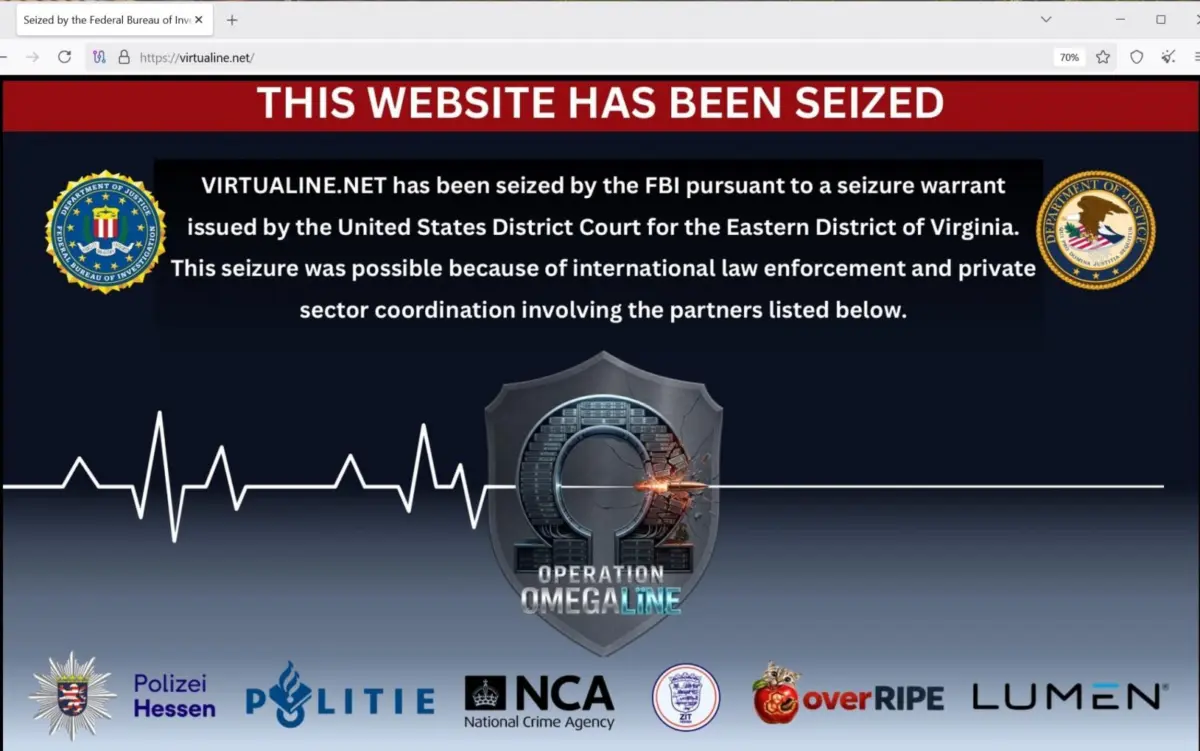
In a significant blow to the global cybercrime underworld, U.S. law enforcement, in coordination with international partners, has successfully dismantled and seized the primary domain of Virtualine, a notorious bulletproof hosting service. Advertised on clandestine cybercrime forums, Virtualine provided a critical infrastructure layer for a wide array of illegal online activities, offering a shield against legal repercussions and law enforcement inquiries. The operation, detailed by the U.S. Department of Justice (DOJ), marks a victory in the ongoing battle against sophisticated cybercriminal networks.
Virtualine operated under multiple aliases, including Secury, Massgod, Spamhouse, Lanedo, and Omegatech, meticulously crafting an image of impregnability for its clientele. The service explicitly marketed its ability to facilitate "illegal/black hat activities," encompassing a spectrum of malicious operations from phishing and mass spam campaigns to carding (credit card fraud) and port scanning, a reconnaissance technique used by attackers to identify vulnerabilities. This deliberate positioning cemented Virtualine’s reputation as an indispensable tool for those seeking to operate with impunity online.
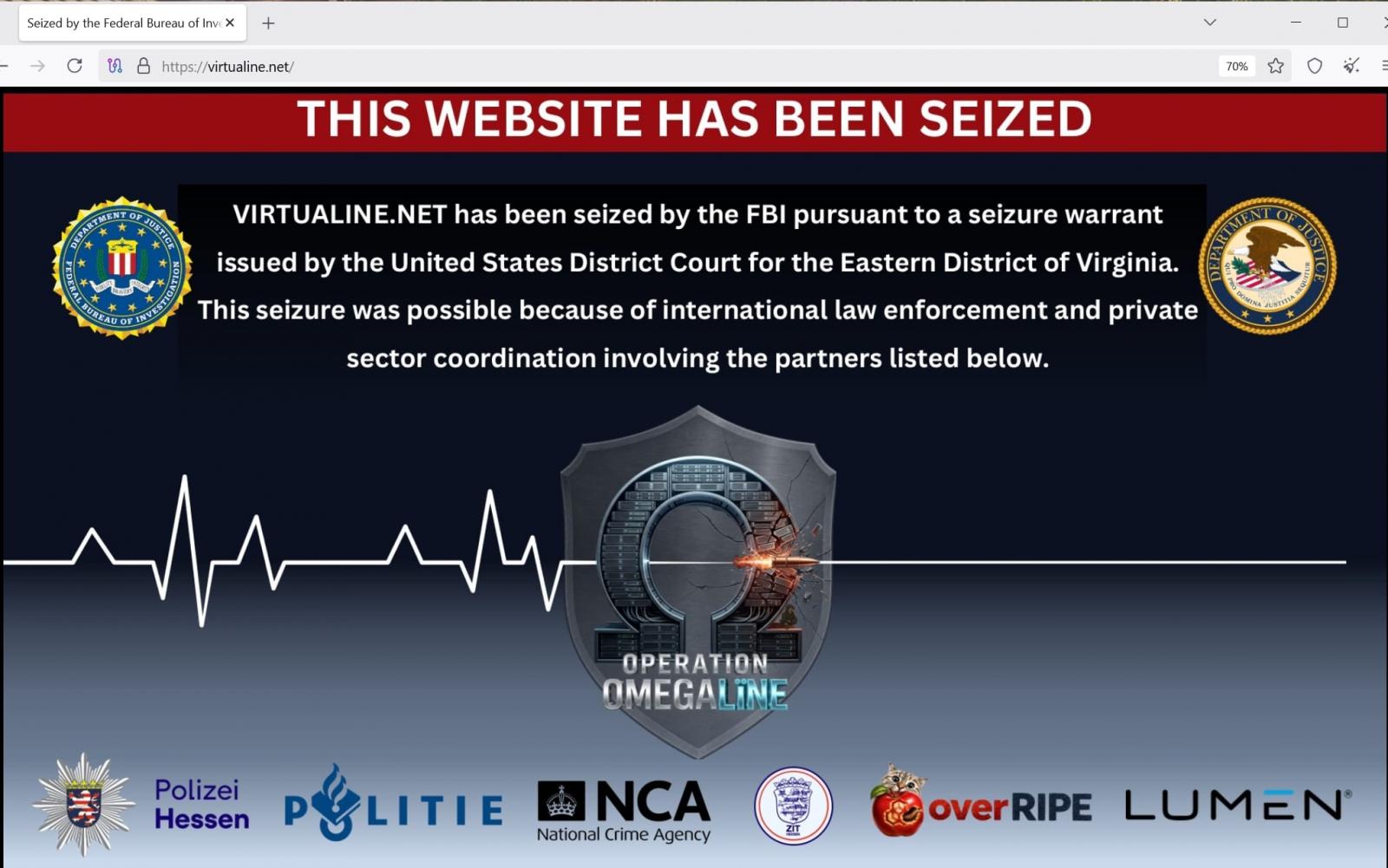
The coordinated takedown was spearheaded by the Federal Bureau of Investigation (FBI), with crucial support from Germany’s Polizei Hessen, the Netherlands’ Politie Midden-Nederland, and the United Kingdom’s National Crime Agency. Private sector partners, including OverRIPE and Lumen, also played a vital role in providing technical intelligence and operational assistance, underscoring the complex, multi-stakeholder nature of modern cyber investigations. The seizure of the primary domain, identified as virtualine[.net], effectively crippled the service’s central operational hub, disrupting its ability to communicate with and serve its illicit customer base.
While Virtualine’s public-facing advertisements often drew a line at child exploitation content, authorities revealed a disturbing undercurrent: the service knowingly hosted an online forum dedicated to promoting child abuse material. This revelation highlights a critical loophole in the "bulletproof" ethos, where profits often trump ethical considerations. Despite repeated notifications from law enforcement, the National Center for Missing and Exploited Children (NCMEC), and even a victim’s attorney, Virtualine allegedly continued to host the abhorrent content. Evidence suggests that as legal pressure mounted, Virtualine actively assisted the forum’s administrators in migrating to a new, albeit similarly illicit, platform. The DOJ stated unequivocally in its announcement, "Virtualine hosts this new website to this day, and it has already received at least one abuse complaint about sexually explicit images of children found on that website." This assertion paints a grim picture of the service’s complicity in facilitating some of the most heinous crimes.
In response to the allegations, the administrator of Virtualine issued an open letter, published on a newly established website, virtualine[.]org, which was subsequently captured by the cybersecurity firm Silent Push. The operator acknowledged that claims regarding the service’s illegal activities and its customers "deserve a fair investigation." However, they vehemently rejected any association with child exploitation, stating their profound belief that "sexual exploitation of children is a crime against humanity." This counter-narrative, while offering a stark contrast to the official findings, does little to diminish the gravity of the evidence presented by law enforcement.
The Cybercrime Ecosystem Fueled by Virtualine
Virtualine’s role extended beyond mere hosting; it actively participated in the financial laundering of illicit proceeds. The service accepted direct Bitcoin payments from its customers, a common practice within the cybercrime ecosystem that facilitates anonymity and circumvents traditional financial regulations. Blockchain intelligence firms, such as Chainalysis, provided critical data linking Virtualine’s payment addresses directly to a sophisticated network of criminal enterprises. These connections spanned ransomware operators, infostealer infrastructure, Russian-language cybercrime forums, illicit online marketplaces, various scams, and widespread phishing platforms.

Chainalysis detailed the mechanics of this financial pipeline: "Virtualine accepted direct bitcoin payments through unhosted wallet addresses, allowing criminal customers to pay without flagging their funds through hosted exchange compliance programs. Virtualine then laundered those proceeds to conceal their origin." This method of payment, utilizing unhosted wallets, is a cornerstone of anonymous cryptocurrency transactions, making it exceptionally difficult for law enforcement to trace the flow of funds back to their ultimate beneficiaries.
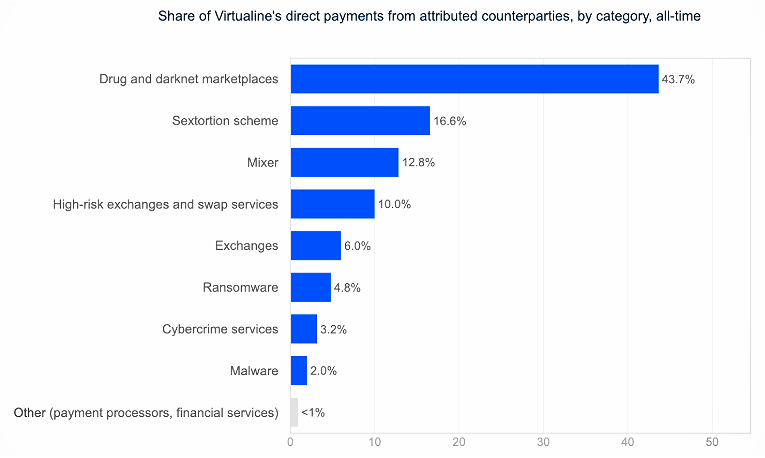
Further analysis from TRM Labs, another prominent blockchain intelligence firm, provided a granular breakdown of Virtualine’s financial inflows. According to TRM’s report, ransomware groups accounted for approximately 5% of Virtualine’s financial flows. More significantly, a Russian drug marketplace was identified as the largest contributor, comprising roughly 44% of the service’s revenue. The report also highlighted a "large sextortion scheme and a mixer" as substantial sources of funds, indicating the diverse and pervasive nature of the criminal activities Virtualine supported.
TRM’s research also revealed a consistent financial relationship between Virtualine and the StealC infostealer, with transactions observed throughout the current year. This ongoing financial connection suggests a sustained partnership, with Virtualine providing essential infrastructure and financial services to facilitate the StealC operation.
The physical impact of this international operation was also substantial. A press release from the Dutch police confirmed that dozens of physical servers were seized in Limburg, effectively taking hundreds of virtual servers offline. This physical disruption directly targeted the backend infrastructure that powered Virtualine’s services, causing immediate and widespread disruption. The Dutch police also reported recovering data from over 3,000 Virtualine customers, initiating follow-up investigations that are currently underway.
According to Dutch authorities, the illegal platform had been actively facilitating cybercrime operations since at least 2022. The scope of these operations included the deployment of ransomware, the management of botnets, the distribution of infostealers, widespread phishing campaigns, and, most disturbingly, the dissemination of child abuse material. The timeline indicates that Virtualine had been a significant enabler of cybercrime for at least two years before its takedown.
While the seizure of the primary domain represents a major victory, researchers have noted that the bulletproof hosting provider remains partially online. However, observations of its network prefixes indicate very low routing visibility, suggesting that a significant portion of its infrastructure may no longer be reachable. This partial persistence is not uncommon in such operations, as criminals often maintain redundant systems and contingency plans. The ongoing efforts to fully dismantle the remaining infrastructure are crucial to prevent a resurgence.
Chronology of the Investigation and Seizure
The investigation into Virtualine was a complex, multi-year effort that likely began with initial intelligence gathering on cybercrime forums and through network traffic analysis. While a precise start date is not publicly available, the timeline of the operation suggests a culmination of meticulous planning and international cooperation.
Early to Mid-2022: Virtualine is believed to have been actively operating and facilitating cybercrime, as indicated by Dutch authorities. During this period, intelligence likely began to coalesce regarding its infrastructure and clientele.
Throughout 2022-2025: International law enforcement agencies, including the FBI, German Polizei Hessen, and Dutch Politie Midden-Nederland, alongside national security bodies like the UK’s National Crime Agency, would have been engaged in covert surveillance, digital forensics, and intelligence sharing. Private sector partners like Chainalysis and TRM Labs would have been providing crucial blockchain analysis and threat intelligence, identifying financial links and mapping the service’s operational network.
Specific Incidents of Child Abuse Material Hosting Noted: Authorities have indicated that repeated notices regarding child abuse material were issued, suggesting specific points in time where law enforcement directly engaged with Virtualine about this issue, only to be ignored or met with obfuscation.
Late 2025 – Early 2026: The investigative efforts would have intensified, focusing on identifying the core infrastructure, key operators, and financial mechanisms of Virtualine. This phase likely involved coordinated digital forensics and the tracking of server locations and domain registrations.
October 2026: The culmination of these efforts. The U.S. Department of Justice announced the seizure of the primary domain, virtualine[.net], signaling the operational success of the international law enforcement action. This date also marks the public disclosure of the operation, coinciding with the release of reports from Chainalysis and TRM Labs.
Broader Impact and Implications
The seizure of Virtualine represents a significant disruption to the cybercrime-as-a-service (CaaS) model. Bulletproof hosting providers are the bedrock upon which many illegal online operations are built, offering the essential infrastructure that allows criminals to operate with a degree of anonymity and resilience against takedowns. By dismantling Virtualine, law enforcement has removed a critical enabler for a wide range of malicious activities, from ransomware attacks that cripple businesses and critical infrastructure to widespread phishing operations that steal personal data.
The international collaboration demonstrated in this operation is a positive indicator for future cybercrime enforcement. The ability of agencies from multiple countries to coordinate effectively, share intelligence, and execute simultaneous actions is crucial in combating a threat that transcends national borders. The involvement of private sector cybersecurity firms, particularly those specializing in blockchain analysis, is also becoming increasingly vital, providing law enforcement with the sophisticated tools needed to navigate the complex financial and technical landscapes of cybercrime.
However, the persistence of some Virtualine infrastructure and the swift emergence of a new domain highlight the adaptive nature of cybercriminals. The fight against these actors is not a single battle but an ongoing campaign. The data recovered from over 3,000 Virtualine customers represents a significant intelligence trove, and the follow-up actions against these individuals will be critical in dismantling smaller criminal cells and preventing future attacks.
The continued existence of services that knowingly facilitate the distribution of child abuse material, even while claiming to uphold certain ethical boundaries, underscores a persistent challenge. Law enforcement and child protection organizations must maintain vigilance and continue to pressure platforms that turn a blind eye to such abhorrent content, regardless of their purported "bulletproof" nature.
The financial data provided by Chainalysis and TRM Labs offers valuable insights into the economic drivers of cybercrime. Understanding the flow of illicit funds, the primary sources of revenue for these criminal enterprises, and the methods used for money laundering is essential for developing effective countermeasures. By disrupting these financial pipelines, law enforcement can significantly impact the profitability and sustainability of cybercriminal operations.
In conclusion, the seizure of Virtualine is a hard-won victory, demonstrating the effectiveness of international cooperation and advanced investigative techniques in disrupting the cybercrime ecosystem. While the threat landscape remains dynamic, this operation serves as a strong deterrent and a clear message to those who provide infrastructure for illegal activities: law enforcement is increasingly capable of reaching across borders and dismantling the digital fortresses of cybercriminals. The ongoing analysis of the recovered data and the pursuit of Virtualine’s customers will undoubtedly yield further intelligence and contribute to a safer digital environment.