
 George Chandra Eka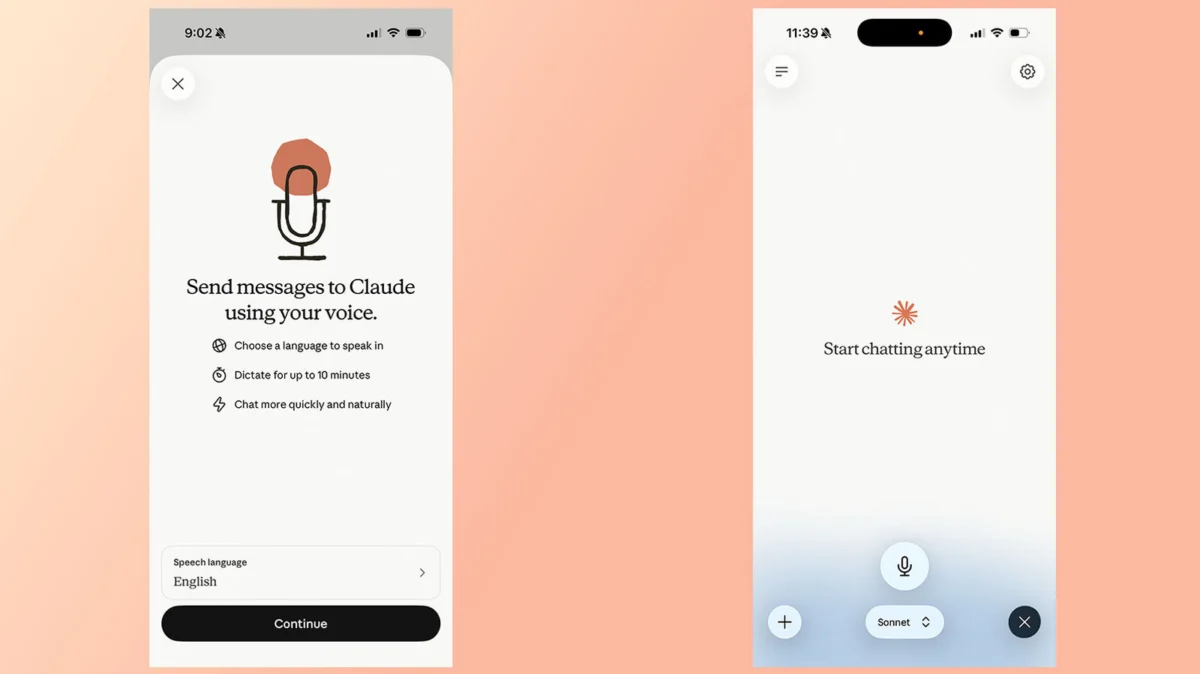
Anthropic has significantly advanced its large language model (LLM) Claude by enhancing its voice mode, allowing users to engage with the AI through natural spoken language rather than text prompts. Initially introduced in late 2023, the voice feature has undergone a substantial upgrade in July 2024, broadening its utility and integrating with Claude’s more sophisticated models. This pivotal update marks a strategic move by Anthropic to deliver a more intuitive, efficient, and accessible conversational AI experience, positioning Claude competitively within the rapidly evolving landscape of multimodal AI.
The Evolution of Claude’s Voice Mode: A Chronology of Enhancements
Anthropic first rolled out its voice mode for Claude in late 2023, providing users with the ability to interact verbally with its chatbot. This initial iteration was primarily designed for low-latency interactions and was exclusively powered by Haiku, Anthropic’s fastest and most compact model. While effective for quick queries, its limited processing power meant that complex, multi-layered conversations were not its strong suit. The strategic decision to prioritize speed aimed to minimize user frustration associated with delays in spoken interactions, a common hurdle in early voice AI applications.
The landscape shifted dramatically with the major update released in July 2024. This enhancement transcended the limitations of the initial rollout by integrating voice mode across Anthropic’s full suite of models, including the more powerful Sonnet and the highly capable Opus. This expansion fundamentally transformed the potential of Claude’s voice interface, allowing users to leverage advanced reasoning and broader contextual understanding through spoken commands. Crucially, the update also introduced the ability for voice mode to pull context from connected applications and services, such as Gmail, Google Calendar, and Slack, significantly augmenting Claude’s utility as a personal and professional assistant. This integration of higher-fidelity models and external data sources via voice represents a leap forward in natural language processing and human-computer interaction.
Navigating Claude’s Enhanced Voice Capabilities
Accessing Claude’s voice mode is designed to be straightforward, available across its mobile applications (for both Android and iOS), desktop apps, and directly through the web interface. Anthropic explicitly recommends using the feature on mobile devices for the optimal experience, likely due to the integrated microphone capabilities and on-the-go utility.
To initiate a voice conversation on a mobile device, users typically follow a simple process:
- Open the Claude application.
- Start a new chat or select an existing one.
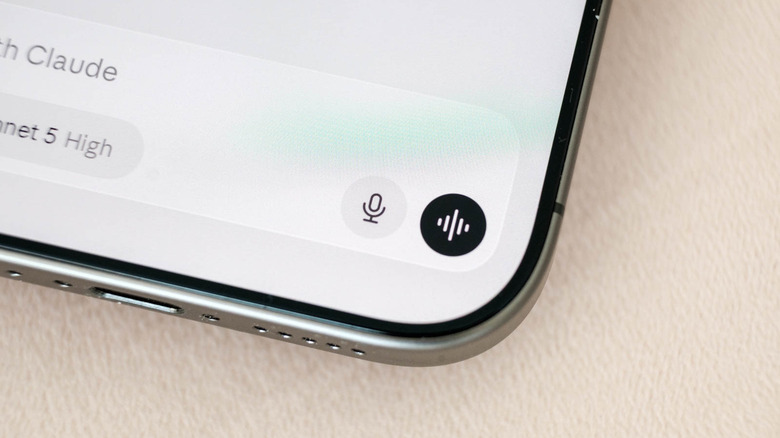
- Locate and tap the microphone icon, usually found within the text input field.
- Begin speaking your prompt or question. Claude will process the audio and respond verbally.
A key distinction in Claude’s voice mode architecture, as of this update, is its "turn-based" processing. This means Claude listens to a complete user utterance before generating its response. This contrasts with OpenAI’s ChatGPT, which, since its recent updates, employs a "duplex" architecture allowing its GPT-Live models to process speech and generate outputs simultaneously. While a duplex system offers a more fluid, conversational feel by enabling interruptions and overlapping speech, Claude’s turn-based approach can sometimes interpret brief pauses as the end of a prompt. Consequently, Anthropic advises users to articulate multi-part questions one at a time to ensure clarity and avoid misinterpretations, optimizing the interaction within its current framework.
Model Selection and Contextual Integration
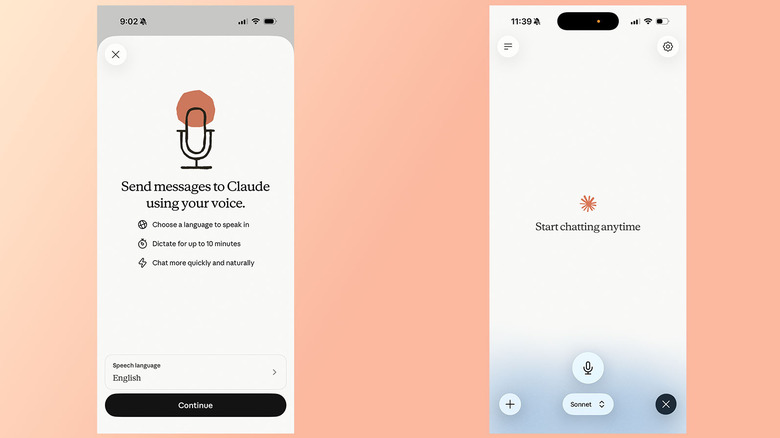
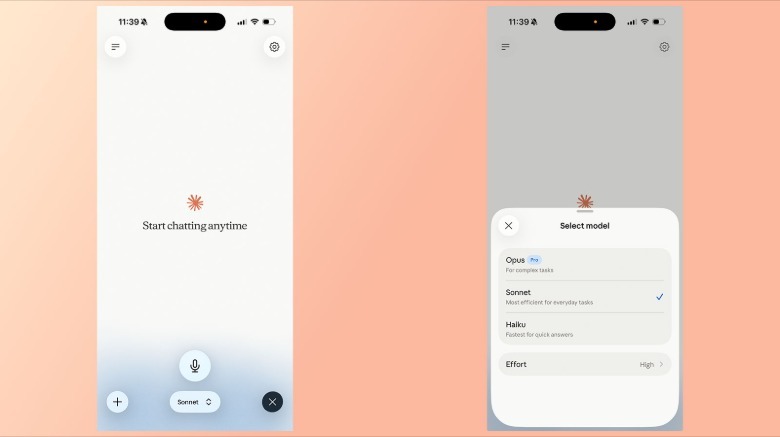
The July 2024 update significantly broadened the choice of underlying LLM models available through voice mode. Users can now select from a range of models, each tailored for different computational needs and complexity levels, directly from a model picker within the interface.
- Haiku: Anthropic’s fastest and most compact model, ideal for quick, simple queries and generating concise responses with minimal latency. It’s designed for efficiency and speed.
- Sonnet: A balanced model offering a strong combination of intelligence and speed, suitable for a wider array of general-purpose tasks, more complex reasoning, and detailed explanations.
- Opus: Anthropic’s most powerful and intelligent model, capable of handling highly complex tasks, advanced reasoning, and nuanced understanding. It excels in scenarios requiring deep analysis, strategic planning, or creative content generation. Access to Opus via voice mode is typically reserved for paid subscribers, reflecting its advanced capabilities and higher computational cost.
Beyond model selection, the ability to integrate with connected applications is a game-changer for voice mode. Users can instruct Claude to interact with services like Gmail, Google Calendar, and Slack directly through voice commands. For instance, a user could verbally ask Claude to "Summarize my unread emails from the past day in Gmail" or "Find my next meeting in Google Calendar." This functionality transforms Claude into a hands-free digital assistant, capable of performing complex tasks by synthesizing information across different platforms. First-time access to a third-party app via Claude requires explicit user permission, adhering to privacy and security protocols.
Personalization: Voice, Language, and Cadence
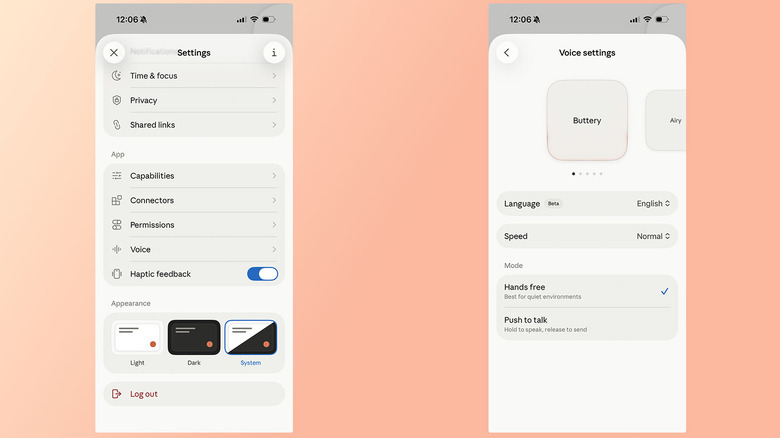
Anthropic has also invested in personalizing the voice mode experience, offering customization options for Claude’s voice and language. As of July 2024, Voice Mode supports 14 different languages, with several offering additional dialects. This multilingual support is critical for global accessibility and caters to a diverse user base. The selected language directly influences the available voice options. For example, English speakers can choose from five distinct voices, while Japanese users might have two options.
The full list of supported languages (as of July 2024) includes: English (US, UK, Australian, Indian, Canadian), Spanish (Spain, Mexico), French (France, Canada), German, Italian, Portuguese (Brazil), Dutch, Japanese, Korean, Chinese (Mandarin), Arabic, Russian, Hindi, and Swedish.
A current limitation highlighted by Anthropic is Claude’s inability to automatically detect mid-sentence language switching. If a user intends to speak in a different language within a conversation, it is recommended to explicitly state this intent or manually change Claude’s language setting via the Settings menu. This proactive approach ensures accurate interpretation and response generation.
Within the Settings menu, under the Voice section, users can preview and select Claude’s voice. For English, options typically include voices that might be described as "Standard Male," "Standard Female," "Deep Male," "Friendly Female," and "Energetic Male," providing a range of auditory experiences. Additionally, users can adjust Claude’s speaking cadence to Slow, Normal, or Fast, further tailoring the interaction speed to their preference. For recording prompts, Anthropic offers two modes: Hands-free, recommended for quiet environments, and Push to talk, which provides more control in noisy settings by only recording when a button is pressed.
Subscription Tiers and Usage Considerations
Access to Claude Voice mode is not exclusively tethered to a paid subscription, making it accessible to a broad user base. Free accounts can utilize voice mode, but with certain limitations. Specifically, free users are restricted to interacting with Claude’s voice mode through the Haiku and Sonnet models. For most everyday prompts and moderately complex tasks, Sonnet generally provides sufficient intelligence and capability. However, to harness the full power of the Opus model via voice, a paid Pro or Max subscription is required. This tiered access strategy allows Anthropic to offer premium features to its paying customers while maintaining a robust free offering.
It is important for all users to note that voice mode conversations contribute to their overall usage limits, similar to text-based interactions. Free accounts also typically face a limitation of a single connected application integration, whereas paid subscribers often enjoy broader integration capabilities. Despite these distinctions, the core voice functionality and multilingual support remain available across all account types, ensuring a baseline of accessibility.
Broader Implications and Market Context
The enhanced voice mode for Claude carries significant implications for the future of human-computer interaction and the competitive landscape of AI.
1. Enhanced Accessibility and Productivity: Voice interfaces fundamentally improve accessibility for users who may have difficulty typing or prefer verbal communication. For professionals, the ability to quickly summarize emails, schedule meetings, or draft responses using voice commands while multitasking can dramatically boost productivity. This hands-free interaction paradigm moves AI beyond a desktop tool into a more pervasive, integrated assistant for daily life and work.
2. Competitive Positioning: Anthropic’s robust voice offering, particularly its integration with powerful models like Opus and connected apps, intensifies the competition among leading AI developers. OpenAI’s ChatGPT, Google’s Gemini, and Amazon’s Alexa are all vying for dominance in multimodal AI. Anthropic’s advancements demonstrate its commitment to keeping pace and innovating in user-friendly interaction methods, solidifying Claude’s position as a premium conversational AI. The nuanced differences in architecture (turn-based vs. duplex) highlight varying approaches to achieving natural conversation, each with its own advantages and challenges.
3. Advancements in Natural Language Processing: The seamless integration of voice input with advanced LLMs pushes the boundaries of natural language understanding (NLU) and natural language generation (NLG). The ability to accurately transcribe complex spoken queries, process them through sophisticated models, and generate contextually relevant, spoken responses in multiple languages requires continuous innovation in speech-to-text, text-to-speech, and core LLM capabilities.
4. Ethical Considerations and User Trust: As voice AI becomes more integrated into daily routines, considerations around data privacy, security of voice recordings, and responsible AI development become paramount. Anthropic’s requirement for explicit permissions for connected apps reflects an industry-wide effort to build user trust and ensure data governance. The future success of voice AI heavily relies on transparent practices and robust security measures.
5. The Future of Multimodal AI: The expansion of voice mode is a step towards truly multimodal AI, where systems can seamlessly process and generate information across various formats – text, audio, image, and video. As AI models become more adept at understanding and generating human-like speech, they will unlock new applications in education, customer service, healthcare, and creative industries, fostering more intuitive and engaging interactions. The ability to "talk" to an AI that can understand complex queries, access external data, and respond intelligently represents a significant shift from command-line interfaces to truly conversational computing.
Conclusion
Anthropic’s July 2024 update to Claude’s voice mode is a significant milestone, transforming the chatbot from a text-centric tool into a powerful, verbally interactive assistant. By extending voice capabilities to its most advanced models and enabling deep integration with connected applications, Anthropic has not only enhanced user accessibility and productivity but also intensified the strategic competition in the burgeoning field of multimodal AI. While technical nuances like the turn-based architecture present unique interaction patterns, the ongoing development reflects a clear trajectory towards more natural, intuitive, and human-like engagement with artificial intelligence, paving the way for a future where conversational AI is an indispensable part of our digital lives.







