Sisilia Frederika
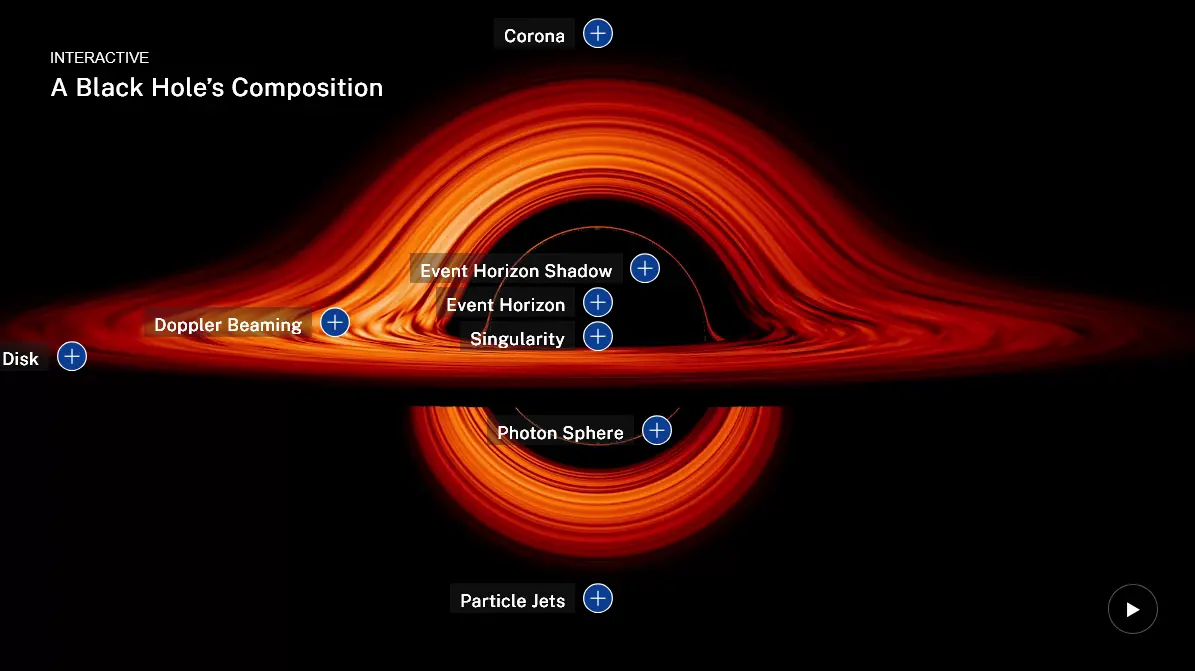
Black holes represent some of the most profound paradoxes in the known universe, often shrouded in misconceptions that stem from their very name. To the casual observer, the term "black hole" evokes images of a cosmic void or a bottomless tunnel in the fabric of spacetime, leading to certain destruction. In scientific reality, however, these objects are not "holes" at all, but rather the extraordinarily dense remnants of collapsed stars. When a massive star exhausts its nuclear fuel, it can undergo a gravitational collapse so intense that its matter is compressed into an infinitesimal volume. This process creates a gravitational field so powerful that at a specific boundary—the event horizon—the escape velocity required to exit exceeds the speed of light. Because no information, including light itself, can cross back over this threshold, these regions appear as dark spheres against the backdrop of the cosmos.
At the Massachusetts Institute of Technology (MIT), within the Kavli Institute for Astrophysics and Space Research, Professor Erin Kara is leading a specialized research group dedicated to piercing this veil of darkness. By utilizing a sophisticated array of space-based and ground-based telescopes, Kara’s team investigates the fundamental properties of black holes, their growth cycles, and the dramatic influence they exert on their surrounding environments. Their primary focus lies with supermassive black holes (SMBHs), titans that reside at the centers of nearly all massive galaxies. These objects, which can be millions or even billions of times the mass of our Sun, are not merely passive observers of galactic history; they are active participants that dictate the formation, star-birth rates, and eventual evolution of the galaxies they inhabit.
The Evolution of X-ray Reverberation Mapping
The journey to understanding the hidden structures of black holes began in earnest at the University of Cambridge’s Institute of Astronomy. It was there that Erin Kara pursued her master’s degree in physics before transitioning into a doctoral program that would redefine how astrophysicists view the immediate surroundings of a black hole. Under the mentorship of Professor Andy Fabian, a Royal Society Research Professor and a titan in the field of X-ray astronomy, Kara began exploring the nascent concept of X-ray reverberation.
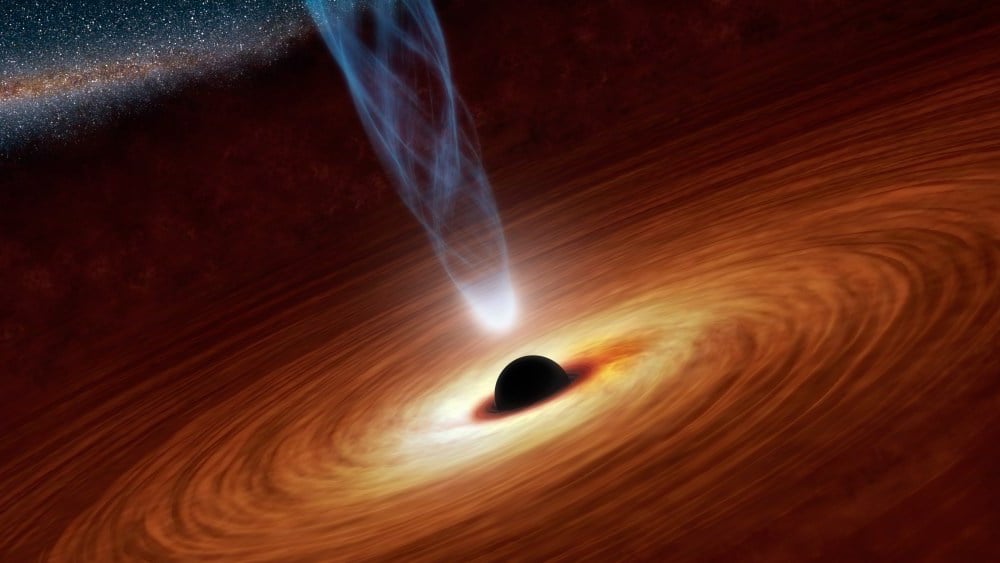
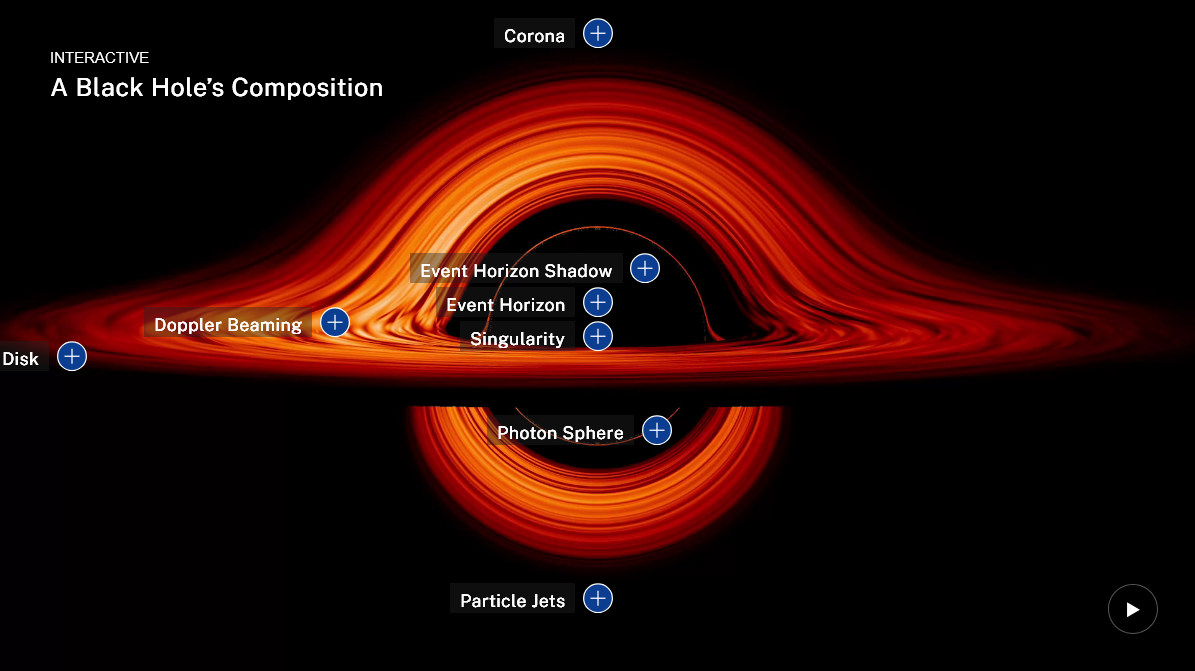
The turning point for the field occurred in 2009. While reviewing archival data from X-ray observatories, Fabian and his colleagues identified peculiar time delays in the high-energy signals emanating from a black hole’s "corona." The corona is a region of ultra-hot, highly ionized gas located just above the accretion disk—the swirling vortex of matter being pulled into the black hole. The team hypothesized that these delays were echoes, or "reverberations," caused by X-ray radiation from the corona reflecting off the inner edge of the accretion disk.
This discovery provided a revolutionary tool for astronomers. Much like bats use echolocation to map the dimensions of a dark cave, Kara realized that scientists could use these X-ray echoes to map the geometry of the space surrounding a black hole. During her PhD, Kara took the initiative to mine vast archives of X-ray data, discovering that these signals were far more common than previously thought. This discovery-driven approach allowed her to develop techniques to measure the distance between the corona and the accretion disk, providing a scale for environments that are otherwise too small to resolve with even the most powerful conventional telescopes.
From Hitomi to XRISM: A Chronology of Technological Advancement
Following her doctoral work, Kara’s career trajectory took her to the University of Maryland and NASA’s Goddard Space Flight Center. This period was marked by both scientific triumph and engineering heartbreak. She became a key participant in the Japanese-led Hitomi mission (ASTRO-H), which launched in early 2016. Hitomi was equipped with a groundbreaking microcalorimeter, an instrument designed to measure the heat of individual X-ray photons with unprecedented precision, allowing for a highly detailed analysis of the chemical composition and velocity of gas near black holes.
Tragically, just 40 days into its mission, a series of command-sequence errors caused Hitomi to lose its attitude control, leading to the spacecraft’s structural failure and eventual loss. Despite this catastrophe, the brief window of data returned by Hitomi was transformative. It provided a glimpse into the Perseus galaxy cluster that fundamentally altered the scientific community’s understanding of how black hole feedback prevents gas from cooling and forming new stars. Most importantly, it proved that microcalorimeter technology was the future of X-ray astronomy.
This technological proof-of-concept laid the groundwork for the X-ray Imaging and Spectroscopy Mission (XRISM), a collaborative effort between the Japan Aerospace Exploration Agency (JAXA) and NASA. Launched in September 2023, XRISM carries a successor to the Hitomi microcalorimeter. Kara now leads a prominent science group within the XRISM mission, focusing on the analysis of X-ray signals from supermassive black hole coronas. By analyzing the "fingerprints" left by heavy elements like iron in the accretion disk, her team can determine how fast a black hole is spinning and how it consumes the matter around it.
Monitoring the Cosmic Pulse with NICER and the ISS
While XRISM provides high-resolution spectroscopy, another mission has been vital for capturing the rapid, "flickering" nature of black holes. Kara was a central figure in the development and scientific application of the Neutron Star Interior Composition Explorer (NICER). Launched in 2017 and installed on the exterior of the International Space Station (ISS), NICER offers exceptional "timing" capabilities. It can measure the arrival of X-ray photons with a precision of better than 100 nanoseconds.
The integration of NICER into the study of black holes has allowed Kara’s group to observe "outbursts"—sudden, violent increases in brightness that occur when a black hole begins to feed rapidly on a companion star or a massive influx of gas. Through NICER, the team has been able to track the contraction and expansion of the corona in real-time, observing how the immediate environment of a black hole changes over the course of weeks or even days. This high-cadence monitoring has debunked the older view of black holes as static, unchanging objects, revealing them instead to be highly dynamic engines of energy.
Challenging Established Notions of Galactic Evolution
The data gathered by Kara and her students at MIT is challenging long-held assumptions in the field of astrophysics. One of the most significant shifts in understanding involves the speed at which black holes interact with their environments. Previous models suggested that the growth of a supermassive black hole was a slow, steady process occurring over millions of years. However, recent observations of tidal disruption events (TDEs)—where a star wanders too close to a black hole and is shredded by tidal forces—show that these systems can "turn on" and "turn off" with startling speed.
"It used to be that we didn’t have eyes on systems all the time," Kara noted regarding the recent shift in observational capabilities. "Now we’re seeing that they can turn on and off at rates that are much faster than we ever thought possible."
Furthermore, her research has indicated that matter is often pulled into the event horizon much faster than theoretical models predicted. This may be due to the complex gravitational dance of stars within the galactic center, which can become trapped in the accretion disk, creating turbulence that accelerates the flow of matter into the black hole. These findings have profound implications for how we understand "AGN feedback"—the process by which the energy released by a black hole can blow gas out of a galaxy, effectively "quenching" star formation and regulating the galaxy’s size.
The Future: ULTRASAT, LISA, and Multi-Messenger Astronomy
The next decade promises to be a golden age for black hole research, with Kara’s work expanding into the realms of ultraviolet astronomy and gravitational waves. She is currently involved with the Ultraviolet Transient Astronomy Satellite (ULTRASAT), a mission led by the Israel Space Agency and the DESY research center in Germany. ULTRASAT will have a wide field of view, allowing it to detect the hot, ultraviolet flashes that occur immediately after a star is disrupted by a black hole, providing an early warning system for other telescopes to pivot and observe these events in different wavelengths.
Perhaps most ambitious is Kara’s involvement with the Laser Interferometer Space Antenna (LISA), the first space-based gravitational wave observatory. While ground-based detectors like LIGO have been successful in detecting the mergers of stellar-mass black holes, LISA will be sensitive to low-frequency gravitational waves. This will allow scientists to hear the "hum" of supermassive black holes as they spiral into one another during galaxy mergers. By combining the gravitational wave data from LISA with the X-ray reverberation data from missions like XRISM, Kara’s group aims to practice "multi-messenger astronomy," providing a holistic view of the most violent events in the universe.
Conclusion: The Human Scale of Universal Discovery
The work conducted at MIT’s Kavli Institute serves as a bridge between the infinitesimal scales of human observation and the incomprehensible scales of the cosmos. For Professor Erin Kara, the motivation remains rooted in the sheer improbability of the endeavor. The ability of the human mind to develop instruments capable of measuring the echoes of light from the edge of a gravitational abyss, located billions of light-years away, remains a testament to scientific ingenuity.
As new missions prepare for launch and archival data continues to yield secrets, the study of supermassive black holes is moving from a period of theoretical speculation to one of precise mapping. Through the lens of X-ray reverberation, the "black" in black holes is slowly being replaced by a detailed map of light, gravity, and the fundamental forces that shape our universe. The puzzles that remain—how the first seeds of SMBHs formed in the early universe and how they truly dictate the fate of their host galaxies—continue to drive the next generation of researchers under Kara’s guidance at MIT.