
 Vera Intan Clara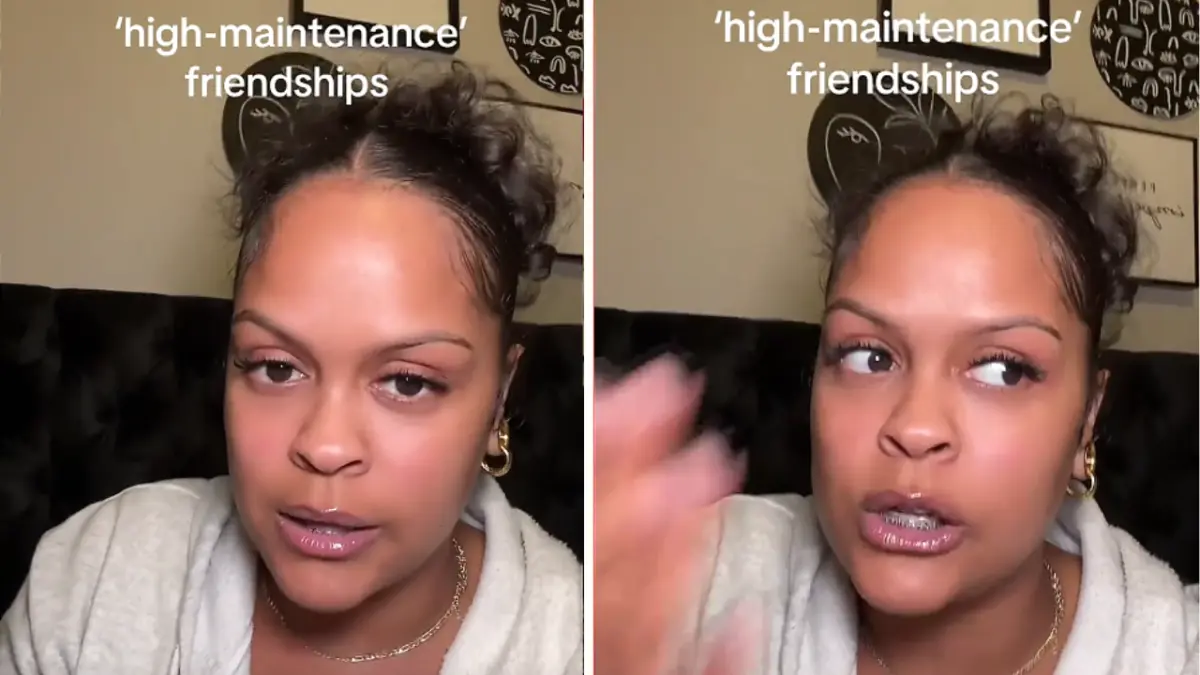
A recent TikTok video posted by user @ciearratati has ignited a widespread conversation across social media platforms, garnering close to 815,000 views and 3,364 comments, by boldly asserting a preference for what she terms "high-maintenance" friendships. The video, which rapidly gained traction, describes a woman’s deeply held belief that authentic and meaningful friendships inherently involve a significant level of closeness and mutual investment, directly challenging the increasingly normalized concept of "low-maintenance" relationships. Ciearra’s perspective posits that the needs and concerns of her friends are never excessive for her to address, expressing a clear preference for intimate, familiar bonds over distant, superficial ones.
The Viral Spark: Redefining Friendship in the Digital Age
The video, which appeared on TikTok recently and quickly amassed its impressive viewership, struck a chord with a significant portion of the online community. Ciearra began her explanation by stating that once she considers someone a friend, they transcend the label of "high-maintenance" in her eyes. This conviction stems from her willingness to consistently allocate time for communication, whether through conversations or video chats, whenever her friends express a need. She further elaborated that even a nascent acquaintance, someone she might have met just the day prior, would not be met with resistance if they desired to reconnect. For Ciearra, this immediate willingness to engage is fundamental to the very definition of friendship, suggesting an innate desire for connection from the outset.
Her candid declaration, "No, you’re not acting like I’m your boyfriend. No, it’s not too high-maintenance. No, I don’t feel like you’re smothering me," directly confronts common anxieties and unspoken rules that often govern modern friendships. Ciearra articulated that this profound level of closeness is precisely what she actively seeks in her social connections, emphasizing that she thrives on the deep bond she cultivates with individuals she considers friends. This sentiment is encapsulated in her poignant statement: "This is literally what I want. I literally want to do life with human beings." This desire for shared life experiences extends beyond infrequent encounters, as she explicitly rejects the notion that a true friendship can subsist on rare, quarterly meetings. Instead, she champions the idea that genuine friends should naturally and organically spend time together more often, expressing genuine anticipation for these shared moments.
Challenging Modern Friendship Paradigms: Beyond the "Bare Minimum"
Ciearra’s critique of contemporary friendship norms is particularly sharp when she questions the frequency of interaction: "No, I don’t want to see you every quarter of the year. I wanna see you way more than that, actually. Why are we doing quarterly meetings? What is this, a business or a friendship?" This rhetorical question underscores her belief that many individuals have come to perceive genuine, invested friendships as "high-maintenance" because they have grown accustomed to, and perhaps even settled for, what she describes as the "bare minimum" in their relational dynamics. This "bare minimum" often manifests as infrequent check-ins, superficial interactions, and a general lack of consistent presence in each other’s lives.
This perspective resonates deeply within a broader cultural context where individualism and busyness are often lauded, sometimes at the expense of communal bonds. The normalization of "low-maintenance" friendships has been a topic of increasing discussion among sociologists and psychologists who observe a potential correlation with rising rates of loneliness and social isolation, particularly in developed nations. According to a 2023 advisory from the U.S. Surgeon General, Dr. Vivek Murthy, loneliness has reached epidemic levels, posing significant public health risks comparable to smoking or obesity. This report highlighted that individuals with strong social connections tend to live longer, healthier lives, underscoring the vital importance of robust interpersonal relationships. Ciearra’s video, therefore, taps into a fundamental human need that many feel is being unmet in modern society.
The Simplicity of Connection: A Call for Authenticity
Further elaborating on her vision for high-maintenance friendships, Ciearra clarified that spending quality time together does not necessarily demand elaborate or meticulously planned activities. She explicitly stated that genuine connection can be fostered through simple, domestic interactions, countering the pervasive idea that social engagement must always involve going to clubs, restaurants, or shopping expeditions. For Ciearra, merely existing in the same space, whether sitting on a couch, performing mundane tasks like doing each other’s hair, or even being on separate devices in the same room without constant conversation, still constitutes valuable "hanging out."
Her illustrative example, "You can be on your phone, I’ll be on my phone. You can do your thing, I’ll do my thing. You can be in the living room, I can be in my bedroom," emphasizes the comfort and ease she seeks in these close relationships. This demonstrates a preference for companionship that is not contingent on constant stimulation or performative engagement, but rather on shared presence and mutual comfort. She stressed that her friends need never hesitate to ask for more of her time or emotional investment because, reciprocally, she also craves a deeper, more consistent engagement from them. Ciearra argued that many modern friendships are suffering from a profound lack of genuine investment, advocating for relationships where individuals can feel completely at ease and authentic in each other’s company, without the pressure of constant entertainment or conversational effort.
Her concluding remarks served as a powerful call to action, particularly for women, to revive the inherent simplicity and intimacy of traditional friendships. She reminisced about activities such as braiding each other’s hair while listening to music, highlighting these simple, shared experiences as the very essence missing from many contemporary friendships. This emphasis on uncomplicated, yet deeply connective, activities underscores a longing for a return to relational authenticity that predates the complexities and performance pressures often associated with digital-age socializing.
Public Resonance and the Loneliness Epidemic
The overwhelming response to Ciearra’s video indicates a significant public appetite for discussions surrounding the quality and nature of modern friendships. A substantial portion of the comments section reflected strong agreement with her stance, articulating a shared frustration with the superficiality and infrequent engagement often characteristic of "low-maintenance" relationships. One commenter poignantly wrote, "Low maintenance friendships are so boring! Barely talk, don’t hang out, never visit each other’s homes. I just go with the flow but it gets to a point where I don’t wanna be friends anymore." This sentiment encapsulates a widespread disillusionment with relationships that fail to provide genuine connection and emotional sustenance.
Another commenter highlighted the insidious role of busyness as an excuse for relational neglect: "Idk why we’ve normalized ‘low-maintenance’ friendships. Yes life can get busy but it gets to a point where that’s an excuse." This comment directly addresses a common societal narrative that prioritizes professional and personal pursuits over consistent social investment, often leading to a gradual erosion of friendships. The consensus among many online participants was that "low-maintenance" friendships are not merely suboptimal but are actively lacking and should not be tacitly accepted as the norm. This collective voice signals a potential cultural shift, or at least a burgeoning desire, for more profound and actively nurtured social bonds.
Expert Perspectives: Navigating Friendship Expectations in a Complex World
While @ciearratati’s claims and opinions are rooted in her personal experiences and perspective, as noted by The Daily Dot, her video has inadvertently sparked a critical dialogue that resonates with findings from social psychology and sociology. Experts often point to the nuanced challenges of maintaining deep friendships in an increasingly mobile and individualized society. Dr. Sarah J. Tracy, a professor of organizational communication, often discusses the concept of "relational work," emphasizing that all relationships require continuous effort and investment to thrive. The idea of a "low-maintenance" friendship, from this perspective, might be seen as an oxymoron; while some relationships naturally require less intensive care due to shared history or stable life circumstances, all require some degree of sustained effort.
Psychologists suggest that the digital age, while offering unprecedented connectivity, has also inadvertently contributed to a sense of superficiality in relationships. Social media platforms, while facilitating broad networks, often encourage passive consumption and curated self-presentation rather than deep, reciprocal interaction. The constant visibility of others’ lives can sometimes create a false sense of connection, diminishing the perceived need for direct, in-person engagement. Furthermore, attachment theory, typically applied to romantic relationships, also offers insights into friendships. Individuals with secure attachment styles may naturally gravitate towards more "high-maintenance" or deeply invested friendships, comfortable with intimacy and interdependence, while those with avoidant styles might prefer more distant, "low-maintenance" connections to preserve autonomy.
The Broader Societal Implications: Reclaiming Relational Depth
The viral success of Ciearra’s video serves as a powerful indicator of a collective yearning for deeper, more authentic human connections. In an era often characterized by digital detachment and increasing social isolation, her advocacy for "high-maintenance" friendships could be interpreted as a counter-cultural movement, a quiet rebellion against the perceived superficiality of modern social interactions. The conversation she initiated transcends mere personal preference, touching upon fundamental questions about the value we place on human connection, the effort we are willing to invest, and the kind of society we collectively desire to build.
The implications of this burgeoning discussion are far-reaching. If a critical mass of individuals begins to actively reject the "bare minimum" in friendships and strive for more invested relationships, it could foster a societal shift towards greater community engagement, enhanced mental well-being, and a stronger collective sense of belonging. This pursuit of relational depth may necessitate a re-evaluation of personal priorities, encouraging individuals to allocate more time and emotional energy to nurturing their social bonds. It may also challenge existing social norms that equate busyness with importance, instead championing the deliberate cultivation of meaningful human connections as a cornerstone of a fulfilling life. Ultimately, Ciearra’s viral moment on TikTok underscores a profound and perhaps unspoken societal desire: to "do life with human beings" in a way that is truly present, deeply connected, and genuinely cherished.








