admin
admin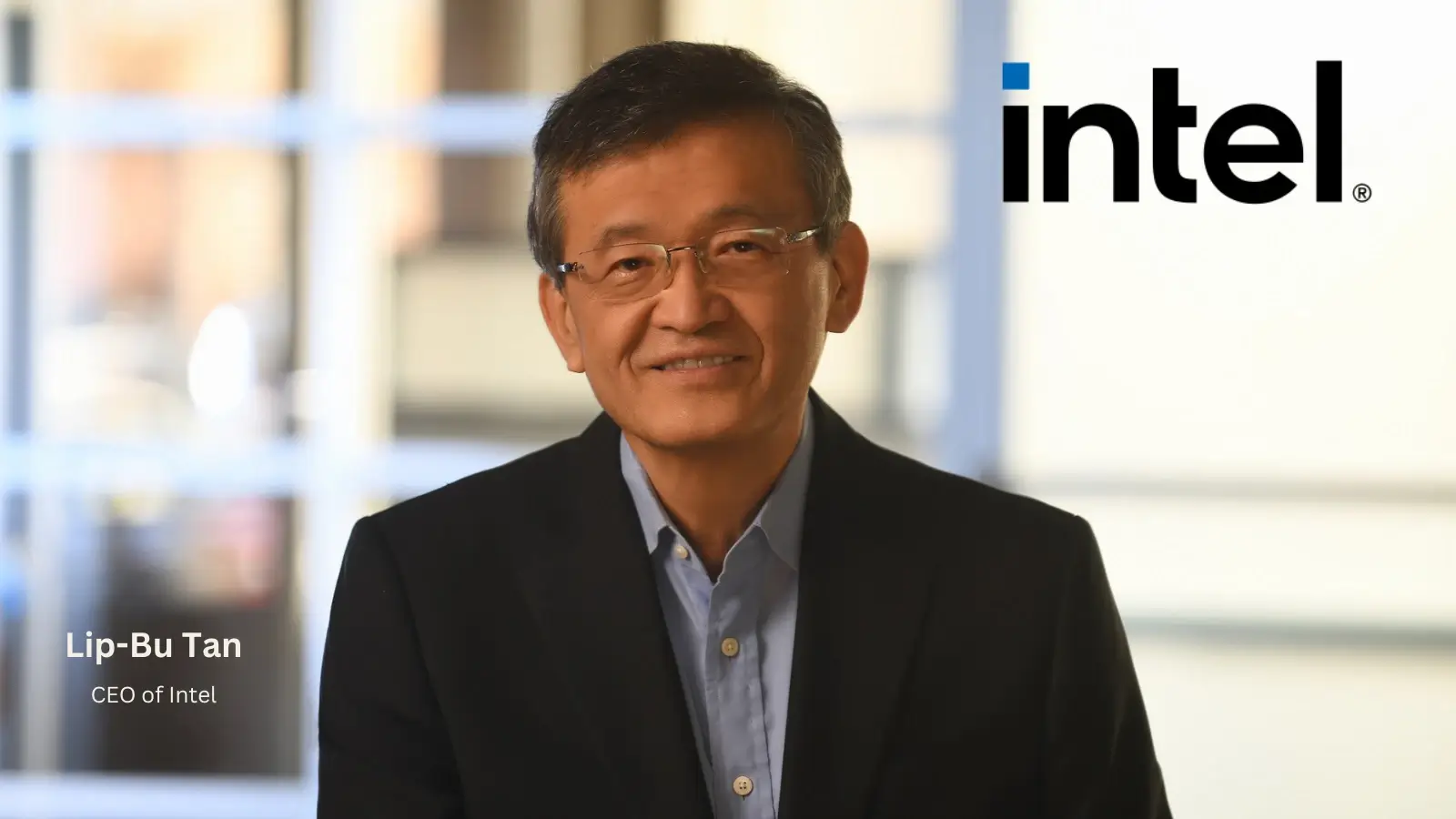
In a significant departure from its traditional proprietary business model, semiconductor giant Intel Corporation has reportedly entered into a strategic agreement to provide its Atom processor technology to Rosaic, a nascent startup led by a long-time associate of Intel board member and industry luminary Lip-Bu Tan. This move, first detailed in reports by Reuters, signals a pivotal shift in Intel’s strategy as it seeks to revitalize its market position under the guidance of Tan and CEO Pat Gelsinger. The arrangement involves the transfer of Register-Transfer Level (RTL) code for Intel’s Atom processors—a level of intellectual property (IP) sharing that is exceptionally rare for the Santa Clara-based firm, which has historically guarded its x86 architecture with rigorous legal and technical protections.
The startup at the center of this deal, Rosaic, is headed by Amarjit Gill, a seasoned silicon entrepreneur with a track record of high-profile successes in the semiconductor space. Gill and Lip-Bu Tan share a deep professional history, having co-invested in Nuvia—a high-performance chip startup eventually acquired by Qualcomm for $1.4 billion—and collaborated on the founding of Rivos, a company focused on RISC-V architecture. The decision to license Atom technology to Rosaic is viewed by industry analysts as a calculated effort to foster a broader ecosystem for Intel’s low-power architecture, potentially creating new pathways for the x86 instruction set in an era increasingly dominated by custom silicon and artificial intelligence.
Technical Foundations and the Significance of RTL Sharing
To understand the weight of this transaction, one must consider the nature of the technology being shared. Register-Transfer Level (RTL) code is essentially the blueprint of a digital circuit. It describes how data flows between hardware registers and how that data is transformed by the logic within the chip. By gaining access to Intel’s RTL for the Atom line, Rosaic is not merely buying a finished product to resell; it is obtaining the foundational code necessary to modify, optimize, and integrate Intel’s architecture into bespoke designs.
Historically, Intel has maintained a "walled garden" approach to its x86 IP. While the company has occasionally licensed its technology—most notably to Advanced Micro Devices (AMD) via long-standing cross-licensing agreements and to Chinese joint ventures such as Zhaoxin—it has rarely empowered third-party startups with the depth of access required to build custom variations of its cores. This deal suggests that Intel is beginning to embrace a more "foundry-like" mentality, where providing the "building blocks" of silicon is as important as selling the final packaged chips.
The Atom processor family itself has undergone a dramatic evolution. Originally launched in 2008, Atom was Intel’s answer to the burgeoning mobile and netbook markets. While it struggled to compete with Arm-based processors in the smartphone arena, the architecture found a second life in embedded systems, micro-servers, and networking equipment. Modern Atom chips, such as those in the P-Series and X-Series, are designed for high-density, low-power environments where efficiency is paramount. By leveraging this architecture, Rosaic could potentially develop specialized chips for edge computing or specific AI workloads that require the compatibility of x86 without the massive power draw of Intel’s flagship Xeon processors.
The Influence of Lip-Bu Tan and the Intel Turnaround
The involvement of Lip-Bu Tan is a critical element of this narrative. Tan, who joined Intel’s board of directors in 2022, is widely regarded as one of the most influential figures in the global semiconductor industry. As the former CEO and current Executive Chairman of Cadence Design Systems, and the founder of Walden International, a venture capital firm, Tan possesses a unique vantage point that bridges the gap between chip design software, hardware manufacturing, and venture-backed innovation.

Since his arrival at Intel, Tan has been a vocal proponent of the company’s "IDM 2.0" strategy. This strategy, spearheaded by CEO Pat Gelsinger, aims to return Intel to manufacturing leadership while simultaneously building a world-class foundry business that manufactures chips for other companies. The deal with Rosaic appears to be an extension of this philosophy. By providing IP to a startup run by a trusted associate, Intel can experiment with new business models that allow third parties to innovate on top of Intel’s silicon "DNA," thereby expanding the total addressable market for x86-based solutions.
Industry observers note that Tan’s strategy often involves identifying "gaps" in the market where traditional incumbents are too slow to move. By empowering a nimble startup like Rosaic with proven x86 technology, Intel may be attempting to preempt the encroachment of Arm-based startups in the data center and industrial sectors.
Chronology of Intel’s Recent Atom Developments
The licensing deal comes on the heels of a period of renewed activity for the Atom brand. Intel has spent the last 24 months aggressively updating its low-power portfolio to stay competitive against Arm Neoverse cores and AMD’s "Zen c" (compact) cores.
- Q3 2023: Intel announced two new Atom X Series chips, focusing on industrial automation and edge telecommunications. These chips featured enhanced security protocols and support for Time-Sensitive Networking (TSN).
- Q1 2024: The company upgraded its P-Series lineup, introducing "Sierra Forest" architecture elements into the low-power segment. These processors were marketed specifically for high-density cloud environments where power efficiency per rack is the primary metric of success.
- Mid-2024: Reports surfaced regarding Intel’s engagement with various startups to explore IP-sharing models, a move aimed at bolstering its Intel Foundry Services (IFS) division.
- July 2024: The Reuters report confirmed the transfer of RTL code to Rosaic, marking one of the first concrete examples of this new IP-sharing paradigm.
Market Context: The Battle for the Data Center and the Edge
Intel’s decision to share its "crown jewels" with Rosaic must be viewed through the lens of the intense competition currently defining the semiconductor landscape. For decades, Intel and AMD have held a virtual duopoly on the x86 architecture. However, the rise of cloud computing and AI has shifted the balance of power.
Hyperscalers like Amazon (with Graviton), Google (with Axion), and Microsoft (with Cobalt) have all begun designing their own custom silicon based on the Arm architecture. These companies are seeking chips that are tailored specifically to their software stacks, offering better performance-per-watt than "off-the-shelf" Intel processors. By licensing Atom RTL to Rosaic, Intel is essentially offering a counter-proposition: the ability for a startup to build custom, workload-specific silicon that retains the vast software compatibility of the x86 ecosystem.
Furthermore, the geopolitical dimension cannot be ignored. In China, firms like Shanghai Zhaoxin Semiconductor and Hygon Information Technology have used licensed x86 technology to build domestic chips, reducing the country’s reliance on Western imports. By fostering a similar ecosystem of x86 innovation in the West through companies like Rosaic, Intel ensures that the x86 instruction set remains a viable and flexible option for the next generation of hardware designers, rather than a legacy architecture tethered only to Intel’s own product cycles.
The Role of Agentic AI and Future Computing
A key driver for this deal is the emerging field of "Agentic AI." Unlike traditional AI models that simply respond to prompts, agentic AI refers to autonomous systems capable of reasoning, using tools, and executing complex multi-step tasks. While GPUs (Graphics Processing Units) are the workhorses of AI training, the "orchestration" or "logic" layer of agentic AI often relies heavily on the CPU.

Intel, under the strategic guidance of Tan, is betting that as AI agents become more prevalent, there will be a surge in demand for power-efficient CPUs that can handle the logic and input/output (I/O) requirements of these agents. Traditional high-performance CPUs are often too power-hungry for edge-based AI agents, while basic microcontrollers lack the necessary computational "heft." The Atom architecture, modified and customized by a startup like Rosaic, could sit in the "sweet spot" of this new market—providing enough performance for sophisticated AI logic while maintaining a low enough power profile for widespread deployment.
Strategic Implications and Industry Reaction
While Intel and Rosaic have not released official statements detailing the financial terms of the deal, the industry reaction has been one of cautious optimism. Proponents of the move argue that Intel needs to act more like a "platform" company and less like a "product" company. By allowing others to build on its IP, Intel creates a "halo effect" for its manufacturing business; it is highly likely that any chips designed by Rosaic using Intel’s RTL will be manufactured at Intel’s own foundries.
However, some analysts warn of potential risks. Sharing RTL code is a high-stakes endeavor; if the IP is not properly managed, it could lead to fragmentation of the x86 standard or legal complexities regarding patent infringement. There is also the question of whether a startup, even one led by industry veterans like Gill, can successfully navigate the immense costs and complexities of modern chip design, which can reach hundreds of millions of dollars for a single 3nm or 2nm tape-out.
Despite these risks, the deal represents a bold experiment. It suggests that Intel is no longer content to simply defend its territory; it is actively seeking to rewrite the rules of the semiconductor industry. By leveraging the expertise of Lip-Bu Tan and the entrepreneurial agility of Amarjit Gill, Intel is positioning itself at the center of a new, more open x86 ecosystem.
Conclusion and Outlook
The licensing of Atom technology to Rosaic marks a milestone in Intel’s multi-year turnaround effort. It is a clear indication that the company is willing to break with decades of tradition to secure its future in a silicon landscape that values customization, efficiency, and AI integration above all else. As Rosaic begins its work on this new class of custom x86 silicon, the tech world will be watching closely to see if this "rare deal" can provide the spark Intel needs to reclaim its status as the undisputed leader of the computing world. If successful, this model could become a blueprint for how legacy hardware giants can collaborate with the startup ecosystem to drive innovation in the age of artificial intelligence.