Sisilia Frederika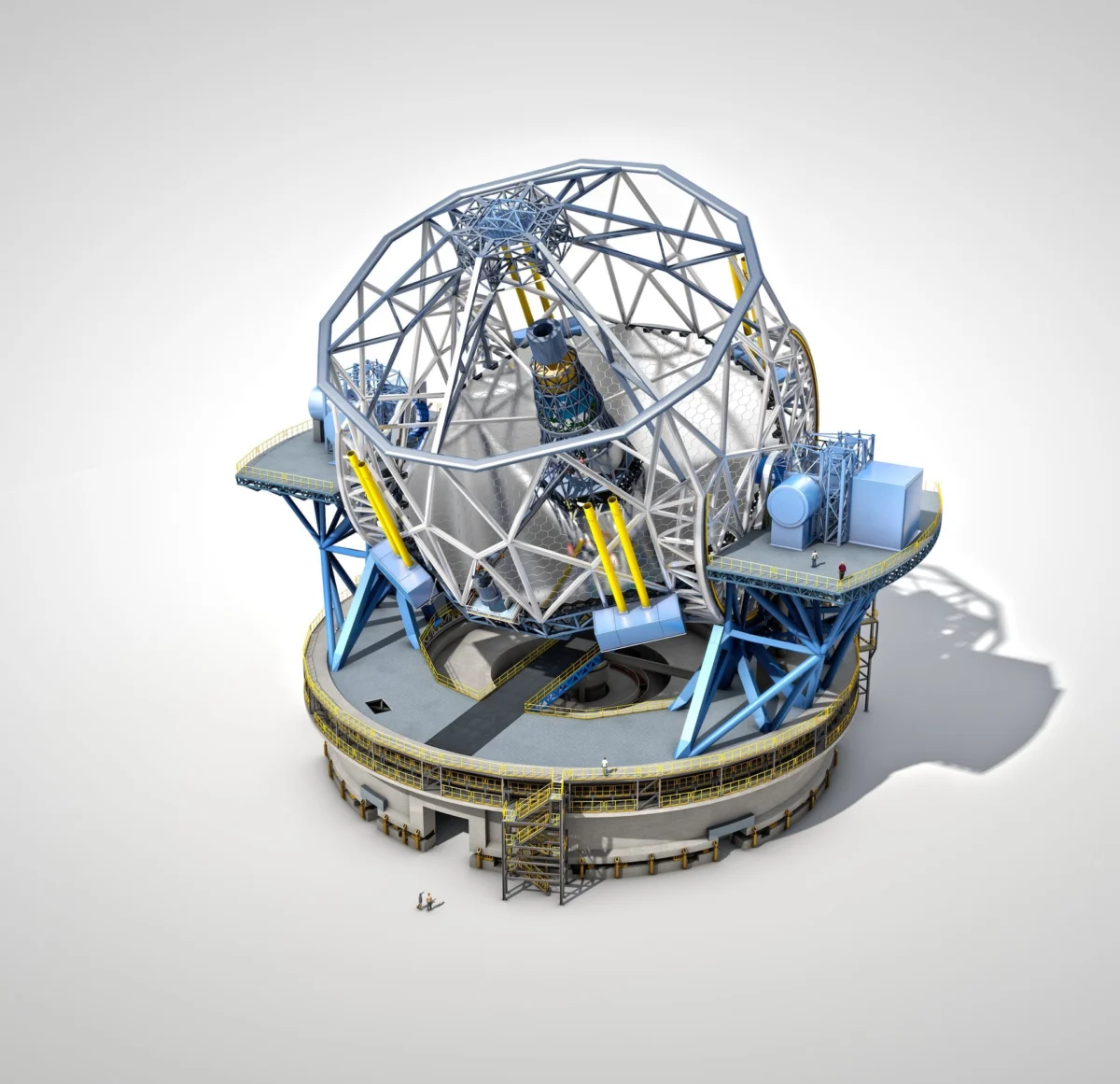
As the astronomical community prepares for a new era of ground-based observation, a seminal research paper has outlined the specific capabilities of the upcoming Extremely Large Telescope (ELT) in the search for extraterrestrial life. Lead author Evann Kurzawa-Ferrandez and a team of researchers from NASA’s Jet Propulsion Laboratory (JPL) recently published a study on the arXiv pre-print server detailing how the ELT’s advanced instrumentation will be used to detect biologically relevant gases on nearby exoplanets. This research represents a critical bridge between current theoretical models and the practical application of the 39-meter telescope, which is currently under construction in the Atacama Desert of Chile and is expected to see "first light" in the late 2020s or early 2030s.
The Engineering Marvel of the Extremely Large Telescope
The Extremely Large Telescope, managed by the European Southern Observatory (ESO), is set to become the world’s largest optical and near-infrared telescope. Located atop Cerro Armazones at an altitude of 3,046 meters, the ELT features a primary mirror 39 meters in diameter, composed of 798 hexagonal segments. This massive surface area allows the telescope to collect 100 million times more light than the human eye and roughly 13 times more light than the largest optical telescopes currently in operation.
The ELT is designed to tackle the most profound questions in modern astrophysics, from the nature of dark matter and dark energy to the formation of the first galaxies. However, its most anticipated role lies in the characterization of exoplanet atmospheres. While space-based observatories like the James Webb Space Telescope (JWST) have already begun probing the chemical makeup of distant worlds, the ELT’s sheer size and ground-based location allow for the use of high-resolution spectrographs that can peer deeper into the atmospheres of smaller, Earth-like planets.
ANDES: The Instrument Tasked with Finding Life
Central to the search for biosignatures is the ArmazoNes high Dispersion Echelle Spectrograph (ANDES), previously known as HIRES. ANDES is a high-resolution spectrograph designed to operate across a wide range of wavelengths, from the visible to the near-infrared. Its primary function is to split the light collected from distant stars and planets into its constituent colors, creating a spectrum that reveals the chemical "fingerprints" of various gases.
In the context of exoplanet research, ANDES will primarily utilize transmission spectroscopy. When a planet transits, or passes in front of its host star from our perspective, a small portion of the starlight passes through the planet’s atmosphere. The gases within that atmosphere absorb specific wavelengths of light, leaving dark lines in the resulting spectrum. By analyzing these lines, astronomers can identify the presence of molecules such as carbon dioxide ($CO_2$), water vapor ($H_2O$), methane ($CH_4$), and oxygen ($O_2$).
The presence of these gases in certain combinations—specifically methane and oxygen existing simultaneously—is considered a strong biosignature. On Earth, these two gases react and neutralize each other; their continued presence in our atmosphere is only possible because they are constantly replenished by biological processes. Finding a similar "chemical disequilibrium" on another world would be a historic indicator of potential life.
Selecting the Target Worlds: The 18 Candidates
The study by Kurzawa-Ferrandez and his colleagues did not look at the thousands of known exoplanets indiscriminately. Instead, they focused on a curated list of 18 rocky, potentially habitable planets that are known to transit their host stars. These planets are located within the "habitable zone," the region around a star where temperatures are just right for liquid water to exist on a planet’s surface.
A primary focus of the study was the TRAPPIST-1 system, located approximately 40 light-years from Earth. This system is unique because it hosts seven Earth-sized planets orbiting an ultra-cool M-dwarf star. Several of these planets, including TRAPPIST-1d, 1e, and 1f, reside within the habitable zone. Because the host star is relatively small and dim compared to our Sun, the signal from the planets’ atmospheres is easier to isolate, making the TRAPPIST-1 system the premier laboratory for the ELT’s initial biosignature surveys.
The Detection Timeline: Water vs. Oxygen
The JPL researchers used sophisticated simulations to determine how many "transits" the ELT would need to observe to confirm the presence of specific gases. A transit occurs each time the planet completes an orbit and passes in front of its star.
The findings indicate a stark difference in the detectability of different molecules. Water vapor emerged as the easiest target for ANDES. For the TRAPPIST-1 planets, the simulation suggests that water could be statistically confirmed in as few as 10 to 19 transits. For the outermost habitable planet in that system, 19 transits would take approximately 380 Earth days. This means that within just over a year of dedicated observation, the ELT could provide definitive proof of water on a world 40 light-years away.
Oxygen, however, presents a much greater challenge. As a smaller molecule with a weaker spectral signature in the wavelengths ANDES will prioritize, oxygen would require roughly four times as many observations as water. Even for the most favorable candidate, TRAPPIST-1d, it would take 36 transits to reach a decisive detection. For many other planets in the study, the limit was set at 100 transits. The researchers found that only 8 out of the 18 candidate planets would yield a decisive detection of any of the targeted gases within that 100-transit window. This highlights the difficulty of the task; even with the world’s largest telescope, the search for life will be a multi-year, if not multi-decade, endeavor.
Overcoming the "Noise" of Earth and Space
One of the most significant hurdles for ground-based telescopes is Earth’s own atmosphere. To an observer on the ground, the gases in our own air—oxygen and water vapor—create "noise" that can easily overwhelm the faint signal coming from an exoplanet. To address this, the JPL team employed a mathematical framework known as the Bayesian cross-correlation function.
This framework allows researchers to statistically separate the "local" noise of Earth’s atmosphere from the "distant" signal of the exoplanet. By accounting for the Doppler shift—the change in the frequency of light as the planet moves toward or away from Earth in its orbit—astronomers can distinguish between the stationary gases in our atmosphere and the moving gases on the target planet.
However, the authors noted several "optimistic assumptions" in their simulation that may be harder to navigate in the real world:
- Cloud Cover: The simulations assumed clear skies on the target planets. In reality, most exoplanets are likely to have clouds or high-altitude hazes that can block the view of the lower atmosphere, where biosignatures are most concentrated.
- Stellar Activity: M-dwarf stars, like TRAPPIST-1, are known for being volatile. They frequently emit massive stellar flares and have large sunspots. This activity can mimic atmospheric signals or drown them out entirely, requiring even more complex data processing.
- The Photon-Noise Limit: Reaching the level of precision needed for these detections requires the telescope to operate at its theoretical limit of light sensitivity, which is a monumental engineering and data-processing challenge.
Beyond Transits: Reflected Light and Direct Imaging
While the primary focus of the paper was on transiting planets, the ELT and ANDES will have another trick up their sleeve. The instrument is slated to include an adaptive-optics-assisted integral-field-unit (IFU) mode. Adaptive optics is a technology that uses deformable mirrors to correct for the "twinkling" effect caused by Earth’s atmospheric turbulence in real-time.
This IFU mode will allow ANDES to perform diffraction-limited observations in the near-infrared. Essentially, it will allow the telescope to capture light reflecting off the "day-side" of a planet even when it is not transiting its star. This "reflected light" spectroscopy opens the door to studying a much larger number of exoplanets, as only a small fraction of planets are aligned in a way that allows them to transit from Earth’s perspective. By monitoring the starlight reflecting off a planet’s surface or cloud tops, astronomers can look for the "red edge" of vegetation—a specific reflection pattern caused by chlorophyll—or other surface-based biosignatures.
Implications for the Future of Astronomy
The work of Kurzawa-Ferrandez and his team provides a realistic roadmap for the first decade of the ELT’s operation. While the "100 transit limit" suggests that finding life will not be instantaneous, it confirms that the technology to find biologically relevant gases on Earth-like worlds is finally within our reach.
The ELT will not work in isolation. It will complement space-based missions like JWST and the future Habitable Worlds Observatory (HWO). While JWST excels at observing the mid-infrared spectra of larger gas giants and "super-Earths," the ELT’s high-resolution capabilities are better suited for the finer details of smaller, rocky planets.
As construction continues on the Chilean mountain of Cerro Armazones, the astronomical community is shifting its focus from finding planets to understanding them. The next decade promises to move the field of astrobiology from the realm of speculation into a data-driven science. If the ELT fulfills the potential outlined in this latest research, the 2030s could be the decade when humanity finally answers the question of whether we are alone in the universe.
The engineering challenges remain significant, and the "noise" of the cosmos is formidable. Yet, with the mathematical frameworks and instrumental designs now coming to light, the path to discovering a second Earth has never been clearer. The Extremely Large Telescope may be a behemoth of steel and glass, but its true power lies in its ability to turn a tiny speck of light from a distant star into a window onto a living world.