Vera Intan Clara
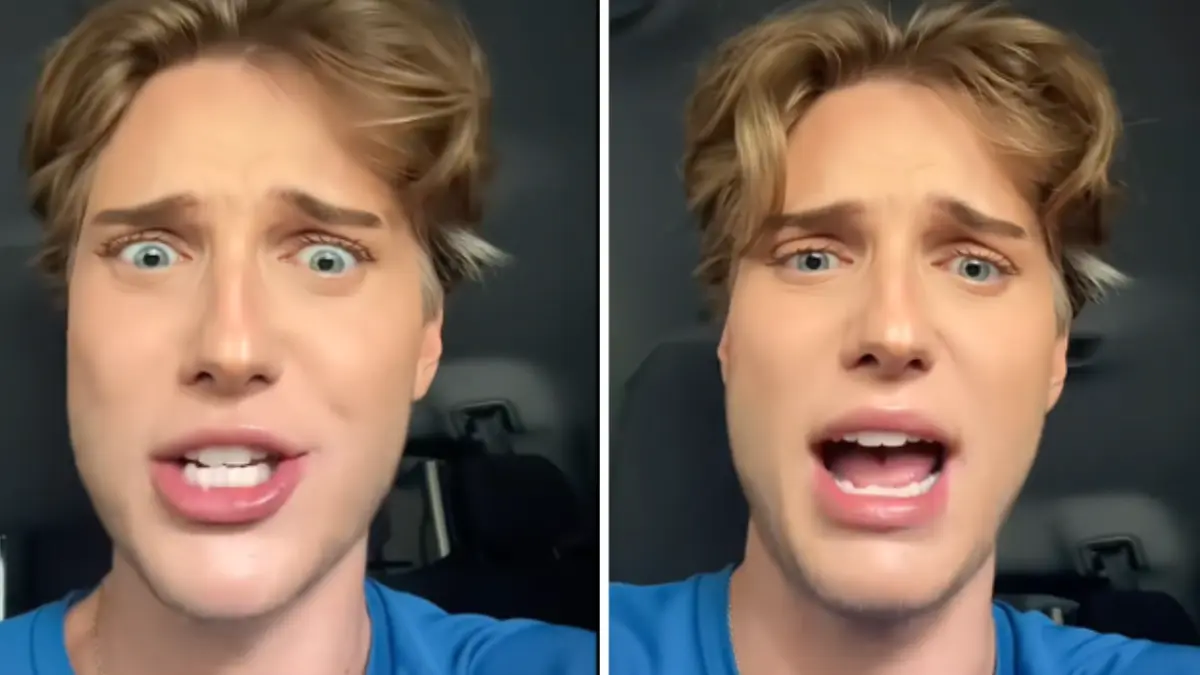
The digital sphere recently buzzed with a compelling anecdote from a TikTok server known as Dean, or @deanredmonds, who recounted a dramatic encounter with a customer attempting to secure a complimentary meal through a common, yet often audacious, tactic: claiming familiarity with the restaurant’s owner. Dean’s unconventional response, involving a fabricated personal tragedy, not only thwarted the customer’s scheme but also ignited widespread discussion across social media platforms regarding customer entitlement, the challenges faced by service industry professionals, and the creative measures sometimes employed to uphold fairness. The video, rapidly gaining traction with tens of thousands of views and a significant comment count, quickly became a focal point for those both within and outside the hospitality sector, offering a rare glimpse into the daily tribulations of front-line workers.
The Incident Unfolds: A Chronology of Deception and Counter-Deception
The encounter, as narrated by Dean, commenced during a routine shift at his restaurant. A woman arrived, ostensibly to collect a food order placed under the name "Mary." Upon presenting the bill for the order, Dean observed a noticeable shift in the customer’s demeanor. She reportedly scoffed at the total, promptly deploying the well-worn phrase, "I know the owner," implying that her purported connection should exempt her from payment. This tactic, a familiar refrain in many service establishments, typically aims to intimidate staff into compliance or to leverage a non-existent relationship for personal gain.
Dean, perceiving an immediate disingenuousness in her claim, felt compelled to challenge her assertion. His intuition suggested that the customer’s confidence was built on an unfounded premise. Rather than directly disputing her, Dean opted for a subtle but strategic counter-move. He calmly informed the woman that he could facilitate a direct call to the owner, allowing "Mary" – the supposed acquaintance – to speak with them personally. This proposition evidently caught the customer off guard. Her initial bravado wavered, and she began to "backpedal," as Dean described, stating she did not wish to "bother" the owner. This hesitation served to further solidify Dean’s suspicion regarding the legitimacy of her claim.
Undeterred by her retreat, Dean pressed on, maintaining his composure. He remarked that the owner had "not been busy for a while," subtly implying that a call would not be an imposition. The woman, attempting to regain control of the narrative, then reportedly insisted that the owner would "know exactly who she was" and reiterated her demand for the food to be provided free of charge. At this juncture, Dean made a decisive pivot, introducing a layer of elaborate fiction into the interaction that dramatically altered its trajectory.
He looked the customer directly and stated, with a solemn tone, that the owner was his mother, and that she had tragically passed away several months prior. He then, with feigned sincerity, expressed a desire to connect with anyone who had been a close friend of his late mother, extending an invitation for the woman to share stories or memories. This unexpected and emotionally charged fabrication instantly shattered the customer’s composure. According to Dean, her confidence evaporated entirely. She became visibly nervous, began to stutter, and her previous assertiveness dissolved into an uncomfortable silence. The confrontation culminated with the woman hastily placing a $20 bill on the counter – enough to cover the order – and making a swift exit, leaving the restaurant without further argument.
Dean later revealed the "catch" to his audience: while his mother had indeed passed away, she was not, in fact, the owner of the establishment. His elaborate narrative was a calculated improvisation, designed specifically to expose and deter the customer whom he believed was attempting to exploit the system for a free meal. The story, delivered with compelling detail, immediately resonated with a broad audience, particularly those familiar with the often-frustrating dynamics of customer service.
The "I Know the Owner" Phenomenon: A Deeper Dive into Customer Entitlement
The tactic employed by the customer in Dean’s story is far from isolated; it represents a pervasive challenge within the hospitality and retail sectors. The "I know the owner" card is a classic maneuver, often rooted in a sense of perceived entitlement or a desire for special treatment that bypasses standard operational procedures. Sociologists and consumer behavior experts note that such claims can stem from various motivations: a genuine, albeit often exaggerated, acquaintance; an attempt to exert power over service staff; or simply a brazen effort to reduce or eliminate costs. This behavior, while seemingly minor in individual instances, contributes to a larger culture of entitlement that can significantly impact the morale of service workers and, in some cases, the financial stability of businesses.
Service industry professionals are frequently placed in awkward positions, forced to navigate potentially confrontational situations while upholding company policies and protecting revenue. The emotional labor involved in these interactions can be substantial, contributing to stress and burnout within an already demanding industry. According to a 2023 study by Black Box Intelligence, restaurant employee turnover remains high, partly fueled by challenging work environments and difficult customer interactions. While specific data on "free meal" attempts are scarce, anecdotal evidence from countless service professionals suggests it is a regular occurrence, ranging from subtle hints for discounts to overt demands for complimentary goods or services. These incidents, while individually minor, collectively contribute to operational inefficiencies and financial strain.
Restaurants, bars, and retail establishments typically operate on razor-thin profit margins, averaging around 3-6% for full-service restaurants. Every complimentary item or unbilled service, particularly when extracted under false pretenses, directly chips away at this delicate balance. While owners may occasionally extend genuine courtesies to friends or regular patrons, these are typically deliberate decisions made at the management level, not forced concessions demanded by customers. The expectation that a mere acquaintance warrants a free meal or preferential treatment undermines the value of the product or service and disrespects the labor of those providing it.
TikTok as a Platform for Service Industry Catharsis and Commentary
Dean’s decision to share his experience on TikTok tapped into a powerful vein of collective frustration and shared understanding among service workers globally. The platform, known for its short-form video content, has become an unexpected forum for employees to document their daily lives, including the unique challenges of their professions. For many in the service industry, Dean’s video was not just an entertaining story; it was a moment of catharsis, validating their own experiences with difficult customers and providing a rare public outlet for frustrations often confined to back-of-house conversations.
The video’s rapid ascent to viral status underscores the universal relatability of its theme. With over 15,600 views and 67 comments at the time of initial reporting (and likely far more since), the engagement reflected a deep resonance with the narrative. Viewers, many of whom identified as current or former service industry employees, flooded the comments section with praise for Dean’s ingenuity and shared their own stories of similar encounters. The comments section transformed into a digital town square, where servers, bartenders, and retail associates found common ground in their shared experiences of navigating customer entitlement.
Comments ranged from outright admiration for Dean’s quick thinking ("Not only did you teach us something but you taught her to never try that again," one user wrote) to commendations for his creativity ("This is so creative I’m dead," another added). Many users articulated their solidarity with Dean’s stance against entitlement, emphasizing that genuine connections with business owners do not equate to free services. "YESSS! I go to restaurants where I know the owner and I NEVER expect free food. That’s THEIR business, make your bag boo," a commenter passionately stated, highlighting the respect that truly supportive patrons have for a business. Another echoed this sentiment: "As someone who knows lots of people who own their own business, I would never go in and ask for free food. I love them and I want to support them. I wouldn’t go in just to get special treatment lol. That’s why I get so confused when people who ‘know the owner’ expect their meal for free." These comments collectively painted a vivid picture of an industry grappling with a widespread, often unacknowledged, problem.
The discussion also brought forth other extreme examples, such as the anecdote shared by another server: "One of the restaurants I worked at the owner and his wife would work there as well. We had someone try to pull the ‘I’m married to the owner’ card and the owner looked her in the eye and said ‘you’re not my wife, that’s my wife’ and pointed to where she was at. She just left and he told her to never come back." This story further illustrates the audacious nature of some customer attempts and the direct, sometimes confrontational, responses required to address them. The sheer volume and intensity of these shared experiences on TikTok suggest that Dean’s encounter is not an anomaly but rather a symptom of a larger, systemic issue within customer service, where employees are increasingly using social media to shed light on their daily struggles.
Ethical Considerations and Broader Implications
While Dean’s stratagem was undeniably effective in resolving the immediate conflict and ensuring payment, it also opens a dialogue about the ethical boundaries of customer service. The use of a personal tragedy, even a partially fabricated one, to manipulate a customer raises questions about the methods employed in navigating difficult interactions. On one hand, Dean’s actions could be seen as a justifiable response to an attempted fraud, a clever way to turn the tables on someone seeking to exploit the system. From this perspective, the lie served to protect the business’s revenue and uphold fairness. It was a non-violent, non-aggressive solution that achieved the desired outcome without escalating the situation into a public argument.
On the other hand, relying on deception, regardless of the provocation, could be viewed as a slippery slope. While Dean’s specific lie was potent due to its emotional weight, it could, in other contexts, escalate a situation or lead to unforeseen negative consequences. For instance, a more aggressive customer might have reacted poorly, or the lie could have been exposed, potentially damaging the restaurant’s reputation or leading to disciplinary action against Dean. However, given the context of a customer attempting to obtain goods under false pretenses, many argue that Dean’s response was a proportional and ultimately harmless way to defend himself and his employer. The rapid retreat of the customer suggests the effectiveness of this particular approach in deterring further confrontation without resorting to aggression or overt shaming.
The incident also highlights the often-unacknowledged power dynamic in customer service. While the adage "the customer is always right" often dictates interactions, stories like Dean’s demonstrate the significant burden placed on service professionals to manage unreasonable demands. The ability for servers to share these experiences publicly via platforms like TikTok has subtly shifted this dynamic, providing a collective voice and a sense of empowerment to workers who traditionally hold less power in these exchanges. It allows them to expose behaviors that are often tolerated in silence, fostering a broader public discourse on respectful customer conduct. This digital empowerment serves as a form of accountability, encouraging customers to reflect on their own behavior in service environments.
Industry Best Practices and the Future of Customer Service
For restaurant owners and managers, incidents like Dean’s serve as a reminder of the need for clear policies and robust training programs for staff. While an owner might wish to extend goodwill to genuine acquaintances, this should be a managed process, perhaps involving a specific authorization system or a discreet communication channel, rather than leaving staff vulnerable to unsubstantiated claims. Training for employees should cover strategies for handling difficult customers, identifying fraudulent claims, and knowing when to escalate situations to management. This equips staff with tools to navigate challenging scenarios professionally and confidently, reducing reliance on individual, potentially risky, improvisations. Effective training can also help reduce employee stress and improve retention in a high-turnover industry.
The broader implication is a call for greater mutual respect in customer-service interactions. As consumers increasingly rely on service industries for convenience and experience, understanding the pressures faced by the workers delivering these services becomes paramount. The proliferation of social media stories like Dean’s is not just entertainment; it’s a social commentary, urging a re-evaluation of how customers and service providers interact. Dean’s story, while humorous and satisfying for many, ultimately underscores a fundamental tension: the pursuit of personal gain at the expense of others, and the creative lengths to which individuals will go to uphold principles of fairness and integrity in their professional roles.
In conclusion, Dean’s viral TikTok narrative transcends a simple anecdote; it is a microcosm of persistent issues within the service industry. It brilliantly showcases a server’s clever response to entitlement, prompting both laughter and serious reflection among a global audience. While the details of the event are based solely on @deanredmonds’ account and were unable to be independently verified by news outlets such as The Daily Dot, its widespread resonance confirms that the challenges he described are very real for countless individuals working on the front lines of customer interaction, reinforcing the ongoing dialogue about professionalism, respect, and ethical conduct in commercial exchanges. The incident serves as a poignant reminder that while the customer may not always be "right," service professionals are often adept at finding innovative ways to navigate the complexities of their demanding roles.