Sisilia Frederika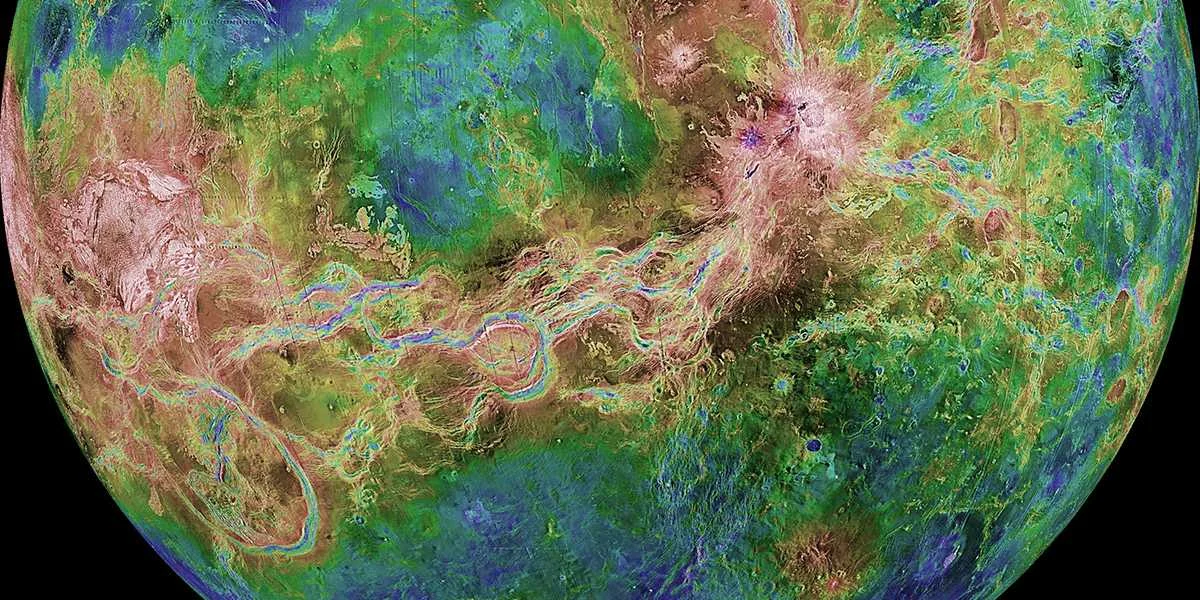
Venus has long been characterized in the scientific community as Earth’s "evil twin," a world where the similarities in size and composition are overshadowed by a hellish environment that defies human survival. For decades, the prevailing consensus suggested that Venus was a geologically dead world, a planet whose internal heat had failed to manifest in the dynamic tectonic activity seen on Earth. However, groundbreaking research from ETH Zurich, published in the prestigious journal Nature Geoscience, is fundamentally shifting this paradigm. Led by Taras Gerya, a Professor of Geodynamics at the Department of Earth and Planetary Sciences, and lead author Xi Yang, the study provides compelling evidence that Venus is not only geologically alive but possesses a dynamic interior that continues to reshape its surface through active volcanism and tectonic rifting.
The Hellish Landscape: Contextualizing the Venusian Environment
To understand the significance of the ETH Zurich findings, one must first appreciate the extreme conditions of the Venusian environment. Venus is a world of superlatives, often described as a literary allegory for Dante’s Inferno. Its atmosphere is a thick, choking shroud composed primarily of carbon dioxide, with clouds of sulfuric acid that reflect sunlight, making it the brightest planet in the night sky. This dense atmosphere creates a runaway greenhouse effect, trapping heat and driving surface temperatures to a staggering 467°C (872°F). This temperature is consistent across the planet, day or night, and is hot enough to melt lead, zinc, and many common electronic components.
The atmospheric pressure at the surface is equally daunting. At 93 times the pressure of Earth’s atmosphere, standing on the surface of Venus would be equivalent to being 900 meters (approximately 3,000 feet) underwater on Earth. Such pressure is sufficient to crush a conventional human submarine, let alone a human body. Geologically, Venus differs from Earth in one fundamental way: it lacks the mosaic of shifting tectonic plates that define Earth’s "active lid" geology. Instead, Venus possesses what scientists call a "stagnant lid" or a single-piece crust. Until recently, this lack of plate boundaries led many to believe the planet’s surface was a frozen relic of its ancient past.
The Breakthrough Study: 3D Modeling and Rift Dynamics
The research conducted by Xi Yang and Taras Gerya utilized advanced 3D computer simulations to challenge the "dead planet" hypothesis. Previous attempts to model the Venusian crust were limited by two-dimensional constraints and simplified material assumptions, which failed to capture the complexity of the planet’s topography. By developing a high-resolution, three-dimensional model, the ETH team was able to replicate the formation of Venusian rift valleys with unprecedented accuracy.
Rift valleys are lowland features that form when a planet’s crust is pulled apart by internal forces. On Earth, these are often associated with plate boundaries, such as the East African Rift. On Venus, these rifts are massive, spanning up to 10,000 kilometers in length. The ETH simulations focused on the "flanks" of these rifts—the raised ridges that border the valleys. The study found that broad, high ridges along the edges of these rifts are a signature of geological youth. According to the model, these flanks form when the rifts are either actively moving or have only recently ceased their expansion.
Crucially, the simulations suggest that these rifts widen at a rate of 3 to 10 centimeters per year. This rate is surprisingly rapid, comparable to the spreading rates of mid-ocean ridges on Earth. The presence of these high-standing flanks in modern satellite imagery suggests that the tectonic activity that created them is either ongoing or occurred within the last few million years—a mere blink of an eye in geological time.
Chronology of Discovery: From Magellan to the Present
The journey to understanding Venusian geology has been a long and arduous one, hampered by the planet’s opaque atmosphere. The modern era of Venusian exploration began in earnest with the NASA Magellan mission, which arrived at the planet in 1990. Using synthetic aperture radar, Magellan mapped 98% of the surface, revealing a world dominated by volcanic features, vast plains, and the mysterious rift valleys that are the focus of the ETH study.
While Magellan provided the data, the interpretation of that data has evolved over thirty years. In the 1990s, the "global resurfacing" hypothesis was the dominant theory. This theory proposed that Venus underwent a catastrophic, planet-wide volcanic event roughly 500 million years ago, which paved over the entire surface and was followed by geological quiescence.
However, the ETH Zurich research builds upon a growing body of evidence from the 2010s and 2020s that contradicts the "dormant twin" narrative. In 2010, ESA’s Venus Express orbiter detected "hot spots" on the surface that suggested recent volcanic flows. In 2020, researchers identified "coronae"—ring-like structures formed by plumes of hot magma—that appeared to be currently active. The new ETH study provides the mechanical explanation for these observations, linking the internal heat of the mantle to the visible stretching of the crust.
Supporting Data: Crustal Relaxation and the Absence of Erosion
One of the most significant findings of the ETH study involves the process of "crustal relaxation." On Earth, geological features like mountain ranges and rift flanks are eventually worn down by the relentless forces of wind, rain, and ice. Venus, however, lacks a hydrological cycle. There is no rainfall (except for sulfuric acid that evaporates before hitting the ground) and very little surface wind.
Instead of traditional erosion, Venusian features subside through a process where the crust effectively "flows" or relaxes over time due to the extreme heat. The ETH model demonstrated that the older a rift system becomes, the flatter and narrower its flanks appear. By comparing the high, steep flanks observed in Magellan’s radar data with the results of their simulations, Yang and Gerya concluded that many of the observed rifts have not yet had time to relax. This indicates that the tectonic activity is relatively recent—likely occurring within the last 100 million years, with some regions potentially active today.
Official Responses and Scientific Reactions
The publication of this study has sent ripples through the planetary science community. While official statements from space agencies like NASA and ESA typically remain neutral until further peer review, the implications are being integrated into the planning of upcoming missions.
Taras Gerya emphasized the importance of these findings for future exploration, stating, "The results help us to better assess the tectonic activity on Venus. We can now pinpoint specific regions that are likely to be geologically active, which will be vital for the next generation of orbiters and landers."
Geophysicists not involved in the study have noted that the 3D nature of the model is a "game-changer." By accounting for the thickness of the Venusian lithosphere and the temperature gradients within the mantle, the ETH team has provided a more robust framework for understanding how a planet without plate tectonics can still be dynamic. This challenges the long-held belief that plate tectonics is the only way for a rocky planet to remain "alive."
Broader Impact: Exoplanets and the Search for Life
The study’s implications extend far beyond our own solar system. As astronomers discover thousands of exoplanets orbiting distant stars, many of which are "Super-Earths" or "Venus-analogs," understanding the geological evolution of Venus becomes a priority.
If a planet as hostile as Venus can maintain geological activity without plate tectonics, it changes the "habitability" criteria used by astrobiologists. Geological activity is essential for regulating a planet’s atmosphere and cycling nutrients. By refining our understanding of how Venusian rifts form, the ETH researchers are providing a template for identifying active rocky exoplanets. This research suggests that a "stagnant lid" planet is not necessarily a "dead" planet, broadening the scope of where we might look for geologically dynamic worlds in the galaxy.
The Future of Venusian Exploration: 2030 and Beyond
The findings from ETH Zurich come at a pivotal moment as a new "Decade of Venus" approaches. After years of focusing on Mars, the international scientific community is returning its gaze to Earth’s neighbor.
- ESA’s EnVision Mission: Scheduled for launch in the early 2030s, EnVision will provide high-resolution radar mapping and atmospheric analysis. ETH Zurich professors Paul Tackley and Taras Gerya are actively involved in developing instruments for this mission. The goal is to observe the surface changes in real-time, potentially capturing an active volcanic eruption or a shifting rift.
- NASA’s VERITAS: This mission (Venus Emissivity, Radio Science, InSAR, Topography, and Spectroscopy) will create a high-resolution 3D map of the planet. The data from the ETH study will help VERITAS scientists decide which rift systems to prioritize for high-resolution imaging.
- NASA’s DAVINCI: While VERITAS and EnVision focus on the surface and interior, DAVINCI will drop a probe through the atmosphere. This will provide the chemical context needed to understand the volcanic gases being released by the active regions identified in the ETH simulations.
The synthesis of the ETH Zurich study and these upcoming missions represents a new chapter in planetary science. We are moving away from the view of Venus as a static, hellish wasteland and toward a vision of a complex, evolving world. The discovery that Venusian rifts are widening at rates comparable to Earth’s ocean floors suggests that beneath the crushing pressure and searing heat, the heart of the planet is still beating. As we prepare to send a new fleet of robotic explorers to the second planet, the work of Xi Yang and Taras Gerya serves as a roadmap, guiding us toward the most dynamic and geologically significant regions of our mysterious twin.