admin
admin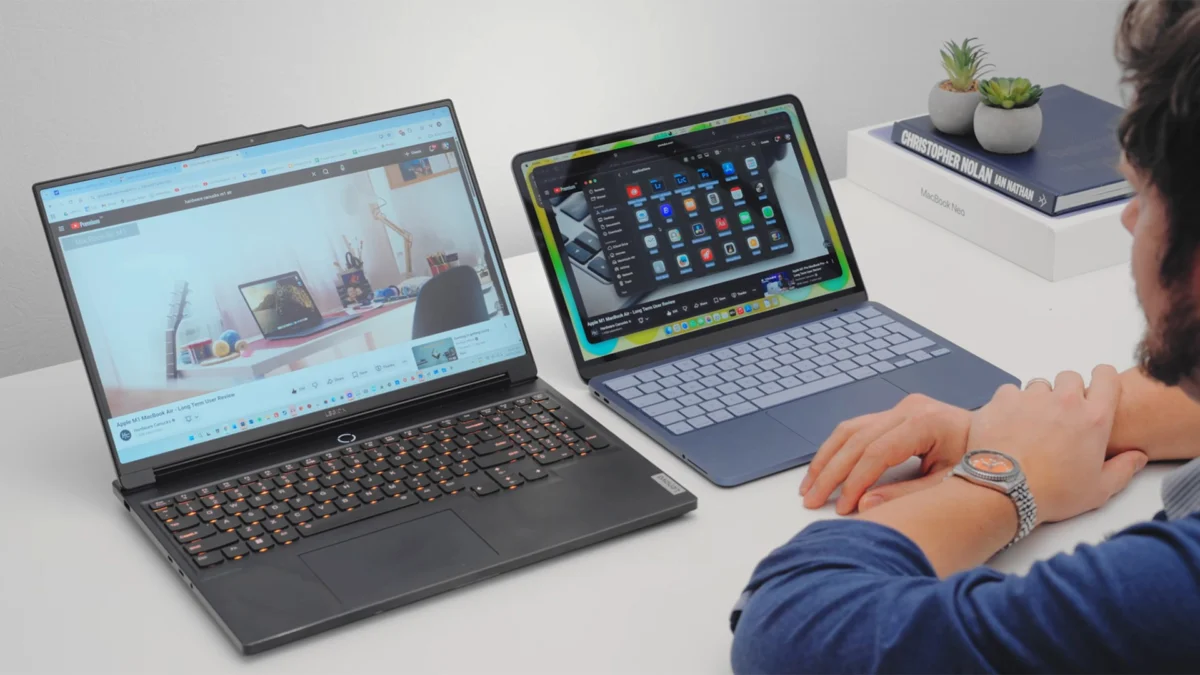
The release of the MacBook Neo has reignited a long-standing debate within the technology industry regarding the adequacy of 8GB of RAM in modern computing environments. Central to this discussion is Apple’s strategic decision to utilize the A18 Pro chipset, a component originally designed with mobile-first architecture, which necessitates a unified memory configuration where the RAM is physically integrated into the chipset’s packaging. This hardware limitation means that users are restricted to the base memory capacity without the possibility of future upgrades. While critics have frequently labeled 8GB as insufficient for contemporary workflows, a recent stress test conducted by the prominent technology YouTube channel Hardware Canucks has provided a different perspective, demonstrating that the MacBook Neo’s memory management may be more robust than its raw specifications suggest.
The controversy began when Hardware Canucks released a comprehensive review and stress test of the MacBook Neo, aiming to determine the practical limits of the 8GB unified memory architecture. In an attempt to simulate an extreme multitasking scenario—far beyond the typical use case for an entry-level portable Mac—the testers launched 60 separate applications in rapid succession. The list of software included a variety of system utilities, productivity tools, and media applications. Simultaneously, the machine was tasked with streaming high-definition video. According to the test results, the MacBook Neo maintained system stability throughout the ordeal; the macOS interface remained responsive, the cursor showed no signs of lagging, and the video playback continued without stuttering, despite a predictable increase in battery consumption due to the high processing load.
Comparative Performance and the Lenovo Legion Incident
To provide a baseline for the MacBook Neo’s performance, Hardware Canucks attempted to replicate the same multitasking stress test on a Windows-powered notebook, specifically identified as a Lenovo Legion model. The Legion series is generally marketed as a high-performance gaming and workstation line, typically boasting larger thermal envelopes and higher raw hardware specifications than a slim, portable device like the MacBook Neo. However, the results of the comparison were unexpected. During the attempt to launch a similar volume of applications, the Lenovo notebook reportedly suffered a total system failure, described by the reviewers as a "black screen" event where the device powered off entirely.
This specific outcome has become a focal point of intense discussion within the tech community. Critics of the test, most notably the X (formerly Twitter) account Beyond FPS, challenged the validity of the comparison. Beyond FPS accused Hardware Canucks of publishing a "biased" and "shifty" video, suggesting that the Windows laptop might have simply entered a hibernation or sleep state rather than experiencing a hardware or software crash. The critique argued that the video failed to show the specific steps taken to open the apps on the Windows machine, implying that the failure might have been engineered or misinterpreted to favor Apple’s hardware.
In response to these allegations, Hardware Canucks clarified that the Lenovo Legion did not enter a power-saving mode but rather experienced a legitimate system crash under the pressure of the task. To bolster their claim, the channel pointed toward documented issues within the Lenovo user community. A Reddit thread from the r/LenovoLegion community was cited, where users of the Legion Slim 5 and related models reported similar "black screen" issues when the machines were either under significant load or, in some cases, sitting idle. This suggests that the failure observed during the stress test may have been related to specific firmware or driver instabilities inherent to that particular Windows hardware configuration, rather than a direct indictment of the Windows operating system’s memory management capabilities.
Technical Analysis of the A18 Pro Packaging
The MacBook Neo’s reliance on the A18 Pro chipset is a significant departure from Apple’s standard use of "M-series" silicon for its laptop lineup. By utilizing the A18 Pro—the same architecture found in the flagship iPhone 16 Pro series—Apple is leveraging a highly efficient 3-nanometer process. However, the mobile origins of the chip dictate its memory structure. In the A18 Pro, the LPDDR5X memory is "PoP" (Package on Package) or sits in close proximity within the same housing as the CPU and GPU cores. This design minimizes latency and maximizes energy efficiency, which is why the MacBook Neo can handle high-bandwidth tasks like video streaming and multi-app switching with relatively low RAM overhead.
The "unified" nature of this memory means that the 8GB is shared dynamically between the central processing unit (CPU) and the graphics processing unit (GPU). In traditional PC architectures, the system RAM and the dedicated video RAM (VRAM) are separate. Apple’s argument has long been that 8GB of unified memory is functionally equivalent to a higher amount of traditional RAM because of the speed of the interface and the efficiency of the macOS "swap" system, which utilizes the high-speed Solid State Drive (SSD) to temporarily store data when the physical RAM is full. The Hardware Canucks test appears to validate this claim for general consumer tasks, showing that while the "memory pressure" in macOS may turn red, the user experience remains fluid.
Market Positioning and Consumer Impact
The MacBook Neo is positioned as an entry-level device, targeting students, casual users, and professionals with light workloads who prioritize portability and price over raw computational power. With an MSRP of $699—and recent retail listings on Amazon showing a slight price drop to $689.99 for the 512GB variant—it represents the most affordable entry point into the modern Mac ecosystem.
For the target demographic, the 8GB limitation may be a non-issue. The Hardware Canucks test demonstrates that for web browsing, document editing, and media consumption, the machine is more than capable. However, the tech community remains divided on the longevity of such a device. As web applications become more resource-intensive and AI-driven features (such as Apple Intelligence) become integrated into the core OS, the baseline requirements for memory are expected to rise. Analysts suggest that while 8GB suffices for 60 apps today, it may struggle with the advanced neural processing tasks expected in future software updates.
Timeline of the MacBook Neo Memory Debate
The discussion surrounding the MacBook Neo’s specifications has evolved through several key stages:
- Announcement and Specification Reveal: Apple confirms the MacBook Neo will use the A18 Pro chip with a fixed 8GB unified memory configuration.
- Initial Market Skepticism: Tech enthusiasts and reviewers question the decision to ship a "Pro" branded chip with a "non-Pro" amount of RAM in 2025/2026.
- Hardware Canucks Review (March 2026): The controversial stress test is published, showing the MacBook Neo outlasting a Windows gaming laptop in a multitasking marathon.
- Social Media Backlash: Beyond FPS and other creators call out the methodology of the test, sparking a viral debate on X and Reddit.
- Technical Rebuttal: Hardware Canucks provides evidence of known issues with the Lenovo Legion series to justify the Windows failure.
- Price Adjustment: Major retailers like Amazon begin offering discounts, positioning the Neo as a high-value "daily driver" for the budget-conscious.
Broader Implications for the Laptop Industry
The performance of the MacBook Neo highlights a growing divergence in how Apple and its competitors approach mobile computing. While Windows manufacturers like Lenovo, Dell, and HP are increasingly moving toward 16GB as a standard minimum to accommodate the overhead of Windows 11 and diverse hardware configurations, Apple continues to optimize its vertically integrated stack to do "more with less."
This efficiency comes at the cost of repairability and upgradability. The "black screen" incident with the Lenovo Legion, while potentially a localized hardware flaw, underscores the complexity of the Windows ecosystem where hardware from one vendor must work with software from another, often leading to driver conflicts under extreme stress. In contrast, Apple’s closed loop allows for tighter control over how the system handles "out of memory" events, preventing the hard crashes seen in the Hardware Canucks video.
However, the industry trend is clear: software is not getting lighter. The debate over the MacBook Neo is a microcosm of a larger question in personal computing: is optimized efficiency better than raw capacity? For now, the MacBook Neo seems to have proven that it can punch above its weight class in stability, even if it remains a lightning rod for criticism regarding its fixed hardware path. As the MacBook Neo continues to see adoption, particularly at its sub-$700 price point, the real-world experiences of millions of users will eventually provide the final verdict on whether 8GB was a calculated masterstroke of engineering or a short-sighted limitation.