admin
admin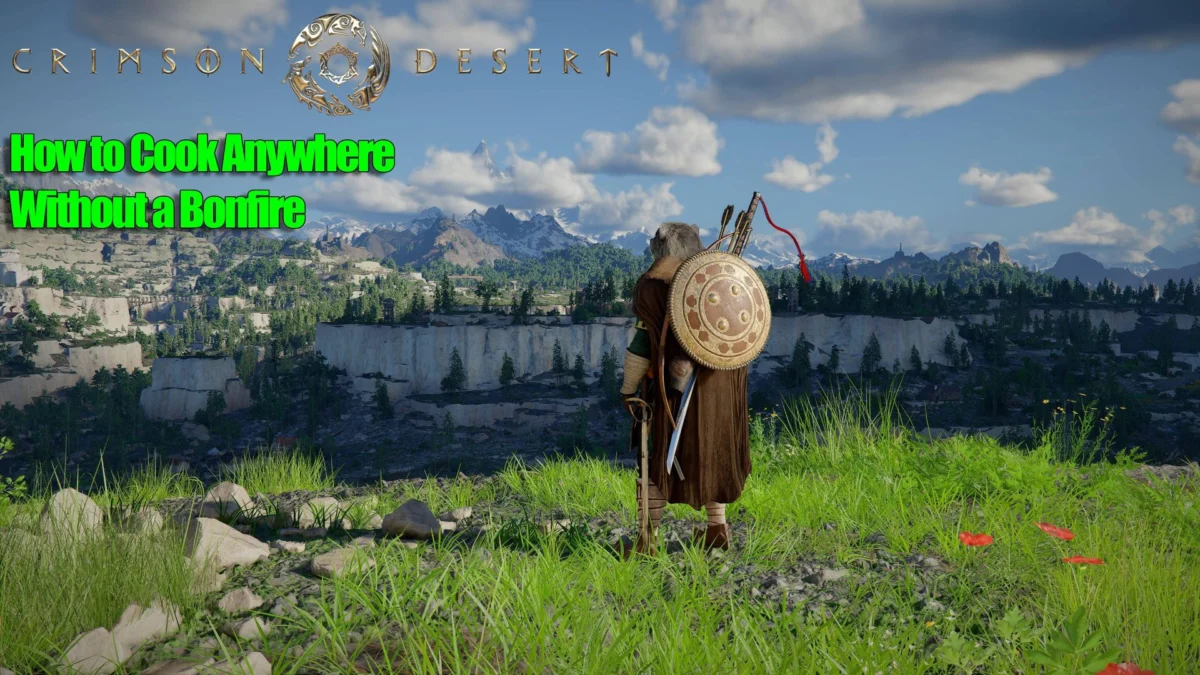
The evolution of open-world action-adventure titles has increasingly favored emergent gameplay, where systemic interactions allow players to solve problems in ways not explicitly outlined in a tutorial. Pearl Abyss, the South Korean developer behind the ambitious title Crimson Desert, has integrated a sophisticated sandbox environment that rewards this level of creative thinking. At the heart of the game’s survival loop is the necessity of maintaining the health and vitality of the protagonist, Kliff, and his companions, Damiane and Oongka. While traditional survival mechanics dictate the use of designated rest areas, a recently discovered interaction involving the "Blinding Flash" skill has redefined how players approach resource management in the field.
The Critical Role of Nutrition and Survival in Pywel
In the harsh, war-torn continent of Pywel, survival is not merely a thematic element but a core mechanical pillar. Crimson Desert distinguishes itself from standard hack-and-slash titles by implementing a rigorous Hit Point (HP) management system. Players must manage the well-being of multiple characters, each belonging to the Grey Mane mercenaries. Unlike games where health regenerates automatically or through simple potion consumption, Crimson Desert emphasizes the importance of prepared meals.
Under standard gameplay conditions, the most effective way to restore HP is to consume cooked food. This process typically requires players to locate a bonfire—a static environmental asset found in camps, settlements, or specific wilderness locations. At these fires, players can combine raw ingredients to create complex dishes that provide substantial healing and temporary stat buffs. However, this system introduces a strategic bottleneck: if a player enters a high-stakes encounter or a boss arena without an adequate supply of pre-cooked meals, they are often left vulnerable. The friction created by the need to backtrack to a bonfire can disrupt the pacing of exploration and combat.
The Blinding Flash Skill: Beyond Tactical Utility
The discovery of an alternative cooking method centers on "Blinding Flash," a core ability unlocked during the narrative progression of Chapter 2. On a surface level, Blinding Flash is a tactical combat tool designed to disorient groups of enemies, providing Kliff with a window to execute high-damage combos or retreat from a disadvantageous position. However, the internal physics engine of Crimson Desert—the proprietary BlackSpace Engine—simulates heat and light with high fidelity.
Detailed analysis of the skill reveals that Blinding Flash generates a concentrated burst of thermal energy. By directing this light toward flammable or reactive objects in the environment, players can initiate combustion. While the game’s official guides emphasize its use in lighting torches or triggering explosive barrels, its application in culinary survival is a testament to the game’s "sandbox" philosophy. By dropping raw ingredients, such as meat harvested from local wildlife or foraged fruits, onto the ground and subjecting them to the concentrated heat of Blinding Flash, players can produce "simple grilled" variants of these items.
Chronology of Skill Acquisition and Gameplay Integration
To understand the impact of this mechanic, one must look at the progression timeline within Crimson Desert. The first ten hours of gameplay serve as an introduction to the mercenary lifestyle, focusing on basic swordplay and the standard bonfire cooking system.
- Early Game (Hours 1-5): Players are taught to rely on established camps. Resource scarcity is a major factor, and the reliance on static healing points creates a high-risk environment.
- Chapter 2 Milestone (Hours 6-8): The player unlocks the Blinding Flash skill. This marks a shift in tactical options, allowing for better crowd control.
- The Discovery Phase: As players experiment with the BlackSpace Engine’s environmental interactions, the realization that "heat generation" applies to item entities on the ground allows for the transition to field cooking.
- Late Game Optimization: Experienced players utilize this "caveman cooking" method to maintain momentum during long treks across the Serkis Estate or the treacherous Unicorn Cliff, where bonfires are infrequent.
Technical Data: Efficiency and Resource Management
While the Blinding Flash method offers unparalleled convenience, it is important to analyze its efficiency relative to traditional methods. Data gathered from extensive playthroughs suggests a clear hierarchy in the game’s culinary system:
- Bonfire Cooking: Allows for "Complex Meals" (e.g., Stews, Roasts with garnishes). These items typically restore 60-80% of total HP and provide 10-minute buffs to stamina or defense.
- Blinding Flash Cooking: Produces "Simple Grilled" items. These restore approximately 20-30% of HP and offer no secondary buffs.
- Raw Consumption: Restores negligible HP (5%) and carries a risk of debuffs like "Food Poisoning" in certain difficulty settings.
Despite the lower healing yield per item, the Blinding Flash method is statistically superior in terms of "Active Time Activity." In a standard 40-hour playthrough, a player might spend up to two hours cumulative time navigating menus and animations at bonfires. By utilizing field cooking, this time is reduced significantly, allowing for a more fluid transition between exploration and combat.
Institutional Responses and Design Philosophy
While Pearl Abyss has not issued a formal "patch note" regarding this specific use of Blinding Flash, the studio’s design philosophy has always leaned toward player agency. In previous developer diaries, representatives for the BlackSpace Engine team noted that their goal was to create a world where "logical interactions produce logical results."
"We wanted Pywel to feel like a living entity," a lead designer commented during a 2024 preview event. "If a player sees a source of heat and a piece of meat, they should be able to put the two together. We don’t want to lock creativity behind rigid UI prompts."

Industry analysts suggest that this approach is a direct response to the "Breath of the Wild effect," where players expect environmental systems to be consistent and exploitable. By allowing skills to have utility outside of combat, Pearl Abyss is positioning Crimson Desert as a more immersive experience than its predecessor, Black Desert Online.
Strategic Implications for High-Level Play
The ability to cook on the fly has significant implications for the game’s meta-strategy, particularly for those playing on higher difficulty tiers where enemy damage is punishing.
1. Inventory Management:
Players no longer need to clog their limited inventory slots with dozens of pre-cooked meals. Instead, they can carry large stacks of raw ingredients, which often weigh less and are more abundant. This frees up space for valuable loot and equipment upgrades.
2. Boss Fight Sustainability:
During multi-phase boss encounters that take place in large arenas, there are often moments of downtime. A player who has mastered the Blinding Flash technique can drop a piece of meat and cook it during a boss’s transition animation, providing a vital health boost without needing to rely on limited potion stacks.
3. Speedrunning Potential:
For the speedrunning community, the "Blinding Flash Skip" (referring to skipping the bonfire animation) will likely become a standard optimization. Reducing the time spent in menus is critical for world-record attempts, and the utility of this skill provides a reliable way to maintain health while moving through the world at high speeds.
Broader Impact on the Action-Adventure Genre
The inclusion of such "hidden" mechanics reflects a broader trend in the gaming industry toward systemic depth. As hardware capabilities increase, developers are moving away from scripted sequences and toward simulations. Crimson Desert’s heat-generation system is a microcosm of this shift. It challenges the player to think of their character’s "skills" not as buttons to press for damage, but as tools to interact with the world.
Furthermore, this mechanic enhances the characterization of Kliff and his band of mercenaries. It reinforces the narrative trope of the "rugged survivor" who can make do with minimal resources. When Kliff uses his magical abilities to perform a mundane task like grilling meat, it grounds the high-fantasy elements of the game in a relatable, gritty reality.
Conclusion and Future Outlook
As Crimson Desert moves toward its full global release, the discovery of field cooking via Blinding Flash is likely just the tip of the iceberg. The BlackSpace Engine’s promise of high-fidelity environmental interaction suggests that other skills—perhaps those involving frost, wind, or electricity—will have similar dual-purpose applications.
For now, the "caveman cooking method" remains a vital secret for players looking to master the wilds of Pywel. It represents a perfect marriage of game design and player intuition: a solution to a friction-filled survival mechanic that feels earned rather than given. As players continue to clock hundreds of hours in the PC and console versions of the game, the community’s ability to "break" the intended loop of the game through creative use of its own systems will undoubtedly remain a focal point of the Crimson Desert experience.
For those navigating the Serkis Estate or preparing for the daunting challenges of the late-game chapters, the advice is clear: do not overlook the simplest of tools. A flash of light may be meant to blind an enemy, but it can just as easily save a life by providing a warm meal in the coldest of environments. This concludes our technical overview of the emergent survival systems in Crimson Desert; for further strategic analysis, players are encouraged to consult comprehensive walkthroughs and community-driven guides.