Chandra Wibowo

The cryptocurrency and blockchain ecosystem is in a constant state of evolution, with complex upgrades and security protocols being paramount to maintaining trust and functionality. This week, the anticipated Glamsterdam hard fork for Ethereum faced a significant setback as its final testnet phase was abruptly canceled. The reason: the discovery of critical vulnerabilities within two proposed Ethereum Improvement Proposals (EIPs) designed to enhance gas efficiency. These flaws, identified by security firm ChainSecurity, posed a substantial risk, potentially impacting at least 13 decentralized finance (DeFi) contracts that rely heavily on the current gas mechanics.
The vulnerabilities stemmed from EIP-8037 and EIP-8038, technical proposals aimed at optimizing gas usage. The core issue lay in how these proposals, if implemented, could cause contracts to malfunction when a transaction ran out of gas. This unexpected behavior could have been exploited by malicious actors, leading to significant disruptions and potential financial losses within the Ethereum ecosystem. The ramifications of such exploits could ripple through DeFi, affecting lending protocols, decentralized exchanges, and other critical financial infrastructure built on Ethereum.
The cancellation of the testnet, codenamed "Hoodi," highlights the intricate and often unpredictable nature of blockchain upgrades. A rescheduled date for the testnet has not yet been announced, as developers are prioritizing a thorough analysis of all potential secondary effects of the proposed fork. Derek Chiang, a representative from Eth Labs, shared insights on X (formerly Twitter) regarding the discovery of these critical bugs. He noted that the vulnerabilities were identified mere minutes before midnight, a timing that necessitated a rapid and widespread scramble to address the fallout. This last-minute discovery underscores the challenges of comprehensive security auditing in the rapidly evolving blockchain space.
"In the future, protocol designers would do well to conduct much more thorough analysis of potential breakages that their update might introduce, and to do so much earlier in the process," Chiang emphasized in his post, pointing to a crucial lesson learned from this incident. This sentiment resonates with the broader industry’s ongoing efforts to mature its development and security practices, moving from reactive fixes to proactive vulnerability mitigation.
Innovative Approaches to Security Auditing
In response to the urgent need for robust security assessments, a novel approach involving AI agents has emerged. Chiang revealed that two researchers from Eth Labs and the Ethereum Foundation independently deployed a fleet of AI agents to scrutinize smart contracts for potential vulnerabilities. Coincidentally, both teams adopted similar scanning strategies. Recognizing this parallel effort, they decided to establish a collaborative platform – a message board in the form of a GitHub repository – to coordinate their AI agents’ work. This inter-agent communication channel proved instrumental in pooling their findings and avoiding redundant efforts.

Chiang drew a parallel between this collaborative AI approach and a past incident involving OpenAI and Hugging Face, where rogue AI agents reportedly used a message board to coordinate malicious activities. "Well, turns out the same pattern is useful for the good agents too," he remarked, highlighting the adaptability of such communication mechanisms for both offensive and defensive purposes. The success of this AI-driven audit in uncovering potential problems has been significant. Encouraged by these results, a second message board has been established. This new platform is dedicated to examining the potential effects of EIP-8198, also known as "Quick Slots," a proposal slated for the subsequent Hegota hard fork. This proactive use of AI agents represents a significant step forward in the quest for more efficient and comprehensive smart contract security auditing.
The broader implications of this AI-driven approach to security are substantial. As blockchain networks become more complex and the volume of smart contract code grows exponentially, traditional manual auditing methods are struggling to keep pace. AI agents, with their ability to process vast amounts of data and identify patterns that might elude human analysts, offer a scalable and potentially more effective solution. The creation of a dedicated message board for these agents further streamlines the process, fostering collaboration and accelerating the identification and remediation of vulnerabilities. This development could set a precedent for future blockchain upgrade processes, integrating AI as a fundamental component of security assurance.
Steal My Bitcoin Site Demonstrates Resilience Against PHP Vulnerabilities
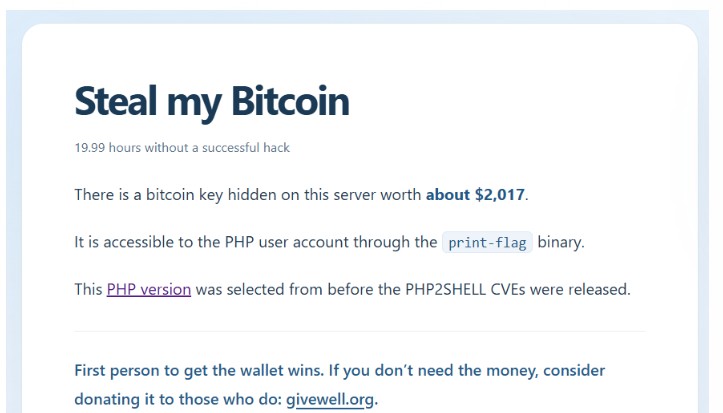
In parallel to Ethereum’s security challenges, the Bitcoin community has been keenly observing a unique demonstration of security resilience. A new website, intentionally left unpatched for the recently discovered PHP2Shell vulnerabilities, has been established with the explicit purpose of proving that Bitcoin wallets are not susceptible to this particular cybersecurity threat. The "Steal My Bitcoin" site hosts the private key to a Bitcoin wallet containing approximately $2,000 worth of BTC. Access to this wallet is theoretically possible through a binary executable named "print-flag" within the compromised PHP user account.
The initiative aims to debunk fears that the widespread PHP2Shell vulnerability could compromise Bitcoin holdings. PHP, a widely used server-side scripting language powering a vast array of websites and web applications, including many content management systems, was the subject of a significant cybersecurity scare. Critical vulnerabilities were identified in PHP, prompting governments and organizations worldwide to take essential websites offline as a precautionary measure while emergency patches were developed. These flaws held the potential to allow unauthenticated attackers to execute arbitrary code on affected servers, a serious threat to any system relying on vulnerable PHP installations.
At the time of reporting, the "Steal My Bitcoin" site had remained operational for over 25 hours without a successful exploit. Despite experiencing intermittent downtime due to heavy traffic and persistent probing attempts, the core Bitcoin wallet remained secure, underscoring the distinct architectural differences between web application security and blockchain asset protection. This experiment serves as a powerful, albeit unconventional, testament to the robust security model of the Bitcoin network itself, which is fundamentally different from the server-side vulnerabilities that plague traditional web infrastructure.

Solana’s Alpenglow Upgrade Enhances Transaction Finality
Shifting focus to another major blockchain, Solana has successfully launched its first significant consensus upgrade, "Alpenglow," on its mainnet. The upgrade went live on Wednesday around 1:54 PM UTC, according to the Solana Foundation’s dedicated dashboard. This development marks a crucial step in Solana’s roadmap for enhancing network performance and scalability.
The primary impact of the Alpenglow upgrade is a dramatic reduction in transaction finality time. Previously, transactions on Solana took approximately 12.8 seconds to become truly final. Post-upgrade, this duration has been slashed to roughly 150 milliseconds. This near-instantaneous finality is a game-changer for applications requiring high transaction throughput and low latency, such as high-frequency trading platforms and real-time gaming. Anza, a developer from the Agave ecosystem, confirmed the significant improvement. While DeFi activity has shown a slight dip or remained flat in the immediate aftermath of the upgrade, this is attributed to the early stages of adoption and the fact that the full benefits are yet to be realized.
The Alpenglow upgrade is being rolled out in phases. The first phase, "Votor," replaces the existing voting and finalization mechanisms with a more streamlined system of direct validator voting and a certificate-based framework. This is expected to reduce the overall transaction count related to voting by approximately 60%. A subsequent phase will introduce "Rotor," a new protocol designed for block data distribution, intended to replace the current "Turbine" protocol. These architectural changes are crucial for Solana’s long-term vision of achieving massive scalability and supporting a global user base. The successful deployment of Alpenglow positions Solana to further solidify its place as a high-performance blockchain contender in the competitive crypto landscape.
StarkNet Explores Transition to a Post-Quantum Layer-1 Blockchain
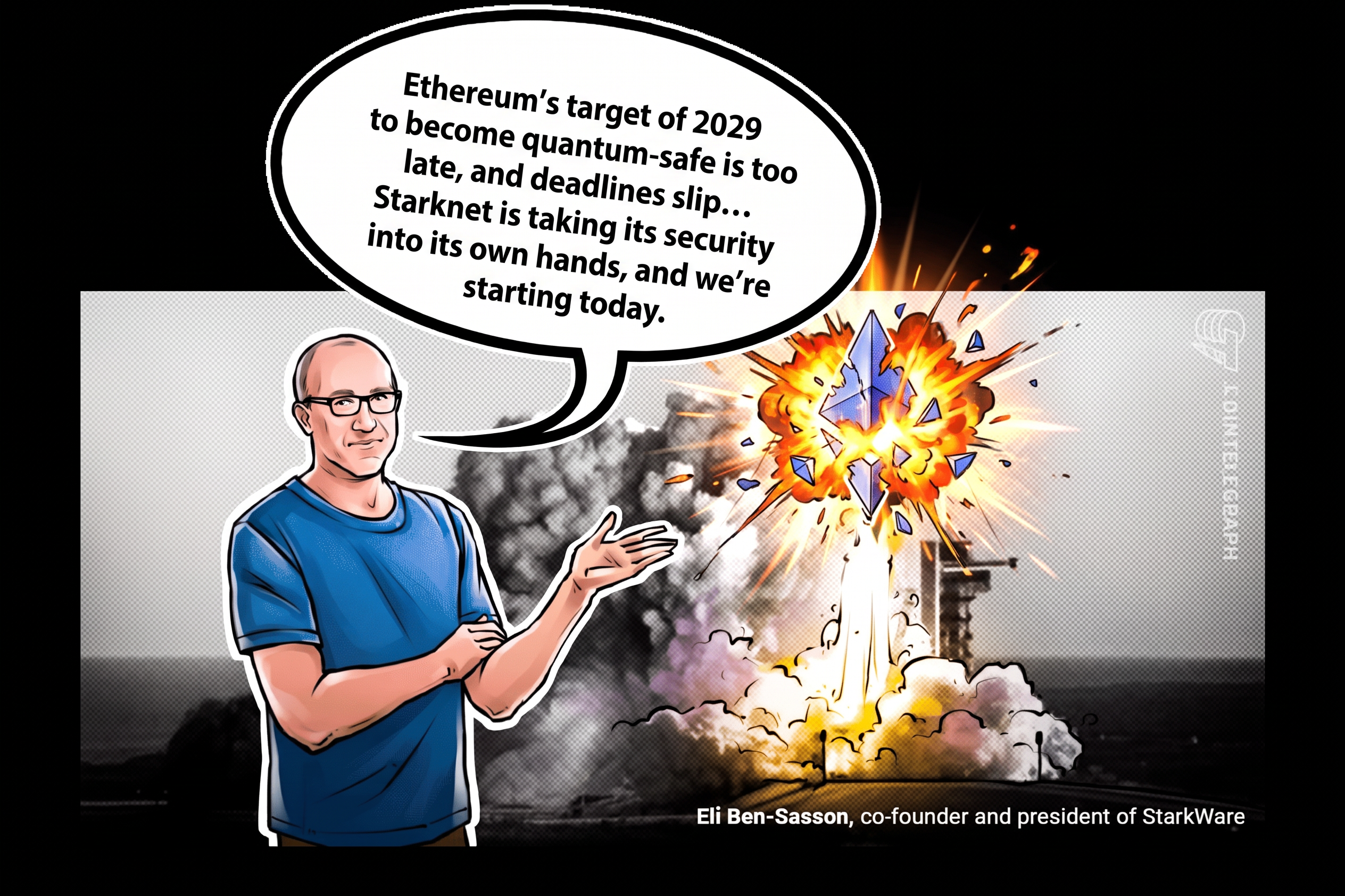
In a significant governance decision, the StarkNet community has voted in favor of initiating research into transitioning the network into an independent, post-quantum layer-1 blockchain. This forward-thinking move addresses the growing concerns surrounding the potential threat posed by quantum computing to current cryptographic standards. A seven-day governance vote saw participation from approximately 3,200 voters, with an overwhelming 93.52% of the voting power endorsing the exploration of this transition.
While this vote signals strong community support for the research initiative, the actual migration to a post-quantum layer-1 would necessitate a separate, binding governance vote. For the time being, StarkNet will continue to operate as a layer-2 scaling solution for Ethereum. Eli Ben-Sasson, CEO of StarkWare, the company behind StarkNet, indicated that work on a whitepaper detailing the proposed transition has already commenced, with a draft expected for public review in November. This proactive approach to quantum resistance is a crucial consideration for the long-term security and viability of blockchain networks.
The announcement comes amidst a challenging week for StarkNet, which experienced the most significant price decline among the top 100 cryptocurrencies, losing a quarter of its value. This market performance, however, does not diminish the strategic importance of the community’s vote to explore quantum-resistant cryptography. The development of post-quantum cryptography is a global imperative, and StarkNet’s potential move to become an early adopter positions it as a pioneer in securing blockchain infrastructure against future threats. The research will likely involve exploring new cryptographic primitives and consensus mechanisms that are resilient to attacks from quantum computers, a feat that requires significant innovation and rigorous testing.
US Senator Probes Tether Over Deal with Former Trump Crypto Adviser
Tether, the issuer of the world’s largest stablecoin, USDT, is facing scrutiny from a US Senator regarding a recent marketing deal. Senator Richard Blumenthal, the leading Democrat on the Senate’s investigations subcommittee, has formally requested information from Tether CEO Paolo Ardoino. The inquiry follows a report by The Wall Street Journal detailing a $6.3 million deal between Tether and a marketing company co-founded by Bo Hines, a former White House crypto adviser.
In a letter addressed to Ardoino on Thursday, Senator Blumenthal, representing Connecticut, stated that the Senate Permanent Subcommittee on Investigations is demanding "records and information related to contracts, payments, communications, and lobbying" concerning the deal. The senator expressed concerns that the arrangement might contravene established rules regarding ethics, corruption, and lobbying practices. Tether, in response, has stated that an external investigation into the matter "found no evidence of wrongdoing." This investigation and subsequent report will be closely watched for any potential implications on Tether’s operations and regulatory standing. The involvement of a former White House crypto adviser in a substantial marketing deal with a major stablecoin issuer raises questions about influence, transparency, and the potential for regulatory capture.
Winners and Losers in the Crypto Market
As the week concludes, the broader cryptocurrency market has experienced mixed performance. Bitcoin (BTC) saw a slight decline, trading down 1.2% to $80,549. Ethereum (ETH) followed suit, down 1.9% to $2,343. XRP (XRP) bucked the trend with a modest gain of 0.9%, reaching $1.20. The total cryptocurrency market capitalization stood at approximately $2.68 trillion, according to CoinMarketCap.
Among the top 100 cryptocurrencies, several altcoins have shown notable upward momentum. MemeCore (M) emerged as a significant winner, posting a 24.4% gain. Venice Token (VVV) also performed well, with a 14.8% increase, followed by Ethena (ENA) at 14.1%. On the downside, Starknet (STRK) experienced the steepest decline among the top performers, down 24.9%. Aerodrome Finance (AERO) and Sei (SEI) both registered losses of 12.5% for the week.

JPMorgan Projects Bitcoin to Outperform Stocks and Gold
In a significant development for the digital asset class, JPMorgan Asset Management has projected that Bitcoin (BTC) will outperform both U.S. stocks and gold over the next decade. The firm’s "2027 Long-Term Capital Market Assumptions" report, released on Monday, forecasts an annualized return of 10% for Bitcoin. This compares favorably to the projected 7.5% for large-cap U.S. stocks and 5.5% for gold.
Despite this optimistic outlook on future returns, the report also includes a crucial caveat. JPMorgan cautions that Bitcoin’s inherent volatility currently makes it unsuitable for diversifying portfolios. "At the moment, we do not make a case for Bitcoin as a diversifier in portfolios due to its unstable market correlations," the report stated. "We see Bitcoin as a speculative asset and a hedge against monetary easing." This dual perspective highlights the ongoing debate surrounding Bitcoin’s role in investment strategies, acknowledging its potential for high returns while underscoring the risks associated with its price fluctuations. The report’s findings suggest that while institutional investors are increasingly viewing Bitcoin as a long-term growth asset, its integration into traditional portfolio management requires careful consideration of its risk profile.
New York AG Seeks $1.37B from NovaTech Founders Over Ponzi Scheme
The New York Attorney General’s office has taken significant legal action against the founders of the defunct cryptocurrency and forex trading platform NovaTech. Attorney General Letitia James is seeking court orders for founders Cynthia and Eddy Petion, along with related companies, to pay $1.37 billion in restitution. This demand stems from allegations that NovaTech operated as a Ponzi scheme.
The complaint filed by the Attorney General’s office alleges that over 11,000 New Yorkers lost tens of millions of dollars through NovaTech and an earlier crypto mining scheme, AWS Mining. Promoters are accused of targeting Haitian and other immigrant communities through various channels, including prayer groups, social media, and WhatsApp, promising high returns and recruitment bonuses. This case underscores the persistent risks of fraudulent schemes within the cryptocurrency space, particularly those that prey on vulnerable communities with promises of easy wealth. The substantial sum sought by the Attorney General reflects the scale of the alleged fraud and the significant losses incurred by victims.
Bitcoin Core Updates Security Policy Amidst AI-Driven Bug Discovery
Bitcoin Core, the reference implementation of the Bitcoin protocol, is revising its security vulnerability handling policy. This adjustment is a direct response to the increasing speed at which large language models (LLMs) are identifying software flaws. Historically, security vulnerabilities in Bitcoin Core were subject to lengthy disclosure embargoes, providing users with ample time to upgrade their software before details of the exploits became public.
However, Antoine Poinsot, a Bitcoin Core developer, explained that LLMs have made certain vulnerabilities so easily discoverable that extended embargo periods offer diminishing returns in terms of user protection. "The embargo period achieves little but it delays the availability of a fixed release," Poinsot stated in a communication on the Bitcoin development mailing list. "We are therefore updating our policy disclosure to accommodate those." This policy change reflects a pragmatic adaptation to the evolving landscape of software security, acknowledging that the rapid pace of AI-driven discovery necessitates a more agile approach to vulnerability disclosure and remediation. The implication is that the development community must find new strategies to balance rapid patching with responsible disclosure in an era where AI can accelerate both the discovery and exploitation of bugs.
Pentagon Bans Military Personnel from Using Insider Information for Prediction Market Bets
The U.S. Department of Defense has implemented a new policy to prohibit military personnel from using non-public information for wagering on prediction markets. Defense Secretary Pete Hegseth issued a memo barring all Pentagon staff from placing bets on upcoming military actions using classified or unclassified insider information. This directive specifically targets platforms like Kalshi and Polymarket, where users can speculate on future events.
The memo, sent to senior Pentagon and defense agency officials, explicitly prohibits Department of War personnel from engaging in financial transactions based on non-public information. This move is intended to maintain the integrity of military operations and prevent any potential misuse of sensitive data for personal financial gain. The ban highlights the growing concern within government circles about the intersection of emerging technologies like prediction markets and the need to safeguard national security information.
Top Magazine Features of the Week
This week’s magazine content explored crucial topics for crypto users and enthusiasts. One feature offered "5 Alternatives to Ledger to Store Your Bitcoin," examining various hardware wallets and other storage solutions, detailing their respective risks and trade-offs. Another insightful piece, "Agents Can Trade 24/7 – But Yat Siu Warns You Could Lose Access at Any Time," featured Yat Siu, Chairman of Animoca Brands. Siu discussed the advantages of AI agents for continuous trading while cautioning users about the potential for losing access to these automated trading systems. These articles address practical concerns for individuals managing their digital assets and navigating the evolving landscape of crypto investments.