George Chandra Eka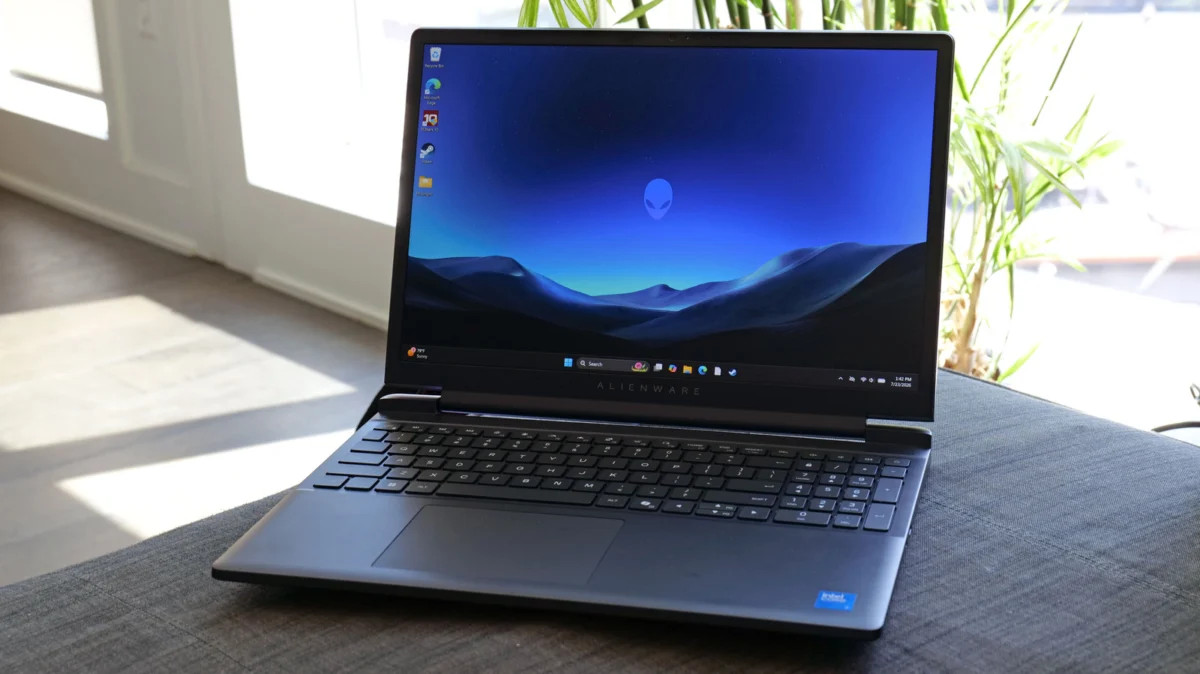
Amidst a challenging global economic climate marked by surging component costs and supply chain complexities, Alienware, a brand synonymous with premium gaming hardware for three decades, has made an unprecedented move into the budget gaming laptop segment with its new Alienware 15. This strategic pivot, arriving at a time when consumers are grappling with escalating prices across the tech industry, positions the Alienware 15 as a noteworthy contender, despite some compromises in display quality. The laptop, earning an 8.7 out of 10 in initial assessments, represents a significant departure for the manufacturer, offering a welcome reprieve for gamers seeking capable performance without the customary premium price tag.
Alienware’s Strategic Shift: A Historical Context
For 30 years, Alienware has cultivated a reputation as a vanguard of high-performance gaming PCs, catering primarily to enthusiasts and professionals willing to invest in cutting-edge technology and distinctive design. The company’s portfolio has historically comprised top-tier desktops and laptops, with even its more compact offerings, such as the Alienware 13 from previous generations, being positioned as highly portable yet undeniably premium devices. This unwavering focus on the high-end market solidified Alienware’s brand identity, distinguishing it from mainstream manufacturers. However, the summer release of the Alienware 15 marks a significant recalibration of this strategy. This is Alienware’s inaugural foray into the truly budget-friendly gaming laptop category, a move that analysts suggest is a direct response to evolving market dynamics and the acute pressures impacting the cost of PC components globally.
The Global Component Crisis and Market Realities
The timing of the Alienware 15’s introduction could not be more critical. The technology sector has been experiencing unprecedented volatility, particularly concerning the cost and availability of essential components like RAM. Industry reports from Q1 and Q2 indicate a sustained upward trend in DRAM prices, driven by factors including increased demand from AI development, ongoing geopolitical tensions impacting manufacturing, and persistent supply chain bottlenecks. This has cascaded into higher retail prices across various consumer electronics. For instance, major gaming consoles, including the Sony PlayStation 5 and Microsoft Xbox Series S and X, have seen multiple price adjustments upwards. Even upcoming devices like the Nintendo Switch 2 are projected to launch with higher price points, with Nintendo officially confirming revisions effective September 1st. In this landscape, where even established gaming handhelds like the MSI Claw 8 EX AI start at $1,800 for performance levels sometimes comparable to mid-range laptops, the concept of a sub-$1,500 gaming laptop from a premium brand like Alienware represents a strategic counter-narrative to the prevailing inflationary trends. Dell’s decision to launch the Alienware 15 reflects a clear understanding of consumer budget constraints and a proactive effort to capture a segment of the market previously underserved by the brand.
Design and Build: A Pragmatic Aesthetic
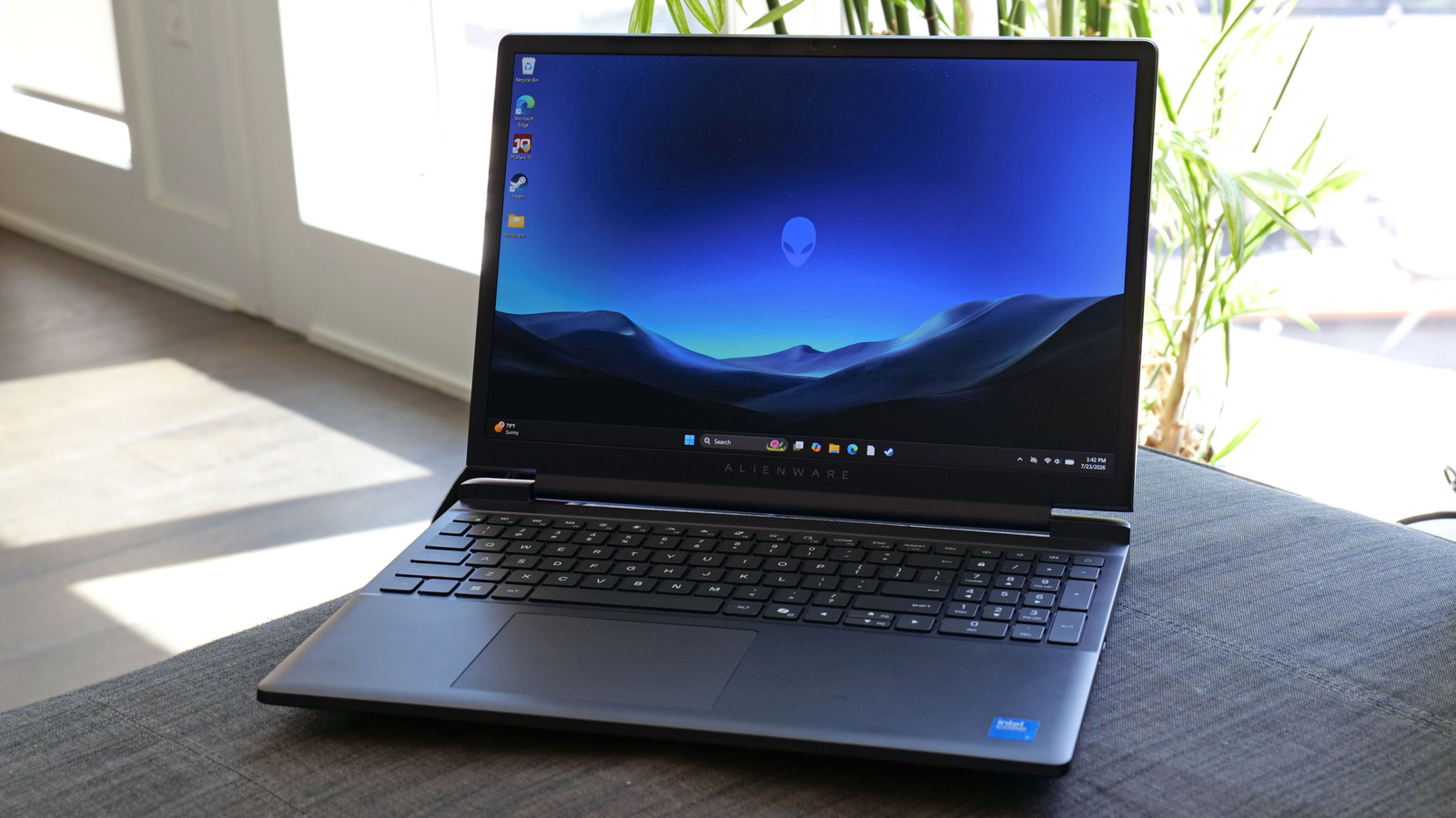
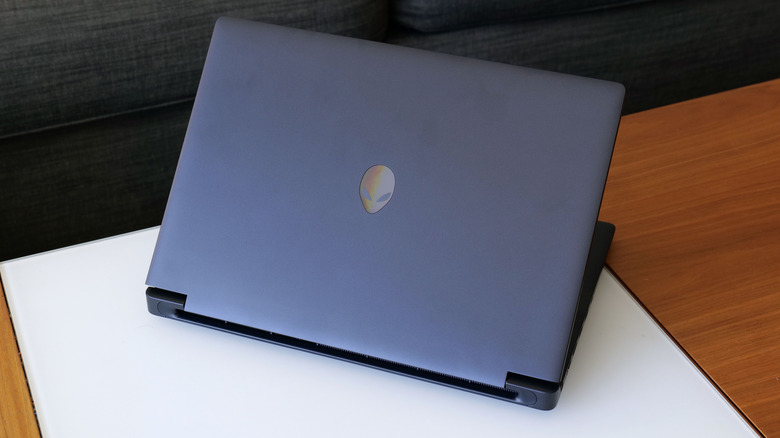
In its pursuit of affordability, Alienware has adopted a more understated design philosophy for the Alienware 15, diverging from the striking, often flamboyant aesthetics of its higher-end siblings. This pragmatic approach translates into a chassis constructed predominantly from black plastic, a departure from the metallic finishes found on more expensive Alienware models. While some may miss the signature RGB lighting, including the iconic alien logo on the lid (which is merely an opalescent badge here) and the keyboard (featuring only a white backlight), this subdued appearance contributes to a "stealthy" profile that appeals to users who prioritize function over flashy aesthetics. This design choice aligns with a growing segment of the gaming community that values performance and value over ostentatious design cues.
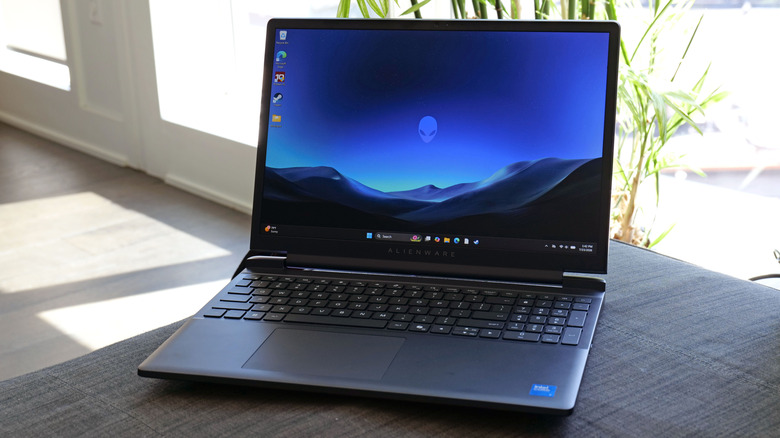
Despite the plastic construction, the Alienware 15 exhibits commendable build quality. The deck demonstrates solid rigidity with minimal flex, a testament to thoughtful engineering within budget constraints. The keyboard offers a firm, responsive typing experience, a crucial attribute for both intense gaming sessions and prolonged productivity tasks. The inclusion of a numpad is a welcome addition, enhancing the laptop’s versatility for users who require numerical input for work or specific game genres. The touchpad, while adequately sized, is described as slightly mushy, suggesting a minor area for refinement.
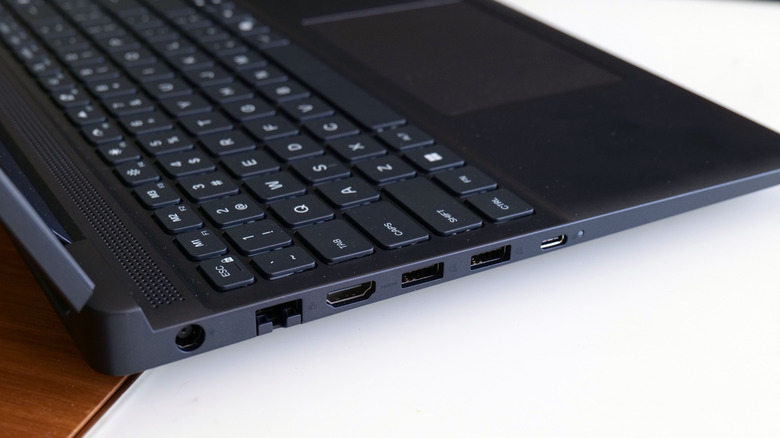
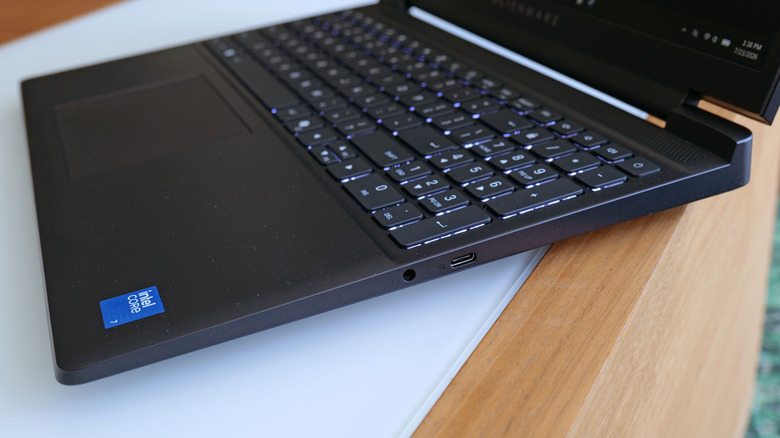
Connectivity is robust, a pleasant surprise for a laptop starting at approximately $1,000. The Alienware 15 is equipped with two USB-A 3.2 slots, two USB-C connections (one of which supports power delivery and DisplayPort 1.4), an HDMI 2.1 port, a 3.5mm audio jack, and a dedicated 1Gb Ethernet port. This comprehensive selection ensures compatibility with a wide array of peripherals and external displays, crucial for a versatile gaming setup. Weighing just under five pounds, the Alienware 15 is manageable for occasional transport, positioning it as a portable desktop replacement rather than an ultraportable companion. Compared to other budget gaming laptops in the 15-inch category, its weight is competitive, often falling within the average range of 4.5 to 5.5 pounds.
Display and Visuals: The Primary Compromise
The most significant area where cost-saving measures are apparent is the Alienware 15’s display. The 15.3-inch 1,920 x 1,200 LCD panel is identified as the system’s weakest link, and critically, there are no alternative display options available for upgrade. This lack of choice forces all configurations, regardless of GPU power, to utilize the same panel.
While the 165Hz refresh rate is commendable and well-matched to the system’s performance capabilities, offering ample headroom for smoother gameplay and taking advantage of technologies like NVIDIA’s multi-frame generation (with compatible 50-series GPUs), other aspects of the display fall short. The 300-nit maximum brightness is generally acceptable for indoor use, but it struggles in brightly lit environments or near sunny windows, impacting visibility. The core issue lies in its color reproduction: the display covers only 62.5 percent of the sRGB spectrum. This limited gamut results in colors appearing somewhat washed out and lacking vibrancy, a noticeable drawback for visually rich games and especially for tasks requiring color accuracy, such as photo or video editing. For users planning to connect the laptop to a higher-quality external monitor, this might be a minor concern. However, for those relying solely on the integrated screen, the muted color profile is a significant compromise. This stands in contrast to premium alternatives like the Alienware Aurora 16, which naturally boast superior display technologies.
The integrated webcam is a 720p sensor operating at 30 frames per second. While adequate for basic video calls and online meetings, its image quality lacks sharpness and its dynamic range is mediocre. For aspiring content creators or Twitch streamers, an external, higher-resolution camera would be an essential upgrade. This again highlights the targeted budget segment, where such features are often relegated to baseline functionality.
Performance: Power for the Price Point
The Alienware 15 offers a compelling performance proposition for its price segment. The base model, starting at $1,000, features an Intel Core i5 processor and an RTX 4050 GPU. However, for an additional $200, the reviewed configuration includes an Intel Core i7 240H CPU, 16GB of RAM, a 512GB SSD, and RTX 5050 graphics. This mid-tier setup represents a sweet spot for value, offering substantial savings compared to higher-end Alienware systems like the Aurora 16, which might cost $1,500 for a similar specification.
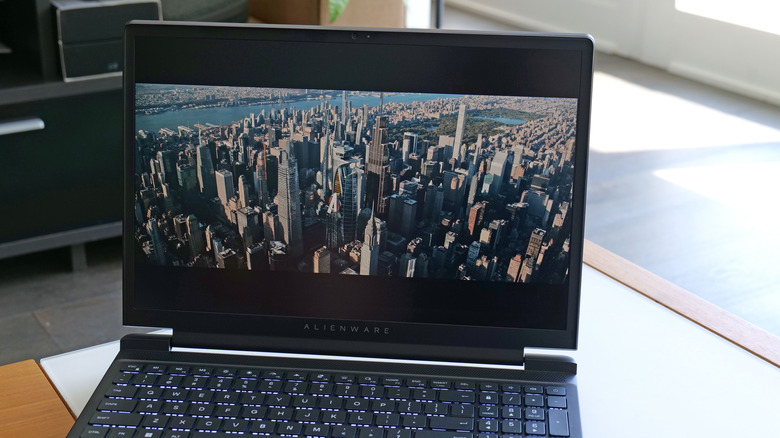
In real-world gaming scenarios, the Alienware 15 demonstrates solid capabilities for 1080p gaming. In graphically demanding titles like Cyberpunk 2077, with Ultra RT graphics settings, the system achieved an average of 45 frames per second (fps). By adjusting settings slightly to plain Ultra graphics without ray tracing, performance significantly improved to 78 fps. This illustrates the laptop’s ability to deliver smooth gameplay with minor graphical concessions, a common practice for budget gaming setups. In Control, another visually intensive game, the Alienware 15 performed even better, reaching 96 fps at 1080p with Epic graphics. These figures indicate that the laptop possesses sufficient horsepower for most modern titles at its native resolution, providing a satisfying gaming experience. The availability of GPU options, extending up to an RTX 5060 card, allows for further performance scaling for those with a slightly larger budget.
However, performance comes with its caveats. The Alienware 15’s cooling system, while effective, can become noticeably loud under heavy load, often necessitating the use of headphones for an immersive experience. Furthermore, the placement of the cooling vents on the laptop’s bottom makes it less ideal for gaming on a lap, as airflow can be obstructed, potentially leading to increased temperatures and reduced performance. This design choice is common in gaming laptops but highlights a specific use-case limitation.
Battery Life and Portability Considerations
An often-overlooked aspect in budget gaming laptops is battery endurance. The reviewed model benefits from a larger 70WHr battery, a 30 percent increase over the base model’s 54Whr cell. This upgrade is significant for users who require untethered operation. In PCMark 10’s Modern Office battery test, the Alienware 15 recorded a runtime of eight hours and four minutes. While this falls short of the endurance offered by premium ultraportables like Dell’s XPS 16 (which boasts nearly 12 hours), it is a commendable result for a budget gaming notebook equipped with a discrete GPU. Practical usage, such as playing less demanding games like Teamfight Tactics, yielded approximately two hours of playtime on a single charge. For more graphically intensive titles, users should anticipate needing the power adapter readily available. The laptop’s weight, just under five pounds, contributes to its overall portability, making it a viable option for those who need to move their gaming station occasionally.
Competitive Landscape and Market Position
The Alienware 15 enters a fiercely competitive budget gaming laptop market, currently dominated by established players such as ASUS ROG, Acer Predator, HP Omen, and MSI. Brands like ASUS and Acer have long offered compelling options in the $1,000-$1,500 range, often balancing performance with features. For example, the ASUS ROG Strix G15, a frequent contender in this segment, often offers comparable GPU options and sometimes boasts brighter displays, though it may compromise on build materials or port selection. MSI’s Katana series also provides strong performance-per-dollar, often with higher refresh rate screens, but might fall short on battery life.
Alienware’s entry distinguishes itself by bringing the brand’s reputation for quality and engineering to a more accessible price point. While it makes compromises, particularly in the display, its robust build, comprehensive port selection, and solid performance from the RTX 5050/5060 GPUs make it a strong value proposition. The inferred strategic intent behind the Alienware 15 is to capture a new demographic of gamers who aspire to the Alienware brand but have historically been priced out. This move could potentially disrupt the market by forcing competitors to re-evaluate their own budget offerings, either by increasing value or lowering prices to maintain market share. Dell’s scale and supply chain advantages could give Alienware a competitive edge in maintaining attractive pricing amidst rising component costs.
Implications and Future Outlook
The launch of the Alienware 15 is more than just a new product; it signals a potentially significant shift in Alienware’s brand strategy and, by extension, Dell’s broader approach to the gaming market. By democratizing access to the Alienware experience, the company aims to broaden its consumer base, potentially cultivating brand loyalty at an earlier stage in a gamer’s journey. This could have long-term benefits for Dell, as these budget-conscious consumers may eventually upgrade to more premium Alienware systems as their needs and budgets evolve.
In a climate where technological accessibility is being challenged by economic pressures, Alienware’s commitment to delivering a competent gaming experience at a more affordable price point is a commendable effort. While the Alienware 15 is not without its flaws—most notably the display and webcam—these compromises are contextualized and largely acceptable within its budget segment. The laptop offers a viable pathway for gamers to enjoy modern titles without incurring the prohibitive costs associated with high-end hardware. The timely arrival of the Alienware 15 provides a much-needed option for consumers navigating a tech market where value is increasingly difficult to find, serving as a beacon of affordability amidst rising prices. This strategic maneuver by Alienware could set a precedent for other premium brands to explore similar budget-friendly offerings, ultimately benefiting consumers by fostering greater competition and more diverse choices in the gaming hardware landscape.