Sisilia Frederika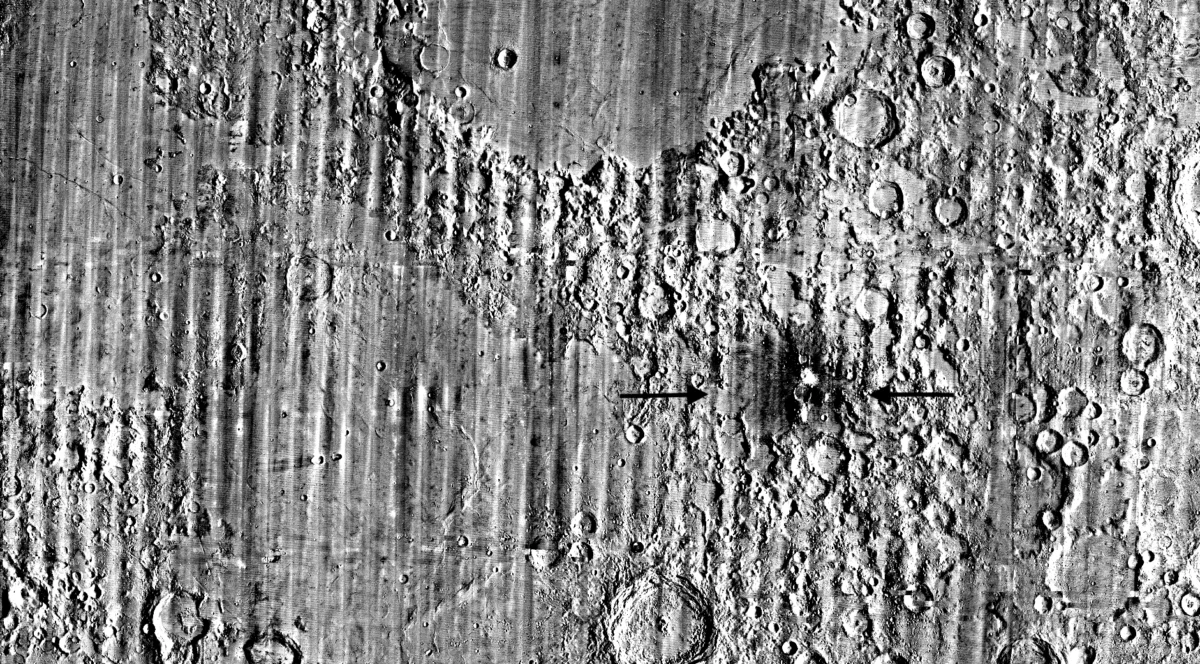
The Moon, long perceived as a desolate and unchanging relic of the early solar system, has recently revealed a dramatic reminder of its dynamic nature. Researchers utilizing data from NASA’s Lunar Reconnaissance Orbiter (LRO) have identified a massive new impact crater, a geological feature so significant that experts estimate such an event occurs only once every 132 years. Named McGetchin Crater, the site represents the largest fresh impact discovered on the lunar surface since the beginning of the space age, providing scientists with an unprecedented opportunity to study the mechanics of high-velocity celestial collisions and their long-term effects on the lunar environment.
The discovery was made by Robert Wagner, an image-processing specialist at Intuitive Machines, while he was performing a routine but meticulous analysis of lunar surface data. By stitching together "global difference maps"—composite images that highlight changes on the Moon’s surface over time—Wagner identified a stark, high-contrast anomaly that had not appeared in previous scans. The impact, which occurred in the spring of 2024, resulted in a crater measuring 222 meters (approximately 728 feet) in diameter and 43 meters (141 feet) in depth. The scale of the event has startled the scientific community, as most modern lunar impacts result in "micro-craters" or small pits barely visible even to high-resolution orbital cameras.
The Chronology of Discovery and Identification
The timeline of the McGetchin impact is a testament to the persistent monitoring capabilities of the Lunar Reconnaissance Orbiter, which has been circling the Moon since 2009. Through a process of elimination and retrospective data analysis, researchers narrowed the window of the impact to a period between April 11 and May 22, 2024. During this 41-day window, a significant object—likely an asteroid or a comet fragment—traversed the vacuum of space and collided with the lunar regolith at several kilometers per second.
Despite the impact occurring in early 2024, the crater remained unnoticed for over a year. It was not until October 2025 that Wagner, while processing LRO data for Intuitive Machines, observed a "dramatic change" in the landscape. The difference mapping technique involves comparing "before" and "after" images of the same coordinates. When the images are overlaid, static terrain appears as a neutral, dull grey, while any physical changes—such as new craters or shifted dust—manifest as bright or dark patches.
Wagner’s reaction to the find was immediate. "I just stopped, dropped everything, and started looking into what that spot was," Wagner stated in a press release. "It was by far the most obvious impact debris pattern I’ve ever seen in one of those images." The debris field, or ejecta pattern, stretched far beyond the crater rim, indicating a high-energy event that displaced thousands of tons of lunar soil.
Technical Specifications and the Scale of the Impactor
To understand the magnitude of the McGetchin impact, NASA scientists utilized the LRO’s Lunar Reconnaissance Orbiter Camera (LROC). The camera system provides both wide-angle views for context and Narrow Angle Camera (NAC) images that capture details as small as half a meter per pixel. Upon closer inspection, the dimensions of the crater—222 meters wide and 43 meters deep—allowed physicists to reverse-calculate the size of the object that caused it.
The impactor is estimated to have been between 10 and 20 meters in size, roughly equivalent to a three-to-six-story building. In the context of the solar system, such objects are relatively common, but they rarely strike planetary bodies with such visible results. On Earth, an object of this size would likely fragment or burn up significantly in the thick atmosphere, resulting in a spectacular bolide or meteor shower but rarely a crater of this magnitude. On the Moon, however, the lack of an atmosphere means that even small objects strike the surface with their full kinetic energy.
The statistical rarity of this event cannot be overstated. According to the research paper published in Science Advances, an impact of this size occurs on the Moon roughly once every 132 years. This makes McGetchin a "once-in-a-century" event, offering a rare data point for scientists who track the frequency of near-Earth objects (NEOs) and the bombardment rate of the inner solar system.
Thermal Anomalies and the "Fluffing" of Regolith
One of the most intriguing aspects of the McGetchin discovery is not the crater itself, but the "thermal halo" surrounding it. Following the visual identification, researchers pointed the LRO’s Diviner Lunar Radiometer Experiment—an instrument designed to measure surface temperatures—toward the site. The findings revealed a massive thermal anomaly extending 6.4 kilometers (nearly 4 miles) from the impact center.
During the lunar night, when temperatures on the Moon plummet, this broad halo remained significantly colder than the surrounding terrain. Specifically, the area was measured to be approximately 9 degrees Celsius (16.2 degrees Fahrenheit) colder than the older, undisturbed regolith nearby. This phenomenon is caused by a process scientists describe as "fluffing."
When the asteroid struck, the sheer force of the explosion blasted the tightly compacted lunar soil into the air. As this material settled back to the surface, it did so in a much looser, less dense configuration. Compacted regolith acts as a heat sink, retaining warmth from the sun and releasing it slowly during the night. However, the "fluffed" regolith lacks the density required for efficient heat retention. Its increased porosity allows heat to escape more rapidly into space, leading to the distinct cold signature detected by the Diviner instrument. This discovery provides critical insights into the mechanical properties of the lunar surface and how impact energy propagates through vacuum-exposed soil.
Honoring a Legacy: The Naming of McGetchin
The crater has been named in honor of Tom McGetchin, a distinguished lunar scientist and volcanologist whose work was instrumental during the Apollo era. McGetchin was a pioneer in understanding the geological processes of the Moon and other terrestrial planets. By naming this significant new feature after him, the scientific community acknowledges his contributions to our understanding of how planetary surfaces evolve through both volcanic activity and external bombardment.
The naming of new craters is a regulated process overseen by the International Astronomical Union (IAU), typically reserved for features of significant scientific interest. Given the rarity of an impact this large in modern times, McGetchin’s name is now permanently etched into the lunar map, joining the ranks of historical figures whose names grace the Moon’s more famous craters like Copernicus and Tycho.
Implications for Future Lunar Exploration and Habitat Design
The discovery of McGetchin Crater comes at a pivotal moment in human history as NASA and its international partners prepare for the Artemis missions, which aim to establish a long-term human presence on the Moon. The reality of a "once-in-a-century" impact provides a sobering reminder of the hazards inherent in lunar colonization.
Understanding the frequency and impact of such events is vital for several practical reasons:
- Structural Integrity: Engineers designing lunar habitats must account for the possibility of meteorite strikes. While a 20-meter impactor is rare, smaller strikes are more frequent. The data from McGetchin helps refine models of how much shielding is required to protect astronauts from kinetic impacts and the resulting ejecta.
- Regolith Mechanics: The "fluffing" effect observed by the Diviner instrument has direct implications for lunar mobility. Future rovers and landing craft must navigate terrain that may be significantly less stable or dense than expected. Designing wheels and landing pads that can maintain grip and stability in "fluffed" soil is essential for mission safety.
- Site Selection: The discovery emphasizes the importance of continuous orbital monitoring. By identifying areas of recent activity, space agencies can better assess the risks associated with specific regions of the Moon, particularly the South Pole, where permanent bases are currently planned.
Scientific Consensus and Broader Impact
The publication of these findings in Science Advances has sparked widespread discussion among planetary scientists. The consensus is that McGetchin represents a "laboratory in the sky." Unlike ancient craters that have been degraded by billions of years of solar wind and micrometeorite "weathering," McGetchin is pristine. It offers a clear look at fresh ejecta, sharp crater rims, and unaltered thermal signatures.
"It’s really lucky that we got a once-in-a-century chance to look at a big one before all of those design choices [for lunar bases] were finalized," the research team noted. The ability to study the "mechanical properties of the terrain" in the immediate aftermath of a major impact allows scientists to calibrate their instruments and theories with real-world data that was previously unavailable.
As the Lunar Reconnaissance Orbiter continues its mission, the discovery of McGetchin Crater serves as a powerful reminder that the Moon is not a finished book, but a continuing narrative. Each impact, though potentially hazardous, writes a new chapter in our understanding of the solar system’s history and the ongoing celestial mechanics that shape the worlds around us. For now, McGetchin stands as a fresh scar on the "Man in the Moon," a silent witness to the violent beauty of the cosmos and a vital guidepost for the next generation of human explorers.