Sisilia Frederika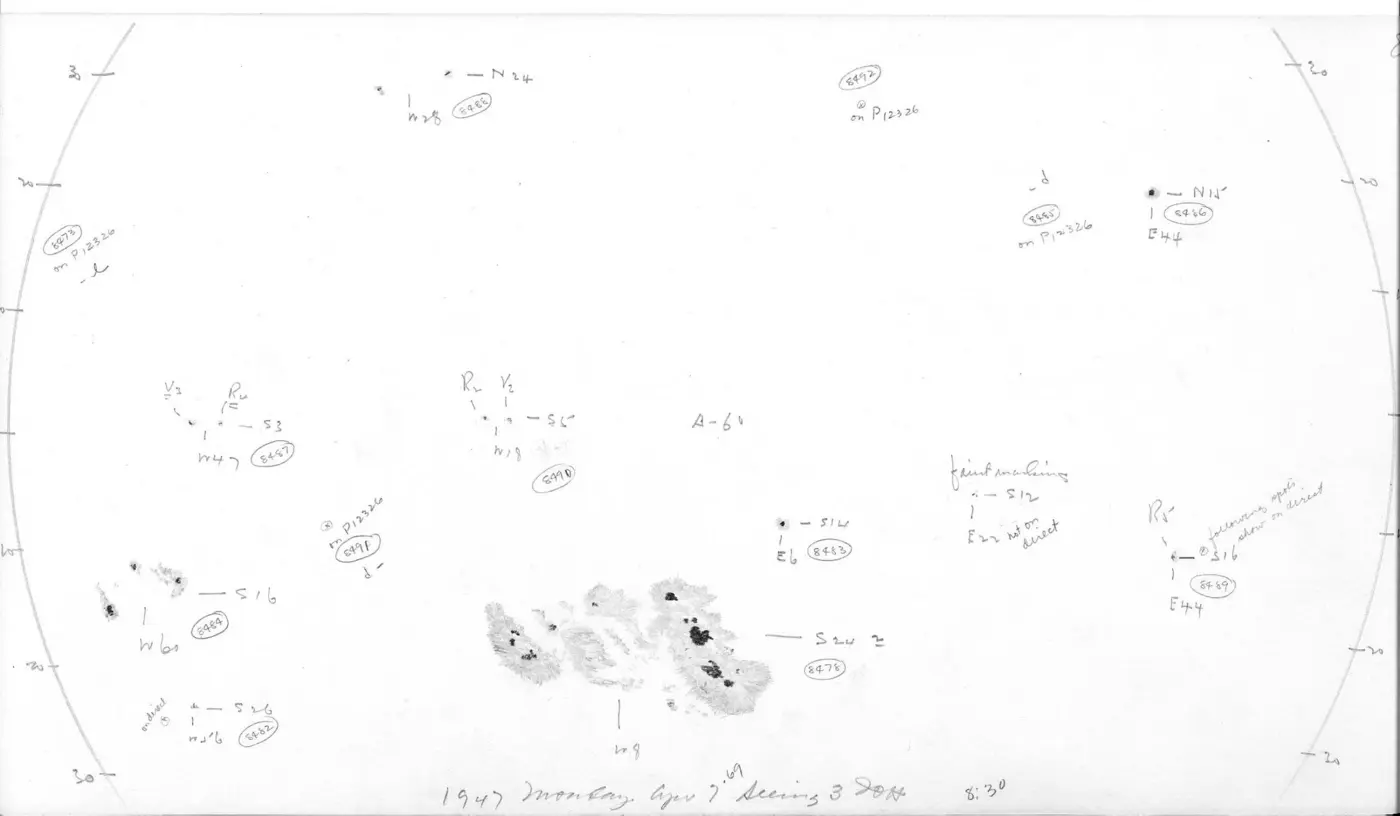
The scientific consensus regarding the Sun’s long-term stability and its capacity for extreme celestial events is undergoing a significant re-evaluation following the publication of new research. For decades, the Sun has been characterized by the astronomical community as a relatively "quiet" star. While it is known to be active, exhibiting periodic solar flares and coronal mass ejections, it has generally been viewed as incapable of the catastrophic "superflares" observed in other Sun-like stars across the galaxy. This perceived stability has often been cited as a foundational requirement for the evolution of complex life on Earth. However, a recent study led by Natalie Krivova of the Max Planck Institute for Solar System Research, published in the journal Philosophical Transactions A, suggests that this assumption may be flawed. By analyzing historical data and modern satellite observations, the research team has identified evidence indicating that our Sun possesses the physical capacity to produce flares of a magnitude previously thought impossible, posing a latent threat to modern technological civilization.
The Mechanics of Solar Activity and Active Regions
To understand the implications of the study, it is necessary to examine the underlying physics of solar eruptions. The Sun is a dynamic ball of plasma governed by complex magnetic fields. These fields become twisted and knotted due to the Sun’s differential rotation—where the equator rotates faster than the poles. When these magnetic fields become excessively stressed, they concentrate in areas known as Active Regions (ARs), which are visually manifested as sunspots.
Solar flares occur through a process known as magnetic reconnection. When the strained magnetic field lines in an Active Region suddenly "snap" and realign, they release a staggering amount of stored energy. This energy is emitted across the electromagnetic spectrum, from radio waves to X-rays and gamma rays. Following these high-power snaps, the Sun often leaves behind "flare ribbons"—residual glowing structures on the solar surface that mark the footprints of the magnetic loops.
The research conducted by Krivova and her colleagues utilized high-resolution data from NASA’s Solar Dynamics Observatory (SDO) collected between 2010 and 2016. By meticulously measuring the total area of Active Regions and the size of the resulting flare ribbons, the team established a critical statistical correlation. Their findings demonstrate that the maximum potential energy of a flare is directly proportional to the area of the flare ribbons, which in turn is dictated by the size of the Active Region. Crucially, the data indicates that flare energy scales exponentially with the ribbon area, meaning that incremental increases in sunspot size can lead to massive leaps in destructive potential.
Historical Benchmarks: From Carrington to the Great Sunspot
The study’s most provocative conclusions arise from applying this new energy-scaling formula to historical records of solar activity. The most famous reference point in heliophysics is the Carrington Event of 1859. Named after British astronomer Richard Carrington, who witnessed the white-light flare, the event remains the most powerful solar storm in recorded history. At the time, the impact was felt primarily through the nascent telegraph system. Telegraph lines spontaneously sparked, stations caught fire, and operators reported being able to send messages even after disconnecting their batteries, powered solely by the atmospheric electricity generated by the storm. Auroras were reported as far south as the Caribbean and Hawaii, so bright that they reportedly woke laborers who believed the sun was rising.
By applying their calculations to the sunspot data from 1859, Krivova’s team estimated the Carrington Event’s energy release at approximately 10^33 ergs. While this was a monumental release of energy that caused global disruption in the 19th century, it falls just short of the official "superflare" classification.
However, the team’s analysis of the "Great Sunspot" of 1947 paints a more concerning picture. This particular sunspot group was more than double the size of the one that triggered the Carrington Event. According to the researchers’ formula, the 1947 Active Region possessed a theoretical energy potential exceeding 10^34 ergs—the definitive threshold for a superflare. While the 1947 sunspot did not actually erupt with its full potential energy, the fact that the Sun produced a magnetic structure capable of such an output proves that the Sun is not as "quiet" as previously assumed. It demonstrates that the physical limit of the Sun’s eruptive capacity overlaps with the superflare energy levels observed in more volatile stars.
Statistical Probability and the Once-a-Century Risk
The realization that the Sun can produce superflare-capable Active Regions shifts the conversation from "if" to "when." Astronomers and space weather experts have long debated the frequency of such extreme events. Based on the historical record and the analysis of Sun-like stars, researchers estimate that Carrington-level events or larger occur approximately once every 100 to 150 years.
Given that the last major event occurred in 1859, and a significant (though less Earth-directed) event occurred in 1947, the Earth is statistically entering a window of increased probability. The study emphasizes that while the formation of a massive sunspot does not guarantee a superflare—as evidenced by the 1947 event—it creates the necessary conditions. The rarity of these events is a product of the specific conflux of solar physics required to generate such massive magnetic tension. Nevertheless, the presence of these "Great Sunspots" in the historical record suggests that the Sun’s internal dynamo is capable of reaching these extremes more frequently than a stable, life-nurturing star "should" according to older models.
Implications for a High-Tech Society
The primary concern for scientists and policymakers is the vulnerability of modern infrastructure. In 1859, the world was not dependent on microelectronics, global positioning systems, or a synchronized high-voltage power grid. A superflare today would have vastly different consequences.
A major solar eruption is typically accompanied by a Coronal Mass Ejection (CME)—a massive cloud of solar plasma and magnetic fields. If a superflare-level CME were directed toward Earth, it would induce geomagnetically induced currents (GICs) in power lines and pipelines. According to analysis from the National Academy of Sciences and various space agencies, such an event could lead to:
- Grid Collapse: The saturation of high-voltage transformers could lead to permanent damage across entire continental power grids. Unlike a standard blackout, these transformers cannot be easily repaired; they must be replaced, and global lead times for such equipment can be months or years.
- Satellite Failure: The intense radiation environment would likely disable or destroy the electronics of hundreds of satellites, impacting everything from global telecommunications to weather forecasting and military reconnaissance.
- GPS Disruption: The ionization of the upper atmosphere would interfere with GPS signals, rendering precision navigation impossible for aviation, maritime shipping, and autonomous systems.
- Economic Impact: Estimates suggest that a Carrington-level event today could result in economic damages exceeding $2 trillion in the first year alone, with a recovery period lasting nearly a decade.
Scientific Reaction and the Need for Enhanced Monitoring
The findings from the Max Planck Institute have been met with significant interest from the broader astrophysical community. Dr. Krivova’s research provides an empirical bridge between solar observations and stellar statistics. Historically, scientists have struggled to explain why other G-type stars (stars similar to the Sun) show superflares while the Sun appeared exempt. This paper suggests the Sun is not an outlier; rather, our period of human observation has simply been too short to witness its full range of behavior.
The paper serves as a call to action for increased investment in space weather forecasting. Currently, humanity has only a limited warning window—typically 12 to 48 hours—between the observation of a CME and its impact on Earth’s magnetosphere. Enhancing our ability to model the evolution of Active Regions and predict the "snap" of magnetic reconnection is now viewed as a matter of national security for many industrialized nations.
Conclusion: A Paradigm Shift in Solar Understanding
The research by Natalie Krivova and her co-authors marks a turning point in our understanding of the Sun’s relationship with the Earth. By proving that the Sun has produced sunspots with the theoretical energy capacity of superflares within the last century, the study dismantles the comfort of the "Quiet Sun" hypothesis.
While the Sun remains the essential engine of life on our planet, this new evidence highlights its potential as a source of extreme natural disaster. The "Great Sunspot" of 1947 serves as a silent witness to a capacity for destruction that remains latent within our star. As society becomes increasingly reliant on delicate electronic technologies, the necessity of understanding and preparing for the Sun’s maximum potential has never been more urgent. The study concludes that while we may not be able to prevent a solar superflare, our survival as a technological species depends on our ability to forecast its arrival and harden our infrastructure against the inevitable surge of solar energy.