admin
admin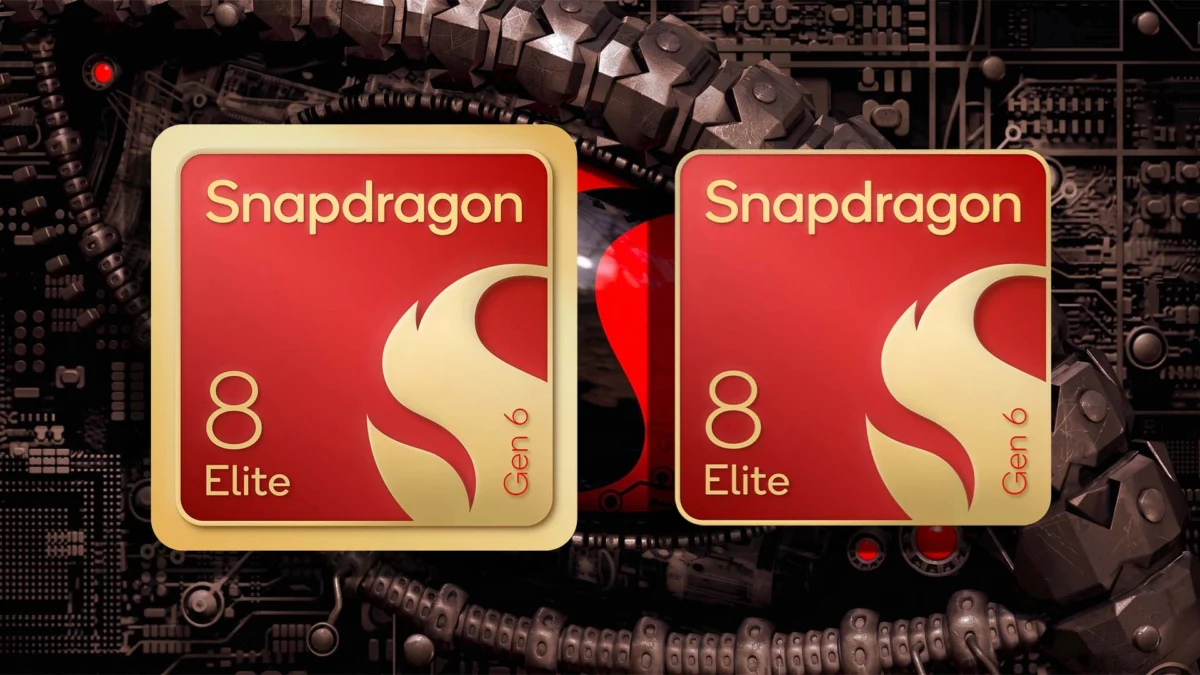
Qualcomm Technologies has officially introduced its next-generation mobile platforms, the Snapdragon 8 Elite Extreme Gen 6 and the Snapdragon 8 Elite Gen 6, marking a significant departure from previous naming conventions and a leap into the 2-nanometer (2nm) manufacturing era. Announced at the annual Snapdragon Summit in Maui, the new chipsets ditch the long-standing "Pro" moniker in favor of the "Elite Extreme" branding for its top-tier silicon. These processors represent the first mobile platforms to reach a 5.00GHz clock speed, a milestone enabled by the transition to TSMC’s advanced 2nm lithography and the second generation of Qualcomm’s custom Oryon CPU architecture.
The launch signals a strategic shift for the San Diego-based semiconductor giant as it prepares for the era of "agentic AI"—artificial intelligence capable of autonomous reasoning and action. By integrating massive on-device AI model support and re-engineered graphics hardware, Qualcomm aims to maintain its dominance in the premium Android ecosystem, providing the backbone for the 2027 flagship smartphone cycle from partners such as Samsung, Xiaomi, and OnePlus.
The Evolution of Snapdragon: Context and Chronology
The introduction of the Snapdragon 8 Elite Extreme Gen 6 comes at a critical juncture for the mobile industry. For the past decade, Qualcomm has followed a steady cadence of performance improvements, but the transition to custom CPU cores has been the most significant development in its recent history. Following the acquisition of Nuvia in 2021, Qualcomm began integrating its proprietary Oryon CPU cores into its laptop-class Snapdragon X Elite chips before bringing the technology to mobile with the Snapdragon 8 Elite Gen 5.
The Gen 6 series represents the refinement of this "mobile-first" custom silicon strategy. By moving to a 2nm process node, Qualcomm has managed to overcome the thermal and power density hurdles that typically limit mobile clock speeds. The chronology of the Snapdragon 8 series shows a rapid acceleration: while the Snapdragon 8 Gen 2 hovered around 3.2GHz, the new Elite Extreme Gen 6 pushes the envelope to 5.00GHz, a nearly 60% increase in frequency over just four generations.
Architectural Breakdown: The 5GHz Oryon CPU
At the heart of the Snapdragon 8 Elite Extreme Gen 6 lies a sophisticated CPU cluster designed for peak single-threaded performance and sustained multi-core efficiency. The chipset features a "2+6" configuration, consisting of two Prime cores and six Performance cores. The Prime cores are clocked at a record-breaking 5.00GHz, while the Performance cores operate at up to 4.00GHz.
To support these high frequencies, Qualcomm has implemented 16MB of Oryon Flex Cache, a dedicated high-speed memory pool that reduces latency and prevents data bottlenecks. According to technical briefings provided during the summit, the Elite Extreme Gen 6 offers a 13% gain in raw CPU performance over the previous Snapdragon 8 Elite Gen 5. More impressively, the transition to 2nm lithography has yielded a 37% improvement in CPU power efficiency, allowing devices to maintain these high speeds for longer durations without thermal throttling.
The standard Snapdragon 8 Elite Gen 6 shares the same 5.00GHz/4.00GHz clock speeds but is tuned slightly differently for various power envelopes, resulting in a 10% performance gain over the previous generation while matching the 37% efficiency improvement of its "Extreme" sibling.
Adreno Neural Fusion and the Future of Mobile Gaming
The graphics department sees an equally dramatic overhaul. The new Adreno Neural Fusion engine is powered by specialized Adreno matrix cores designed to offload AI-intensive workloads from the primary GPU shaders. This architecture is specifically designed to boost frame rates through AI-driven upscaling and frame generation.
The Snapdragon 8 Elite Extreme Gen 6 includes 18MB of Adreno High-Performance Memory (HPM), which acts as a dedicated buffer for the GPU, resulting in roughly 12% additional power savings during gaming. The performance metrics are substantial: the Extreme variant delivers a 44% jump in GPU performance with a 40% reduction in power consumption compared to the Gen 5.
For enthusiasts, the chipset supports hardware-accelerated ray tracing with Lumen Global Illumination, a key feature of Unreal Engine 5. Additionally, support for "MegaLights" and "Nanite Virtualized Geometry" allows mobile developers to bring desktop-level geometric complexity and lighting effects to handheld devices. The standard Elite Gen 6, while lacking the dedicated HPM, still offers a 35% performance increase over the prior year’s flagship.
Agentic AI and the Hexagon NPU
Qualcomm’s vision for "Agentic AI" relies heavily on the re-engineered Hexagon Neural Processing Unit (NPU). The NPU in the Elite Extreme Gen 6 features a new "Element Accelerator" in a complex configuration of 12 scalar, 8 vector, 1 tensor, and 1 element cores. This design is optimized for Mixture-of-Experts (MoE) models, which are increasingly used in sophisticated AI agents.

A standout feature is the NPU’s ability to host models with over 30 billion parameters locally on the device. This is made possible by a 50% larger shared memory pool and 64-bit memory virtualization. By running these models locally rather than in the cloud, Qualcomm ensures user privacy and reduces latency for AI-driven tasks such as real-time translation, automated scheduling, and advanced photo editing.
The NPU performance on the Extreme model is 35% faster than its predecessor, with a 33% improvement in AI performance-per-watt. The standard Gen 6 provides a 14% NPU speed boost and includes the same "Personal Scribe" capabilities via the Qualcomm Sensing Hub, which utilizes dual micro-NPUs for low-power, always-on AI monitoring.
Multimedia, Connectivity, and 5G-Advanced
The Snapdragon 8 Elite Gen 6 series introduces the X105 5G modem, which Qualcomm identifies as the industry’s first 3GPP Release 19-ready system. This "5G-Advanced" modem offers staggering downlink speeds of up to 14.8Gbps and uplink speeds of 4.2Gbps. It also features comprehensive support for Non-Terrestrial Networks (NR-NTN and NB-NTN), ensuring satellite connectivity in remote areas.
In terms of local connectivity, the FastConnect 8800 system makes these chips "Wi-Fi 8-ready." It utilizes a 4×4 Wi-Fi configuration to reach speeds of 11.6Gbps. Bluetooth 6.0, Ultra-Wideband (UWB), and Thread support are also integrated, positioning the chips as central hubs for the burgeoning Matter smart home ecosystem.
The imaging capabilities are handled by the Spectra ISP and a triple 20-bit AI-ISP setup. The Elite Extreme Gen 6 supports:
- Up to 320MP single-camera photo capture.
- 8K video recording at 60FPS.
- 4K super slow motion at 240FPS.
- Hardware-accelerated H.266 (VVC) decoding, a first for the mobile industry, alongside H.265, VP9, and AV1.
- Support for the APV Codec, a professional-grade alternative to ProRes.
Comparative Specifications: Elite vs. Elite Extreme
The distinction between the two tiers is defined primarily by memory support, GPU cache, and video capabilities. The following data highlights the divergence between the two 2nm platforms:
| Feature | Snapdragon 8 Elite Gen 6 | Snapdragon 8 Elite Extreme Gen 6 |
|---|---|---|
| Process Technology | 2nm (TSMC) | 2nm (TSMC) |
| Max CPU Clock | 5.00 GHz | 5.00 GHz |
| GPU Architecture | Adreno Matrix Cores | Adreno Matrix Cores + 18MB HPM |
| GPU Perf. Gain | 35% | 44% |
| NPU Model Support | Up to 10B Parameters | 30B+ Parameter MoE Models |
| Memory Support | LPDDR5X | LPDDR6 |
| Storage Support | UFS 5.0 | UFS 5.0 |
| Video Recording | 8K @ 30FPS | 8K @ 60FPS |
| Modem | Snapdragon X105 | Snapdragon X105 |
The Elite Extreme Gen 6 is clearly positioned for "Ultra" tier flagship devices that require LPDDR6 RAM to handle the massive throughput required by 30B+ parameter AI models and 8K60 video workflows.
Industry Impact and Market Implications
The launch of the Snapdragon 8 Elite Gen 6 series is expected to trigger a wave of hardware refreshes across the industry. Early benchmark leaks from Chinese content creators suggest that engineering prototypes of the Extreme variant are already outperforming existing mobile silicon in both Geekbench and AnTuTu tests, particularly in multi-threaded workloads where the 5.00GHz clock speed provides a significant advantage.
Industry analysts suggest that Qualcomm’s move to 2nm ahead of many competitors provides a narrow but vital window of technological leadership. By ditching the "Pro" branding for "Elite Extreme," Qualcomm is also simplifying its marketing message, aligning its mobile chips with its high-end PC offerings.
The inclusion of the H.266 (VVC) decoder is particularly noteworthy for the future of streaming. As a more efficient successor to H.265, VVC allows for higher-quality video at lower bitrates. Qualcomm’s early adoption of this hardware decoder could make Snapdragon-powered devices the preferred choice for high-definition streaming services and content creators.
As the first smartphones featuring these chipsets are expected to debut in late 2026 and early 2027, the focus will shift to how manufacturers manage the thermal output of a 5GHz processor. Qualcomm’s new packaging technology, mentioned during the unveiling, is designed to dissipate heat more effectively, but the true test will lie in the hands of consumers using the next generation of flagship mobile devices. For now, the Snapdragon 8 Elite Extreme Gen 6 stands as a formidable statement of intent in the race for mobile AI and computing supremacy.