Vera Intan Clara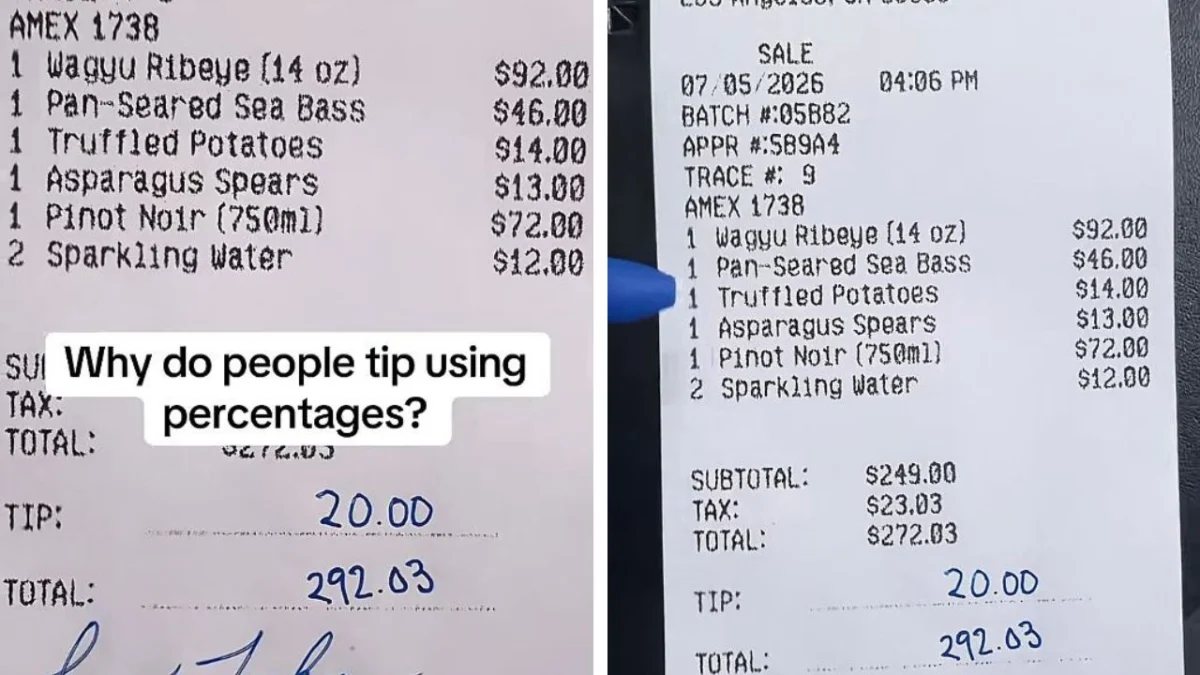
A recent TikTok video, posted by user @captain.t.roll, has thrust the long-standing debate surrounding tipping culture in the United States back into the spotlight, attracting significant online engagement and sparking widespread discussion about the fairness and rationale behind conventional gratuity percentages. The video prominently featured a receipt from Ember & Vine, an upscale restaurant in Los Angeles, detailing a meal that included a wagyu ribeye, pan-seared sea bass, truffled potatoes, asparagus spears, and a bottle of Pinot Noir, culminating in a subtotal of $249. Alongside this, a handwritten $20 tip was noted, prompting the creator to articulate a controversial stance against the perceived rigidity of the 20 percent tipping standard.
The Viral Spark: A Detailed Look at the TikTok Post
The TikTok post, which rapidly amassed over 43,600 likes, 8,000 comments, and 6,700 shares as of publication, centered on a specific dining experience. The bill, totaling $272.03 after tax, increased to $292.03 with the addition of the $20 tip. @captain.t.roll’s central argument posited that consumers have been "brainwashed by the restaurant industry" into accepting a fixed 20 percent tip as a mandatory standard, regardless of the actual cost of the meal or the perceived effort of the service. He asserted that he calculates tips based solely on the subtotal, not the final bill inclusive of taxes, and that his $20 gratuity, representing less than 10 percent of the $249 subtotal, was appropriate.
The TikToker elaborated on his rationale, claiming that the physical task performed by a server—delivering food from the kitchen to the table—remains constant irrespective of the menu item’s price. He argued that a higher-priced dish, such as a wagyu ribeye, does not inherently demand more effort from the server than a less expensive entree. Any additional value associated with a premium dish, he contended, is attributable to the culinary expertise of the kitchen staff who prepared it, rather than the individual who merely transported it to the table. He further illustrated his point by suggesting that if his table were the server’s sole focus for an hour, his $20 tip would equate to an hourly wage of $20, which he considered fair compensation for the task. This reasoning, he stated, applies consistently across all dining establishments, from fast-casual eateries to high-end restaurants like Ember & Vine. He challenged the notion of immutable tipping norms, advocating for diners’ autonomy in setting their own standards for what constitutes appropriate compensation for table service.
Historical Context of Tipping in the United States
To fully appreciate the intensity of this contemporary debate, it is crucial to understand the historical trajectory of tipping in the United States. Unlike many European countries where service charges are often integrated into bills or tipping is less prevalent, the U.S. has developed a unique and often contentious tipping culture. Tipping first gained widespread traction in America after the Civil War, imported by wealthy Americans who had traveled to Europe and sought to emulate aristocratic customs. Initially, it was met with resistance, viewed by many as an undemocratic and servile practice.
However, the practice became entrenched, particularly in industries employing newly freed slaves, as a way to avoid paying a living wage, effectively shifting the burden of employee compensation onto the customer. This historical context is vital, as it underpins many modern arguments against the current system. The "tip credit" system, introduced during the New Deal era under the Fair Labor Standards Act, further solidified this model. It allowed employers to pay tipped employees a sub-minimum wage (currently $2.13 per hour federally, though many states have higher rates) provided that their tips bring them up to the standard federal minimum wage ($7.25 per hour). If tips do not meet this threshold, the employer is legally obligated to make up the difference. This system has been a continuous source of contention, with labor advocates arguing it perpetuates low wages and income instability for servers, making them overly reliant on the generosity of customers. Over decades, the "standard" tipping percentage gradually increased from 10-15% in the mid-20th century to the widely accepted 18-20% (or even higher) seen today, often prompted by suggestions on payment terminals.
The Economics of Table Service: Deconstructing Server Compensation
The TikToker’s argument about the "fixed effort" of serving a dish, regardless of its price, touches upon a core tension in the restaurant industry’s compensation structure. While it is true that the physical act of carrying a plate is consistent, the role of a server extends far beyond this singular action. Servers are often responsible for a myriad of tasks that contribute significantly to the dining experience and, by extension, the perceived value of the meal. These responsibilities include:
- Menu Knowledge: Extensive understanding of ingredients, preparation methods, potential allergens, and wine pairings, especially in high-end establishments like Ember & Vine.
- Customer Service and Hospitality: Anticipating diner needs, managing expectations, resolving issues, and creating a pleasant atmosphere. This involves emotional labor and the ability to read social cues.
- Sales and Upselling: Guiding diners through menus, suggesting appetizers, desserts, or higher-priced beverages, which directly impacts the bill total and, consequently, the potential tip.
- Timing and Coordination: Liaising with the kitchen to ensure dishes are served at the correct temperature and pace, managing multiple tables simultaneously, and coordinating with other front-of-house staff.
- Pre- and Post-Service Duties: Setting up dining areas, polishing cutlery, cleaning tables, and resetting for subsequent guests.
For many servers, tips constitute the vast majority of their income. The federal minimum wage for tipped employees, $2.13 per hour, has not increased since 1991, meaning that in states adhering to this rate, servers are almost entirely dependent on gratuities for their livelihood. In states with higher tipped minimum wages, or those that mandate the full state minimum wage for tipped employees before tips, the reliance on tips may be slightly less absolute but remains substantial. The variability of tips can lead to significant income instability, affecting a server’s ability to plan finances, secure housing, or access credit. This economic reality is a primary driver behind the restaurant industry’s defense of the current tipping model and the expectation of percentage-based gratuities. A server handling a $249 subtotal bill, if tipped 20%, would receive $49.80, a stark contrast to the $20 tip provided in the video. This difference, particularly over multiple tables in a shift, can mean the distinction between a living wage and financial struggle.
Diverse Voices: Public and Industry Reactions
The comments section of @captain.t.roll’s TikTok video became a microcosm of the broader societal debate, showcasing a range of perspectives:
- Online Commentary: Many users echoed the TikToker’s sentiment, questioning the logic of percentage-based tipping. One commenter agreed that a $75 bottle of wine requires the same effort to serve as a $20 bottle, suggesting the tip amount should remain consistent irrespective of the item’s cost. This highlights a consumer desire for a more direct link between effort and compensation. Conversely, numerous commenters defended the traditional 20% standard, often performing their own calculations. One user pointed out that a 20% tip on the $292 total would amount to $58, arguing that a server "just made $50 an hour to carry out food to you" if they dedicated an hour to that table. This perspective emphasizes the potential for significant hourly earnings through tips, especially in high-end dining. A significant portion of the online discourse also pivoted to the plight of kitchen staff. A self-identified cook expressed frustration, noting that servers expecting large tips often overlook the "sweating hot standing getting yelled at having to cook" conditions endured by kitchen employees, who typically do not receive a share of tips (though tip pooling is becoming more common in some establishments) and are often paid hourly wages that may not reflect the intensity of their work.
- Restaurant Industry Perspective: While Ember & Vine itself has not commented on the specific incident, the broader restaurant industry, represented by organizations like the National Restaurant Association, generally supports the current tipping system. They often argue that tipping incentivizes excellent service, allows restaurants to keep menu prices lower than they would be if higher base wages were paid, and provides servers with the opportunity to earn well above minimum wage, especially in popular establishments. Many restaurateurs also express concerns that eliminating tips or moving to service charges could alienate customers accustomed to the current model and potentially lead to a decline in service quality if staff lose the direct incentive of tips.
- Labor Advocacy Groups: Organizations such as the Restaurant Opportunities Center United (ROC United) consistently advocate for the elimination of the sub-minimum tipped wage, pushing for a "One Fair Wage" model where all restaurant employees earn the full state minimum wage before tips. They argue that the current system is inherently unfair, perpetuates poverty wages, disproportionately affects women and minorities, and creates an environment where sexual harassment can thrive due to servers’ reliance on customer generosity.
- Economists and Social Scientists: Economic analyses of tipping often reveal a complex picture. While tipping can serve as a performance incentive, studies have shown that the correlation between service quality and tip amount is often weak, influenced more by factors like attractiveness, race, or perceived generosity. Some economists argue that mandatory service charges or higher base wages would create a more stable and equitable compensation system for workers, while providing greater price transparency for consumers. Others caution against such changes, citing potential job losses or increased menu prices that could deter diners.
The Tipping Debate: A Broader Societal Conversation
The TikTok video, therefore, is not an isolated incident but a high-profile manifestation of an ongoing, multifaceted societal conversation about fair compensation, consumer expectations, and the economic realities of the service industry. The "menu price vs. service effort" argument at its core challenges the very foundation of percentage-based tipping. As menu prices continue to rise due to inflation, labor costs, and ingredient expenses, the corresponding increase in tip amounts, even for the same level of service, is leading to what some are calling "tip fatigue" or "tip inflation" among consumers.
This fatigue has spurred a growing interest in alternative compensation models within the restaurant industry. Some restaurants have experimented with:
- Service Charges: A fixed percentage added to the bill, which is then distributed among all staff (front and back of house) or used to pay higher wages. This provides more stable income for employees but can sometimes be perceived negatively by customers who feel they are paying an additional, non-discretionary fee.
- No-Tipping Policies: Restaurants that eliminate tipping entirely, opting instead for significantly higher menu prices to cover increased base wages for all staff. While promoting wage equity and stability, this model requires a substantial shift in consumer mindset and can make price comparisons challenging.
- Hybrid Models: Combinations of the above, such as a smaller service charge coupled with optional tipping, or differentiated pay scales for front and back of house with some tip sharing.
These experiments reflect a broader search for a sustainable and equitable model that addresses the concerns of both employees and customers in an evolving economic landscape.
Implications for Diners, Servers, and the Restaurant Industry
The implications of this ongoing debate are far-reaching:
- For Diners: The current system fosters confusion and can lead to moral dilemmas. Diners grapple with what constitutes an "appropriate" tip, often feeling pressured by societal norms or payment terminal prompts. The financial burden of tipping on increasingly expensive meals is also a growing concern, impacting dining frequency and choices.
- For Servers: The income volatility inherent in a tip-dependent model creates significant financial stress. While top performers in high-volume, high-end establishments can earn substantial incomes, many servers struggle with inconsistent wages, especially during off-peak seasons or economic downturns. The debate also impacts their professional perception and dignity, as their compensation is often seen as subject to the arbitrary generosity of patrons.
- For Restaurants: The challenge lies in balancing operational costs, staff compensation, customer satisfaction, and competitive pricing. Implementing alternative models requires careful planning, transparent communication with both staff and customers, and the willingness to navigate potential backlash or changes in customer behavior. Staff retention can also be a significant issue if compensation models are perceived as unfair or uncompetitive.
The Road Ahead: Navigating a Changing Landscape
The TikTok video, by virtue of its virality, has amplified a critical discussion that will undoubtedly continue to evolve. The proliferation of digital payment systems that often pre-populate tip percentages (e.g., 18%, 20%, 25%) further influences consumer behavior, often pushing higher gratuity amounts. As technology intertwines more deeply with dining experiences, the mechanisms and expectations surrounding tipping are likely to shift.
Future developments may include legislative efforts at state or federal levels to revisit the tipped minimum wage, following the lead of states like California that mandate a full minimum wage for all employees regardless of tips. There may also be a continued cultural shift, driven by greater transparency from restaurants about how their employees are compensated, and increased consumer education about the complexities of server livelihoods.
Ultimately, the debate sparked by @captain.t.roll’s video underscores a fundamental tension in the service economy: how to fairly compensate labor in a way that is sustainable for businesses, equitable for workers, and transparent and acceptable to consumers. There are no easy answers, but the intensity of the online reaction suggests that the status quo of tipping in the U.S. is increasingly under scrutiny and ripe for reevaluation. The conversation is not just about a $20 tip on a $249 bill; it’s about the future of work, fair wages, and the economic contract between those who serve and those who are served.