
 Evan Lee Salim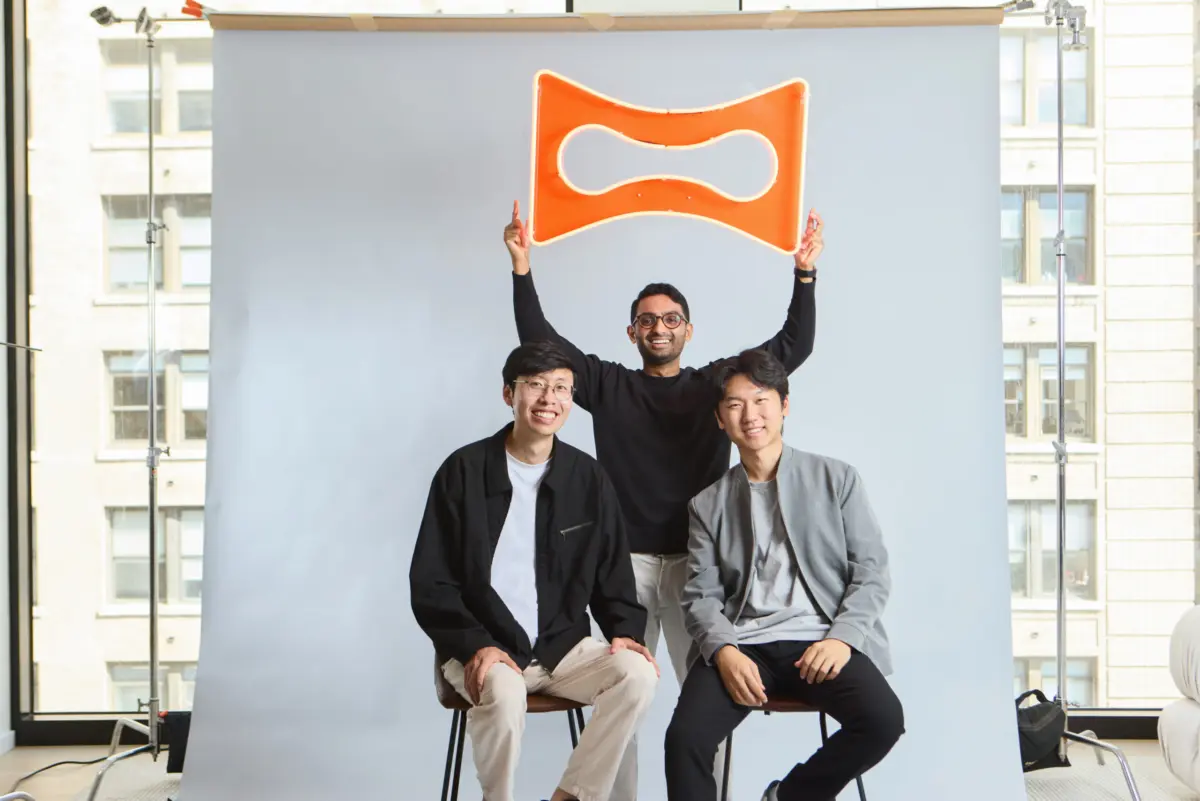
Melius, an emerging artificial intelligence platform specializing in the generation of comprehensive ad campaigns, images, and videos, announced on Tuesday a substantial capital raise totaling $25 million. This financial injection comprises a $20 million Series A funding round, spearheaded by prominent venture capital firm CRV, complemented by an earlier $5 million seed round led by General Catalyst. The announcement positions Melius as a rapidly scaling innovator in the burgeoning AI-driven creative sector, especially notable given the company’s recent emergence from stealth mode and an impressive early revenue trajectory.
The New York-based startup has reported hitting more than $1 million in annualized recurring revenue (ARR) within just two months of its public debut in July. While this rapid financial ascent signals strong market acceptance, co-founder Joowon Kim, pictured on the right, candidly admits that Melius’s journey was not without its initial challenges and strategic recalibrations. This funding round not only validates the company’s current direction but also underscores investor confidence in its potential to redefine creative advertising through advanced AI capabilities.
The Genesis and a Pivotal Strategic Shift
The story of Melius begins over a year ago, with its three co-founders — Joowon Kim, Young Kim (pictured on the left), and Arnav Ramu (pictured center) — bringing a wealth of engineering expertise from their prior roles at Ramp, a leading corporate spending and finance software company. Initially, their ambition centered on developing an AI-powered performance marketing tool designed to help businesses manage and optimize their ad spend more effectively. This initial concept, while seemingly aligned with market needs, ultimately proved to be less impactful than anticipated.
After dedicating more than six months to developing their original product, the co-founders faced a critical juncture. Joowon Kim revealed to TechCrunch that they concluded their initial idea "didn’t have legs" – a frank acknowledgment that the market opportunity or their approach to it wasn’t as compelling as first imagined. This realization led to a bold and decisive move that would fundamentally reshape Melius’s future. In a drastic yet strategic decision, the team opted to completely abandon their existing codebase. "We scrapped the entire codebase; we burned all of it," Kim stated, encapsulating the radical nature of their pivot. This willingness to discard significant prior investment in favor of a more promising path highlights the agile and pragmatic ethos driving the startup.
Following this complete overhaul, Melius swiftly embarked on developing an entirely new product. Nearly a year after its initial conceptual launch, the company unveiled its transformed platform, which it now describes as an "agents lab for creative work." This new iteration shifted focus from merely optimizing ad spend to actively generating the creative assets and campaigns themselves – a significantly larger and more impactful opportunity in the eyes of the founders. This strategic pivot from performance optimization to creative generation positions Melius squarely in the forefront of the AI-powered content creation revolution.
Investor Confidence and Market Validation
The successful securing of $25 million in funding speaks volumes about investor belief in Melius’s revised vision and early traction. CRV, leading the Series A, is a venture capital firm with a long history of backing transformative technology companies. Their investment in Melius suggests a strong conviction in the potential of AI to revolutionize creative industries. Similarly, General Catalyst, an early-stage investor known for identifying disruptive innovations, saw sufficient promise in the seed stage to support the company’s foundational efforts.
Sources close to the funding rounds, while not explicitly quoted, often emphasize factors such as a strong founding team with a proven technical background, a compelling product addressing a clear market need, and demonstrable early traction. Melius’s quick achievement of over $1 million in annualized revenue within months of exiting stealth mode would have been a significant data point for investors, signaling rapid product-market fit and effective execution. The strategic pivot itself, demonstrating the team’s adaptability and commitment to finding a truly impactful solution, likely further cemented investor confidence in their leadership and foresight. For venture capitalists, investing in a company that has successfully navigated such a fundamental pivot often indicates resilience and a deep understanding of market dynamics.
The Exploding Market for AI Creative Tools
Melius enters a rapidly expanding and increasingly competitive landscape for AI-driven creative tools. The global market for AI in advertising, which includes creative generation, personalization, and campaign optimization, is projected to reach tens of billions of dollars in the coming years, driven by the ever-increasing demand for personalized content, multi-channel marketing, and greater efficiency in ad production. As digital advertising continues to grow, the need for high-volume, high-quality, and highly targeted creative assets has become paramount for brands and agencies alike.
Traditional creative processes, often manual and time-consuming, struggle to keep pace with the demand for content velocity required by modern digital campaigns. This bottleneck is precisely where AI platforms like Melius offer a transformative solution. By automating the generation of images, videos, and entire campaign concepts, these platforms empower marketers to experiment with more variations, personalize content at scale, and reduce time-to-market significantly.
Within this dynamic sector, Melius faces several well-capitalized and rapidly growing competitors. Higgsfield, for instance, stands out as a formidable player, having achieved a staggering $5.4 billion valuation in August and reporting over $700 million in annualized revenue within three years of its inception. Other innovative startups like Krea and Flora AI are also making strides in various aspects of AI-powered creative generation.
Despite the presence of such robust competition, Joowon Kim expresses a calm and optimistic outlook. He acknowledges Higgsfield’s impressive growth, stating it "is growing like mad," but remains unfazed by the competitive landscape. Kim posits that the sheer size and burgeoning demand within the market for AI creative solutions are vast enough to support multiple successful entities. "There are a lot of players, which is pretty exciting," he told TechCrunch, underscoring his belief that this competitive environment actually validates the market’s immense potential. "That means there are customers to be won and there is demand in this space." This perspective is common in nascent but rapidly expanding markets, where early competition often signifies a robust and underserved need rather than immediate saturation.
Melius’s Technological Edge: The "Agents Lab" Concept
Melius distinguishes itself through its focus on being an "agents lab for creative work." This description implies a sophisticated platform that moves beyond simple asset generation to offer a more autonomous and comprehensive approach to campaign creation. Instead of merely providing tools for users to generate individual images or videos, Melius aims to enable marketers to define high-level creative objectives using plain language, and then have AI agents autonomously generate, iterate, and refine entire campaigns.
The platform’s core capability likely leverages advanced multimodal AI models that can understand natural language prompts and translate them into visual and textual creative elements. This means a user could potentially input a brief like, "Generate a social media campaign for a new organic coffee brand targeting millennials, featuring vibrant imagery and a call to action for sustainability," and Melius would output a series of interconnected ads, complete with imagery, video snippets, headlines, and body copy, optimized for various platforms.
Key benefits of such an "agents lab" approach include:
- Speed and Scale: Dramatically reduces the time and resources required to produce diverse creative assets and full campaigns.
- Iterative Optimization: Allows for rapid testing and iteration of different creative concepts, leading to data-driven improvements in campaign performance.
- Democratization of Creativity: Empowers individuals and teams without extensive design or video editing expertise to produce professional-grade marketing content.
- Consistency: Helps maintain brand consistency across numerous creative variations and channels.
For ad agencies, this could mean increased efficiency in pitching and executing campaigns. For brands, it offers unprecedented control and flexibility in their marketing efforts. And for individual marketers, it serves as a powerful co-pilot, augmenting their creative capabilities and allowing them to focus on strategy and messaging rather than tedious production.
A Founder’s Personal Odyssey: From Aspiring YouTuber to AI Visionary
The personal narrative behind Melius’s creation is deeply rooted in co-founder Joowon Kim’s long-standing fascination with digital media and content creation. Far from a purely technical endeavor, Kim describes himself as a social media influencer with a passion for making short videos that dates back to his elementary school days. His childhood dream was to become a famous YouTuber, a common aspiration for his generation.
"I tried my best to make vlogs," he recounts, reflecting on his early forays into video production. However, these early attempts were often hampered by the complexity of available tools. "My dad was great at using FinalCut Pro, but I wasn’t." This personal frustration with the technical barriers to creative expression proved to be a powerful motivator. While his early vlogs never quite achieved viral fame, his intrinsic fascination with the process of digital media creation never waned.
This lifelong journey with content creation directly informs the design philosophy of Melius. Kim is now building the very tool he wished he had as a young, aspiring creator: a platform that removes technical hurdles and empowers anyone – from a novice marketer to a seasoned creative director – to transform their ideas into tangible reality using simple, intuitive language. This user-centric approach, born from personal experience, is a significant differentiator for Melius, suggesting a platform designed not just for efficiency but for genuine creative enablement. It seeks to bridge the gap between creative vision and technical execution, making advanced content generation accessible to a broader audience.
Implications and Future Trajectory
The successful funding round and Melius’s innovative approach carry significant implications for the future of advertising and creative industries. For Melius itself, the $25 million will undoubtedly fuel aggressive expansion. This capital infusion will likely be directed towards accelerating product development, enhancing its AI models, expanding its engineering and sales teams, and pursuing broader market penetration. The company’s focus on an "agents lab" suggests continuous investment in sophisticated AI research and development to make its autonomous creative capabilities even more robust and versatile.
More broadly, Melius’s ascent, alongside its competitors, signals a pivotal shift in the advertising ecosystem.
- Democratization of Creative: High-quality, professional-grade creative content, once the exclusive domain of large agencies and specialized production houses, is becoming increasingly accessible to smaller businesses and individual marketers. This could level the playing field, allowing more brands to compete effectively in the digital space.
- Evolving Creative Roles: While AI automates much of the generative work, the demand for human creativity will not disappear. Instead, roles may evolve towards strategic thinking, prompt engineering, AI supervision, and conceptualizing high-level campaigns that leverage AI tools for execution. Creative professionals may transition from hands-on asset creation to becoming orchestrators of AI-powered creative workflows.
- Hyper-Personalization at Scale: AI-generated creative enables a degree of personalization previously unimaginable. Marketers can now create thousands of tailored ad variations for different audience segments, optimizing for maximum resonance and engagement.
- Ethical Considerations: As AI-generated content becomes more sophisticated, ethical considerations surrounding authenticity, deepfakes, copyright, and brand safety will become increasingly important. Platforms like Melius will need to build robust guardrails and transparent mechanisms to address these concerns.
- Data-Driven Creative: The ability to rapidly generate and test creative variations will lead to a more data-driven approach to advertising. Performance metrics will directly inform subsequent creative iterations, fostering a continuous loop of improvement.
Melius’s journey, marked by a critical strategic pivot and rapid market traction, exemplifies the dynamic nature of the AI industry. Its focus on empowering creative professionals through an "agents lab" approach, coupled with a founder’s personal mission, positions it as a compelling force in shaping the next generation of advertising creative. The significant capital infusion will enable Melius to accelerate its vision, potentially solidifying its role as a key player in the transformative era of AI-powered marketing.








