
 Galang Taruna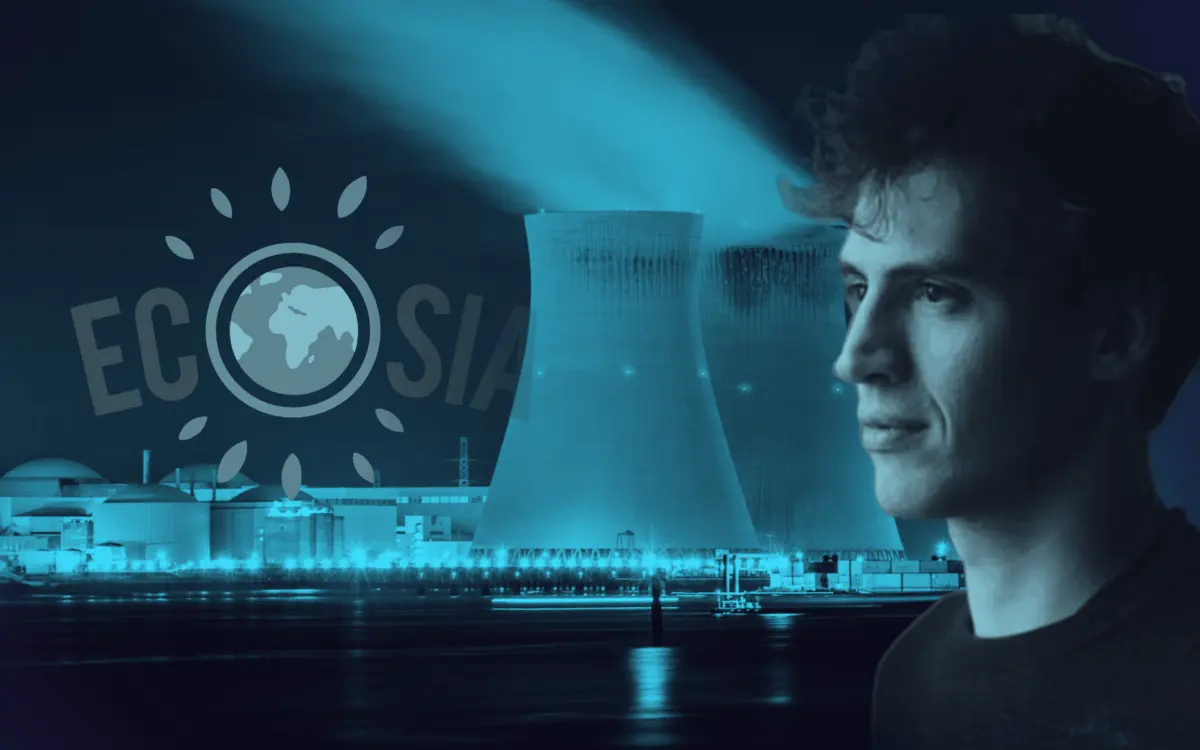
Ecosia, the German search engine renowned for financing global reforestation efforts, has announced its decision to cease utilizing models from the French artificial intelligence laboratory Mistral AI. This abrupt shift comes merely five months after Ecosia initially integrated Mistral’s technology to power its AI-generated search responses, replacing OpenAI in the process. The Berlin-based company is now transitioning to a suite of open-source models, a significant portion of which originate from Chinese developers, facilitated by the German platform Melious. While Ecosia has cited three primary reasons for this strategic pivot – concerns over quality, environmental compatibility, and digital sovereignty – a closer examination reveals that only the performance-related grievances appear to withstand rigorous scrutiny. The announcement, made through an interview published by Politico on October 6, coincided notably with Mistral AI’s own unveiling of "Large 4," its most ambitious model to date, creating a particularly ill-timed public relations challenge for the French startup.
Ecosia’s Mission and AI Integration
Founded in 2009 by Christian Kroll, Ecosia distinguishes itself in the competitive search engine market by dedicating its profits to environmental initiatives, primarily tree planting and ecosystem restoration projects worldwide. With a reported user base exceeding 20 million, Ecosia has cultivated a strong brand identity centered on sustainability, privacy, and social responsibility. Its commitment to these values has earned it endorsements from significant public bodies, including the German Federal Ministry of the Environment and the UK’s National Health Service (NHS), which utilize Ecosia as their default search engine.
The integration of artificial intelligence into search functionality, particularly for generating concise and informative answers to complex queries, has become a critical feature for modern search engines. Ecosia’s initial foray into this domain saw it leveraging OpenAI’s powerful language models. However, driven by a desire to align more closely with its values of transparency, data privacy, and potentially supporting European innovation, Ecosia made a strategic decision in May to replace OpenAI with Mistral AI. Mistral, a rising star in the European AI landscape, positioned itself as a champion of open, efficient, and sovereign AI solutions, making it an seemingly ideal partner for Ecosia. This initial partnership was hailed by some as a significant step towards building a robust, ethical AI ecosystem within Europe.
The Abrupt Departure: Chronology and Stated Reasons
The relationship, however, proved to be short-lived. Just five months after its adoption, Christian Kroll, Ecosia’s founder and CEO, publicly declared the termination of the partnership. The timing of this announcement on October 6 was particularly striking, as it occurred on the very same day that Mistral AI was introducing "Large 4," touted as its most powerful and extensive model yet, designed to compete with the leading AI giants from both the US and China. This confluence of events undeniably cast a shadow over Mistral’s celebratory launch.
Kroll articulated three main reasons behind Ecosia’s decision to sever ties with Mistral:
-
Performance and Quality Deficiencies: This was presented as the most immediate and tangible concern. Kroll explicitly stated, "We are disappointed by the quality of Mistral." He elaborated that Mistral’s models were perceived to be "a year behind" the competition in terms of capabilities and sophistication. Furthermore, Ecosia reportedly experienced frequent server saturation issues, leading to service disruptions and potentially impacting user experience. For a search engine that relies on quick, accurate, and reliable responses, such performance shortcomings would be a critical impediment. While Mistral has yet to offer a detailed public rebuttal to these specific performance claims, a startup scaling rapidly can often face infrastructure and optimization challenges, particularly when integrating new, demanding AI workloads.
-
Environmental Compatibility and Nuclear Energy: Ecosia, with its core mission rooted in climate action, raised concerns about Mistral’s environmental footprint, specifically citing the reliance on nuclear power within the French electricity grid. This critique is rooted in the long-standing debate surrounding nuclear energy. While nuclear power plants produce virtually no greenhouse gas emissions during operation, the argument against them often centers on concerns about radioactive waste disposal, safety risks, and the energy-intensive mining and processing of uranium. From a purely carbon emissions perspective, however, France’s electricity generation is remarkably clean. According to data from RTE (Réseau de Transport d’Électricité), the French transmission system operator, the carbon intensity of electricity produced in France in 2025 was projected to be around 19.6 grams of CO2 per kilowatt-hour (kWh). In stark contrast, Germany’s electricity mix, which has largely phased out nuclear power in favor of a growing but still significant share of fossil fuels (particularly coal, despite rapid renewables expansion), registered approximately 344 grams of CO2 per kWh, as reported by the German Federal Environment Agency. This represents a nearly 17-fold difference. The Intergovernmental Panel on Climate Change (IPCC) also places nuclear power’s lifecycle emissions, including mining and decommissioning, at around 12 grams per kWh, comparable to wind energy and significantly lower than most fossil fuel sources. Therefore, from a purely carbon-centric environmental viewpoint, rejecting a provider due to its reliance on French nuclear power appears counterintuitive, effectively eschewing one of Europe’s lowest-carbon electricity sources. This particular grievance resonates more deeply with Germany’s specific historical and political stance on nuclear energy, rather than a universal climate imperative. Arthur Mensch, CEO of Mistral, acknowledged this nuanced point on X (formerly Twitter), stating, "Sorry if nuclear energy is a real blocking point."
-
Digital Sovereignty Concerns: Kroll also questioned Mistral’s true "sovereignty," pointing to its significant foreign investment. Mistral AI recently secured a record-breaking €3 billion funding round in September, notably led by the South Korean conglomerate Samsung, with chip giant Nvidia also holding a stake. Kroll argued that such foreign financial backing compromises Mistral’s independence and, by extension, its claim to European digital sovereignty. However, the concept of AI sovereignty itself is complex. It often refers to a nation or region’s ability to control its data, develop its own AI technologies, and ensure that critical AI infrastructure is not unduly influenced by external powers. Mistral, despite its foreign investors, maintains its headquarters and core research and development in France, and critically, it embraces an open-source philosophy, releasing the weights of its models (with Large 4’s weights expected by late October). Furthermore, Mistral itself hosts Chinese AI models like GLM on its own infrastructure since August, demonstrating its commitment to offering a diverse range of open-source options. This multifaceted approach to sovereignty challenges the simplistic notion that foreign investment automatically negates independence, especially when core technologies are made openly available.
Ecosia’s New Path: Open-Source and Melious
Following its departure from Mistral, Ecosia has transitioned to utilizing models offered through Melious, a German platform that provides access to approximately sixty different open-source AI models from across Europe. Among the specific models Ecosia is now employing are Qwen (developed by Alibaba), GLM (from Z.ai, also known as Zhipu AI), and Kimi (from Moonshot AI). All three are prominent Chinese AI models.
Christian Kroll asserts that this switch has resulted in an approximate 50% reduction in costs for Ecosia, though this claim has not been independently verified. The move to open-source models, whether Chinese or otherwise, typically offers greater flexibility and potentially lower operational costs compared to proprietary solutions, as companies can host and manage these models on their own or third-party infrastructure without incurring significant licensing fees for commercial use.
However, Ecosia’s new configuration introduces its own set of complexities, particularly regarding the very concerns it raised about Mistral:
-
Environmental Footprint: Melious, as a platform, does not own data centers. Instead, it distributes requests across various partner hosting providers located in several European countries. The specific energy mix of these diverse hosting environments remains largely unspecified. Without this information, it becomes challenging to definitively assert that Ecosia’s new setup is inherently more environmentally friendly or less carbon-intensive than its previous reliance on Mistral, which utilized a French grid heavily supplied by low-carbon nuclear power.
-
Sovereignty and Bias: The adoption of Chinese AI models like Qwen, GLM, and Kimi, even when served through a German platform, presents a new dimension to the sovereignty debate. While these models are "open-source" in the sense that their weights are accessible, the underlying data, development methodologies, and the potential for embedded political or cultural biases originating from their Chinese developers remain a significant consideration. For a search engine utilized by government entities such as the German Ministry of the Environment and the UK NHS, the potential for such biases in AI-generated responses could be a serious issue, impacting information integrity and trust. Kroll, while acknowledging this possibility, expressed confidence that these models can be fine-tuned or retrained to mitigate any undesirable biases, a process that requires substantial computational resources and expertise.
Mistral AI’s Resilience and Broader Implications
Despite Ecosia’s public disengagement, Mistral AI appears to be on a trajectory of rapid growth and increasing influence. Its recent €3 billion funding round underscores significant investor confidence, and the simultaneous launch of "Large 4" demonstrates its ambition to directly challenge established AI leaders. Mistral’s commitment to publishing model weights and hosting other open-source models, including Chinese ones, reinforces its position as a key player in the open AI movement, advocating for a more transparent and accessible AI ecosystem. While Ecosia’s departure might represent a minor reputational setback, it is unlikely to derail Mistral’s broader strategic objectives or its momentum within the European and global AI landscape.
This episode between Ecosia and Mistral AI highlights several broader implications for the evolving artificial intelligence industry:
- The "Open vs. Closed" AI Debate: Ecosia’s pivot emphatically endorses the growing trend towards open-source AI models. The increasing sophistication and accessibility of open-source alternatives are putting pressure on developers of proprietary models, fostering a more competitive and dynamic environment.
- Geopolitics of AI: The willingness of a European-based, environmentally conscious company like Ecosia to integrate Chinese AI models underscores the globalized nature of AI development and the increasing prominence of non-Western AI innovation. It also complicates the narrative around "European AI sovereignty," as the pursuit of open-source flexibility can lead to reliance on technologies developed in other geopolitical blocs.
- Ethical and Environmental AI: The debate over nuclear power’s role in "green AI" underscores the complexities of defining and achieving truly ethical and environmentally responsible AI. Different regions hold varying perspectives on energy sources, and the carbon footprint of AI models is a critical, yet often challenging, metric to quantify and optimize across diverse global infrastructures.
- The Nuance of Sovereignty: The incident demonstrates that "digital sovereignty" is not a simple binary. It involves a complex interplay of ownership, control, data location, model transparency, and geopolitical influences. Relying on open-source models can enhance one aspect of sovereignty (control over the software stack), but if those models originate from foreign powers with different values, it can introduce new layers of concern.
In conclusion, Ecosia’s decision to discontinue its partnership with Mistral AI represents a multifaceted decision driven by a complex interplay of technical performance, deeply held environmental principles, and evolving notions of digital sovereignty. While the performance concerns appear to be the most robust justification, the arguments regarding environmental impact and sovereignty are considerably more contentious, revealing a tension between ideological purity and practical realities in the rapidly evolving world of artificial intelligence. The episode serves as a compelling case study of the intricate challenges and diverse considerations that companies and governments face as they navigate the ethical, technical, and geopolitical landscape of AI adoption and development.








