Sisilia Frederika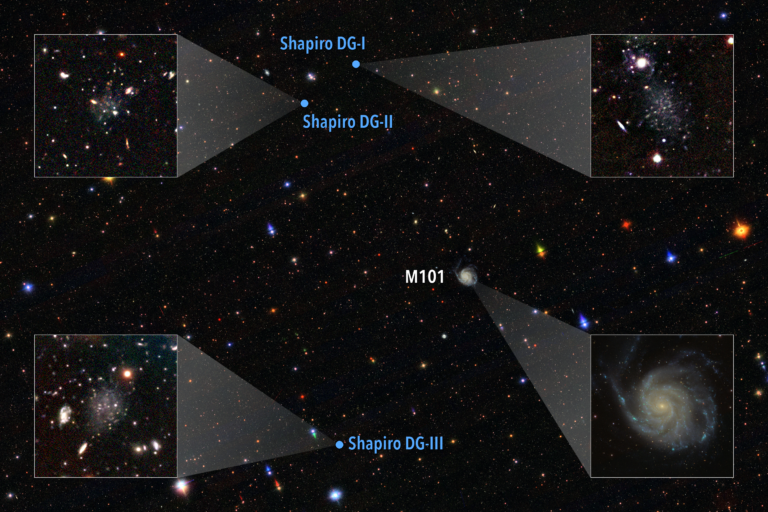
The annals of astronomy are traditionally filled with the names of seasoned veterans, tenured professors, and international collaborations involving hundreds of scientists. It is an exceedingly rare occurrence for a student to have a celestial body named after them, let alone three. Yet, Julian Shapiro, an astrophysics student at the University of California, Berkeley, has achieved exactly that. While still a high school student, Shapiro identified three distinct dwarf galaxies that defied the established conventions of galactic evolution and star formation. Now formally recognized as Shapiro I, II, and III, these galaxies are providing new insights into the "backsplash" phenomenon, a process that explains how small galaxies can lose their lifeblood—star-forming gas—despite existing in the desolate reaches of intergalactic space.
The discovery, recently detailed in a paper published in The Astrophysical Journal, represents more than just a personal milestone for Shapiro; it serves as a testament to the power of public archival data in modern science. Shapiro’s journey from a curious high schooler to a recognized researcher at one of the world’s premier institutions highlights a shifting paradigm in astrophysics, where the democratization of data allows young minds to contribute meaningfully to our understanding of the universe.
The Mystery of the Quenched Dwarfs
To understand the significance of Shapiro I, II, and III, one must first understand the typical lifecycle of a dwarf galaxy. These objects are the smallest and most numerous galaxies in the cosmos, ranging in scale from a mere few thousand stars to several billion. For comparison, our own Milky Way is estimated to contain between 100 billion and 400 billion stars. Because of their low mass, dwarf galaxies are highly susceptible to environmental influences, making them excellent laboratories for studying dark matter and the effects of cosmic gas dynamics.
In the standard model of galaxy formation, isolated dwarf galaxies—those located far from the gravitational influence of massive spiral or elliptical galaxies—are expected to be "active." This means they should possess a reservoir of cold hydrogen gas, the essential fuel for creating new stars. Conversely, dwarf galaxies that have stopped forming stars are referred to as "quenched." Traditionally, quenching is only observed in dwarf galaxies that are satellites of larger hosts. In these crowded environments, the larger galaxy’s gravity or the pressure of its surrounding hot halo can "strip" the smaller galaxy of its gas, effectively halting star formation.
The Shapiro galaxies, however, break this fundamental rule. Located in the vicinity of the massive spiral galaxy M101, also known as the Pinwheel Galaxy, these three dwarfs appeared to be isolated and yet were devoid of the gas necessary to create new stars. They were "quenched" in a region where they should have been thriving. This anomaly suggested that the galaxies were not always as isolated as they currently appear.
The Backsplash Hypothesis: A Galactic Slingshot
Shapiro’s research proposes that these three objects are "backsplash" galaxies. This theory describes a specific orbital history: a dwarf galaxy that once plunged through the high-density environment of a massive host galaxy before being flung back out into the cosmic void.
As the dwarf galaxy moves through the hot gas surrounding a giant like M101, it experiences a phenomenon known as ram-pressure stripping. This can be visualized as a cyclist riding against a strong headwind; just as the wind might blow a loose hat off the cyclist’s head, the pressure of the host galaxy’s gas "blows" the cold star-forming gas out of the dwarf galaxy. Following this traumatic encounter, the dwarf galaxy continues its trajectory, eventually moving far away from the host.
While the Lambda-Cold Dark Matter ($Lambda$CDM) model—the current leading theoretical framework for how the universe evolved—predicts the existence of backsplash galaxies, finding resolved examples in our local galactic neighborhood has proven difficult. Shapiro used sophisticated computer simulations to model the interactions between the dwarfs and M101. His analysis suggested that Shapiro I, II, and III were likely victims of this gravitational and hydrodynamic dance. They were stripped of their gas during a close pass of the Pinwheel Galaxy and were subsequently ejected into their current isolated positions.
From High School Research to Peer-Reviewed Publication
The timeline of Shapiro’s discovery is as remarkable as the science itself. He began his investigation while still a student at Miramonte High School in Orinda, California. Eschewing the traditional route of waiting for university-level instruction, Shapiro delved into the DECaLS/DESI Legacy Imaging Surveys, a massive public archive of telescope data.
By meticulously analyzing these images, he identified the faint signatures of the three dwarf galaxies near M101. His work required not only a keen eye for detail but also the ability to develop custom modeling and analysis code to determine the distances and star-formation rates of the objects. To confirm that the galaxies were indeed quenched and isolated, he had to accurately estimate their distances from Earth and their proximity to M101 and other nearby galaxies like NGC 5585.
His sophisticated research did not go unnoticed. Shapiro was awarded the Davidson Fellowship, one of the most prestigious prizes for high school students in the United States, which includes a $50,000 scholarship. This recognition paved his way to UC Berkeley, where he joined the research group of world-renowned astrophysicist Alexei Filippenko.
"Julian conducted some remarkably sophisticated research while still in high school, which is highly unusual," said Filippenko. "I feel very fortunate that he chose UC Berkeley for his undergraduate studies in astrophysics, and especially that he decided to join my research team."
The Role of Public Archives and Open Science
A recurring theme in Shapiro’s work is the importance of accessibility in science. In his public statements, Shapiro has emphasized that his discovery would not have been possible without open-access data and journals.
"My paper demonstrates that public archival telescope data is a critical tool for new discoveries in our understanding of cosmology and how our universe evolved," Shapiro noted. He pointed out that while traditional school curriculums often offer only a surface-level introduction to astronomy, the availability of professional-grade data allows students to bypass institutional barriers and engage in real-world discovery.
The use of archival data is becoming increasingly vital as the volume of information generated by modern observatories exceeds the capacity of any single team of scientists to analyze. Projects like the Sloan Digital Sky Survey (SDSS) and the Dark Energy Spectroscopic Instrument (DESI) produce petabytes of data, much of which contains "hidden" discoveries waiting for a researcher with the right question to ask.
Broader Implications for Cosmology
The identification of Shapiro I, II, and III has significant implications for the $Lambda$CDM model. If backsplash galaxies are as common as the model suggests, finding them helps astronomers calibrate their simulations of how matter is distributed across the universe.
Furthermore, these galaxies provide a unique look at the "environmental quenching" process. By studying objects that have already been through the "rinse cycle" of a large galaxy and come out the other side, scientists can better understand the timeline of gas stripping. For instance, Shapiro noted that Shapiro Dwarf Galaxy II is positioned near the spiral galaxy NGC 5585, suggesting that its quenching might involve a more complex multi-body interaction than previously thought.
The research also sets the stage for the next generation of astronomical surveys. The Vera C. Rubin Observatory, currently under construction in Chile, will conduct the Legacy Survey of Space and Time (LSST). This survey is expected to catalog billions of galaxies and will likely uncover thousands of additional backsplash candidates. Shapiro’s methodology provides a blueprint for how these future discoveries can be analyzed and categorized.
Future Outlook: The Next Frontier
Now a student at UC Berkeley, Shapiro is not resting on his laurels. He is currently working with Professor Filippenko on cosmological measurements related to the Hubble Constant—the rate at which the universe is expanding. The Hubble Constant remains one of the most contentious topics in modern physics, as different methods of measurement yield slightly different results, a problem known as the "Hubble Tension."
In addition to his work on the expansion of the universe, Shapiro plans to conduct follow-up observations of his eponymous galaxies. He hopes to use high-resolution space telescopes, such as the Hubble Space Telescope or the James Webb Space Telescope (JWST), to definitively map the positions and stellar populations of Shapiro I, II, and III. These observations could provide a "fossil record" of the stars within the dwarfs, revealing exactly when the star formation ceased and confirming their history as backsplash objects.
Shapiro’s story is a powerful reminder that the frontier of space is closer than it seems. "I envision my work serving as inspiration for young people aspiring to pursue research in astrophysics," he said. Through the combination of curiosity, public data, and rigorous scientific inquiry, the next major discovery in cosmology may very well come from a student sitting at a laptop, looking at the stars through a digital lens.
As the scientific community looks toward the launch of new observatories and the release of even larger datasets, the "Shapiro Three" stand as a beacon of what is possible when the tools of discovery are placed in the hands of the next generation. The galactic dance of M101 and its tiny, quenched neighbors has only just begun to reveal its secrets, and Julian Shapiro will undoubtedly be there to interpret them.