
 Galang Taruna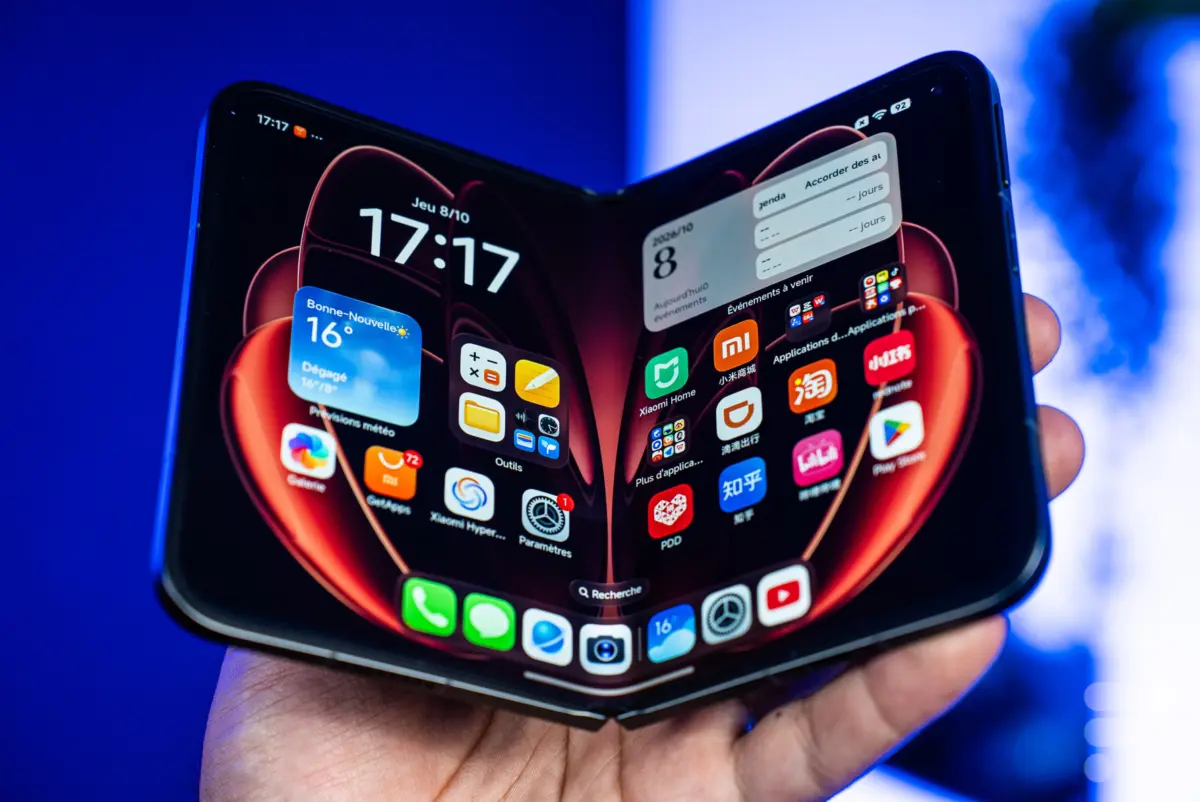
The global smartphone market, particularly the burgeoning foldable segment, witnessed a significant development with the unofficial emergence and subsequent analysis of the Xiaomi 18 Fold. Launched in China on September 10, 2026, just two days before Apple’s highly anticipated keynote revealing the iPhone Duo, this device has positioned itself as a direct Android competitor, mirroring many of the design philosophies expected from Apple’s entry into the foldable arena. While officially designated for the Chinese domestic market, early hands-on experiences with import models provide a revealing glimpse into the future of foldable technology and the fierce competition among manufacturers to define this evolving category.

A Strategic Pre-emptive Strike in the Foldable Market

Xiaomi’s timing of the 18 Fold’s launch was a calculated move, indicative of the intense rivalry shaping the premium smartphone landscape. Industry observers and analysts widely interpret the September 7 unveiling as a strategic maneuver to pre-empt Apple’s much-rumored iPhone Duo, leveraging early intelligence regarding its form factor and dimensions. This aggressive strategy underscores Xiaomi’s ambition to be a frontrunner in innovation, often pushing boundaries and bringing cutting-edge technology to market rapidly. The "passport" or "mid-fold" design, characterized by a compact, squarish external display that unfolds into a larger, more expansive internal screen, is gaining traction, and Xiaomi has effectively demonstrated its ability to execute this form factor with considerable refinement.

The 18 Fold, running on the Chinese version of HyperOS 4 (based on Android 17), is a testament to Xiaomi’s continued investment in its proprietary software and hardware ecosystem. However, its China-exclusive availability at launch, with prices starting at 10,999 yuan (approximately 1,470 euros), means international enthusiasts must contend with import channels, driving the cost up to an estimated 1,650 to 1,850 euros. This price point, while still lower than the Samsung Galaxy Z Fold 8 (€1,999) and the forthcoming Apple iPhone Duo (€2,339), comes with inherent trade-offs, primarily the absence of official warranty, after-sales support, and the complexities of adapting a China-specific ROM for Western markets.

Design Philosophy: Echoing and Refining the Passport Foldable Form

The physical dimensions of the Xiaomi 18 Fold are strikingly similar to those of the iPhone Duo, measuring 117.8 mm in height and 83.6 mm in width when folded, compared to Apple’s 117.8 mm by 84.1 mm. This near-identical footprint suggests that Xiaomi’s design team had access to crucial specifications of Apple’s upcoming device, enabling them to engineer a comparable, if not superior, physical package.

Xiaomi champions the "mid-fold" concept, highlighting its screens’ proportions, which closely align with the 1.4:1 aspect ratio, reminiscent of an A4 sheet of paper when unfolded. This particular ratio (the square root of 2) is significant because it maintains its proportions when folded in half, ensuring a consistent user experience between the external and internal displays. The external OLED LTPO display measures 5.38 inches (1712 x 1168 pixels), while the internal OLED LTPO panel expands to 7.58 inches (2364 x 1672 pixels), both offering a dynamic refresh rate from 1 to 120 Hz and an impressive peak brightness of 4,000 nits. This brightness surpasses the 3,000 nits offered by both the Galaxy Z Fold 8 and the iPhone Duo, providing superior visibility in bright conditions.

In a direct comparison with the Samsung Galaxy Z Fold 8, the Xiaomi 18 Fold presents a different ergonomic profile. While the Z Fold 8 is marginally taller, narrower, and lighter (201g vs 219g), the 18 Fold’s shorter and wider external screen proves more conducive to comfortable one-handed operation. This is because the thumb can traverse nearly the entire display without needing to adjust grip, a common ergonomic challenge on taller, narrower phones. Xiaomi has also made a conscious design choice to prioritize battery capacity, incorporating a substantial 6,000 mAh silicon-carbon battery – significantly larger than the Z Fold 8’s 4,800 mAh and the iPhone Duo’s estimated 5,400 mAh. This translates to superior battery life, even if it means the device is slightly thicker (10.68 mm folded) and heavier than the Z Fold 8.

The hinge mechanism, often a critical point of concern for foldables, features Xiaomi’s latest "Dragon Bone" technology, a three-link structure that securely supports the screen. While initial reports noted some minor creaking during the first few days of use, the hinge quickly "broke in," becoming remarkably smooth. Unlike the Z Fold 8, which abandoned intermediate hinge positions, the 18 Fold retains a robust "Flex Mode," allowing the device to remain open at various angles – a practical feature for hands-free media consumption or video calls. Furthermore, the internal crease on the 18 Fold is notably less visible and tactilely perceptible than on the Z Fold 8, a testament to Xiaomi’s advanced display engineering, which claims a crease depth of less than 30 micrometers.

Software Experience: The Dual-Edged Sword of a Chinese ROM

The software experience on the Xiaomi 18 Fold is a mixed bag, primarily due to its Chinese-market HyperOS 4 ROM. While essential Google services are pre-installed and functional, and the device supports 5G on French networks and offers a French language option, a multitude of "frictions" arise from its regional specificity. These include challenges with eSIM activation, inconsistent notification behavior, and the non-functionality of Android Auto – issues that collectively detract from a seamless user experience in a non-Chinese market.

The multitouch capabilities of HyperOS 4 on the large internal screen are impressive. When split, each half of the display functions almost as an independent screen, allowing users to swipe through different applications on one side without affecting the other. This feature, along with support for floating windows, offers a degree of multitasking flexibility that the iPhone Duo, with its current limitation to two side-by-side applications, may not match.

However, the "A4-like" proportions, while excellent for content consumption, present a challenge with the virtual keyboard on both the external and split internal screens. The keyboard tends to occupy approximately half the screen height, often obscuring input fields in certain applications. This inconsistency extends to how various applications adapt to the large foldable display; some, like Le Monde news app, occasionally display content in a narrow column flanked by large black bars, negating the benefit of the expansive screen. This highlights a broader challenge within the Android ecosystem, where app optimization for diverse foldable form factors remains inconsistent, heavily reliant on individual developers and manufacturer-specific software layers. Apple, with its tightly controlled ecosystem, is expected to deliver a more uniformly optimized app experience for the iPhone Duo.

Camera Performance: A Foldable with a Photographic Edge

Foldable smartphones traditionally make compromises in camera hardware due to the inherent space constraints of their thin, dual-body designs. However, the Xiaomi 18 Fold defies this trend by incorporating a comprehensive triple-camera system, co-engineered with Leica and featuring Summilux optics. This setup includes a 200-megapixel main sensor, a 50-megapixel ultra-wide-angle lens, and a 50-megapixel periscopic telephoto lens offering 3.5x optical zoom (80-85mm equivalent). This contrasts sharply with the Samsung Galaxy Z Fold 8 and the iPhone Duo, both of which notably lack a dedicated telephoto module.

This telephoto advantage is a significant differentiator for the 18 Fold. At approximately 7x digital zoom (160mm equivalent), the Xiaomi device, leveraging its optical telephoto, produces images with superior detail and clarity compared to the Z Fold 8, which relies on cropping its main sensor. This allows the 18 Fold to effectively isolate distant subjects and render intricate textures that the Samsung phone struggles with.

Conversely, the Z Fold 8 holds an advantage in its ultra-wide-angle capabilities, offering a broader 13mm equivalent focal length compared to Xiaomi’s 17mm. This wider field of view provides greater compositional flexibility in tight spaces or for expansive landscapes. For the primary camera (23mm equivalent), both devices deliver strong performance, with differences largely attributable to their respective computational photography pipelines. Xiaomi tends towards a warmer, slightly softer aesthetic with brighter greens, while Samsung offers a sharper, more neutral rendition, sometimes leaning towards magenta or yellow. In close-up photography, the Z Fold 8 ingeniously utilizes its ultra-wide sensor for macro shots, producing excellent results that the 18 Fold’s main camera struggles to match.

Night photography reveals a stylistic divergence. Samsung’s processing aims to brighten dark scenes considerably, often at the cost of introducing graininess and color shifts (e.g., purplish skies). Xiaomi, in contrast, preserves a darker, more atmospheric ambiance with better contrast and contained light halos, though it may sacrifice some fine detail in heavily shadowed areas. While the 18 Fold’s camera system is commendable for a foldable, it doesn’t quite reach the pinnacle of dedicated "photophone" flagships like the Xiaomi 18 Pro or top-tier models from Vivo, Oppo, or even other Samsung offerings. Nevertheless, its inclusion of a dedicated telephoto lens makes it a compelling choice for users who value zoom capabilities in their foldable device.

Performance and Thermal Management: Xiaomi’s Xring O3 Chip

At the heart of the Xiaomi 18 Fold lies the proprietary Xring O3 chip, fabricated on TSMC’s 3nm process. This marks Xiaomi’s second-generation in-house silicon and its first foray into a high-end, performance-oriented mobile processor. Featuring 24 billion transistors and a unique 10-core CPU architecture where all cores are performance-focused (two clocking up to 4.35 GHz), alongside a 16-core Arm GPU, the Xring O3 is designed for raw power. Unusually, Xiaomi has omitted low-power efficiency cores, a decision that has implications for thermal management.

Initial benchmarks reveal a discrepancy between Xiaomi’s advertised performance figures (3,945 single-core, 15,221 multi-core on Geekbench 6) and actual measured scores (2,989 single-core, 10,631 multi-core). This 24-30% reduction in benchmark performance is largely attributed to thermal throttling within the compact 5mm-thick chassis of the 18 Fold. For instance, the Xiaomi Pad 9 Pro Max, which uses the same Xring O3 chip in a larger tablet form factor, achieves significantly higher multi-core scores (14,319), demonstrating the chip’s full potential when thermal dissipation is less constrained.

Stress tests highlight this thermal challenge, with the internal screen reaching up to 58°C at its hottest point after ten minutes in a 22°C room, and the rear panel hitting 45-46°C, particularly under the camera module where the chip likely resides. Thermal imaging confirms that heat accumulation is concentrated, indicating that the chassis struggles to effectively dissipate warmth across its entire body.

Despite these benchmark and thermal observations, daily usage and general gaming experience on the 18 Fold remain remarkably fluid and responsive. The interface is smooth, applications launch swiftly, and the chip proves efficient for most everyday tasks. However, users engaging in extended, graphically intensive gaming sessions or residing in warmer climates might notice a tangible increase in device temperature and a subsequent, albeit minor, dip in sustained performance.

In comparison to the Samsung Galaxy Z Fold 8, which features the previous-generation Snapdragon 8 Elite Gen 5, the Xring O3 trails in synthetic benchmarks. The Z Fold 8 boasts a 47% lead in Geekbench Vulkan (graphics) and approximately 24% in AnTuTu 10, with a modest 3% advantage in Frandroid’s overall performance index. Qualcomm’s processors also benefit from superior optimization by game developers and app creators, given their widespread adoption in high-end Android devices. Xiaomi’s decision to equip its global flagship, the 18 Pro, with a Snapdragon 8 Elite Gen 6 chip further acknowledges Qualcomm’s current leadership in mobile processor performance and optimization.

Market Implications and Future Prospects

The Xiaomi 18 Fold stands as a bold statement of intent in the rapidly maturing foldable market. Its strategic launch, impressive hardware specifications, and refined design position it as a formidable Android alternative to Apple’s iPhone Duo, particularly for users attracted to the passport-style foldable form factor.

However, its current market availability severely limits its reach. The China-only release means that most international consumers must navigate the complexities and risks of importing the device. Beyond the increased cost, the lack of an official warranty, after-sales service, and the inherent frustrations of a China-specific ROM (e.g., eSIM, notifications, Android Auto) make it a niche product for enthusiasts rather than a mainstream recommendation.

Despite these limitations, the 18 Fold successfully demonstrates that an Android foldable can be lightweight, boast exceptional battery life, integrate a sophisticated camera system with a true telephoto lens, and offer a highly practical and enjoyable user experience. Its ergonomic design, particularly the external screen’s usability, addresses many common criticisms of earlier foldable iterations.

The competitive pricing of the 18 Fold, even with import markups, makes it an attractive proposition against the more expensive Galaxy Z Fold 8 and iPhone Duo. This pricing strategy, coupled with Xiaomi’s evolving global market approach (evidenced by the global launch of the 18 Pro), suggests that a globally available, refined version of the passport-style foldable from Xiaomi could be on the horizon for future generations.

In conclusion, the Xiaomi 18 Fold is an engineering marvel and a significant benchmark for the Android foldable ecosystem. It offers a compelling blend of innovative design, powerful specifications, and practical usability that rivals, and in some areas surpasses, its more established competitors. While its current market constraints prevent a broad recommendation, it serves as a powerful preview of what consumers can expect from the next wave of foldable smartphones – a future where compact, powerful, and versatile devices are increasingly within reach. The 18 Fold earns a strong commendation for its form factor, generous battery, and dedicated telephoto lens, showcasing Xiaomi’s prowess and setting a high bar for the burgeoning foldable market.








