Sisilia Frederika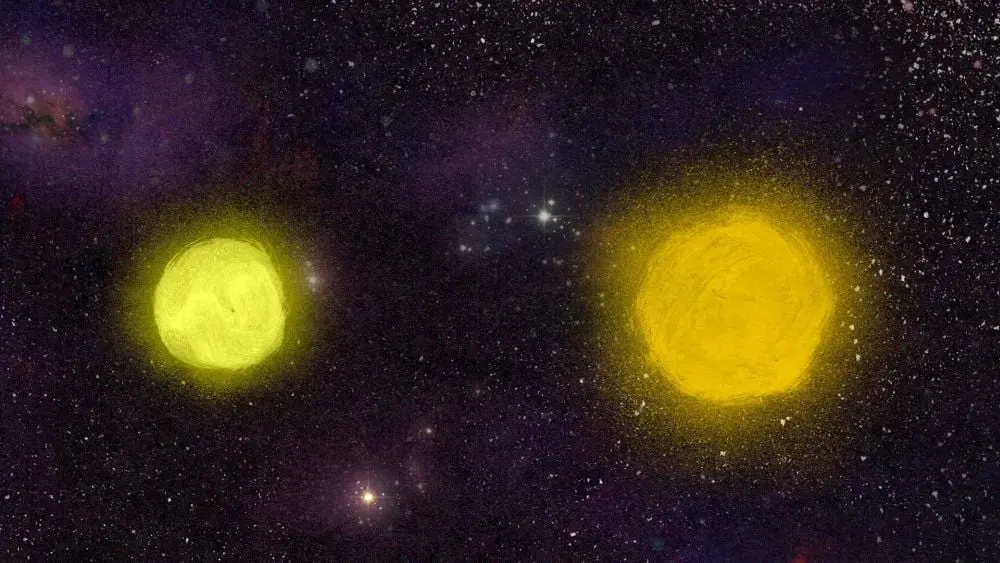
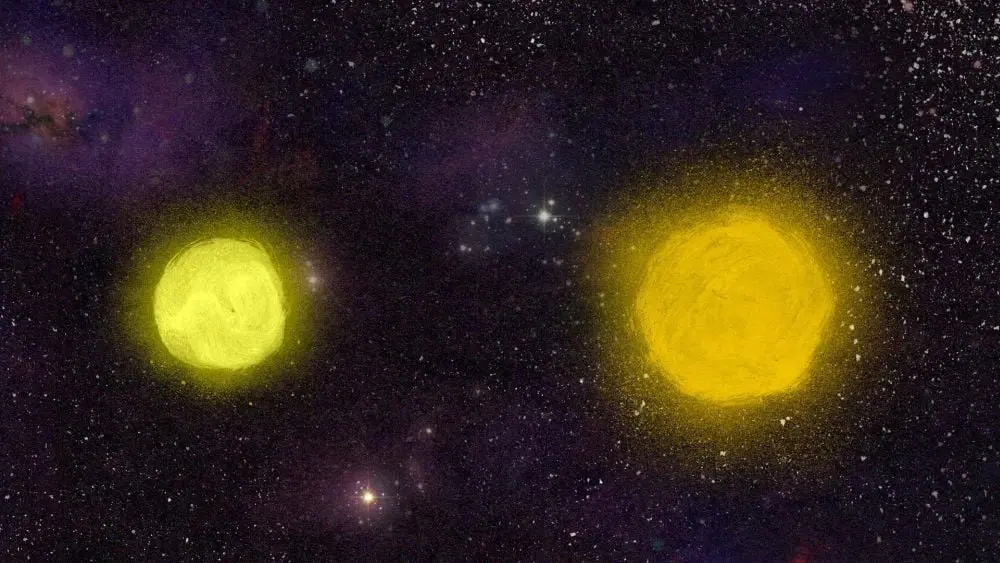
The 70 Ophiuchi system, located a mere 16.6 light-years (5.1 parsecs) from Earth, has long been a subject of fascination for the astronomical community. Comprising two main-sequence stars—70 Oph A, a K0-type star with approximately 89% of the Sun’s mass, and 70 Oph B, a K5-type star with roughly 73% of the Sun’s mass—the system is one of the closest solar-type binaries to our own solar system. Given their age of approximately 6.2 billion years, these stars are considered "mature," providing a stable environment where life, if it exists, would have had ample time to evolve. However, detecting planets in binary systems presents unique challenges that differ significantly from searches around single stars like the Sun.
The Challenge of Binary Systems and the Radial Velocity Method
In the search for exoplanets, two primary methods have dominated the field: the transit method and the radial velocity (RV) method. The transit method, utilized extensively by the Kepler and TESS missions, monitors the slight dip in a star’s brightness as a planet passes in front of it. However, in binary systems, the complex orbital dynamics and the mutual brightness of the two stars often mask these subtle signals, making transit detection exceptionally difficult.
The radial velocity method, often referred to as Doppler spectroscopy, is far more robust in these environments. It measures the "wobble" of a star caused by the gravitational tug of an orbiting planet. As the star moves toward or away from Earth, the frequency of its light shifts. By analyzing these shifts over long periods, astronomers can calculate the mass and orbital period of hidden companions. The University of Michigan-led study utilized the 6.5-meter Magellan II Clay Telescope at the Las Campanas Observatory in Chile, equipped with the Planet Finder Spectrograph (PFS), to achieve the precision necessary to rule out large planetary bodies in the 70 Ophiuchi system.
During the observation campaign, researchers collected 499 measurements of 70 Oph A and 334 measurements of 70 Oph B. This recent data was then integrated with archival RV measurements and astrometry spanning more than a century. The result is a comprehensive dynamical map of the system that constrains the possible existence of planets with unprecedented accuracy.
Distinguishing Stellar Activity from Planetary Signals
One of the primary hurdles in radial velocity science is "stellar jitter"—the noise created by the star’s own internal processes. Features such as sunspots, plages, and convective granulation can create spectral shifts that mimic the signal of a planet. For 70 Ophiuchi, the team found variable radial velocity measurements, but through rigorous analysis, they determined these were not caused by orbiting planets.
"We find that the long-term RV variability of both components is consistent with stellar activity modulated by rotation periods," the researchers noted in their paper published in The Astrophysical Journal. Lead author Yiting Li, a postdoctoral researcher at the University of Michigan, emphasized that while the absence of a "hot Jupiter" or a massive gas giant might seem like a setback, it is actually a vital discovery. By identifying the frequency of the stars’ rotation and the resulting spectral noise, the team has "cleaned" the data, allowing future researchers to look for much smaller signals—such as those from Earth-sized planets—without being misled by stellar activity.
The study specifically ruled out Jupiter-mass planets within 5 astronomical units (AU) of 70 Oph A. For the smaller companion, 70 Oph B, the data excluded planets with a mass between 0.25 and 0.3 times that of Jupiter within 0.5 AU. While these findings close the door on large gas giants in those specific zones, they leave the door wide open for Saturn-mass planets or, more importantly, terrestrial, rocky planets.
Historical Context and Scientific Significance
The 70 Ophiuchi system has a storied history in astronomy. It was first cataloged by William Herschel in the late 18th century as part of his study of double stars. Throughout the 19th and 20th centuries, it became a testbed for orbital mechanics. In the mid-20th century, several astronomers even claimed to have detected planetary companions in the system based on orbital perturbations, though these claims were later debunked as measurement errors.
The current study by Li and her colleagues effectively settles these historical debates while setting the stage for the 21st-century "Golden Age" of exoplanet science. By providing a precise baseline of the stars’ orbits and masses, the team has turned 70 Ophiuchi AB into one of the best-characterized binary systems in the sky. This characterization is essential for habitability studies. In a binary system, the gravitational influence of the second star can destabilize planetary orbits. Knowing the exact masses and eccentricities of 70 Oph A and B allows scientists to calculate the "Stable Zone"—the region where a planet could maintain a circular orbit for billions of years without being ejected into deep space or pulled into a star.
"70 Oph AB presents a unique opportunity for the search and characterization of habitable planets in binary systems," the authors stated, noting that the system’s proximity allows the "Habitable Zone" (the region where liquid water could exist) to be spatially resolved by future telescopes.
Implications for Future Flagship Missions
The importance of this research is tied directly to the upcoming generation of "mega-telescopes" and space-based observatories. Instruments currently under construction, such as the Extremely Large Telescope (ELT) in Chile and the Giant Magellan Telescope (GMT), will possess the light-gathering power and angular resolution to move beyond mere detection and into the realm of direct imaging.
Unlike current methods that infer a planet’s existence, direct imaging captures the actual photons reflected from a planet’s atmosphere. This allows for spectroscopy—the analysis of light to determine chemical composition. Scientists will look for "biosignatures," such as the simultaneous presence of oxygen, methane, and water vapor, which could indicate the presence of life.
However, observing time on these multi-billion-dollar instruments is a precious commodity. Astronomers cannot simply point them at random stars and hope for the best. "Astronomers who request observing time for their research have to make a strong case," the Michigan team explained. By ruling out large planets and defining the orbital constraints of 70 Ophiuchi, Li’s team has provided the "advance work" necessary to justify using the ELT or NASA’s planned Habitable Worlds Observatory (HWO) to scan this system for Earth-like worlds.
Michael Meyer, a senior co-author and chair of the University of Michigan astronomy department, highlighted the system’s role in future missions like SHERA (Small-Heliocentric-Exoplanet-Reconnaissance-Astrometry). "The University of Michigan is part of a team studying a space mission called SHERA that will focus on binaries, where this system is one of a handful of targets," Meyer said. He added that 70 Oph AB is a primary target for the HWO, a mission specifically designed to identify at least 25 Earth-like planets in the coming decades.
A Legacy of Precision
The study’s conclusion serves as a reminder that in science, a "negative" result is often just as informative as a "positive" one. By proving what is not there, the researchers have narrowed the search parameters for what could be there. The statistical prevalence of planets in the Milky Way suggests that it would be highly unusual for a system like 70 Ophiuchi to be entirely devoid of planetary companions.
"The study sets an upper limit, not a ban, on planets," Li remarked. "Given how prevalent planets are in our universe and in the Milky Way, I would wager that we’ll find there are other planets there."
As the astronomical community prepares for the deployment of the Habitable Worlds Observatory and the first light of the ELT, the data harvested from 70 Ophiuchi AB will serve as a vital roadmap. The century-long effort to understand this binary pair has transitioned from a study of stellar motion to a sophisticated hunt for a second Earth. If terrestrial planets do indeed reside within the stable zones of 70 Ophiuchi, they are now among the most likely candidates to be the first worlds where humanity might detect the chemical whispers of an alien biosphere. The work of Li, Meyer, and their team ensures that when the next generation of telescopes is ready to look, they will know exactly where—and how—to see.