Lina Irawan
The landscape of software engineering is currently undergoing a significant paradigm shift as the industry moves toward more rigorous methods for ensuring system reliability and correctness. At the forefront of this movement is Quint, a newly developed open-source, executable specification language designed to bridge the gap between complex formal methods and the practical needs of modern software developers. Based on the foundational principles of Temporal Logic of Actions (TLA+), Quint offers a toolchain that allows engineers to model, simulate, and verify system behaviors through a syntax that is intentionally designed to be intuitive and programmer-friendly. This development comes at a time when the complexity of distributed systems, blockchain protocols, and cloud infrastructure has made traditional testing methods increasingly insufficient for preventing critical failures.
The Technical Foundations of Quint and the Legacy of TLA+
To understand the significance of Quint, one must first examine its predecessor, TLA+. Developed by Leslie Lamport in the late 1990s, TLA+ is a formal specification language used to design, model, document, and verify concurrent and distributed systems. It has been famously utilized by major technology firms, including Amazon Web Services (AWS) and Microsoft, to find subtle bugs in complex algorithms that conventional testing and code reviews failed to detect. However, despite its power, TLA+ has historically faced a steep learning curve due to its mathematical notation, which is rooted in set theory and temporal logic—concepts that are often foreign to the average software engineer.
Quint addresses this barrier to entry by reimagining the TLA+ semantics within a syntax that closely resembles modern programming languages like TypeScript or Rust. By doing so, it democratizes formal verification, allowing a broader range of engineers to apply mathematical rigor to their system designs without requiring an advanced degree in formal logic. The Quint toolchain enables users to write specifications that are not only readable but also executable, meaning they can be run through simulators to explore system states or checked against invariants using automated model checkers.
Bridging the Gap: The Core Objectives of the Quint Project
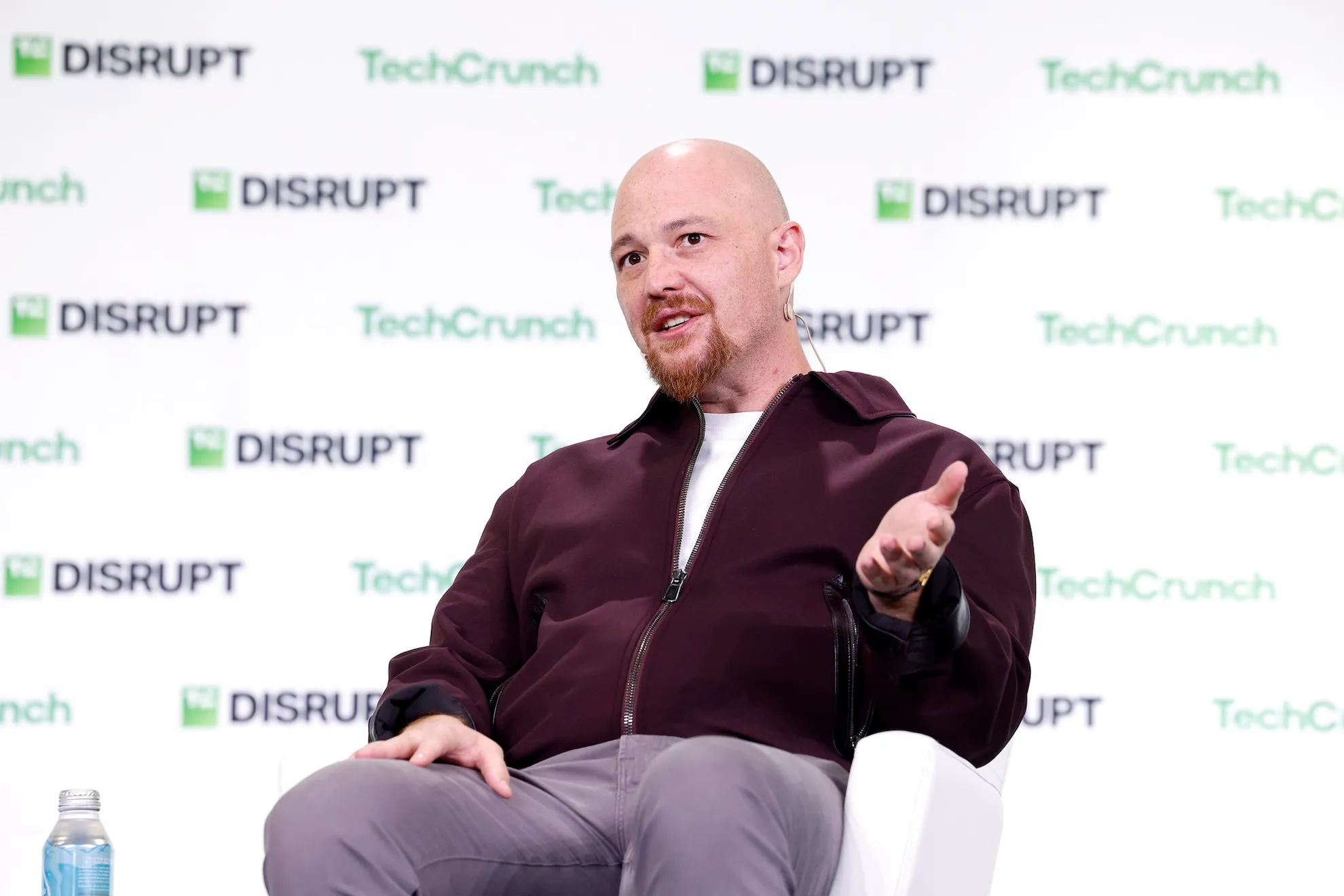
The development of Quint is led by a team of experts, including Gabriela Moreira, who has been instrumental in advocating for the language’s adoption within the developer community. The project’s primary objective is to provide a "path of least resistance" for formal methods. By integrating with existing developer workflows, Quint allows for the early detection of "design-level" bugs—errors in the logic of a system that occur before a single line of production code is written.
Key features of the Quint language include:
- Executable Specifications: Unlike static documentation, Quint models can be executed, allowing developers to see how their systems behave under various conditions.
- State-Machine Modeling: It excels at defining the transitions and states of complex protocols, making it ideal for distributed systems and financial technology.
- Integration with TLA+ Solvers: While the syntax is new, Quint leverages the robust verification engines developed for TLA+, such as the Apalache model checker.
- Modern Tooling: The Quint toolchain includes a Language Server Protocol (LSP) for IDE support, a REPL (Read-Eval-Print Loop) for interactive exploration, and a test runner.
The Critical Need for Formal Methods in Modern Infrastructure
The shift toward languages like Quint is driven by the increasing cost of software failure. In the contemporary digital economy, a single logic error in a distributed database or a smart contract can result in millions of dollars in losses or the total disruption of essential services. According to industry data, the cost of debugging software in the United States alone has exceeded $2 trillion annually, with a significant portion of those costs attributed to architectural flaws that were not identified during the design phase.
Formal methods provide a mathematical guarantee that a system will behave as intended under all possible scenarios. This is particularly vital for "eventual consistency" models and "consensus algorithms" used in decentralized networks. By using Quint, engineers can prove that their systems are "deadlock-free" and that they maintain "liveness" and "safety" properties—terms that refer to the system’s ability to always make progress and never enter an invalid state.
A Chronology of Formal Specification Development
The journey from abstract mathematical logic to the user-friendly interface of Quint has spanned several decades:
- 1977: Amir Pnueli introduces Temporal Logic into computer science, providing a framework for reasoning about how systems change over time.
- 1994: Leslie Lamport publishes the initial papers on the Temporal Logic of Actions (TLA), combining temporal logic with a logic of actions.
- 1999-2002: The TLA+ language is formalized, and the first model checkers (TLC) are released.
- 2014: Amazon Web Services publishes a landmark paper detailing how TLA+ helped them find "subtle, executable-system-wide bugs" in S3 and DynamoDB that had persisted for years.
- 2021-2023: The development of Quint begins, aimed at creating a "TLA+ for the 21st century" that prioritizes developer experience and interoperability with modern IDEs.
- 2024: Quint gains traction in the open-source community, particularly within the blockchain and distributed systems sectors, as a standard for protocol specification.
Community Recognition and the Role of Knowledge Sharing
While the development of new languages like Quint represents the "high-tech" end of software reliability, the industry continues to rely heavily on community-driven knowledge platforms like Stack Overflow for day-to-day problem-solving. This dual reliance on formal rigor and community wisdom was highlighted recently by the recognition of Alex K., a prominent contributor to the Stack Overflow ecosystem.
Alex K. was awarded the prestigious "Populist" badge for an insightful answer to a fundamental yet nuanced query regarding SQL Server: "Select Top 0?". The Populist badge is one of the more difficult accolades to achieve on the platform, as it requires a contributor to provide an answer that outscores an already accepted answer by a significant margin. This specific query—how and why to use a SELECT TOP 0 statement—is a prime example of the "tribal knowledge" that exists within the engineering community.
From a technical perspective, SELECT TOP 0 is often used by developers to retrieve the schema of a database table (column names and data types) without actually pulling any data rows. This is a common practice in data integration and ORM (Object-Relational Mapping) development. The recognition of such contributions underscores the importance of clear, accurate communication in the tech industry—a value that Quint also seeks to uphold by making system specifications more readable and accessible.
Analysis of Implications: The Future of the "Shift-Left" Movement
The emergence of Quint is a significant milestone in the "shift-left" movement, which advocates for performing testing and validation as early as possible in the software development lifecycle. By moving verification from the "post-coding" phase to the "design" phase, companies can drastically reduce the time and resources spent on fixing fundamental architectural errors.
The broader implications of Quint’s adoption include:
- Standardization of Protocols: As more projects use Quint to define their protocols, it becomes easier for different systems to interoperate safely, as their specifications are written in a common, machine-readable language.
- Improved Auditing: For industries such as finance and aerospace, Quint specifications provide an auditable trail of a system’s intended behavior, which can be verified by third-party security firms.
- Educational Impact: By lowering the barrier to formal methods, Quint may lead to a change in computer science curricula, where formal modeling becomes a standard skill taught alongside traditional programming.
Official Responses and Industry Outlook
While official statements from major tech conglomerates regarding Quint specifically are still emerging, the general consensus among software architects is one of cautious optimism. Leaders in the formal methods space have noted that the success of Quint will depend on its ability to maintain the mathematical integrity of TLA+ while expanding its feature set to include more library support and integration with CI/CD (Continuous Integration/Continuous Deployment) pipelines.
Gabriela Moreira, through her active presence on professional networks like LinkedIn and X (formerly Twitter), continues to foster a community of "formal methods enthusiasts" who are dedicated to improving software quality. Her work, alongside the contributions of community members like Alex K. in the realm of database management, illustrates a multi-tiered approach to modern engineering: combining the absolute certainty of mathematical modeling with the practical, experience-based solutions found in developer forums.
As systems continue to grow in scale and complexity, the "trial and error" method of software development is becoming increasingly untenable. Tools like Quint represent the next generation of engineering excellence, where the behavior of a system is not just guessed at or tested via random inputs, but is instead mathematically specified and verified. The ongoing evolution of the Quint toolchain, supported by a robust open-source community and the foundational strength of TLA+, suggests that the era of "verifiable-by-design" software is no longer a theoretical ideal, but a practical reality for the modern engineer.