Vera Intan Clara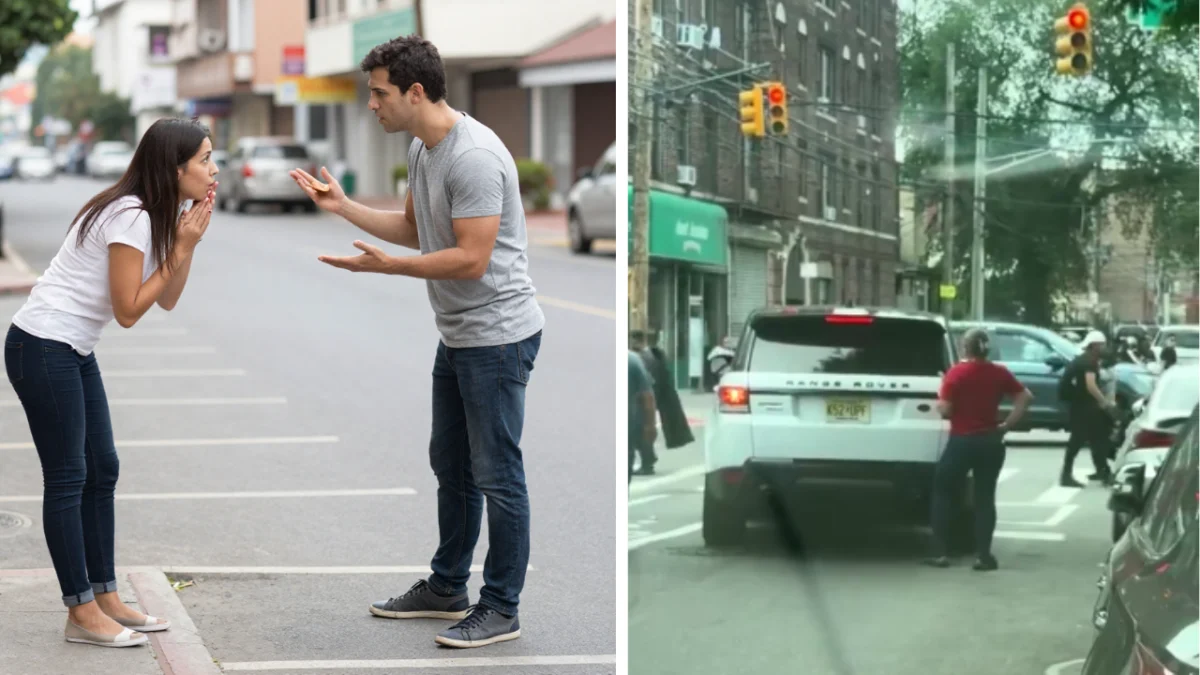
A video disseminated across social media platforms, particularly X, has ignited a fervent debate regarding the contentious practice of reserving public parking spaces using an individual’s physical presence rather than a vehicle. The clip, reportedly filmed amidst the perpetually congested streets of New York City, captures a tense interaction between a driver attempting to park and a woman steadfastly occupying an empty space, ostensibly holding it for another vehicle yet to arrive. This seemingly isolated incident has rapidly become a focal point for discussions on urban etiquette, the scarcity of public resources, and the unwritten rules governing daily life in one of the world’s most densely populated metropolises.
The Genesis of a Digital Firestorm: A Street-Level Confrontation
The recording, which has garnered in excess of 200,000 views since its re-sharing by the X user @ClownWorld, depicts a confrontation devoid of audio but rich in non-verbal communication. The scene opens with a visibly tall man engaging, or perhaps arguing, with a significantly shorter woman clad in a red shirt. The woman is positioned directly within an empty parking space, behind a white Range Rover that is temporarily stopped in the middle of the street, suggesting an imminent attempt to reverse into the contested spot. The man, whose demeanor appears calmly assertive, is attempting to communicate to the woman that she must vacate the space to allow him to park.
However, the woman’s body language projects an unmistakable air of defiance and hostility, indicating a clear unwillingness to cooperate. Her rigid stance and direct gaze convey a firm refusal to yield, creating an impasse. The driver of the Range Rover, having identified what he perceived as an open parking opportunity, evidently found his path obstructed by the woman’s determined presence. She remained unyielding, effectively "holding her ground" against the driver’s persistent requests. The video subsequently shows the man re-entering his Range Rover and repositioning the vehicle, presumably preparing to reverse into the spot. Yet, the woman maintained her close proximity to the rear of the vehicle, a gesture interpreted by many viewers as a direct challenge, daring the driver to proceed despite her presence. This continued obstruction also appeared to impede the flow of traffic, drawing the attention of other motorists who had exited their vehicles to observe the unfolding dispute. The woman’s unwavering refusal to move strongly suggests that the driver ultimately did not secure the coveted parking space.
Chronology of the Digital Outcry
The video’s re-sharing by @ClownWorld on X, dated July 21, 2026, quickly propelled the incident into widespread public consciousness. While the exact date of the original recording remains unverified, its rapid accumulation of views and accompanying commentary underscores the resonant nature of the issue. Within hours of its re-posting, the clip became a trending topic, particularly among New Yorkers who reported similar personal experiences. The absence of audio in the video paradoxically amplified its impact, allowing viewers to project their own interpretations and frustrations onto the silent standoff, fueling a robust online debate that extended beyond X to other social media platforms and local news discussion forums. The incident, though brief, served as a catalyst for a broader examination of urban parking ethics and the daily struggles faced by drivers in high-density environments.
The Perennial Parking Predicament in New York City
The incident captured in the viral video is not an anomaly but rather a vivid illustration of New York City’s chronic and deeply entrenched parking crisis. This scarcity is a daily reality for millions, transforming the act of parking from a routine task into a competitive sport, often fraught with tension and frustration.
-
Background Context: New York City, particularly Manhattan and inner-boroughs like parts of Brooklyn and Queens, suffers from an extreme imbalance between the number of registered vehicles and available parking spaces. Despite an extensive public transportation network, car ownership remains high, driven by factors such as commuting needs for those living outside subway service areas, commercial vehicle requirements, and personal preference. The city’s historic infrastructure, not originally designed for the current volume of vehicular traffic, exacerbates the problem. Street parking, often metered or subject to alternate-side regulations, is a highly coveted commodity, while off-street garage parking can command exorbitant monthly fees, frequently exceeding several hundred dollars, making it unaffordable for many residents. This economic reality pushes more drivers onto the streets in search of free or cheaper options, intensifying the competition.
-
Supporting Data: While precise real-time statistics on parking availability are elusive, anecdotal evidence and studies consistently highlight the severity. A 2017 study by INRIX, a transportation analytics company, estimated that drivers in New York City spend an average of 107 hours per year searching for parking. This equates to significant wasted fuel, increased carbon emissions, and heightened traffic congestion. With over 2 million registered vehicles in NYC and a finite number of street spaces, the odds are perpetually stacked against the driver. For instance, in Manhattan alone, there are estimated to be fewer than 200,000 legal street parking spots, serving a population that swells to millions daily. This fundamental imbalance creates an environment where every empty space is perceived as a precious resource, leading to behaviors like "spot saving" becoming a common, albeit contentious, practice.
-
Cultural Phenomenon of "Spot Saving": The act of a person physically occupying a parking space is deeply embedded in certain urban cultures, particularly in areas where parking is exceptionally scarce. This practice is often seen during harsh winter months, where individuals "reserve" a spot they have arduously shoveled out, sometimes placing chairs or cones to mark their claim. While legally dubious, this "shoveling out" tradition often garners a degree of informal community acceptance. The video incident, however, presents a variation: reserving a spot without any prior investment of labor, simply for an impending arrival. This distinction fuels much of the debate, questioning the legitimacy of such a claim on public property.
Legality and Enforcement: Navigating the Grey Areas
The legality of physically reserving a public parking space is unequivocally clear in principle, yet murky in practical enforcement. Public parking spaces, by definition, are part of the public right-of-way and are generally designated as "first-come, first-served" for vehicles.
-
Legal Precedent: There are no provisions in New York City traffic laws that permit an individual to reserve a public parking space with their body. Such an action could potentially fall under several infractions, including obstructing traffic (if the individual impedes the flow of vehicles), disorderly conduct, or even pedestrian violations if they are standing in the roadway without a legitimate purpose. The New York City Department of Transportation (DOT) and the New York Police Department (NYPD) typically maintain that public spaces cannot be privately claimed without explicit authorization or a permit. The concept of "squatting" on a parking space is not legally recognized.
-
Challenges for Law Enforcement: Despite the clear legal framework, actual enforcement of such minor disputes is often challenging. Police resources are stretched, and officers may prioritize more serious offenses. Unless the situation escalates into a physical altercation, a significant traffic blockage, or a direct threat to public safety, officers might issue a warning or attempt to mediate rather than issue a summons or make an arrest. This gap between the letter of the law and its practical application contributes to the persistence of such practices. Many drivers, frustrated by the lack of immediate enforcement, resort to their own forms of "justice" or simply move on, further entrenching the belief that these actions, while illegal, often go unpunished.
Public Discourse: Divided Opinions and Social Norms
The viral video ignited a passionate discussion online, highlighting a stark division in public opinion, particularly between those accustomed to NYC’s unique urban dynamics and those who adhere strictly to universal traffic laws.
-
The "New Yorker" Perspective: Many commenters, identifying themselves as long-time New Yorkers or frequent drivers in the city, defended the woman’s actions, portraying them as a pragmatic response to an impossible parking situation. One user explicitly stated, "Nahh you must not be a New Yorker or don’t drive. If my wife is rounding the corner I’m gonna hold that spot.. might come with some conflict but ehhh.." This viewpoint often frames "spot holding" as a necessary survival tactic in a cutthroat environment, a form of informal local custom. Another commenter echoed this, writing, "Every one does this. You can physically hold a parking spot in the city. The Range Rover guy from NJ can afford a garage." This sentiment often carries an undercurrent of localism, implying that outsiders (like the perceived "Range Rover guy from NJ") don’t understand or deserve to benefit from these unwritten rules.
-
The "First-Come, First-Served" Principle: Conversely, a significant portion of the online community vehemently condemned the woman’s actions, emphasizing the principle that public parking spaces are inherently open to the first vehicle to arrive, not the first person. These individuals often cited fairness, public safety, and the rule of law. They argued that such behavior breeds entitlement and creates unnecessary conflict. The Range Rover driver, in this view, was simply attempting to claim a legitimate, available space.
-
The Shoveling Out Analogy: The debate also touched upon the "shoveling out" phenomenon. While some drew parallels, arguing that if one can reserve a shoveled-out spot, why not an empty one, others highlighted the distinction: shoveling involves physical labor and time investment, creating a perceived moral claim that merely standing in a spot does not. This nuance underscores the complex interplay between effort, ownership, and public space.
-
Escalation and Danger: A particularly alarming aspect of the online discussion involved numerous warnings about the potential for violence. One commenter stated, "Extremely dangerous…. its been a few people over the course of the years in NYC that lost thier life or were seriously injured trying to block parking spots." These stark warnings underscore the high-stakes nature of parking disputes in densely populated areas, where frustration can quickly escalate into aggression, sometimes with tragic consequences.
Implications for Urban Planning and Community Dynamics
The viral parking standoff, while seemingly a minor incident, illuminates broader implications for urban planning, community cohesion, and public safety in cities like New York.
-
Urban Infrastructure Deficiencies: Such incidents are symptoms of inadequate urban infrastructure and parking management strategies. Cities need to continuously evaluate and adapt their parking policies to match evolving demographics and transportation needs. This includes considering more efficient use of existing spaces, exploring smart parking technologies that provide real-time availability, and investing in expanded public transit options to reduce reliance on private vehicles. The current system inadvertently pits residents against each other for a scarce resource.
-
Impact on Quality of Life: The daily struggle for parking significantly degrades the quality of life for residents. It contributes to stress, frustration, and a sense of constant competition. For businesses, a lack of accessible parking can deter customers. The incident reflects a breakdown in civility that can permeate daily interactions, making public spaces feel more hostile.
-
Potential for Road Rage and Violence: As highlighted by online comments, parking disputes are a known trigger for road rage and, in extreme cases, violence. The woman’s defiant stance in the video, daring the driver to proceed, illustrates a dangerous escalation that could have had severe consequences. Urban planners and law enforcement must recognize these flashpoints and consider interventions, whether through clearer signage, stricter enforcement, or community education campaigns promoting patience and adherence to rules.
-
Policy Considerations: The debate also prompts consideration of policy alternatives. Residential parking permit programs, already implemented in many cities, could prioritize residents in certain zones, though they often face opposition from businesses and visitors. Dynamic pricing for parking, based on demand, could also help manage availability, albeit with equity concerns. Ultimately, a holistic approach that balances the needs of drivers, pedestrians, businesses, and the environment is required.
Safety Concerns and Escalation Risks
The comments section accompanying the viral video served as a stark reminder of the inherent dangers associated with parking disputes. The assertion that "its been a few people over the course of the years in NYC that lost thier life or were seriously injured trying to block parking spots" is a grave reflection of reality. Parking conflicts, often fueled by high-stress urban environments and a sense of entitlement or desperation, can rapidly devolve into violent confrontations. Drivers, already tense from navigating dense traffic, can react aggressively when they perceive an injustice or obstruction. Pedestrians, conversely, can misjudge the severity of their actions or the driver’s frustration. The woman’s unwavering defiance in the video, standing precariously close to the Range Rover as it attempted to maneuver, exemplifies a dangerous disregard for personal safety. Such actions not only put the individual at risk but also create a volatile situation that could easily spiral out of control, involving physical altercations or even vehicular assaults. The presence of other drivers observing the standoff also adds an element of public spectacle, potentially emboldening participants or exacerbating the tension.
Official Responses and Broader Context
As noted by The Daily Dot, independent verification of the video’s exact location, date, and the specific circumstances surrounding the dispute remains elusive. This journalistic caveat is crucial, as it prevents definitive official statements regarding this particular incident. However, it is reasonable to infer the general stance of relevant city authorities.
- New York Police Department (NYPD): The NYPD’s position would invariably emphasize public safety, the rule of law, and discouraging self-help. They would likely advise against individuals physically blocking parking spots, citing potential hazards and the illegality of obstructing public thoroughfares. Their guidance would typically be to contact 911 for emergencies or 311 for non-emergency issues, rather than engaging in confrontations.
- New York City Department of Transportation (DOT): The DOT’s focus would be on the efficient and safe flow of traffic. They would reiterate that public parking spaces are allocated on a first-come, first-served basis for vehicles and that pedestrian obstruction is not permitted. Their efforts would typically center on managing parking regulations, signage, and infrastructure.
- Urban Planning Perspective: From an urban planning perspective, this incident underscores the urgent need for comprehensive parking solutions. Experts might advocate for a multi-pronged approach including better utilization of existing space, smart parking technologies, incentivizing public transit use, and exploring innovative urban design that reduces the overall demand for street parking.
The recurring nature of such incidents highlights a systemic issue rather than isolated acts of defiance. It is a daily challenge that impacts traffic flow, environmental quality, and the social fabric of the city.
Conclusion
The viral video of a woman reserving a parking spot with her body in New York City transcends a mere traffic dispute; it serves as a potent symbol of the profound challenges inherent in urban living. It encapsulates the fierce competition for scarce resources, the clash between formal laws and informal social norms, and the ever-present potential for everyday frustrations to escalate into dangerous confrontations. While the legal framework is clear that public parking spaces cannot be reserved by an individual, the cultural context of New York City’s relentless parking crisis provides a complex backdrop to such acts. This incident is a stark reminder for city planners, law enforcement, and residents alike of the urgent need for sustainable parking solutions, clearer communication of regulations, and a renewed emphasis on civic responsibility and de-escalation in a densely packed urban environment. Until these underlying issues are addressed, similar standoffs are likely to remain an unwelcome, if predictable, feature of city life.