admin
admin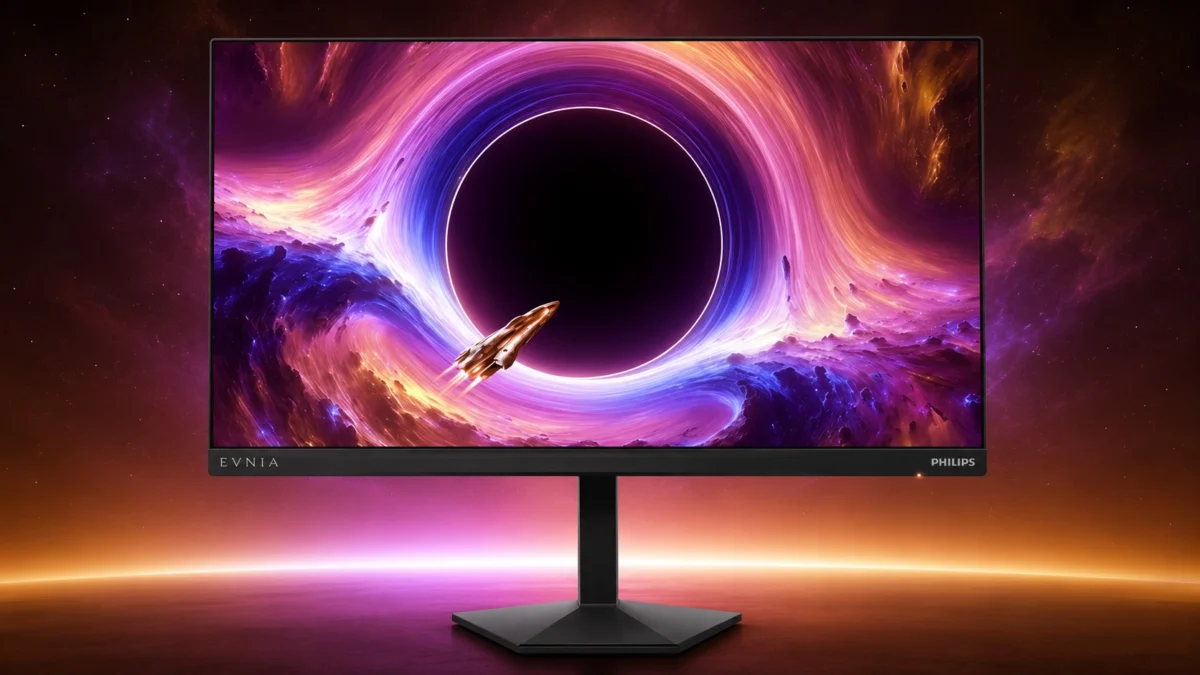
The global gaming peripheral market has witnessed a significant paradigm shift as Philips, under its Evnia gaming sub-brand, officially introduced the 27M4N3500PT. This 27-inch monitor represents a landmark achievement in display technology, not merely for its high-speed performance but for its aggressive pricing strategy that threatens to disrupt the established hierarchy of competitive gaming displays. By integrating "triple-mode" functionality—a feature previously reserved for flagship-tier OLED and Mini-LED monitors—into a Fast IPS panel, Philips has effectively democratized ultra-high refresh rate gaming.
As the industry moves toward 2025, the demand for versatile displays has surged. Gamers no longer want to choose between a high-resolution screen for immersive role-playing games and a high-speed screen for competitive shooters. The 27M4N3500PT addresses this by offering three distinct operating modes: 2K (2560 x 1440) at 275Hz, Full HD (1920 x 1080) at 360Hz, and HD (1280 x 720) at a staggering 540Hz. Priced at approximately 1,099 Yuan (roughly US$162), it currently stands as the most affordable triple-mode monitor on the market, undercutting competitors by hundreds of dollars.
The Evolution of Triple-Mode Display Technology
To understand the significance of the Philips 27M4N3500PT, one must look at the recent trajectory of monitor development. For years, gaming monitors were categorized by a single native resolution and a maximum refresh rate. Users who wanted to play at lower resolutions to gain higher frame rates often dealt with "blurring" or scaling artifacts, as LCD panels are designed to look best at their native resolution.
In 2023 and early 2024, manufacturers like ASUS, MSI, and Gigabyte introduced "dual-mode" and "triple-mode" monitors. These displays utilize advanced controllers that allow the panel to switch its internal logic. For instance, an OLED panel might run at 4K at 240Hz for cinematic gaming but switch to 1080p at 480Hz for professional-grade e-sports. However, these monitors almost exclusively used premium panel types, often retailing for over $1,000.
Philips has taken a different approach by utilizing a Fast IPS (In-Plane Switching) panel. Fast IPS technology employs thinner liquid crystal layers and higher driving voltages to achieve response times that rival older TN (Twisted Nematic) panels while maintaining the superior color accuracy and viewing angles inherent to IPS technology. By applying triple-mode logic to this more cost-effective panel type, Philips has moved the "500Hz+ club" from a niche luxury to a mainstream reality.

Technical Deep Dive: Resolution and Refresh Rate Versatility
The core appeal of the 27M4N3500PT lies in its ability to adapt to different gaming genres through its three primary configurations:
1. Immersive Mode: 2K (1440p) at 275Hz
At its native resolution, the monitor provides a crisp 2560 x 1440 image. This resolution has become the "sweet spot" for modern PC gaming, offering a significant clarity boost over 1080p without the extreme hardware requirements of 4K. A 275Hz refresh rate at 1440p is already at the high end of the market, suitable for high-action titles like Call of Duty or Apex Legends where both visual detail and fluid motion are required.
2. Competitive Mode: FHD (1080p) at 360Hz
By dropping the resolution to 1920 x 1080, the monitor increases its ceiling to 360Hz. This mode is designed for the current standard of professional e-sports. At 360Hz, the end-to-end system latency is significantly reduced, and motion blur is minimized, allowing players in titles like Counter-Strike 2 or Valorant to track moving targets with extreme precision.
3. Ultra-High Speed Mode: HD (720p) at 540Hz
The most notable feature is the 540Hz mode at 1280 x 720 resolution. While 720p may seem low by modern standards, the 540Hz refresh rate provides a level of temporal resolution that was previously impossible. At 540Hz, a new frame is delivered every 1.85 milliseconds. This is specifically targeted at "frame-chasers"—professional players who prioritize the absolute lowest input lag and the smoothest possible motion over visual fidelity.
Panel Performance and Color Fidelity
Despite its budget-friendly price point, Philips has not neglected the visual quality of the 27M4N3500PT. The Fast IPS panel boasts a Gray-to-Gray (GtG) response time of 1ms. In the world of competitive gaming, GtG response time is critical; it measures how fast a pixel can change from one shade of gray to another. A 1ms response time ensures that even at 540Hz, trailing and ghosting are kept to an absolute minimum.
Color reproduction is another area where the 27M4N3500PT punches above its weight class. The monitor covers:

- 100% sRGB: The standard for web content and basic gaming.
- 98% DCI-P3: The color space used in digital cinema, ensuring vibrant and life-like colors in modern AAA games.
- 94% Adobe RGB: A color space preferred by photographers and designers.
With a peak brightness of 350 nits, the monitor is bright enough for most indoor environments, though it lacks the extreme luminance required for high-end HDR (High Dynamic Range) performance. However, for its intended audience of competitive gamers, color accuracy and motion clarity are generally prioritized over peak brightness.
Connectivity and Industrial Design
The I/O (Input/Output) array on the Philips 27M4N3500PT is streamlined but modern. It features two HDMI 2.1 ports and one DisplayPort 1.4 connection. The inclusion of HDMI 2.1 is particularly important for console gamers, as it allows the latest generation of consoles (PlayStation 5 and Xbox Series X) to utilize features like Variable Refresh Rate (VRR) and 120Hz output, although the monitor’s highest refresh rates are only achievable via DisplayPort on a PC.
One notable omission is a built-in USB hub. Many high-end gaming monitors include USB pass-through ports for mice, keyboards, or charging. By excluding this feature, Philips was likely able to reduce manufacturing costs and pass those savings on to the consumer. The physical design follows the Evnia aesthetic—clean, minimalist, and focused on ergonomics, with a stand that likely supports tilt, swivel, and height adjustments to accommodate different desk setups.
Chronology of the Refresh Rate Race
The release of the 27M4N3500PT marks a new chapter in the "Hz Wars" that began over a decade ago:
- 2012-2014: The transition from 60Hz to 120Hz and 144Hz became the standard for "gaming" monitors.
- 2017: The arrival of 240Hz monitors, which were initially met with skepticism but soon became the e-sports standard.
- 2020-2022: 360Hz displays entered the market, pushing the limits of TN and IPS technology.
- 2023: ASUS and BenQ (Zowie) broke the 500Hz barrier with specialized TN and e-TN panels, priced as premium professional tools.
- Late 2024: Philips introduces the 27M4N3500PT, making 540Hz accessible for under $200.
Market Analysis and Competitive Implications
The pricing of the 27M4N3500PT at $162 is a strategic "shot across the bow" for other manufacturers. Historically, monitors with refresh rates exceeding 500Hz, such as the ASUS ROG Swift Pro PG248QP, have carried price tags ranging from $600 to $800. While the ASUS model uses a specialized E-TN panel with potentially better motion clarity at those extremes, the Philips model offers a "good enough" experience for a fraction of the cost.
Industry analysts suggest that Philips (through its parent company TPV Technology) is leveraging its massive supply chain and manufacturing scale to drive down prices. By using a Fast IPS panel instead of the more expensive OLED or Mini-LED alternatives, Philips is targeting the "pro-sumer" and student demographic—gamers who want professional-grade speed but are working with a limited budget.

The "Triple-Mode" feature also serves as a future-proofing mechanism. A user might currently have a mid-range GPU that can only push 275 FPS at 1440p, but as they upgrade their hardware, the monitor can scale with them, eventually allowing them to explore the 540Hz ceiling in less demanding titles.
Broader Impact on the E-sports Ecosystem
The availability of ultra-high refresh rate monitors at this price point could have a ripple effect on the e-sports industry. High-frequency displays reduce the "distraction" of motion blur, allowing players to react to visual stimuli faster. When such technology was expensive, it created a hardware gap between professional players and aspiring amateurs.
By lowering the barrier to entry, Philips is effectively leveling the playing field. If 360Hz and 540Hz become the standard for budget builds, the baseline for competitive performance will rise. Furthermore, this move will likely force competitors like Acer, AOC, and ViewSonic to adjust their pricing or accelerate the development of their own budget-friendly high-speed displays.
Conclusion
The Philips 27M4N3500PT is more than just a monitor; it is a statement of intent. It proves that the cutting edge of display technology does not always have to be prohibitively expensive. While it lacks some of the bells and whistles of $1,000 displays—such as a USB hub, OLED blacks, or extreme HDR—it delivers exactly what a competitive gamer needs: speed, versatility, and color accuracy.
As this monitor rolls out globally, it is expected to become a staple in gaming cafes and home setups alike. For the first time, the dream of playing at over 500Hz is no longer a luxury reserved for the elite, but a viable option for the masses. Philips has set a new benchmark for value in the gaming industry, and the rest of the market will undoubtedly have to respond.