Sisilia Frederika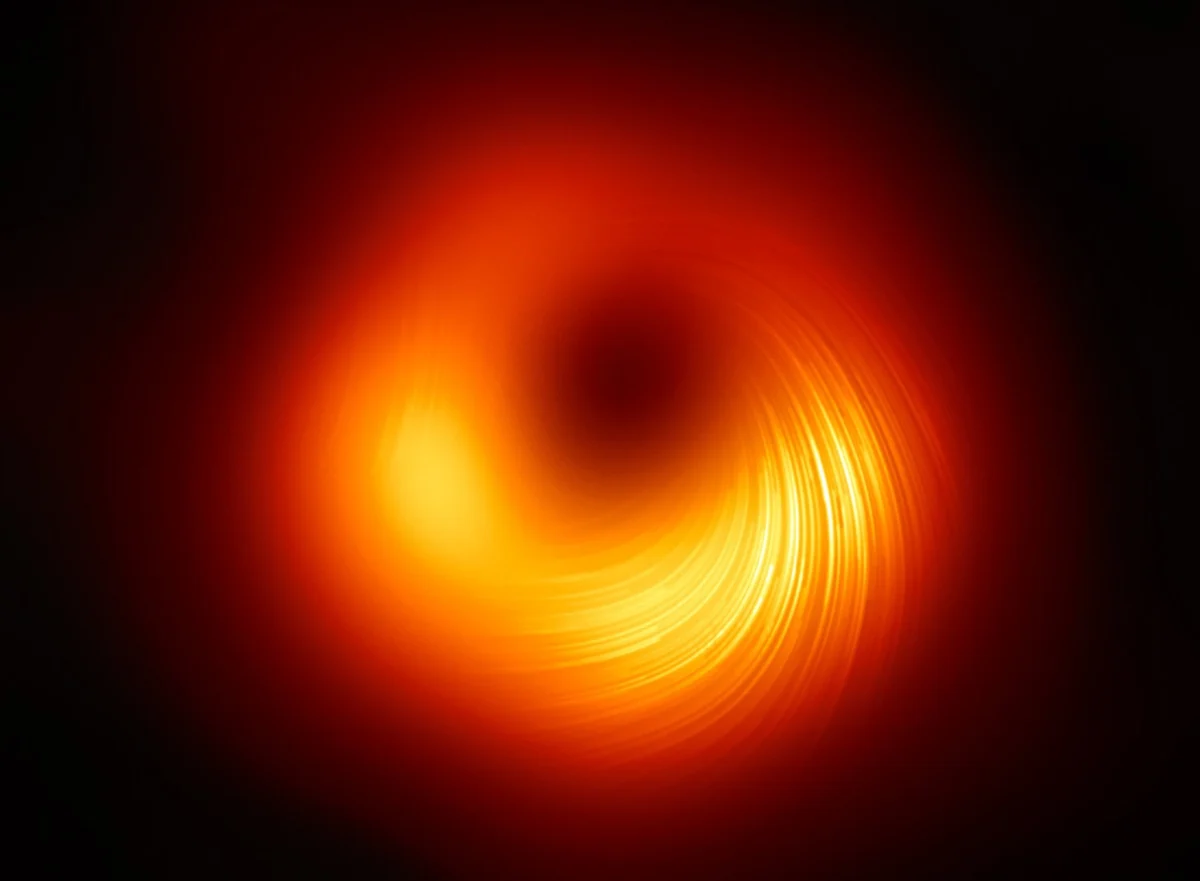
In a landmark achievement for observational astrophysics, an international team of researchers has successfully conducted the first spatially resolved dual-frequency spectral study of the supermassive black hole at the heart of the Messier 87 (M87) galaxy. This study, led by the Shanghai Astronomical Observatory (SAO) of the Chinese Academy of Sciences, marks a significant transition in black hole research, moving from the era of capturing static images to the era of detailed physical characterization. By mapping how the spectral signature of the black hole changes with distance from its center, scientists are now able to probe the extreme plasma environments and magnetic fields that govern the behavior of one of the universe’s most enigmatic objects.
The research, published in The Astrophysical Journal Letters, represents the culmination of years of collaborative effort involving the Chinese Academy of Sciences’ Key Laboratory of Radio Astronomy and Technology, the Center for Computational Sciences at the University of Tsukuba in Japan, the INAF Institute of Radio Astronomy in Italy, the Andalusian Institute of Astrophysics (CSIC) in Spain, and the Max Planck Institute for Radio Astronomy (MPIfR) in Germany. This multi-institutional synergy has allowed for a deeper understanding of the M87 black hole, which is located approximately 53.5 million light-years from Earth in the constellation Virgo and possesses a mass roughly 6.5 billion times that of our Sun.
The Evolution of M87 Observations
The journey toward this breakthrough began in April 2019, when the Event Horizon Telescope (EHT) collaboration released the first-ever image of a black hole’s shadow. That historic image confirmed the predictions of Albert Einstein’s General Theory of Relativity and provided visual evidence of the "event horizon"—the point of no return from which nothing, not even light, can escape. However, while that image provided a morphological view of the black hole’s surrounding "ring" of light, it left many questions unanswered regarding the specific physical conditions of the plasma and the mechanisms behind jet formation.
Following the 2019 release, the scientific community focused on refining data and expanding the scope of observations. In 2021, the EHT collaboration released polarization maps of the M87 black hole, which offered insights into the magnetic field structure near the event horizon. The current study, based on data collected in 2018, takes these investigations a step further by utilizing "multi-frequency horizon-scale imaging." This technique allows researchers to observe the black hole at different wavelengths of light simultaneously, revealing how the energy output varies across different regions of the accretion flow.
Methodology: The Power of Millimeter VLBI
The success of this study hinged on the use of Millimeter Very Long Baseline Interferometry (VLBI). This technique involves synchronizing radio telescopes across the globe to act as a single, Earth-sized telescope. By combining the capabilities of the Event Horizon Telescope and the Global Millimeter VLBI Array (GMVA), the team was able to capture images in the Extremely High Frequency (EHF) range.
Specifically, the researchers combined images taken at 1.3 millimeters (230 GHz) and 3.5 millimeters (86 GHz). These two frequencies provide complementary views of the black hole. The 1.3 mm observations, primarily handled by the EHT, provide the highest resolution and focus on the innermost regions near the event horizon. The 3.5 mm observations, provided by the GMVA, are more sensitive to the extended structures, such as the base of the massive relativistic jet that M87 famously ejects into intergalactic space.
By overlapping these images, the team calculated the "spectral index," a mathematical value that describes how the intensity of radiation changes relative to the frequency. This index is a vital diagnostic tool in astrophysics, as it serves as a fingerprint for the underlying physical processes, such as the density of electrons and the strength of the magnetic field.
Key Findings: Characterizing the Plasma Environment
The resulting spectral-index map revealed a complex and dynamic environment surrounding the M87 black hole. The team found that the spectral properties are not uniform but vary significantly based on the distance from the event horizon.
In the innermost region of the black hole’s environment, the spectral index was found to be positive. According to the researchers, this indicates that the emission is dominated by a process known as "synchrotron self-absorption." In this state, the plasma is so dense that the high-energy electrons moving through the magnetic field reabsorb the very photons they emit. This creates an "optically thick" environment where the radiation is trapped and recycled before it can escape into space.
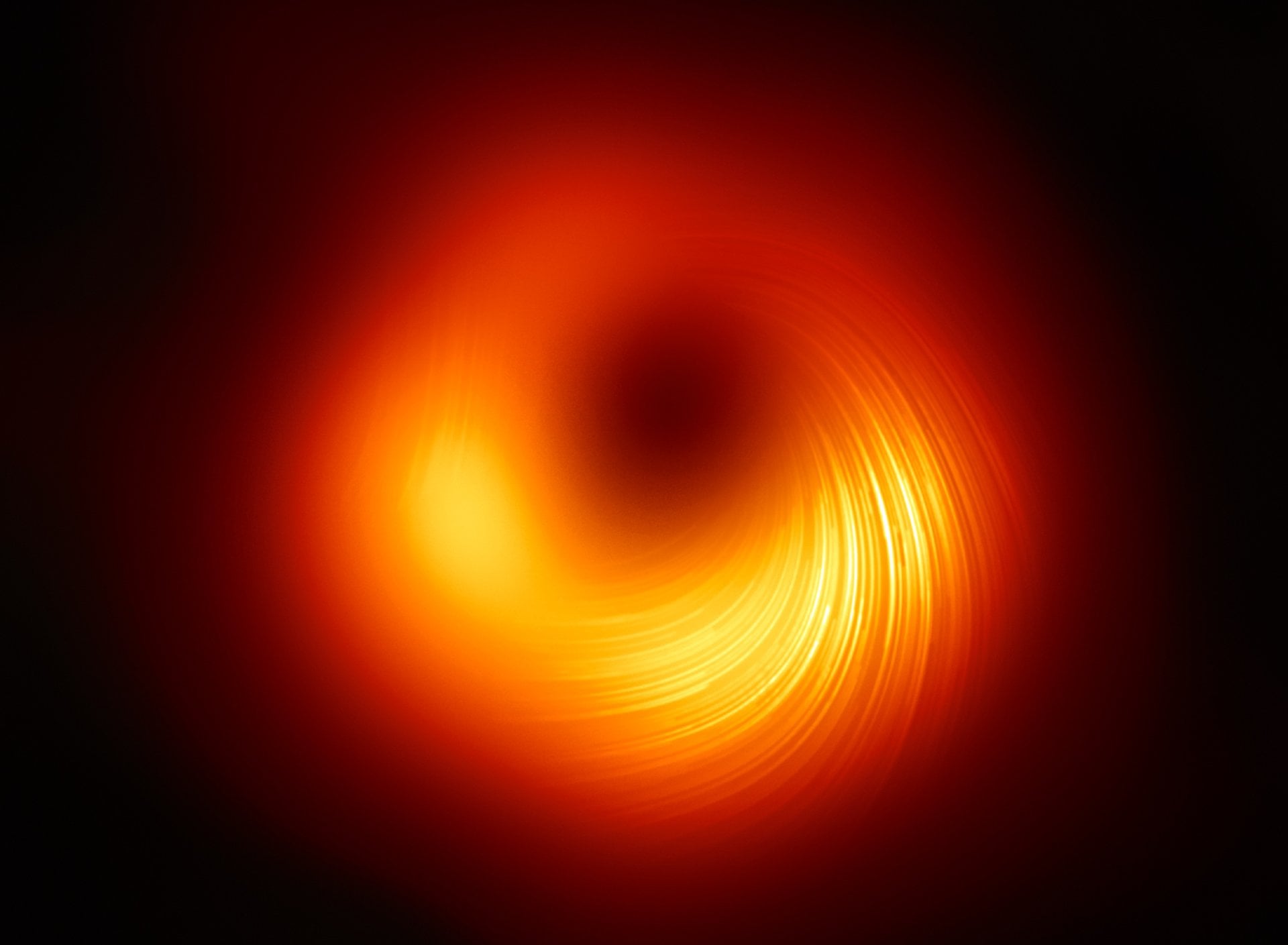
As the distance from the black hole increases, the spectral index undergoes a dramatic shift, becoming negative. This transition occurs at a distance of approximately 30 microarcseconds from the center. This change indicates a shift to an "optically thin" regime, where photons are free to travel through the plasma without being reabsorbed. This 30-microarcsecond threshold corresponds precisely with the ring-like structure observed in the 2019 EHT images, suggesting that the ring is not merely a visual artifact of gravity but is tied to the physical state of the plasma itself.
Expert Perspectives and Institutional Reactions
The lead author of the study, Dr. Shan-Shan Zhao, an assistant researcher at the Shanghai Astronomical Observatory, emphasized the importance of this transition from imaging to physics. "By obtaining the first spatially resolved spectral-index distribution of the M87 black hole, we can quantitatively characterize how the radiation properties change across the region surrounding the black hole," Zhao stated. "This allows us to directly explore how the plasma properties vary on horizon scales and provides new clues for understanding accretion flows and jet formation."
Dr. Ru-Sen Lu, a corresponding author and researcher at the SAO, highlighted the future implications of this methodology. "Multi-frequency horizon-scale imaging will become a powerful tool for diagnosing the physical conditions of plasma near black holes," Lu noted. "With improved observational capabilities, multi-frequency observations will help disentangle the effects of plasma physics from gravitational signatures in black hole images, enabling more precise studies of black hole accretion, jet formation, and strong-field gravity."
The international community has responded with high praise for the findings. Astronomers at the Max Planck Institute for Radio Astronomy noted that the ability to resolve these spectral changes is a "game-changer" for testing theoretical models of how black holes consume matter—a process known as accretion—and how they channel some of that matter into powerful jets that can influence the evolution of entire galaxies.
Chronology of M87 Discovery
To understand the context of this study, it is helpful to look at the timeline of M87* observations:
- 1781: Charles Messier discovers the M87 galaxy, though its nature as a galaxy and its central black hole remain unknown.
- 1918: Astronomer Heber Curtis observes a "curious straight ray" extending from the center of M87, which would later be identified as a relativistic jet.
- 2017: The EHT conducts its first major observational campaign, targeting M87 and Sagittarius A.
- April 2019: The EHT releases the first image of the M87 black hole shadow at 1.3 mm.
- March 2021: The EHT releases the first polarized light image, revealing magnetic field structures.
- April 2023: Researchers release a new image of M87* using the GMVA, showing the connection between the black hole shadow and the jet for the first time.
- July 2024: The SAO-led team publishes the first dual-frequency spectral map, providing the most detailed physical profile of the plasma to date.
Broader Impact and the Future of Astrophysics
The implications of this study extend far beyond the M87 galaxy. By proving that multi-frequency VLBI can resolve the spectral index on such minute scales, the researchers have opened a new window into the study of general relativity and high-energy astrophysics.
One of the most significant challenges in black hole physics is distinguishing between the effects caused by the black hole’s gravity (the "spacetime" effects) and the effects caused by the chaotic movement of plasma (the "astrophysical" effects). This study provides a roadmap for "disentangling" these two factors. By understanding the plasma’s spectral signature, scientists can subtract the "noise" of the environment to get a clearer look at the gravitational signatures of the black hole itself.
Looking ahead, the next generation of the Event Horizon Telescope (ngEHT) is expected to expand the number of participating observatories and increase the frequency range even further. Future observations will likely include time-resolved imaging—essentially moving from photographs to "movies" of black holes. This will allow scientists to watch as plasma swirls into the event horizon and as jets fluctuate in real-time.
Furthermore, these techniques will soon be applied to Sagittarius A, the supermassive black hole at the center of our own Milky Way galaxy. Because Sagittarius A is much smaller and changes much more rapidly than M87*, the lessons learned from the M87 spectral study will be instrumental in calibrating the equipment and models needed to capture our own "local" black hole in similar detail.
In conclusion, the work led by the Shanghai Astronomical Observatory marks a pivotal moment in the history of astronomy. It transforms the black hole from a silhouette in the dark into a laboratory for extreme physics, where the laws of gravity and electromagnetism can be tested in ways impossible to replicate on Earth. As observational technology continues to advance, the secrets of the universe’s most powerful engines are finally being laid bare.