Sisilia Frederika
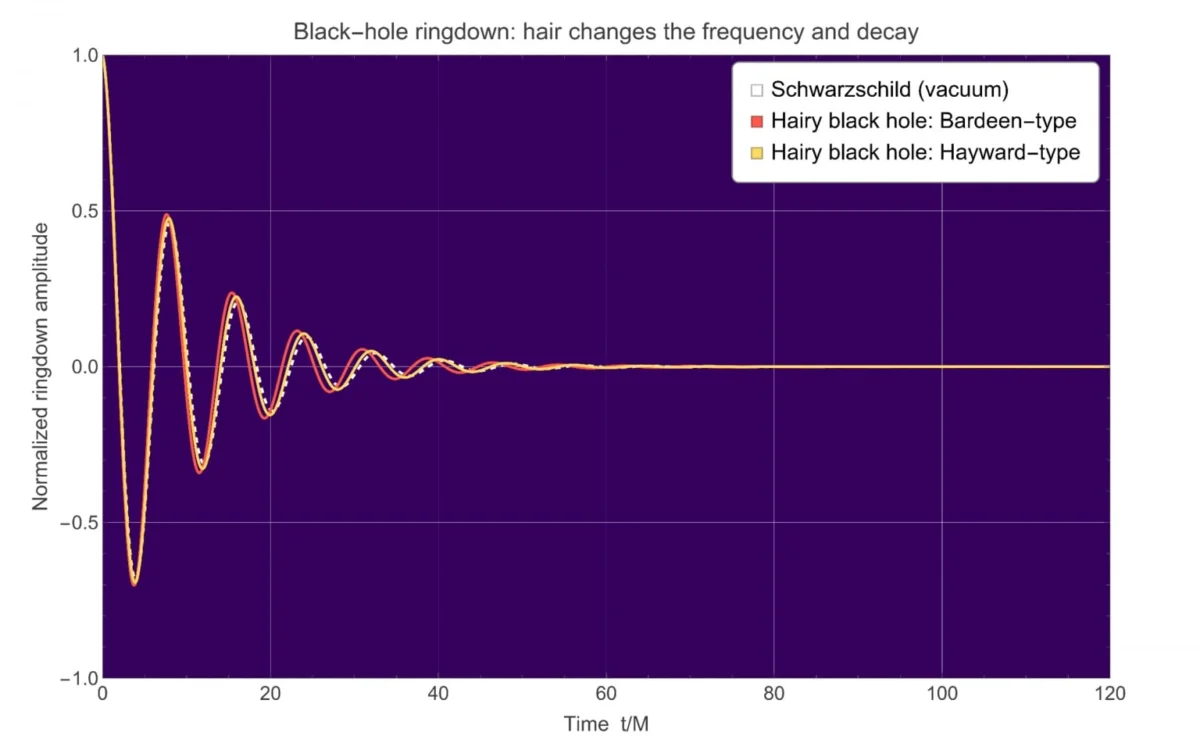
The collision and subsequent merger of two black holes represent some of the most violent and energetic phenomena in the known universe. These events, occurring across the vast reaches of spacetime, involve two singularities orbiting one another at relativistic speeds, drawing closer in a terminal "inspiral" until they coalesce into a single, more massive entity. This process does not merely result in a larger black hole; it serves as a cosmic engine, releasing a torrent of energy in the form of neutrinos, electromagnetic radiation from surrounding gas, and—most crucially for modern astronomy—gravitational waves. These ripples in the fabric of spacetime, first predicted by Albert Einstein a century ago, now serve as the primary tool for astrophysicists seeking to decode the history of the dark remnants of the cosmos.
Recent advancements in gravitational wave detection have provided a transformative look at these events, cataloging hundreds of mergers that were previously invisible to traditional telescopes. While many of these black holes are believed to be "first-generation" objects—formed directly from the gravitational collapse of massive stars during supernova explosions—new research suggests a more complex evolutionary path. A significant subset of black holes appears to have a "past life," having been formed through the prior merger of smaller black holes in a process known as hierarchical merging. This discovery, led by researchers from the Massachusetts Institute of Technology (MIT) and their collaborators, challenges the traditional understanding of black hole populations and suggests that the universe is a far more recycled environment than previously assumed.
The Scientific Foundation of Hierarchical Merging
To understand the concept of hierarchical merging, one must first look at the standard lifecycle of a supermassive star. When a star with several dozen times the mass of our Sun exhausts its nuclear fuel, it undergoes a catastrophic collapse. If the remaining core is sufficiently massive, it forms a stellar-mass black hole. In the conventional model of isolated binary evolution, two such stars born together might both become black holes and eventually merge. This results in a "second-generation" black hole.
However, the "hierarchical" model posits that this is not the end of the story. In densely populated regions of space, such as globular clusters or the centers of galaxies, these second-generation black holes can find new partners. By capturing another black hole through gravitational interaction, they can merge again, creating a third-generation object, and so on. This "repeated rodeo" of collisions allows black holes to grow to masses that would be impossible to achieve through the death of a single star alone.
The research team, which includes Salvatore Vitale and Cailin Plunkett of MIT, Thomas Callister of Williams College, and Michael Zevin of the Adler Planetarium, utilized the most recent datasets to determine how common this pathway actually is. According to Plunkett, the data reveals a "relatively consistent picture" indicating that a "decent percentage" of the black holes detected by gravitational wave observatories are the products of these repeated mergers.
Spin as a Forensic Indicator of Cosmic Lineage
The primary challenge in identifying a hierarchical merger lies in the fact that black holes of the same mass can look identical regardless of how they were formed. To distinguish a "first-timer" from a "second-generation" black hole, scientists look at a property known as spin. Spin, or angular momentum, is a fundamental characteristic of black holes, alongside mass and electric charge.
When a massive star collapses into a black hole during a supernova, it typically loses a significant portion of its outer layers and its angular momentum. Consequently, the resulting first-generation black hole is expected to have a relatively low spin rate. However, the dynamics of a merger are entirely different. When two black holes spiral into each other, the orbital angular momentum of the pair is converted into the rotational spin of the final, merged object.
"They would be spinning very fast, at about 70 percent of their maximum possible spin," noted Salvatore Vitale. This high spin acts as a "fingerprint" of a previous collision. If astronomers observe a binary pair where one or both members possess an exceptionally high spin rate, it serves as strong evidence that they are looking at a black hole that has already undergone at least one merger in its past. By analyzing these spin distributions across the population of detected events, the team can statistically estimate what fraction of the black hole population is hierarchical.
Analyzing the GWTC-4.0 Catalog and Orbital Precession
The study drew its conclusions from the LIGO-Virgo-KAGRA Gravitational Wave Transient Catalog (GWTC-4.0). This repository contains the detections made during the fourth observing run of the international network of gravitational wave interferometers. Unlike earlier catalogs, the expanded data in GWTC-4.0 allows for a more nuanced statistical analysis of the "wobble" in the gravitational wave signals.
In a binary system where the black holes have significant spin, and those spins are not perfectly aligned with the orbital plane, the entire system undergoes precession. This is similar to the way a spinning top wobbles as it slows down. This orbital precession leaves a distinct imprint on the gravitational wave signal, allowing scientists to measure not just the mass of the objects, but the orientation and magnitude of their spins.
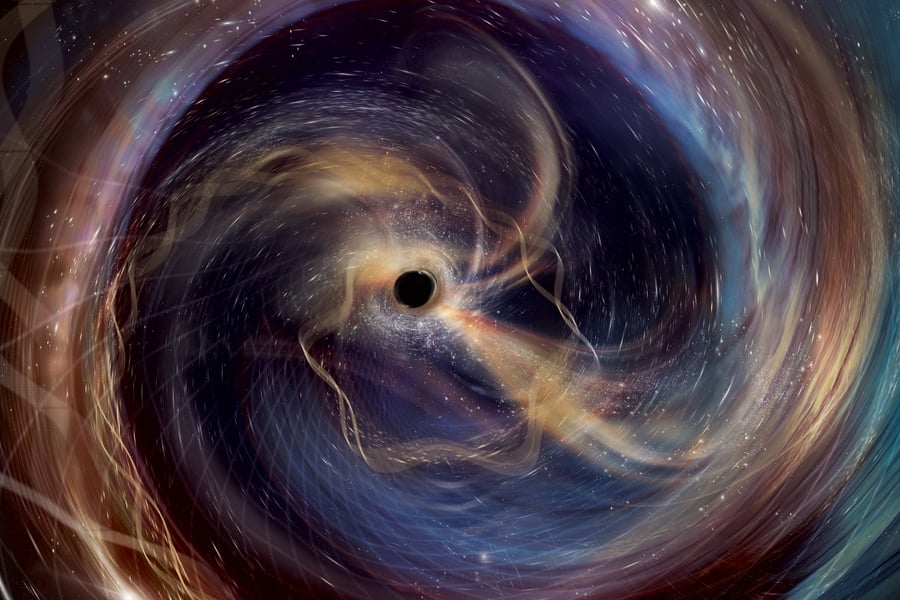
The team’s analysis found that approximately 14 percent of the merging black holes in the current dataset exhibit characteristics—specifically the combination of high mass and high spin—that suggest they have been through the merger process at least twice. This percentage is significant because it implies that hierarchical merging is not a rare anomaly but a standard evolutionary track for black holes in specific environments.
The "Mass Gap" Problem and Stellar Evolution Limits
One of the most compelling pieces of evidence for hierarchical merging comes from the observation of black holes that shouldn’t exist according to current models of stellar evolution. This is known as the "upper mass gap" or the "pair-instability" gap.
Theoretically, when a star reaches a certain mass (roughly 130 to 250 times the mass of the Sun), its core becomes so hot that it begins producing electron-positron pairs. This creates a drop in internal pressure, leading to a violent contraction and a subsequent explosion so powerful that the entire star is obliterated, leaving behind no black hole remnant at all. This predicts a "forbidden zone" for black hole masses between approximately 45 and 130 solar masses.
"Stellar evolution theory predicts you shouldn’t be able to form black holes in that mass range at all from just a supernova," Plunkett explained. "Yet, we have seen black holes that are that massive."
The existence of these "overweight" black holes is a smoking gun for hierarchical merging. If a 30-solar-mass black hole merges with another 30-solar-mass black hole, the result is a roughly 60-solar-mass object—squarely in the middle of the forbidden zone. The study confirmed that while black holes in the 10-to-30 solar mass range are likely first-generation, those exceeding 40 solar masses are overwhelmingly likely to be second-generation products of the hierarchical pathway.
Environments of Extreme Density: Where the Mergers Happen
For a black hole to merge repeatedly, it must reside in an environment where it is likely to encounter other black holes. Space is vast and mostly empty; in the "field" or the general disk of a galaxy, the chances of two black holes meeting are incredibly low. Therefore, hierarchical mergers are believed to be confined to "crowded neighborhoods."
These environments include:
- Globular Clusters: Ancient, tightly packed groups of hundreds of thousands of stars. In these clusters, mass segregation causes the heaviest objects (black holes) to sink toward the center, creating a "sub-cluster" of black holes that frequently interact.
- Active Galactic Nuclei (AGN): The centers of galaxies containing supermassive black holes surrounded by dense disks of gas and stars. The gas disk can act as a "drag" mechanism, catching passing black holes and forcing them into a shared orbital plane where they can merge.
- Nuclear Star Clusters: The densest stellar environments in the universe, located at the very hearts of galaxies.
In these regions, the process can repeat potentially indefinitely. As Plunkett noted, the "ton of stars and black holes in this really dense environment" creates a factory for massive, high-spin black holes that eventually signal their existence to Earth-based detectors.
Broader Implications for Modern Astrophysics
The confirmation that a significant portion of the black hole population is hierarchical has profound implications for our understanding of the universe. It suggests that the black hole mass spectrum is not a static result of star death, but a dynamic, evolving distribution. This research helps bridge the gap between stellar-mass black holes and the "intermediate-mass" black holes that have long remained elusive to astronomers.
Furthermore, these findings provide a new lens through which to view the history of galaxies. If hierarchical merging is common, it implies that the dynamical interactions in star clusters are more frequent and influential than previously modeled. This affects everything from our calculations of galactic evolution to our understanding of the distribution of dark matter.
As the LIGO, Virgo, and KAGRA observatories continue to increase their sensitivity, the catalog of detected mergers will grow from hundreds to thousands. With more data, scientists will be able to refine the 14 percent estimate and perhaps even identify "third-generation" or "fourth-generation" black holes. The study of these "past lives" of black holes is no longer a theoretical curiosity; it is a vital chapter in the story of how the universe builds its most massive and mysterious objects. By linking the mass of these objects to their spin and their orbital "wobble," astronomers are finally beginning to piece together the complex genealogy of the dark side of the cosmos.