Sisilia Frederika
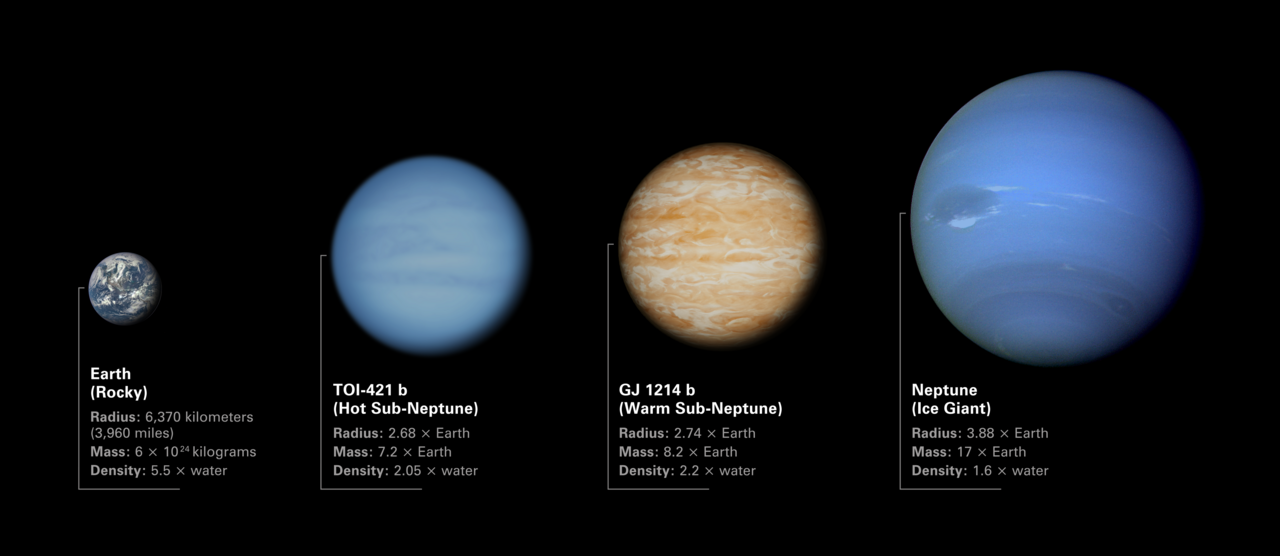
The ongoing exploration of the cosmos has reached a pivotal milestone as astronomers have now confirmed the existence of 6,324 exoplanets distributed across 4,738 unique star systems. Despite this vast census, with tens of thousands of additional candidates awaiting confirmation, a significant gap remains in our understanding of the most common type of planet in the galaxy: the sub-Neptune. These worlds, which possess masses falling between those of Earth and Neptune, account for 2,182 of the confirmed discoveries to date. However, they remain a "mysterious class," according to researchers, because their internal compositions and atmospheric dynamics have long eluded clear categorization. A groundbreaking new study led by Arizona State University (ASU) using data from the James Webb Space Telescope (JWST) has finally begun to peel back the layers of these enigmatic worlds, revealing a complex relationship where high-altitude clouds act as thermal blankets, potentially liquefying the planets’ rocky interiors into vast magma oceans.
The Enigma of the Sub-Neptune Population
For decades, the planetary "radius valley"—a statistical gap in the sizes of exoplanets discovered by missions like Kepler and TESS—has fascinated the astronomical community. On one side of the valley are "Super-Earths," which are likely rocky; on the other are "sub-Neptunes," which are larger and less dense. The central question for astrophysicists has been whether these sub-Neptunes are simply Earth-like rocky cores surrounded by bloated hydrogen and helium atmospheres, or "water worlds" (volatile-rich) containing massive amounts of water, ice, and carbon-bearing molecules.
The challenge in answering this question lies in the limitations of observational technology. Until the deployment of the JWST, instruments could barely penetrate the thick hazes often found in these atmospheres. Even with the unprecedented sensitivity of the JWST, astronomers are primarily restricted to observing the upper layers of a planet’s atmosphere. This creates a disconnect between the visible exterior and the hidden interior, a problem exacerbated by the presence of dense cloud decks.
Collaborative Research and Methodology
The new findings, recently published in The Astrophysical Journal Letters, were spearheaded by Sagnick Mukherjee, a 51 Pegasi b Postdoctoral Fellow at ASU’s School of Earth and Space Exploration (SESE). Mukherjee’s team included a prestigious cohort of researchers: Matthew C. Nixon, another 51 Pegasi b Fellow at SESE; James Mang, an NSF Graduate Research Fellow from the University of Texas at Austin; and specialists from NASA’s Ames Research Center and the SETI Institute.
To bridge the gap between atmospheric data and interior conditions, the team utilized advanced computer modeling to simulate how energy moves through the different layers of a sub-Neptune. By inputting the latest spectroscopic data from the JWST, the researchers developed models that could account for the presence of clouds composed of substances far more exotic than the water-ice clouds found on Earth. These models allowed the team to see how the physical conditions of the atmosphere directly influence the thermal state of the planet’s core.
The "Thermal Blanket" Effect: How Clouds Trap Heat
The core discovery of the ASU-led study is that clouds on sub-Neptunes are not merely passive features of the weather; they are active drivers of the planet’s internal evolution. The research indicates that in the high-pressure, high-temperature environments of these worlds, clouds can form from vaporized rocks and salts. These mineral-based clouds act as a powerful "thermal blanket."
According to the modeling, these clouds trap outgoing infrared radiation from the planet’s interior. This "greenhouse effect on steroids" causes a dramatic temperature shift: while the upper atmosphere—visible to telescopes—remains relatively cool, the layers beneath the clouds experience a surge in heat. The team found that this cloud-driven insulation can raise temperatures in the lower atmospheric layers by more than 1,000 degrees Celsius (1,832 degrees Fahrenheit).
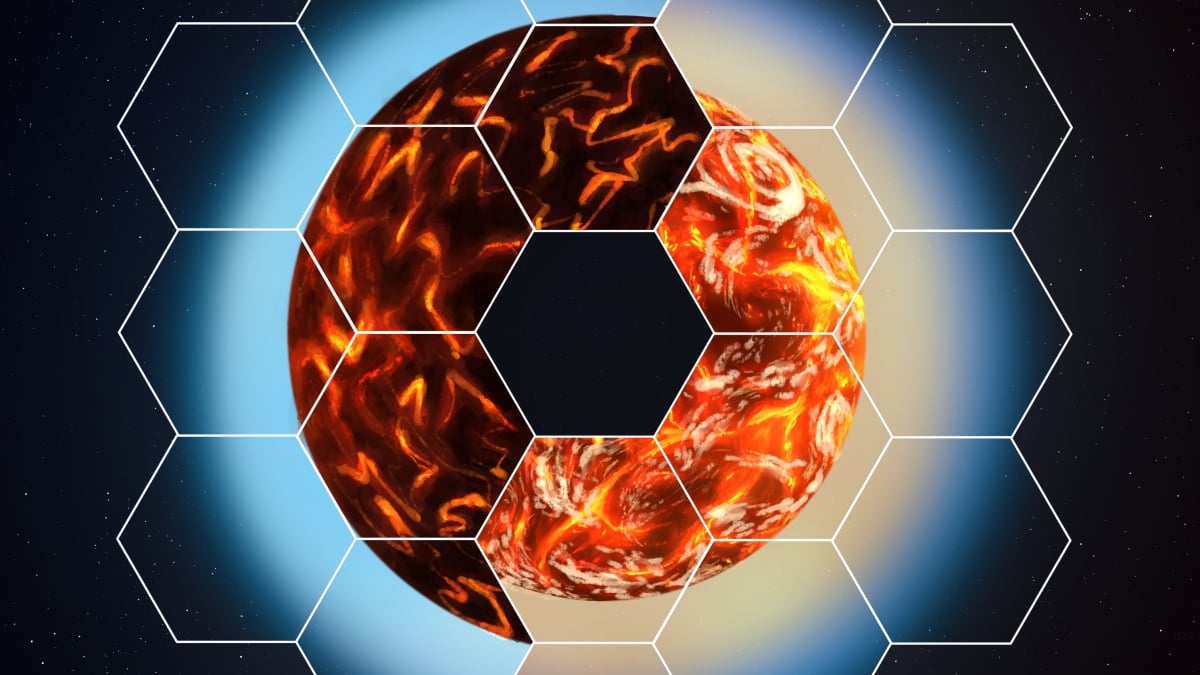
This temperature gradient extends all the way down to the boundary where the atmosphere meets the planetary surface. "Among the sub-Neptunes currently being studied with JWST, we were amazed to find that cloud-driven heating can raise the temperature at the planet’s atmosphere-interior boundary by roughly over 1,400 to 2,600 degrees Celsius," Mukherjee stated in the report.
Case Studies: GJ 1214 b and TOI-1231 b
The study focused specifically on two well-known sub-Neptunes: GJ 1214 b and TOI-1231 b. GJ 1214 b, located approximately 40 light-years away in the constellation Ophiuchus, has been a primary target for exoplanet research since its discovery in 2009. For years, its atmosphere appeared "flat" or featureless to the Hubble Space Telescope, a phenomenon now understood to be caused by high-altitude hazes or clouds.
The ASU team’s models showed that for both GJ 1214 b and TOI-1231 b, the heat trapped by the atmosphere was sufficient to melt the rocky material at the planet’s surface. This suggests that these planets may not have a solid crust like Earth, but rather a global "magma ocean." This realization shifts the paradigm of what a "habitable" or "Earth-like" planet might look like in the sub-Neptune mass range. Instead of a stable surface, these worlds may be dynamic, molten spheres where the boundary between "ground" and "air" is fluid and volatile.
Atmospheric Pollution and the Chemical Feedback Loop
The existence of a magma ocean creates a complex feedback loop between the interior and the atmosphere. On Earth, volcanic activity releases gases from the mantle into the air. On sub-Neptunes with magma oceans, this exchange is likely much more intense and continuous.
The ASU research highlights a process described as "atmospheric pollution." As the interior melts, it triggers the release of specific chemicals into the atmosphere, including oxygen, silicon hydride, and silicon monoxide. Simultaneously, the magma ocean acts as a sink, absorbing volatiles such as methane, water vapor, and ammonia from the atmosphere.
This chemical exchange poses a significant challenge for astronomers using the JWST to determine a planet’s composition. If the atmosphere is being "polluted" by gases from a molten interior, the spectral signatures detected by the telescope may not reflect the planet’s bulk composition. Instead, they represent a complex chemical equilibrium dictated by the intensity of the cloud-driven heating. For years, astronomers viewed clouds as an "obstacle" because they blocked the view of the surface; this research suggests they are an even greater complication because they fundamentally change the chemistry of the air above them.
Historical Context: From Kepler to the JWST Era
To understand the weight of this discovery, one must look at the timeline of exoplanetary science. The "Sub-Neptune Mystery" began in earnest with the Kepler Space Telescope, which revealed that planets of this size are the most common in our galaxy, despite being absent from our own solar system.
- 2009-2018 (The Kepler Era): Thousands of sub-Neptunes were discovered, leading to the identification of the "radius gap."
- 2018-Present (The TESS Era): The Transiting Exoplanet Survey Satellite identified closer, brighter targets like TOI-1231 b, making detailed atmospheric study possible.
- 2022-Present (The JWST Era): With the launch of Webb, scientists finally gained the infrared precision needed to see through cosmic dust and analyze the molecular fingerprints of these atmospheres.
This latest study represents the "third wave" of research, where data is no longer just being collected but is being integrated into complex models that explain the physical processes of planetary formation and survival.
Implications for Habitability and Planetary Evolution
The findings have profound implications for the search for life. Recently, sub-Neptunes like K2-18b have been identified as potential "Hycean" worlds—planets with hydrogen-rich atmospheres and liquid water oceans. However, if the ASU models are correct, many of these candidates might actually be "Magma Worlds" rather than "Water Worlds."
If clouds are driving interior temperatures to several thousand degrees, the presence of liquid water on the surface becomes impossible. Understanding the role of clouds is therefore essential for narrowing down which sub-Neptunes are truly habitable and which are hellish landscapes of molten rock.
Furthermore, the heating and cooling patterns driven by these clouds affect how a planet contracts over billions of years. A planet that stays hot due to a "cloud blanket" will remain larger for a longer period, influencing its current size and density. This provides a new lens through which to view the "radius valley," suggesting that atmospheric clouds may be a deciding factor in whether a planet evolves into a small, rocky world or stays a bloated sub-Neptune.
Expert Reactions and Future Outlook
The scientific community has reacted to the ASU study with a mixture of excitement and caution. Luis Welbanks, an assistant professor at SESE and co-author of the study, emphasized the complexity of the task ahead. "Interpreting JWST observations of sub-Neptunes is particularly challenging due to the complex relationship between the atmosphere and interior," Welbanks noted. "This work takes us one step closer to answering the question of what these mysterious worlds are made of."
The research highlights a shift in exoplanetary science from "discovery" to "characterization." As the JWST continues its mission, the focus will likely move toward identifying the specific types of salts and rocks that form these clouds. If scientists can determine the exact composition of the clouds, they can better "subtract" the thermal effects to reveal the true nature of the planet beneath.
As the ASU team continues their work, the next step involves applying these models to a broader range of planets. With the JWST scheduled for several more years of observation, the data set for sub-Neptunes is expected to grow exponentially. This research serves as a reminder that in the vastness of space, the most common worlds may also be the most complex, and that the clouds we see in the sky are often the key to the fires burning deep below.