Sisilia Frederika
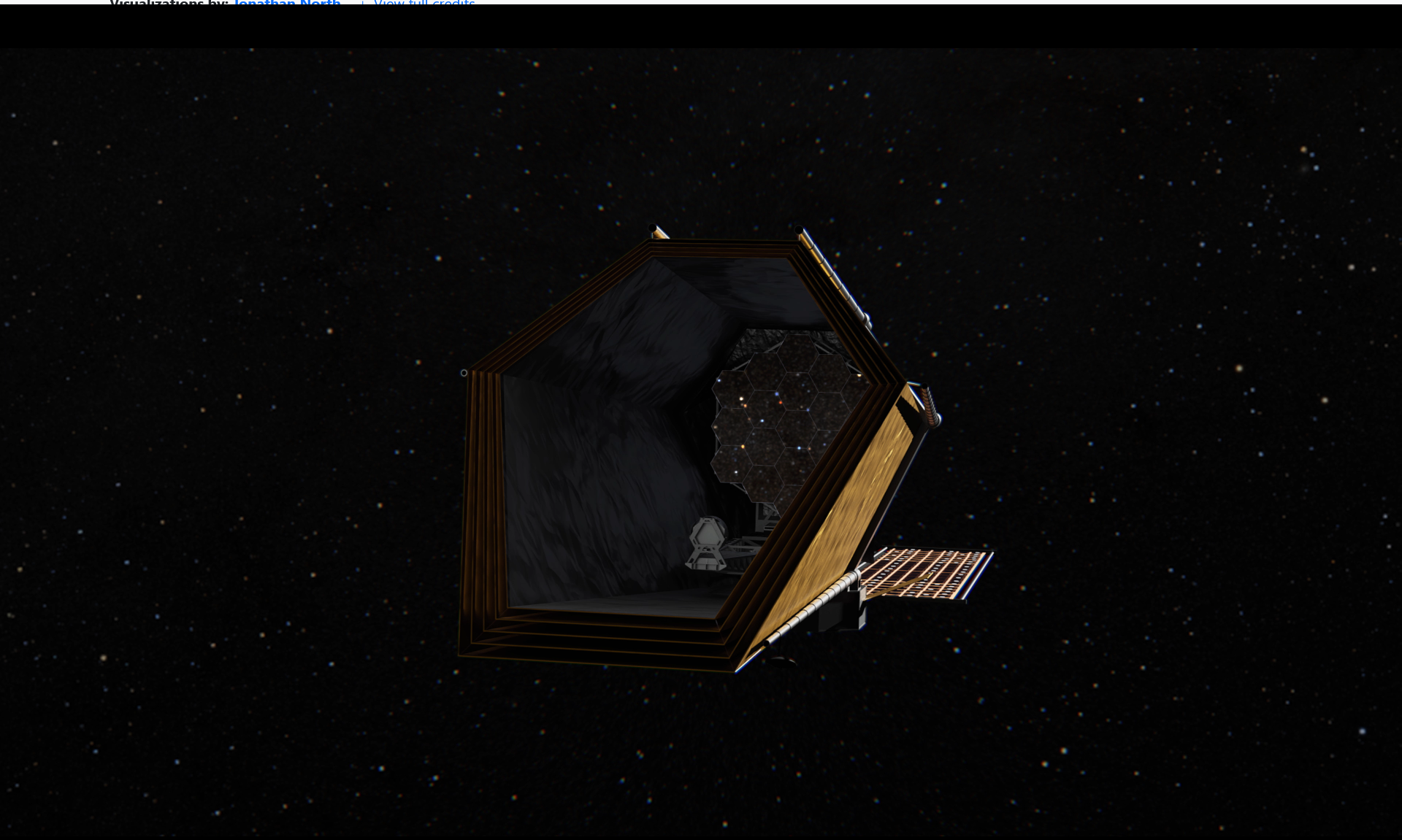
The National Aeronautics and Space Administration (NASA) has officially set its sights on the 2040s for the launch of the Habitable Worlds Observatory (HWO), a mission poised to become the premier tool for identifying life-sustaining planets beyond our solar system. As the next "Great Observatory," following the lineage of the Hubble Space Telescope and the James Webb Space Telescope (JWST), the HWO represents a paradigm shift in astrophysical research. Unlike its predecessors, which were designed for a broad range of cosmological observations, the HWO is the first space telescope specifically engineered to find and characterize rocky, Earth-sized planets orbiting within the "Goldilocks zones" of Sun-like stars.
To achieve this ambitious goal, NASA is investing in high-precision technology capable of overcoming the immense glare of distant stars. Central to this effort is a multi-institutional collaboration led by the Center for Research and Education in Optics and Lasers (CREOL) at the University of Central Florida (UCF). Through a project known as the Photonics-Enabled Exoplanet Spectroscopic System (PEEPSS), researchers are developing advanced wavefront sensing and photonic technologies that will allow the HWO to "see" planets that are currently invisible to even the most powerful modern instruments.
The Scientific Mandate of the Habitable Worlds Observatory
The Habitable Worlds Observatory was born out of the "Pathways to Discovery in Astronomy and Astrophysics for the 2020s," a decadal survey conducted by the National Academies of Sciences, Engineering, and Medicine. The survey recommended that NASA develop a large infrared/optical/ultraviolet space telescope with a primary mirror approximately 6.5 meters in diameter, designed specifically for direct imaging of exoplanets.
The primary objective of the HWO is to identify at least 25 potentially habitable worlds. To be considered "habitable," a planet must be rocky—similar in composition to Earth, Mars, or Venus—and orbit its parent star at a distance where liquid water can exist on the surface. Once these candidates are identified, the HWO will use its suite of spectrometers to analyze their atmospheres for "biosignatures," such as oxygen, methane, water vapor, and carbon dioxide, which could indicate the presence of biological processes.
However, the technical requirements for such a mission are unprecedented. The HWO must operate with a level of stability measured in picometers—roughly the size of an atom—to maintain the optical alignment necessary for high-contrast imaging.
The PEEPSS Project: Overcoming the 10 Billion-to-One Contrast Ratio
The fundamental challenge in direct exoplanet imaging is the extreme contrast between a star and its orbiting planets. A Sun-like star is typically 10 billion times brighter than an Earth-sized planet in the visible spectrum. Professor Stephen Eikenberry, the principal investigator of the PEEPSS project at UCF, emphasizes that traditional imaging methods are insufficient for this task.
"If they’re in the habitable zone, that means they are orbiting close to their host star, and that host star is typically going to be 10 billion times brighter than the planet," Eikenberry stated. "A part in a million means it’s still 10,000 times brighter than your exoplanet."
The PEEPSS project, a three-year NASA-funded initiative, seeks to solve this by integrating photonics into the telescope’s optical train. The collaboration includes experts from UC Santa Cruz, the University of Sydney, and the Space Telescope Science Institute (STScI). Together, they are building prototype systems that combine coronagraphy with advanced wavefront sensing to filter out starlight with surgical precision.
Photonic Lanterns and Quantum-Inspired Imaging
The core innovation of the PEEPSS system is the "photonic lantern." In traditional telescopes, light is captured by a detector that measures intensity but often loses the "phase" information—the specific timing and shape of the light waves. Photonic lanterns act as a bridge between multi-mode light (the chaotic light entering the telescope) and single-mode fibers. By separating incoming light into individual optical channels, the lantern allows researchers to recover both the amplitude and the phase of the light waves.
This capability enables a technique known as "quantum-inspired imaging." By utilizing the full information carried by the light, researchers can apply mathematical algorithms to improve image resolution beyond the standard diffraction limit. This allows the system to distinguish between a star’s light and a planet’s light even when they are separated by an incredibly small angular distance.
Furthermore, the PEEPSS system addresses the problem of "non-common-path aberrations" (NCPA). In most telescopes, the wavefront sensor (which detects distortions) and the science camera (which takes the picture) are located in different parts of the instrument. This separation creates tiny discrepancies in how light is measured versus how it is recorded. Eikenberry uses the analogy of a house where you can see people entering a bedroom but cannot see what is happening inside the room itself. PEEPSS performs wavefront sensing directly at the focal plane—the "bedroom" of the telescope—ensuring that every microscopic imperfection is corrected in real-time.
Chronology of Development and Field Testing
The development of these technologies follows a rigorous timeline established by NASA’s Technology Readiness Level (TRL) framework.
- 2021: The Decadal Survey identifies the Habitable Worlds Observatory as a top priority for the next two decades.
- 2023: NASA begins funding the PEEPSS project as part of its Strategic Astrophysics Technology program. The UCF-led team starts designing the photonic lantern prototypes.
- 2024: Initial laboratory testing of the PEEPSS system demonstrates the ability to detect and correct wavefront errors at the sub-nanometer level.
- Present: Collaborations with the Air Force Research Laboratory (AFRL) have allowed for early-stage testing on ground-based telescopes in Hawaii. These tests serve as a proof-of-concept for how the system handles atmospheric turbulence, though the HWO will ultimately operate in the vacuum of space at the Sun-Earth L2 Lagrange point.
- Late 2020s: NASA is expected to finalize the architectural design of the HWO, choosing between various mirror configurations (monolithic vs. segmented) based on the results of technology maturation projects like PEEPSS.
- 2040s: The scheduled launch of the HWO.
Supporting Data: The Growing Exoplanet Catalog
The urgency of the HWO mission is underscored by the rapid growth of exoplanetary science over the last 30 years. Since the discovery of the first exoplanet orbiting a Sun-like star in 1995 (51 Pegasi b), the catalog of known worlds has expanded exponentially:
- Total Confirmed Exoplanets: Over 5,600 (as of early 2024).
- Terrestrial (Rocky) Planets: Approximately 200 confirmed, though many orbit M-dwarf (red dwarf) stars rather than G-type (Sun-like) stars.
- Planets in Habitable Zones: Roughly 60 candidates have been identified by the Kepler and TESS missions, but their atmospheric compositions remain largely unknown.
While the James Webb Space Telescope is currently analyzing the atmospheres of large gas giants and some rocky planets around red dwarfs (such as the TRAPPIST-1 system), it lacks the specialized coronagraphic stability required to image an Earth-equivalent planet around a Sun-equivalent star. The HWO is designed to fill this specific gap in the "search for another Earth."
Broader Impact and Scientific Implications
The success of the PEEPSS technology and the eventual launch of the HWO could fundamentally alter the human understanding of the cosmos. From an astrobiological perspective, the transition from identifying "potentially habitable" worlds to detecting "inhabited" worlds would be a milestone in history.
"If we can identify habitable worlds around other stars and show they possess conditions where Earth-like life could survive, that’s already revolutionary," said Eikenberry. "If we discover actual evidence of life, then we’re talking about one of the greatest scientific discoveries in human history."
Beyond the search for life, the HWO will serve as a powerhouse for general astrophysics. Its ultraviolet capabilities will allow astronomers to study the "cosmic web" of gas that connects galaxies, while its high-resolution optical imaging will provide unprecedented views of star formation and galactic evolution.
The economic and technological spillovers from the PEEPSS project are also significant. The advancements in fiber optics, photonic lanterns, and wavefront sensing have applications in telecommunications, medical imaging, and defense. By pushing the boundaries of what is possible in optics, UCF and its partners are contributing to a broader ecosystem of high-tech innovation.
Analysis of Future Challenges
Despite the promise of the PEEPSS technology, significant hurdles remain. The HWO will be one of the most expensive and complex machines ever built. Maintaining a 6.5-meter mirror with the stability of a few picometers for the duration of a multi-year mission requires advancements in materials science and thermal control that are still in development.
Furthermore, the "quantum-inspired" algorithms used to process PEEPSS data require immense computational power. As the project moves toward its flight-ready stage, researchers must ensure that these systems can operate reliably in the harsh radiation environment of deep space.
However, the collaborative nature of the PEEPSS project—uniting academia, government research labs, and international partners—provides a robust framework for solving these issues. As the 2040s approach, the work being done today in laboratories at UCF and Hawaii is laying the foundation for a moment when humanity might finally look up at a distant star and know for certain that someone, or something, is looking back.