admin
admin
The technology landscape was recently jolted as Apple Inc., the Cupertino-based pioneer of the smartphone era, issued a formal warning regarding the future of its artificial intelligence and machine learning initiatives. In its most recent 10-Q filing with the Securities and Exchange Commission (SEC), Apple disclosed that it faces significant risks associated with the availability of computing capacity. This admission comes at a critical juncture for the company as it attempts to integrate "Apple Intelligence" across its vast ecosystem of hardware and services. While Apple’s quarterly earnings report initially focused on revenue growth and the impact of global supply chain constraints, the detailed SEC filing paints a more complex picture of the hurdles facing the world’s most valuable consumer electronics brand.
The filing highlights a growing concern within Apple’s executive offices: the infrastructure required to power modern generative AI and complex machine learning algorithms is becoming increasingly scarce and expensive. As the industry experiences an unprecedented surge in demand for high-performance computing, Apple has cautioned investors that any inability to secure sufficient capacity could result in delayed product launches, diminished service functionality, and increased operational costs. This development signals a potential shift in the competitive dynamics of the "AI arms race," where the limiting factor is no longer just software innovation, but the physical hardware and data center capacity required to execute it.
The Specifics of the 10-Q Disclosure and Risk Factors
In the "Risk Factors" section of its quarterly filing, Apple introduced new language specifically addressing the components and computing resources essential for its upcoming AI-driven roadmap. The company noted that its strategic decision to limit the sourcing of components to a select group of high-tier suppliers, while ensuring quality and integration, leaves it vulnerable to market volatility. According to the filing, "The Company’s ability to obtain sufficient quantities of components and products on commercially reasonable terms, or at all," is under constant threat from geopolitical instability, logistical hurdles, and surging demand from competitors.
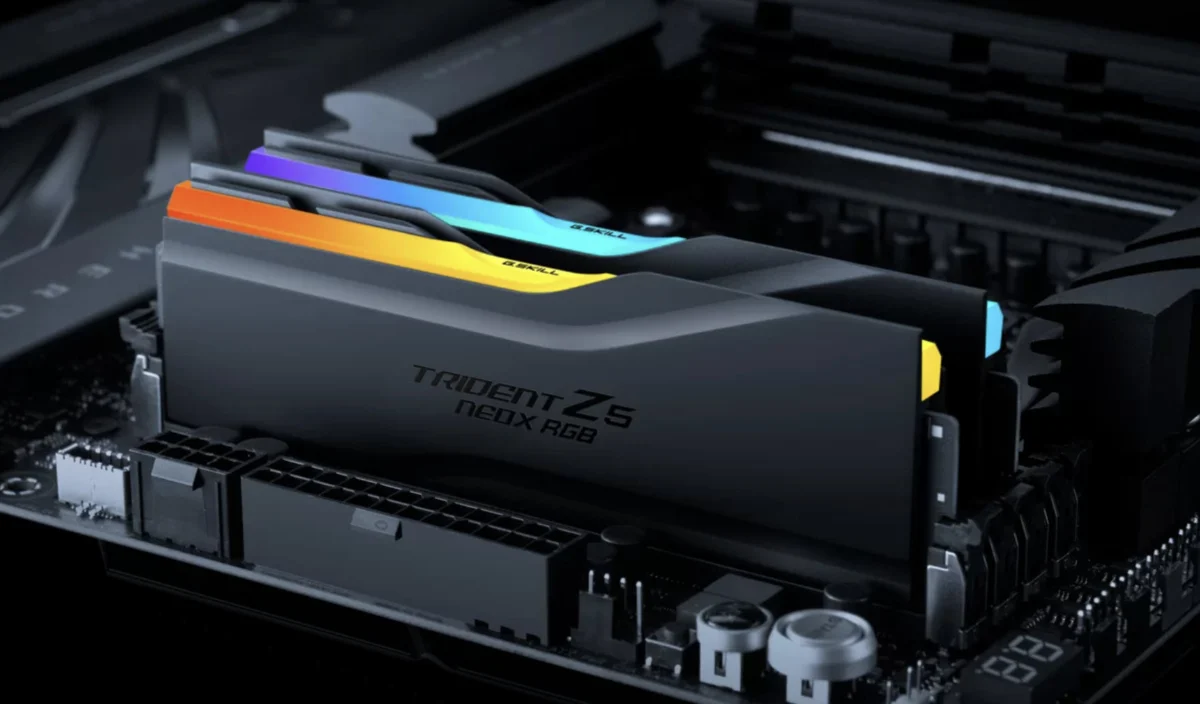
One of the most pressing issues identified by Apple is the current state of the memory industry. The company explicitly cited turmoil in the NAND and DRAM sectors as a primary risk. High-bandwidth memory is a critical component for AI processing, both on-device and in the cloud. As AI models grow in complexity, the requirements for DRAM in iPhones and Macs have scaled upward, placing Apple in direct competition with server-side AI giants for the same pool of high-end memory chips. The filing suggests that price fluctuations in these sectors could directly erode profit margins if the company cannot pass those costs onto consumers or find alternative efficiencies.
Apple’s Unique Position in the AI Infrastructure Landscape
The warning regarding computing capacity is particularly noteworthy given Apple’s historical approach to infrastructure. Unlike its peers in the "Magnificent Seven"—specifically Microsoft, Google, and Amazon—Apple has historically avoided building out a massive, global footprint of proprietary data centers dedicated to general cloud services. Instead, the firm has relied on a hybrid model, utilizing its own "Private Cloud Compute" (PCC) for sensitive tasks while leveraging third-party hyperscalers for broader requirements.
In the 10-Q filing, Apple admitted that its artificial intelligence and machine learning services are heavily dependent on "access to sufficient computing resources." This admission underscores the reality that even a company with Apple’s massive cash reserves is not immune to the hardware shortages currently plaguing the industry. The demand for AI-capable chips, led by NVIDIA’s GPU dominance, has resulted in what Apple describes as "constrained supply, extended lead times, and increasing costs."

Furthermore, Apple confirmed its reliance on third-party infrastructure to meet the peak demands of its user base. The filing warned that the company might be "unable to secure sufficient capacity on commercially reasonable terms, or at all, to meet customer demand." This is a significant acknowledgment, suggesting that Apple’s ability to roll out features like the revamped Siri, automated writing tools, and image generation—collectively known as Apple Intelligence—is tethered to the capacity availability of partners such as Google Cloud.
A Chronology of Apple’s AI Integration and Strategic Shifts
To understand the weight of these warnings, one must look at the timeline of Apple’s AI development over the past year:
- June 2024 (WWDC): Apple officially unveils "Apple Intelligence" at the Worldwide Developers Conference. The company emphasizes a privacy-first approach, introducing Private Cloud Compute (PCC), which uses custom Apple Silicon in a cloud environment to process data that is too complex for on-device execution.
- July 2024: Reports emerge that Apple is utilizing Google’s Tensor Processing Units (TPUs) to train its foundational AI models, rather than relying solely on NVIDIA hardware. This highlighted Apple’s willingness to diversify its training infrastructure.
- August 2024: During its Q3 earnings call, Apple reports solid revenue but hints at "supply chain constraints" affecting the upcoming quarter. The stock market reacts cautiously to the modest guidance.
- October 2024: The release of iOS 18.1 brings the first wave of Apple Intelligence features to the public. However, many of the most anticipated features are delayed to later versions of iOS 18, fueling speculation about backend capacity readiness.
- Current Filing: The 10-Q filing formalizes these concerns, moving them from speculative industry rumors to official corporate risk disclosures.
The Impact of Memory and Semiconductor Shortages
The semiconductor industry has been in a state of flux since the post-pandemic recovery. For Apple, the shortage is two-fold. First, there is the "edge AI" requirement. To run AI locally on an iPhone 16, the device requires significantly more RAM than previous generations. This has forced Apple to upgrade the base specifications of its devices, increasing the bill of materials (BOM) cost.
Second, there is the "cloud AI" requirement. When an iPhone user asks a complex question that requires a Large Language Model (LLM) too big for a phone, the request is routed to a server. These servers require specialized AI processors and massive amounts of high-speed memory. Apple’s filing indicates that the "extended lead times" for these components are hindering the company’s ability to scale its Private Cloud Compute clusters as quickly as user adoption might require.
If Apple cannot secure these components, the result is a bottleneck. This may explain why Apple is rolling out its AI features in "stages" and across different geographic regions at different times. By staggering the release, Apple can manage the load on its limited computing resources.
Official Responses and Inferred Market Reactions
While Apple typically does not comment on the specifics of its SEC filings beyond the text provided, industry analysts have been quick to interpret the data. Analysts from major financial institutions suggest that Apple is essentially managing investor expectations. By listing "computing capacity" as a risk factor, the company protects itself legally if it has to delay the rollout of Apple Intelligence in major markets like Europe or China, or if it has to throttle feature availability during peak usage times.
Suppliers in the memory sector, such as Micron and Samsung, have previously noted that AI-driven demand is outpacing their ability to ramp up production of HBM (High Bandwidth Memory) and high-density DRAM. Apple’s filing serves as a confirmation from the consumer side that this shortage is reaching the highest levels of the product chain.

Market observers also point to the partnership between Apple and NVIDIA as a critical piece of the puzzle. In June, Apple revealed it had worked to extend its PCC ecosystem to include NVIDIA’s chips via Google Cloud. This move was seen as a pragmatic necessity. Despite Apple’s prowess in designing its own M-series and A-series chips, the sheer scale of the generative AI boom requires the specialized architecture that NVIDIA currently leads.
Broader Implications for the Technology Industry
Apple’s warning is a bellwether for the broader tech industry. If a company with Apple’s scale, capital, and supply chain expertise is concerned about securing computing capacity, it suggests that smaller players may face even more dire circumstances. This could lead to a further consolidation of AI power among the "hyperscalers" who own the physical data centers.
There are also implications for the "Services" segment of Apple’s business. In recent years, Services (including iCloud, the App Store, and Apple Music) has been Apple’s fastest-growing and most profitable division. Many of the new AI features are designed to enhance these services. If computing shortages limit the availability of these features, it could slow the growth of service revenue, which investors have come to rely on as hardware sales growth has leveled off in mature markets.
Furthermore, this disclosure highlights the environmental and energy challenges associated with AI. SEC filings increasingly require companies to consider the sustainability of their operations. The "increasing costs" mentioned by Apple likely include not just the price of silicon, but the rising cost of electricity and the cooling infrastructure required for AI data centers.
Conclusion: Navigating a Resource-Constrained Future
Apple’s latest 10-Q filing serves as a sobering reminder that the digital future is still very much grounded in physical realities. The "magic" of generative AI requires a massive, energy-hungry, and material-intensive backend that is currently under strain. For Apple, the challenge moving forward will be to balance its ambitious AI roadmap with the realities of a constrained global supply chain.
As the company prepares for the full-scale deployment of Apple Intelligence in 2025, the focus will shift from the elegance of the software to the robustness of the infrastructure. Whether Apple can successfully navigate these shortages without compromising the user experience or its financial targets remains to be seen. However, by flagging these risks now, Apple has signaled to the world that the next phase of its evolution will be as much about securing silicon and server racks as it is about designing the next iconic device. Investors and consumers alike will be watching closely to see if the "Computing Capacity" risk remains a footnote or becomes a defining obstacle in Apple’s AI journey.