Galang Taruna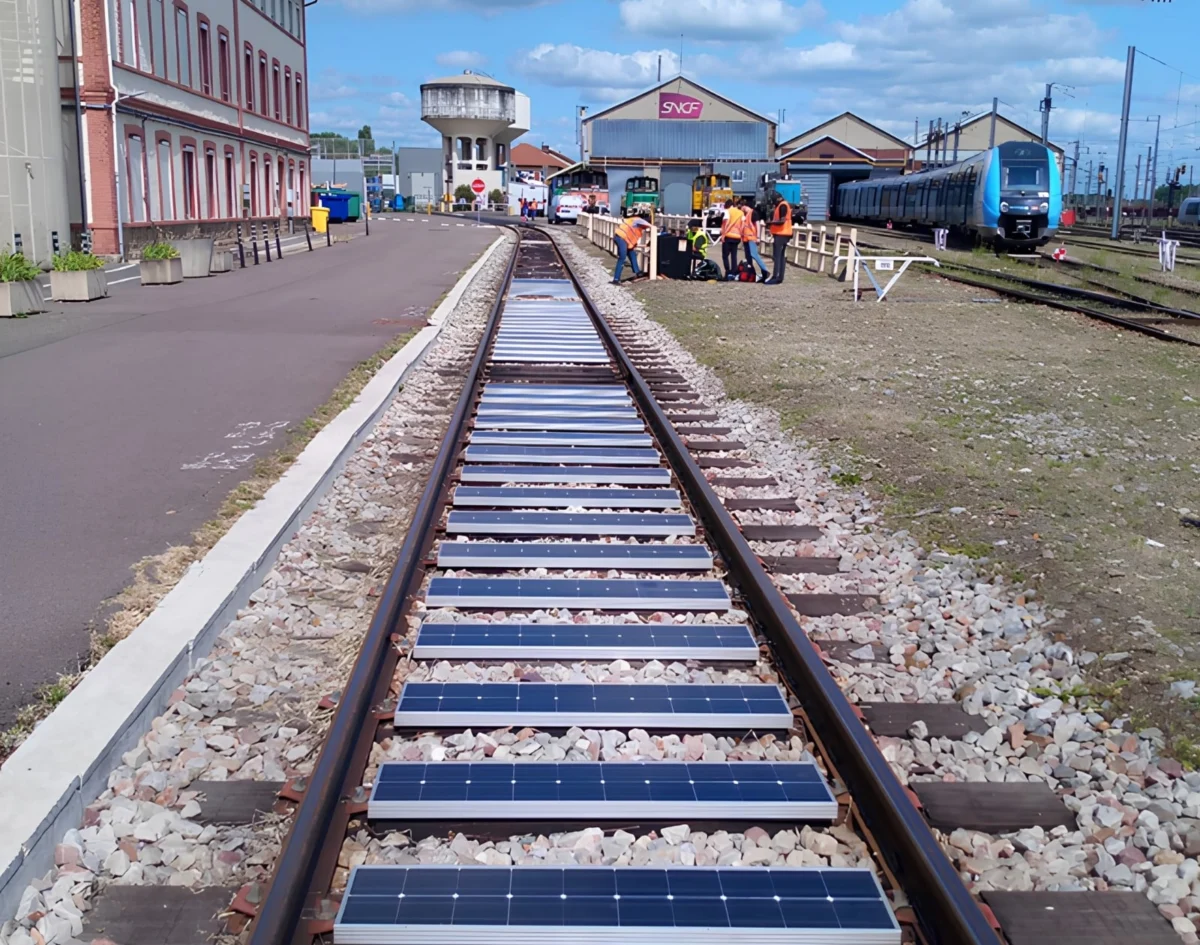
Following the successful integration of solar technology on rooftops, parking lots, and open land, the French national railway company, SNCF, is embarking on a pioneering venture to harness solar energy directly from its vast railway network. The company is actively testing innovative solutions that promise to generate electricity directly on active and disused railway lines. While the potential for this novel approach to energy production is significant, its large-scale deployment remains subject to ongoing technical evaluation and economic viability assessments.
The standard gauge of a railway track, measuring approximately 143.5 centimeters between the inner faces of the two rails, presents an intriguing, often overlooked, expanse. This seemingly modest space, when multiplied across thousands of kilometers of track, offers a substantial surface area that several innovative companies believe can be effectively utilized for photovoltaic electricity generation. For SNCF, which operates an extensive network of over 40,000 kilometers of railway lines across France, this represents a unique opportunity to transform its existing infrastructure into a distributed renewable energy asset. The railway group’s strategic interest in this potential stems from a broader ambition to diversify its energy portfolio, reduce its carbon footprint, and enhance its energy independence. Several pilot projects are currently underway, building upon initiatives first launched in late 2024 and early 2025.
The Strategic Imperative: Decarbonizing Rail and Meeting Energy Demands
SNCF’s exploration into track-integrated solar power is not merely an exercise in technological curiosity; it is a critical component of a wider strategic imperative to decarbonize its operations and meet its substantial energy demands. As France’s largest single consumer of electricity, SNCF’ requires approximately 9 terawatt-hours (TWh) of electricity annually to power its trains, maintain its extensive infrastructure, and operate its stations and facilities. This colossal consumption underscores the urgency and scale of the challenge the company faces in transitioning towards a more sustainable energy model.
The transportation sector globally is under increasing pressure to reduce greenhouse gas emissions, and rail, already a relatively low-carbon mode of transport compared to road or air, is striving to become even greener. By integrating renewable energy sources directly into its infrastructure, SNCF aims to bolster its commitment to the national and European energy transition goals, which target significant increases in renewable energy generation and reductions in carbon emissions. This initiative aligns with France’s broader energy policy, emphasizing decentralized energy production and maximizing the use of existing land and infrastructure for clean energy.
Unlocking the Potential: Solar on Tracks Technology
The core concept behind track-integrated solar involves deploying photovoltaic panels within the confines of the railway infrastructure. This approach seeks to leverage the linear nature of railway lines, transforming them from mere conduits for transport into active generators of clean energy. The technology being tested by SNCF varies, but generally focuses on robust, modular, and easily deployable solar solutions designed to withstand the unique stresses of the railway environment.
One of the primary challenges and innovations lies in designing panels that can be quickly installed and removed, resist vibrations from passing trains, endure extreme weather conditions, and require minimal maintenance, all while ensuring operational safety and continuity of rail services. The narrow gap between the rails demands specially designed panels that can fit snugly and efficiently, maximizing sunlight capture without impeding track maintenance or train movement. Furthermore, the electrical output needs to be safely integrated into the grid or directly used for railway operations, such as powering signals, lighting, or even auxiliary systems in stations.
Pioneering Partnerships and Pilot Projects
SNCF’s ambitious exploration into track-integrated solar is being driven through collaborations with several innovative technology providers, each bringing a unique approach to the challenge. These pilot projects are crucial for gathering real-world data on technical feasibility, energy yield, durability, and cost-effectiveness.
Bankset’s Removable Solutions
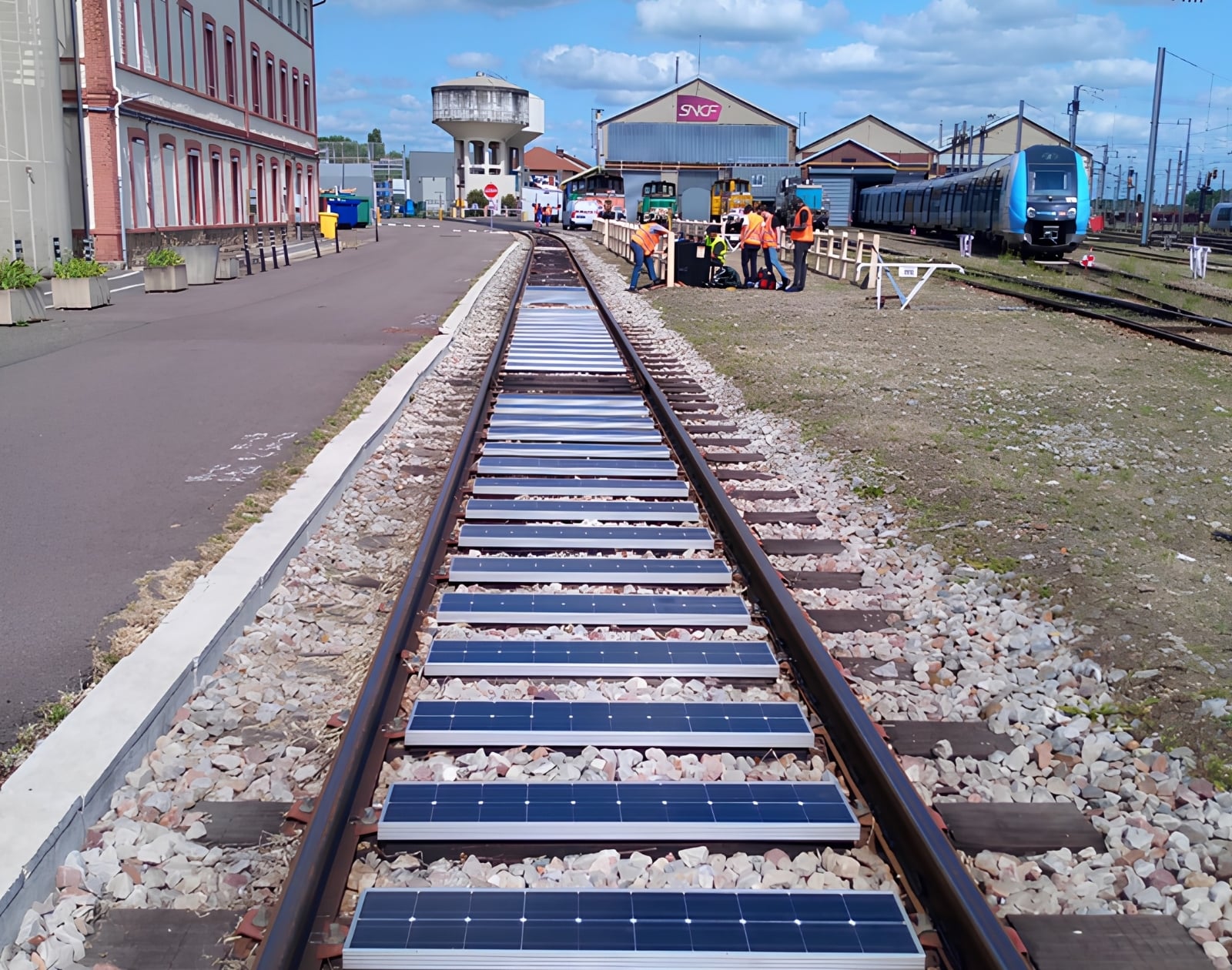
Among SNCF’s key partners in developing this technology is Bankset, an energy company that has engineered solar panels specifically designed for rapid deployment on railway tracks. Bankset’s proprietary system boasts panels that can be mounted on the rails in under two minutes, highlighting their modularity and ease of installation – a critical factor for minimizing disruption on active lines.
The collaboration began with a significant pilot project named "La Grosse Bankset Beta 1." This experimental solar plant was deployed in late 2024 on a technical site within SNCF’s Parisian network. The "Beta 1" installation has since been under continuous monitoring, providing invaluable data on its performance in an operational railway environment. Building on the insights gained, a second, refined version of the system, "La Grosse Bankset Beta 2," was installed and began testing in early 2026, further advancing the research and development efforts. These tests are essential for understanding the long-term resilience and efficiency of the panels under constant vibration, varying weather conditions, and the logistical challenges inherent to railway infrastructure.
Swiss Collaboration: Sun-Ways
SNCF’s commitment to exploring diverse solutions is further demonstrated through its collaboration with the Swiss company Sun-Ways. Sun-Ways also specializes in developing railway-integrated solar power solutions, emphasizing international cooperation in advancing this nascent technology. In April 2025, a pilot project spanning approximately one hundred meters was launched in Buttes, located in the canton of Neuchâtel, Switzerland. This cross-border initiative allows SNCF to benchmark different technological approaches and gather data from varied geographical and operational contexts, enriching its understanding of the technology’s potential. The Swiss site, like its French counterparts, is critical for evaluating the system’s robustness, energy output, and maintenance requirements under real-world conditions.
Innovating on Unused Tracks: The Solveig System
Beyond active railway lines, SNCF is also investigating the potential for installing photovoltaic panels on disused or non-circulated tracks. This approach offers fewer operational constraints and could potentially allow for more traditional, albeit still track-integrated, solar panel designs. From January to June 2025, a prototype solar plant featuring the "Solveig" system, developed by AREP (SNCF’s architectural and design agency), underwent testing at the Achères technicenter in the Yvelines region.
The Solveig system represents an internal innovation, leveraging SNCF’s own expertise in architecture and infrastructure design. The successful completion of this six-month experimentation period has paved the way for considering broader deployment of the Solveig system, particularly on certain unused lines across France. This strategy could unlock significant swathes of land already owned by SNCF, transforming idle assets into productive renewable energy generators without impacting active rail traffic.
Technical Hurdles and Operational Realities
While the concept of track-integrated solar is highly promising, its widespread adoption is contingent upon overcoming a series of significant technical and operational challenges. The railway environment is inherently demanding, posing unique stressors on any installed equipment.
Firstly, the resistance of panels to vibrations caused by passing trains is paramount. Continuous micro-vibrations, coupled with the occasional shock from heavier freight trains, can degrade standard solar cells and connections over time. Panels must be engineered for extreme durability, potentially utilizing flexible substrates or advanced mounting systems to mitigate these forces.
Secondly, durability and lifespan are critical economic factors. The harsh outdoor environment, exposure to dust, debris, temperature extremes, and potential chemical spills (e.g., from train lubricants) demand materials and designs that can withstand decades of operation without significant degradation in performance. Regular cleaning and maintenance are also more complex in this linear, exposed setting.
Thirdly, the real electrical yield needs to be accurately quantified. Shading from passing trains, overhead infrastructure (bridges, tunnels), and even vegetation can reduce efficiency. Optimizing panel orientation and tilt within the confined space between rails is also a challenge, as they cannot always be perfectly angled towards the sun.
Finally, installation and maintenance costs must be carefully evaluated against the energy produced. The specialized nature of the panels, the need for rapid deployment, and the safety protocols required for working on or near railway lines could lead to higher per-watt installation costs compared to conventional ground-mounted solar farms. Long-term maintenance, including cleaning and repair, also needs to be cost-effective and minimally disruptive to rail operations. Safety for maintenance personnel, working in close proximity to active railway lines, is also a critical consideration that influences operational procedures and costs.
Evaluating the Economic and Environmental Footprint
Despite the innovative nature of track-integrated solar, its contribution to SNCF’s overall energy needs, if widely deployed, is likely to be strategic rather than all-encompassing. SNCF’s annual electricity consumption of 9 TWh is immense. For context, Bankset’s projected production for one kilometer of equipped track is estimated to meet the consumption needs of approximately one hundred households.
To put this into perspective, theoretically, several hundred kilometers of such installations would be required to power the equivalent of 40,000 households. While this represents a substantial amount of clean energy, it remains significantly below the railway group’s total annual demand. This implies that while track-integrated solar offers a valuable incremental source of renewable energy and utilizes otherwise dormant space, it cannot be the sole solution to SNCF’s vast energy requirements. Its value lies more in its ability to diversify the energy mix, provide localized power for specific railway operations, and serve as a highly visible symbol of innovation and sustainability.
The environmental benefits, however, are clear. Every kilowatt-hour generated from solar reduces reliance on fossil fuels, contributing directly to a decrease in carbon emissions associated with SNCF’s operations. Furthermore, by generating electricity close to the point of consumption, transmission losses can be minimized, enhancing overall energy efficiency.
A Component of a Larger Vision: SNCF’s Renewable Energy Strategy
SNCF acknowledges that track-integrated solar is one piece of a much larger, multi-faceted renewable energy strategy. The company is investing significantly in more conventional photovoltaic solutions, which currently offer greater scalability and proven cost-effectiveness.
In 2023, SNCF established SNCF Renouvelables, a dedicated subsidiary tasked with accelerating the deployment of renewable energy projects across its extensive property portfolio. This initiative focuses on installing solar panels on the myriad surfaces already owned or managed by SNCF, including the rooftops of train stations, vast parking lots, various technical buildings, and undeveloped land adjacent to its infrastructure. These traditional solar installations offer a larger potential for electricity generation and are often more straightforward to deploy and maintain, forming the backbone of SNCF’s renewable energy transition. SNCF Renouvelables aims to contribute significantly to the national grid and to SNCF’s own energy consumption, with ambitious targets that underscore the scale of its commitment. The long-term vision is to power a significant portion of the railway network with 100% renewable energy, primarily sourced from its own properties.
The Road Ahead: Future Prospects and Scalability Challenges
The ongoing pilot projects are critical for moving track-integrated solar from the experimental phase to potential broader deployment. The data collected on technical feasibility, operational resilience, and energy economics will inform SNCF’s future decisions regarding scalability. Key questions remain: Can the systems withstand decades of continuous operation? How do maintenance costs compare to energy savings? What is the true long-term environmental benefit?
Should these trials prove successful, a phased deployment could be envisioned. Initially, track-integrated solar might be best suited for specific applications, such as powering localized signaling systems, lighting in remote areas, or contributing to the energy needs of smaller stations. Disused lines offer a particularly promising avenue for larger installations with fewer logistical hurdles.
Ultimately, SNCF’s innovative pursuit of track-integrated solar underscores a forward-thinking approach to sustainable infrastructure. While it may not solve all of its energy needs, it represents a bold step in maximizing the utility of existing assets, diversifying energy sources, and positioning the French railway network at the forefront of green transportation innovation. The outcomes of these pioneering tests will undoubtedly influence not only SNCF’s future energy strategy but also potentially inspire similar initiatives across railway networks worldwide, contributing to a more sustainable global transport future.