Lina Irawan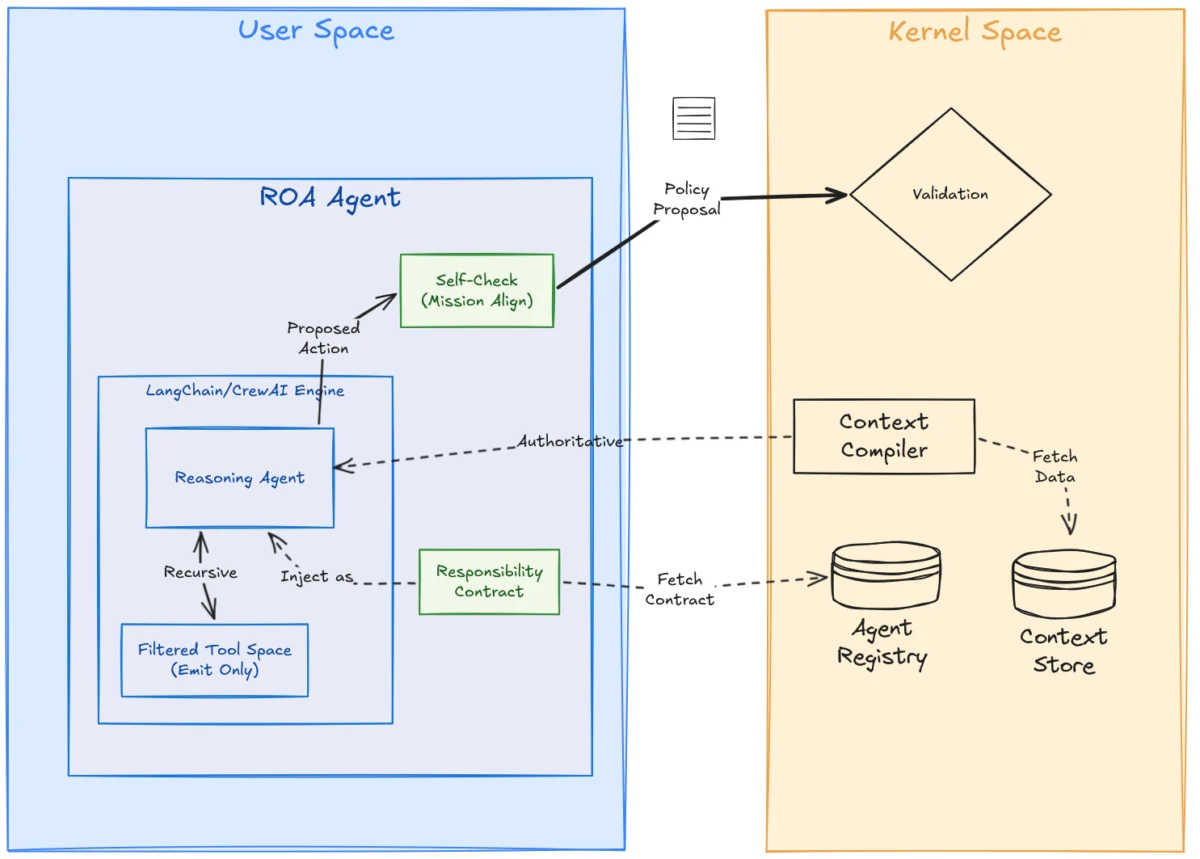
The landscape of artificial intelligence is undergoing a fundamental transition from informational retrieval to autonomous execution. As enterprises move beyond Retrieval-Augmented Generation (RAG) chatbots and research assistants, a new class of "high-stakes" agentic systems is emerging. These systems are characterized by their ability to mutate external states—transferring funds, managing critical infrastructure, and modifying legal or medical records. However, this shift has exposed a critical vulnerability in current AI governance: the reliance on probabilistic models to manage deterministic risks.
Industry experts are now advocating for a structural pivot in how these agents are designed, moving away from a "capabilities-based" framework toward a "responsibility-oriented" architecture. This evolution seeks to address the "Scalability Trap" inherent in current Human-in-the-Loop (HITL) models, where human oversight fails to keep pace with the velocity of automated decision-making.
The Failure of the Human-in-the-Loop Model
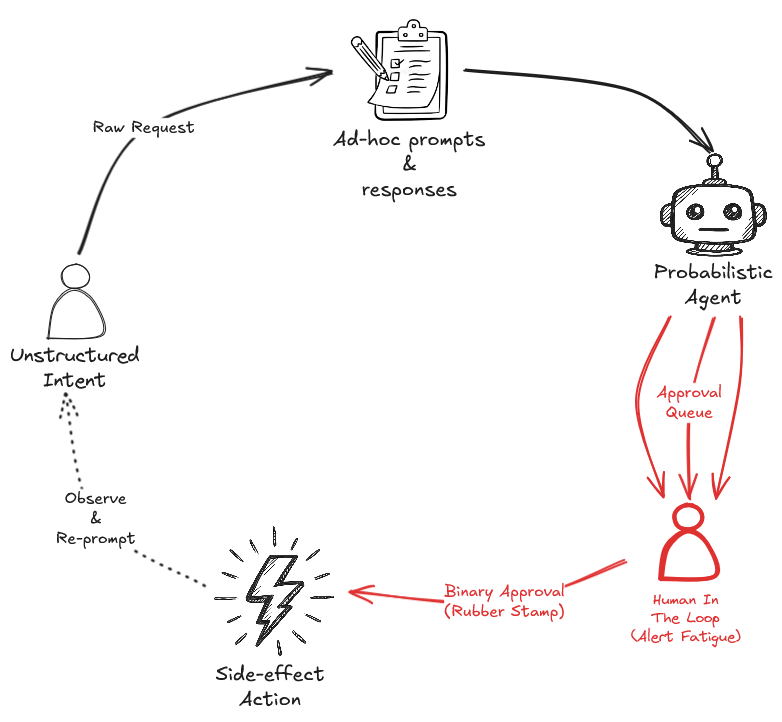
For much of the early deployment phase of generative AI, the industry standard for safety has been the Human-in-the-Loop (HITL) model. Under this paradigm, any significant action proposed by an AI agent is routed to a human operator for approval. While effective in low-volume or experimental environments, this model is increasingly viewed as a bottleneck in production systems operating at scale.
Data from operational environments suggests that when human operators are tasked with reviewing hundreds of AI decisions per hour, "alert fatigue" inevitably sets in. In such scenarios, governance often degrades into a manual throughput exercise. Operators, overwhelmed by a growing queue of JSON payloads and complex decision trees, begin to approve actions without thorough verification. This technical debt creates a veneer of safety while allowing unverified execution to proceed.

The emerging consensus among system architects is that scalable AI does not require hiring more human reviewers, but rather changing the governance model entirely. The proposed alternative, "Governance by Exception," shifts the human role from the execution loop to the design loop. In this model, humans design the policy and the runtime enforces it, with human intervention reserved only for truly exceptional cases.
The Rise of Responsibility-Oriented Agents
The core of this architectural shift is the Responsibility-Oriented Agent (ROA). Unlike traditional agents defined by their capabilities—what tools they can use or what APIs they can call—ROA systems are defined by their constraints. This is a distinction familiar to organizational design and Role-Based Access Control (RBAC) in traditional software engineering, yet it has been largely absent from early AI agent frameworks.
In a capability-oriented frame, an agent might be told, "You have access to the trading API; please be careful with position sizing." In a responsibility-oriented frame, the agent is governed by a hard-coded contract: "You are authorized to execute trades only if the position size is under $10,000 and the volatility index is below a specific threshold."
This shift moves the "guardrails" from the system prompt—where they are suggestions that can be bypassed by prompt injection—to the execution kernel, where they are enforced as deterministic code.
The Five Pillars of the ROA Framework
To transform a probabilistic Large Language Model (LLM) into a governable production component, the ROA pattern relies on five engineering pillars:
1. The Responsibility Contract
The Responsibility Contract is a versioned, machine-readable document that defines the hard boundaries of an agent’s authority. Unlike a natural language prompt, which an LLM might creatively reinterpret, the contract is validated by a deterministic runtime. If an agent attempts to propose an action outside its contract—such as an insurance agent attempting to approve a policy above its delegated limit—the system rejects the proposal before it can reach the execution phase.
2. Immutable Mission Statements
While the contract defines what an agent may do, the mission defines what it should do. In the ROA architecture, the mission is a deployment artifact. It provides the ranking logic for the agent’s internal reasoning. Crucially, the mission is tied to a cryptographic hash. If the agent’s objective is altered by runtime drift or adversarial input, the hash mismatch triggers an immediate rejection of the proposal.
3. Epistemic Isolation
One of the most significant departures from current agent frameworks is the concept of Epistemic Isolation. In this model, agents are prohibited from direct execution. They do not "click buttons" or "call APIs" that change the world. Instead, they produce "Policy Proposals"—structured, typed claims of intent. The agent’s job is purely epistemic: it explains the situation and structures the intent, while the authority for state-mutating actions remains with a downstream deterministic gate.
4. Decision Trajectory and Longevity
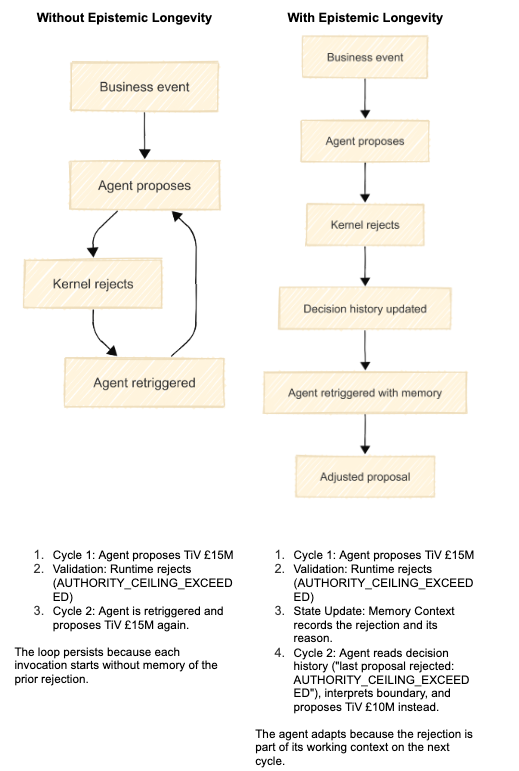
To prevent "decision amnesia," ROA agents are designed as long-lived entities. They maintain a record of prior proposals, validation outcomes, and the resulting business consequences. This continuity allows agents to learn from past rejections and prevents "infinite rejection loops," where an agent repeatedly proposes the same invalid action because it lacks the context of its previous failure.
5. Structured Telemetry via Decision Flow IDs (DFID)
Every action within the ROA framework is bound to a Decision Flow ID (DFID). This creates a relational trace that connects the initial trigger, the data context the agent saw, the agent’s internal reasoning, the deterministic validation results, and the final execution outcome. This level of auditability is essential for compliance with emerging regulations, such as the EU AI Act, which requires high-risk AI systems to maintain detailed logs of their decision-making processes.
Historical Context and Chronology
The transition toward ROA is not an isolated event but the latest step in a 50-year evolution of distributed systems.
- 1973: Carl Hewitt introduces the Actor Model, establishing the foundation for independent computational entities that communicate via messages rather than shared state.
- 2022 (November): The release of ChatGPT marks the beginning of the "Capabilities Era," where the focus is on what LLMs can reason about and generate.
- 2023: The rise of RAG and initial agent frameworks (e.g., LangChain, AutoGen) focuses on giving LLMs tools and API access.
- 2024: High-profile failures in autonomous agents and concerns over "shadow AI" lead to increased demand for deterministic governance.
- 2025: The introduction of the Responsibility-Oriented Agent pattern and the Decision Intelligence Runtime (DIR) marks the beginning of the "Governance Era."
Industry Implications and Analysis
The move toward ROA has profound implications for highly regulated sectors. In insurance, for example, an underwriting agent can be strictly limited to certain risk tiers. If a property submission exceeds the agent’s $10 million authority, the system does not "hope" the agent notices the limit; the runtime identifies the violation and escalates the case to a senior human underwriter.
In financial services, this architecture mitigates the risk of "flash crashes" or unauthorized trading caused by agentic drift. By separating the reasoning (the LLM) from the authority (the Contract), firms can deploy autonomous systems with the same level of confidence they have in traditional algorithmic trading, but with the added benefit of the LLM’s contextual reasoning.
Tech industry analysts suggest that this shift will also change the "build vs. buy" calculation for enterprise AI. Rather than building bespoke safety layers for every agent, companies are likely to adopt standardized runtimes that can govern fleets of agents from different providers.
The Human-Over-The-Loop (HOTL) Future
The ultimate goal of the ROA pattern is the realization of the Human-Over-The-Loop (HOTL) model. In this scenario, the human acts as a "Policy Designer." They are responsible for evolving the contracts and missions that govern the agents.
This model introduces the concept of an "Escalation Budget." If an agent encounters too many edge cases that require human intervention, it exhausts its budget and is suspended. This prevents "Escalation DDoS," where a malfunctioning agent floods human operators with requests for help.
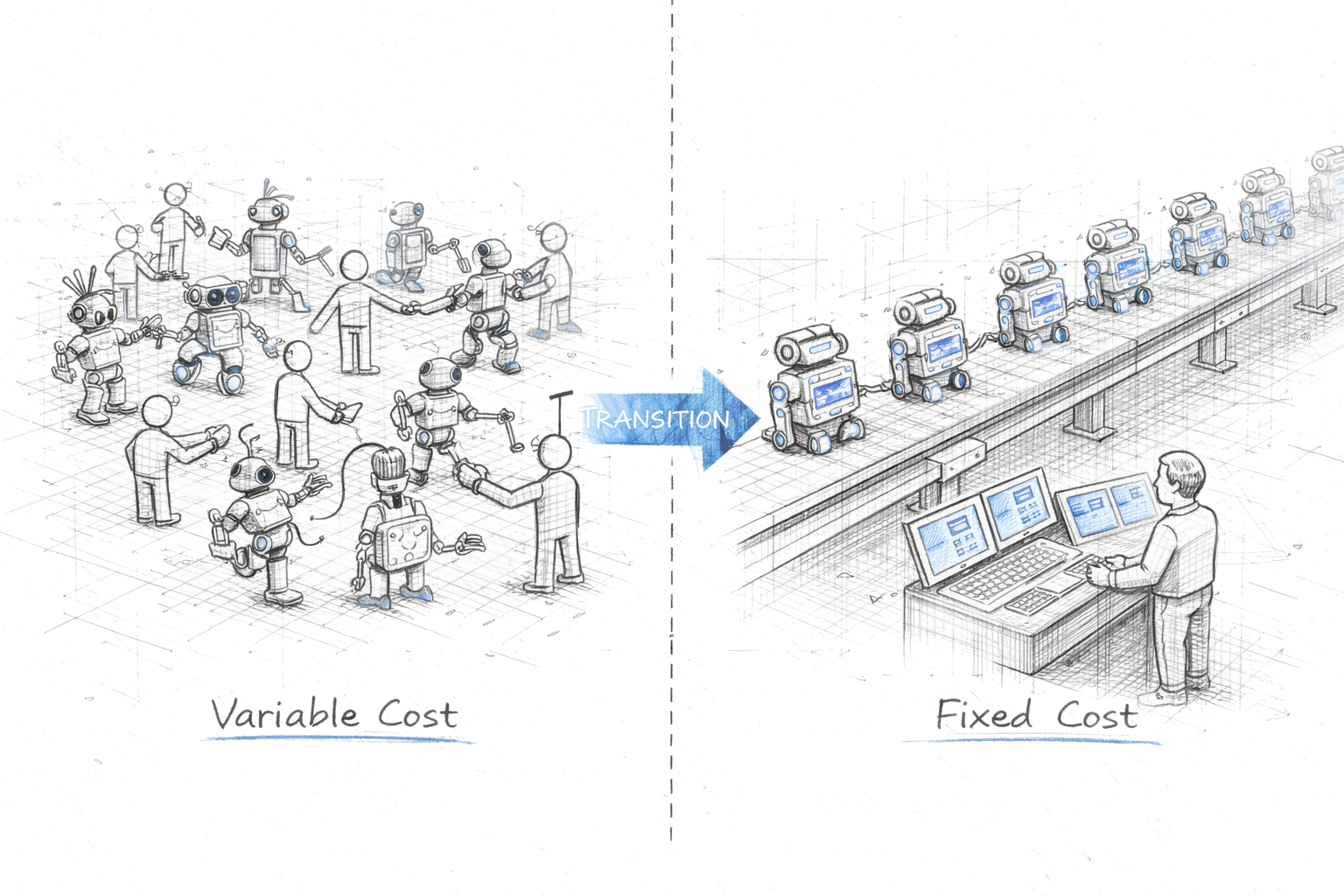
By shifting the human role from manual approval to strategic oversight, organizations can scale their AI operations without a linear increase in headcount. It moves the cost of governance from the execution phase—where it is expensive and prone to error—to the design phase, where it is most effective.
Conclusion
As the era of AI demonstrations concludes and the era of production-grade AI systems begins, the distinction between successful and unsuccessful deployments will be defined by governance. The Responsibility-Oriented Agent pattern provides a roadmap for this transition, replacing informal trust with explicit, machine-enforceable contracts. By embedding responsibility into the architecture rather than the system prompt, the industry can finally move toward autonomous systems that are not only capable but also accountable. The full specification for these systems, including the Decision Intelligence Runtime, is currently being developed as an open-source initiative, signaling a collaborative move toward a more resilient AI future.