Sisilia Frederika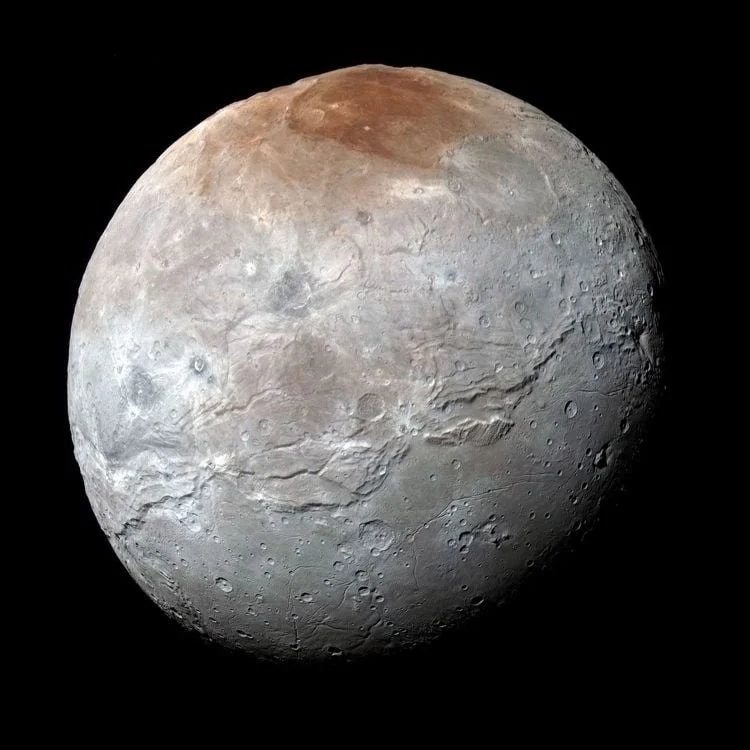
The enigmatic moon of Pluto, Charon, has long occupied a unique position in the study of our solar system. As the largest satellite relative to its parent body, Charon is more than just a moon; it is a critical component of a binary system that challenges our understanding of planetary formation. Recently, a team of researchers from the University of California, Los Angeles (UCLA) published a study in Nature Communications that provides a transformative look into the moon’s early history. By utilizing Charon as a "testbed" for the evolution of icy moons, scientists have proposed that a dramatic slowing of the moon’s rotation, a process known as "despinning," is responsible for the massive tectonic fractures and distinct geological regions observed on its surface.
This research builds upon the data collected nearly a decade ago during NASA’s New Horizons flyby in July 2015. Although the encounter lasted only hours, the spacecraft transmitted a wealth of high-resolution imagery and spectral data that researchers are still decoding. The UCLA study specifically addresses the long-standing mystery of why Charon’s northern and southern hemispheres appear so radically different, suggesting that the moon’s early orbital dynamics left a permanent scar on its frozen crust.
The Mechanics of Despinning and Planetary Stress
The central thesis of the UCLA study revolves around the concept of despinning—the gradual reduction of a planetary body’s rotational velocity over time. In the case of Charon, researchers hypothesize that the moon began its life with a significantly faster rotation period than it exhibits today. According to the team’s computer models, Charon’s initial rotation period may have been as short as 14.3 hours. In contrast, its current rotation period is approximately 6.4 Earth days (153.3 hours), matching its orbital period around Pluto in a state of tidal locking.
This transition from a fast-spinning object to a tidally locked one created immense internal and external stresses. As a planetary body slows down, its shape changes. A fast-rotating body tends to be an oblate spheroid, bulging at the equator due to centrifugal force. As the rotation slows, gravity pulls the body into a more spherical shape. For a world like Charon, which possesses a thick outer shell of water ice, this change in shape is not a smooth transition. Instead, the ice shell must crack and deform to accommodate the shifting geometry of the interior.
The UCLA models suggest that during this period of high-velocity rotation, Charon’s ice shell was approximately 30 to 36 kilometers (18 to 22 miles) thick. The resulting "despinning-induced strain" created the massive fault patterns and tectonic ridges that define the moon’s equatorial and northern regions today.
A Tale of Two Hemispheres: Oz Terra and Vulcan Planitia
One of the most striking features of Charon is its geological dichotomy. The northern hemisphere, known as Oz Terra, is characterized by rugged, mountainous terrain and deep, canyon-like fractures. Some of these chasms are deeper and longer than the Grand Canyon on Earth, reaching depths of several kilometers. Conversely, the southern hemisphere, named Vulcan Planitia, consists of relatively smooth plains that show evidence of ancient cryovolcanic activity.
The UCLA study focused heavily on Oz Terra to determine if its fractured landscape could be explained by the despinning hypothesis. The researchers found that the distribution of tectonic provinces in the northern highlands aligns closely with the stress patterns predicted by their models. The findings suggest that the northern hemisphere preserved the record of the moon’s early contraction and despinning, while the southern hemisphere was likely resurfaced later by internal processes.
Importantly, the study indicates that this despinning occurred very early in Charon’s history, likely before the onset of cryovolcanism. This timeline suggests that the moon’s structural foundation was set within the first few hundred million years of the solar system’s existence.
Chronology of Exploration and Discovery
The journey to understanding Charon has been a slow and methodical one, spanning nearly half a century.
- June 22, 1978: American astronomer James W. Christy, working at the United States Naval Observatory, noticed a recurring "bulge" in the images of Pluto. This bulge was soon identified as a large moon, which Christy named Charon after the mythological ferryman of the dead.
- 1980s – 1990s: Ground-based observations and the Hubble Space Telescope allowed scientists to determine Charon’s size and mass. It was discovered to be half the diameter of Pluto, making it the largest moon in the solar system relative to its primary.
- January 19, 2006: NASA launched the New Horizons mission, the first spacecraft designed to explore the Kuiper Belt.
- July 14, 2015: New Horizons performed its historic flyby of the Pluto-Charon system, coming within 27,000 kilometers of Charon’s surface. The data revealed the "Mordor Macula" (the dark red northern pole), the vast canyons of Oz Terra, and the smooth plains of Vulcan Planitia.
- 2016 – Present: Scientists continue to analyze the 6.25 gigabytes of data returned by New Horizons. The UCLA study represents the latest breakthrough in this ongoing effort to reconstruct the history of the outer solar system.
The "Cold Start" Hypothesis and Thermal Evolution
The UCLA study also weighs in on a significant debate in planetary science: whether Charon experienced a "hot start" or a "cold start." A hot start implies that the moon formed with enough internal heat to maintain a liquid ocean beneath its ice shell for an extended period. A cold start suggests that Charon formed from the gradual accretion of cold, icy materials and only warmed up later through radioactive decay or tidal forces.
The researchers note that the tectonic patterns on Charon suggest global contraction, a phenomenon more consistent with a cold start. As the moon’s interior cooled and solidified, the ice shell would have contracted, leading to the specific types of faulting seen in Oz Terra. This finding is significant because it provides a template for how other Kuiper Belt Objects (KBOs) and icy moons might have evolved.
"The distribution of tectonic provinces on Charon suggests that despinning was accompanied by global contraction, supporting a cold start for Charon," the researchers stated in their report. They emphasized that while their model explains the northern highlands, further study is required to fully integrate the thermal-mechanical evolution of the entire crust.
Supporting Data: Dimensions and Dynamics
To appreciate the scale of the forces at work on Charon, one must look at the physical data of the moon itself. Charon has a diameter of approximately 1,214 kilometers (754 miles). It is so large that the center of mass (barycenter) of the Pluto-Charon system actually lies in the empty space between the two bodies, rather than inside Pluto. This makes the pair a true binary dwarf planet system.
The study’s data regarding the 14.3-hour initial rotation is particularly revealing. For a body of Charon’s size to slow down to a 153.3-hour rotation, an immense amount of angular momentum had to be transferred, primarily through tidal interactions with Pluto. This process would have generated significant heat within Charon, potentially fueling the cryovolcanic eruptions that eventually smoothed out Vulcan Planitia.
Broader Implications for the Outer Solar System
The findings from UCLA have implications that reach far beyond the Pluto system. Charon is often described as a "pristine" laboratory because, unlike the moons of Jupiter (such as Europa) or Saturn (such as Enceladus), it is not subjected to constant, intense tidal heating from a massive gas giant. This lack of ongoing geological "noise" allows scientists to see the scars of early solar system processes more clearly.
The despinning model used for Charon can now be applied to other icy moons across the solar system. For instance, the moons of Uranus—Titania, Oberon, and Ariel—exhibit similar fractured terrains. By applying the techniques developed for the Charon study, astronomers may be able to determine if those moons underwent similar rotational slowing in their early histories.
Furthermore, the study utilizes structural geology techniques originally developed for Earth. By adapting these terrestrial models to an icy, cryogenic environment, the researchers have bridged the gap between traditional geology and planetary science. This interdisciplinary approach is essential for the future of space exploration, particularly as NASA prepares for missions like the Europa Clipper.
The Future of Charon Research
While the New Horizons flyby provided a snapshot in time, the mission’s legacy lives on through the rigorous analysis of its data. The UCLA study underscores the importance of continued investment in planetary modeling and data science.
In the coming decades, scientists hope to return to the Kuiper Belt with dedicated orbiters. An orbiter would allow for the mapping of Charon’s entire surface—including the "night side" that New Horizons could only see in dim reflected light from Pluto. Such a mission would provide the definitive data needed to confirm the despinning-induced strain patterns and the thickness of the ice shell.
As researchers continue to probe the mysteries of this distant moon, Charon stands as a testament to the dynamic and often violent history of our solar system. From a fast-spinning ball of ice to a tidally locked companion of Pluto, Charon’s journey is written in the cracks and mountains of its surface—a frozen record of a time when the solar system was still finding its rhythm. Through the work of teams like those at UCLA, these ancient stories are finally being told, providing a clearer picture of the evolution of the icy worlds that inhabit the dark reaches of our cosmic neighborhood.