Chandra Wibowo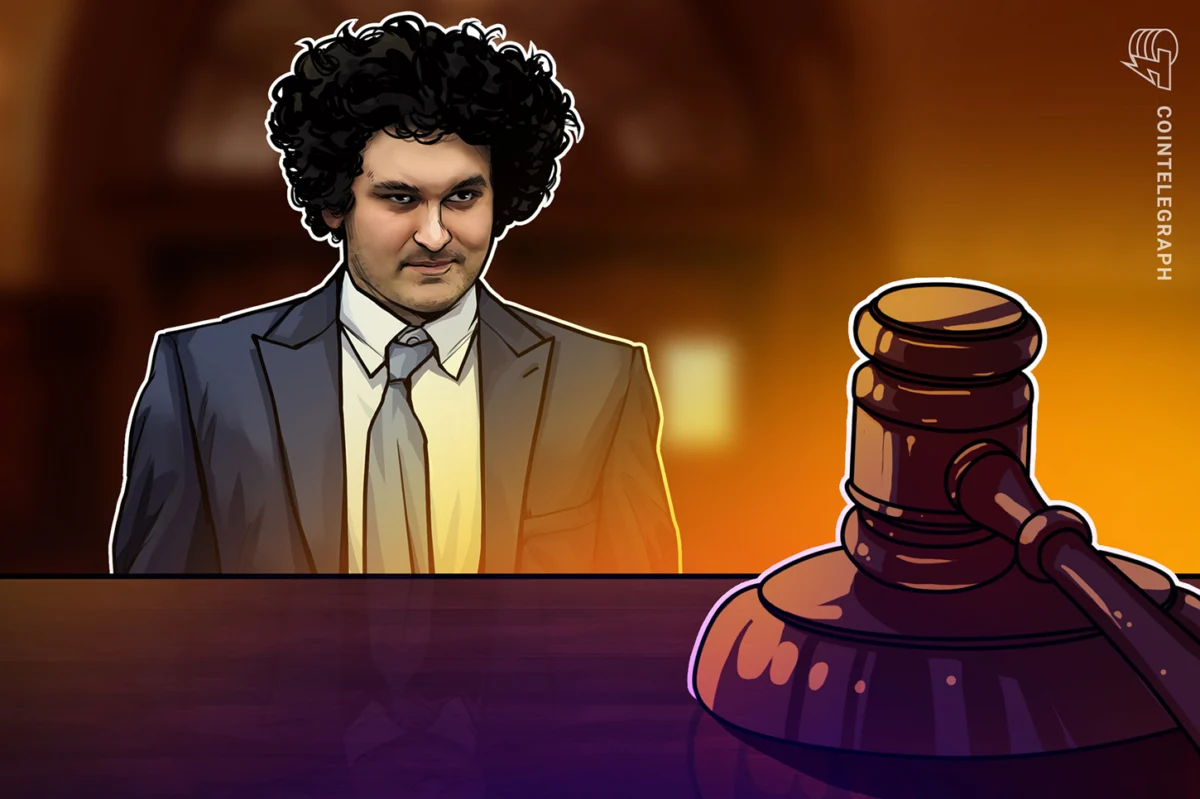
The United States Court of Appeals for the Second Circuit has officially issued its mandate, formally affirming the conviction and 25-year prison sentence of former FTX CEO Sam Bankman-Fried. This decisive action by the appellate court significantly curtails the avenues available to Bankman-Fried for seeking an early release from federal custody, solidifying the legal outcome of his high-profile fraud case. The mandate, filed on Tuesday, stems directly from the June 12 ruling by the Second Circuit, which had previously upheld a lower court’s decision convicting the cryptocurrency mogul on seven felony counts.
The appeals court’s decision meticulously addressed and systematically dismantled Bankman-Fried’s arguments, which had centered on the assertion that FTX possessed "sufficient liquidity to ensure that investors were made whole and would not experience any losses." The three-judge panel of the Second Circuit found these claims to be unsubstantiated and legally unsound. Furthermore, the appellate court also upheld the $11 billion forfeiture order imposed by a New York court as an integral component of the criminal proceedings against the former FTX chief.
Legal Reasoning Behind the Appellate Affirmation
Circuit Judge Barrington D. Parker, writing for the court, articulated the legal reasoning that underpinned the appellate panel’s decision. He emphasized that any defense arguing a lack of fraudulent intent due to an eventual intention to repay customers was "legally misleading and prejudicial." Judge Parker clarified that the wire fraud statute, under which Bankman-Fried was convicted, encompasses even temporary misappropriation of funds or property.
"As the district court recognized, any contention that Bankman-Fried lacked an intent to defraud because he intended to eventually repay his customers was legally misleading and prejudicial because the wire fraud statute encompasses temporary misappropriation of money or property," Judge Parker stated in the court’s opinion. He further elaborated, "As the district court made clear, FTX customers were defrauded as soon as Bankman-Fried transferred their money to Alameda regardless of how strongly he believed he might later return the money." This statement underscores the legal principle that the act of unauthorized transfer and use of customer funds constitutes fraud, irrespective of any subsequent intent to rectify the situation.
Limited Avenues for Early Release
With the appellate mandate now a formal legal document, Sam Bankman-Fried faces an increasingly narrow path in his quest for early release. The most prominent remaining legal avenues include a presidential pardon or a further appeal to the Supreme Court of the United States. However, both of these options appear to be fraught with significant obstacles.
In January of this year, former President Donald Trump, when questioned about the possibility of pardoning Bankman-Fried, stated that he had "no plans" to issue such a pardon. This public declaration significantly diminishes the likelihood of clemency from the executive branch, especially given the political landscape surrounding cryptocurrency regulation and the high-profile nature of the FTX collapse.
Adding further weight against any potential clemency, the United States Senate unanimously adopted a resolution last month opposing any form of clemency for the former FTX CEO. This bipartisan resolution signals a strong consensus within the legislative branch against leniency for Bankman-Fried, further isolating him from potential pathways to early freedom. The Senate’s action reflects a broader sentiment among lawmakers and the public regarding accountability for financial crimes involving large-scale investor losses.
Background and Chronology of the FTX Collapse and Legal Proceedings
The downfall of FTX, once one of the world’s largest cryptocurrency exchanges, and the subsequent legal battles faced by Sam Bankman-Fried, represent a watershed moment in the history of digital asset markets. The narrative began to unravel in November 2022, following revelations about the close financial ties between FTX and Alameda Research, a quantitative trading firm also founded by Bankman-Fried.
- Early November 2022: Reports emerge suggesting a significant portion of FTX’s balance sheet was comprised of FTT, the exchange’s native token, raising concerns about the financial health of both entities.
- November 6, 2022: Binance, a rival cryptocurrency exchange, announces its intention to sell its holdings of FTT, further intensifying market anxiety.
- November 8, 2022: FTX halts customer withdrawals, triggering a liquidity crisis and widespread panic among its users.
- November 11, 2022: FTX files for bankruptcy protection in the United States, marking the dramatic collapse of the once-dominant exchange. Sam Bankman-Fried resigns as CEO.
- December 13, 2022: Sam Bankman-Fried is arrested in the Bahamas and subsequently extradited to the United States to face federal charges.
- March 2024: Bankman-Fried is convicted on all seven felony counts, including wire fraud, conspiracy to commit wire fraud, money laundering, and conspiracy to commit money laundering, by a jury in a New York federal court.
- March 28, 2024: U.S. District Judge Lewis Kaplan sentences Sam Bankman-Fried to 25 years in federal prison and orders the forfeiture of $11 billion.
- June 12, 2024: The U.S. Court of Appeals for the Second Circuit hears oral arguments for Bankman-Fried’s appeal.
- June 12, 2024: The Second Circuit issues a ruling affirming the lower court’s decision, rejecting Bankman-Fried’s appeal.
- Tuesday (Date of article publication): The Second Circuit files its formal mandate, officially solidifying the appellate court’s decision and closing this avenue for immediate relief.
Supporting Data: The Scale of the FTX Debacle
The FTX collapse was not merely a corporate failure; it was a financial catastrophe that impacted hundreds of thousands, if not millions, of individuals and entities. The scale of the alleged fraud and the subsequent financial losses are staggering:
- Customer Funds Misappropriated: Prosecutors alleged that billions of dollars in customer funds were siphoned from FTX and diverted to Alameda Research for speculative trading, real estate purchases, and political donations.
- Forfeiture Order: The $11 billion forfeiture order represents a significant portion of the estimated losses incurred by FTX customers and creditors. This order aims to recover assets that can be distributed back to those defrauded.
- Bankruptcy Estate: The FTX bankruptcy estate is valued in the tens of billions of dollars, but the process of recovering and distributing assets to creditors has been complex and protracted. As of recent reports, FTX is in the process of distributing approximately $900 million to creditors in its fifth distribution round, a testament to the ongoing efforts to recoup losses.
- Investor Losses: Venture capital firms and institutional investors who poured billions into FTX and its related entities have also suffered substantial losses, highlighting the systemic risk that can emerge from unregulated or poorly regulated financial sectors.
Broader Impact and Implications for the Crypto Industry
The conviction and sentence of Sam Bankman-Fried, now formally upheld by the Second Circuit, carry profound implications for the broader cryptocurrency industry. This legal outcome serves as a stark warning to other players in the digital asset space regarding regulatory compliance, transparency, and the ethical handling of customer funds.
- Increased Regulatory Scrutiny: The FTX saga has intensified calls for stricter regulation of cryptocurrency exchanges and related financial activities. Regulators worldwide are likely to use this case as a benchmark for enforcing existing rules and developing new ones to protect investors and ensure market stability.
- Erosion of Trust: The collapse of FTX significantly eroded public trust in the cryptocurrency market. For many, the case exemplified the risks associated with nascent and largely unregulated financial technologies. The lengthy legal process and the finality of the appellate decision may, for some, offer a measure of closure, but the damage to the industry’s reputation may take years to repair.
- Emphasis on Due Diligence: Investors, both retail and institutional, are likely to exercise far greater due diligence when considering investments in cryptocurrency projects and exchanges. The emphasis will shift towards understanding the underlying business models, risk management practices, and regulatory compliance of these entities.
- Justice and Accountability: The formal upholding of Bankman-Fried’s conviction and sentence represents a significant step towards achieving justice for the victims of the FTX fraud. It reinforces the principle that individuals, regardless of their perceived influence or the novelty of their industry, are accountable for their actions under the law.
While Sam Bankman-Fried’s legal options for early release have been significantly narrowed, the full ramifications of the FTX collapse continue to unfold. The formalization of his sentence by the Second Circuit marks a critical juncture, signaling the end of one phase of his legal journey and reinforcing the judiciary’s commitment to upholding financial laws in the rapidly evolving digital asset landscape. The industry itself now faces the challenge of rebuilding trust and demonstrating its capacity for responsible innovation and robust governance in the wake of this monumental failure.