Lina Irawan
The 2025 Stack Overflow Developer Survey has uncovered a significant paradox within the global software engineering community: while the integration of Artificial Intelligence into workflows has reached record highs, professional trust in the reliability of these tools has plummeted to an all-time low. According to the comprehensive report, which surveyed tens of thousands of developers worldwide, more than 84% of respondents confirmed they are currently using or planning to use AI tools in their daily operations by 2025. This figure represents a steady climb from previous years, signaling that AI is no longer a peripheral experiment but a core component of the modern development stack. However, the survey simultaneously revealed a sharp decline in confidence; only 29% of developers in 2025 stated they trust the outputs of AI, a substantial 11 percentage point drop from the 40% trust level recorded just one year prior.
This widening chasm between usage and trust presents a unique challenge for the technology industry. Traditionally, the adoption of new software tools follows a standard curve where increased familiarity leads to higher confidence. With AI, the opposite appears to be true: the more developers interact with Large Language Models (LLMs) and automated coding assistants, the more skeptical they become. This "trust gap" carries profound implications for organizational productivity, the long-term management of technical debt, and the training of the next generation of software architects.
A Chronology of Sentiment: From Curiosity to Skepticism
To understand the current state of developer sentiment, it is necessary to trace the trajectory of AI adoption since the public release of generative AI tools in late 2022. Stack Overflow began tracking these metrics in 2023, providing a clear timeline of how the professional landscape has shifted over a three-year period.
In 2023, the industry was in a phase of rapid exploration. Approximately 70% of developers reported using or planning to use AI tools. At that time, trust levels hovered around 40%. This was considered a reasonable starting point for a nascent technology; developers were testing the boundaries of what tools like GitHub Copilot and ChatGPT could achieve, largely viewing them as sophisticated "autocomplete" functions.
By 2024, AI tools had become ubiquitous in integrated development environments (IDEs). Adoption continued to climb, and the industry entered a "hype" phase where many organizations mandated AI integration to drive perceived efficiency. However, as the 2025 data now shows, the honeymoon period has ended. The rise in usage to 84% coupled with the drop in trust to 29% suggests that developers are now encountering the practical limitations and systemic risks of AI on a daily basis. The novelty has worn off, replaced by the pragmatic realization that AI-generated code often requires rigorous, time-consuming verification.
The Deterministic vs. Probabilistic Conflict
At the heart of this trust deficit is a fundamental clash between the nature of software engineering and the nature of generative AI. Software engineering is historically a deterministic discipline. A developer is trained to believe that if they write a specific block of code, it should produce the same result every time it is executed under the same conditions. This predictability is the foundation of system reliability and security.
AI, conversely, is probabilistic. LLMs do not "understand" logic in the human sense; they predict the next most likely token in a sequence based on vast datasets. Consequently, asking an AI the same technical question twice can result in two different solutions. While both might be functional, they may utilize different libraries, follow different design patterns, or introduce different edge-case vulnerabilities.
For a professional engineer, this variability is a source of cognitive friction. The field of "software engineering" is built on reproducible outcomes, whereas working with AI often feels like "software hoping-for-the-best." This shift from precision to probability is a primary driver of the 2025 trust decline, as developers struggle to reconcile these black-box outputs with the high-stakes requirements of production-grade systems.
The Discernment Burden and Technical Debt
The survey data suggests that the "hallucination" problem remains the most significant technical hurdle to AI trust. Developers frequently report encountering "plausible-looking" code that is functionally broken or refers to non-existent APIs. In more insidious cases, the AI may provide code that works but contains deprecated methods or subtle security flaws that are difficult to spot during a standard peer review.
This creates what industry analysts call a "discernment burden." If a developer uses AI to generate a function in five seconds, but then spends twenty minutes verifying its logic, testing its edge cases, and ensuring it adheres to security protocols, the net productivity gain is neutralized. Furthermore, the risk of "AI-generated technical debt" is a growing concern. Code that is pushed to production without a deep human understanding of its mechanics becomes a liability for future maintenance. Organizations fear that today’s AI-driven speed will lead to tomorrow’s system-wide failures, particularly in critical infrastructure sectors like finance, healthcare, and telecommunications.
Psychological Barriers and the Threat of Obsolescence
Beyond technical limitations, there is a significant psychological component to the trust gap. The prevailing media narrative often frames AI as a replacement for human labor rather than an augmentation of it. For many developers, there is a lingering existential anxiety: by using and refining these tools, are they effectively training their own replacements?
This cognitive dissonance—using a tool because it is helpful or mandated, while simultaneously fearing its long-term impact on the profession—creates a barrier to genuine trust. When developers perceive a tool as a potential threat to their livelihood or professional identity, they are less likely to view it as a reliable partner. This sentiment is particularly prevalent among junior developers who may feel that AI is "skipping" the foundational learning steps they need to advance their careers.
Official Responses and Industry Case Studies
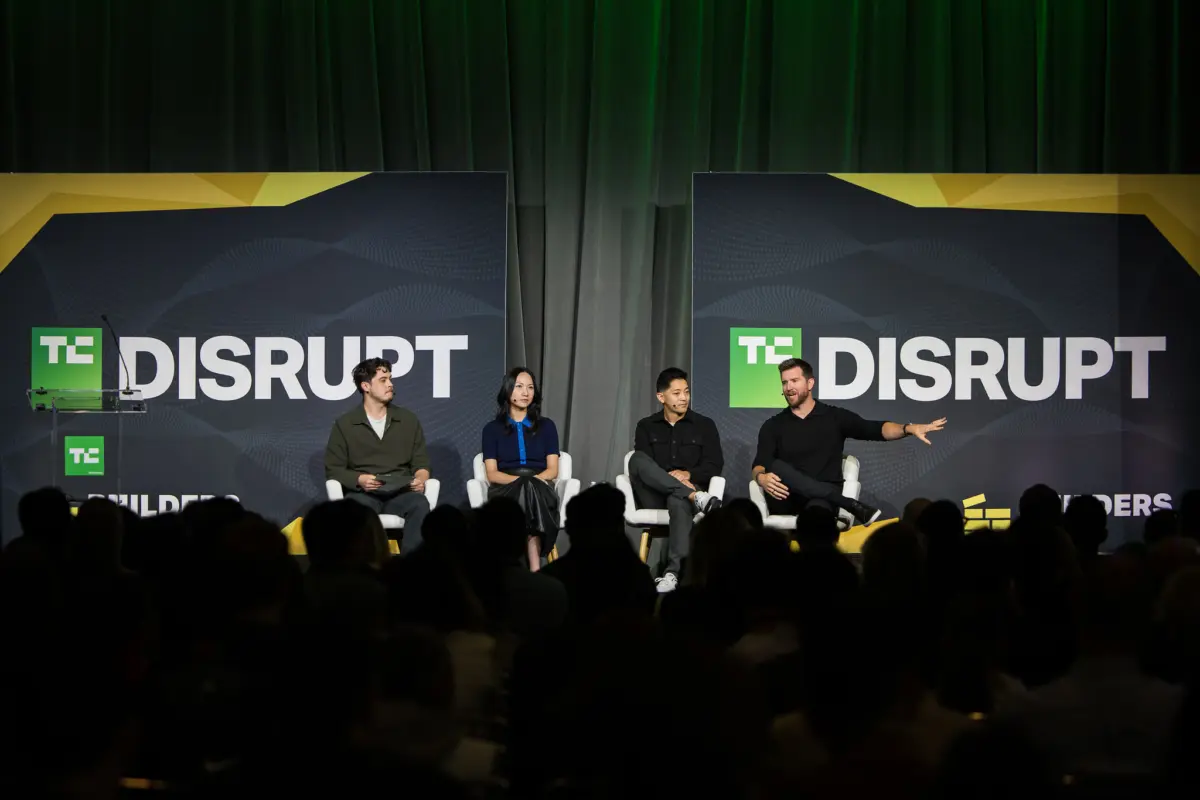
Leadership at major tech hubs has begun to address these findings. Prashanth Chandrasekar, CEO of Stack Overflow, has noted that the current trust gap is a sign of professional integrity rather than a rejection of technology. In a recent discussion with Romain Huet, OpenAI’s Head of Developer Experience, Chandrasekar emphasized that tools are only as effective as the competence of the user. He argued that just as a calculator requires a mathematician to understand the underlying principles, AI requires an engineer who understands the "how and why" of the code being generated.
To combat the trust issue, some organizations are moving toward "grounded" AI solutions. A notable example is Uber’s "Genie," an internal AI assistant. Rather than relying solely on the general knowledge of an LLM, Genie is integrated with "Stack Overflow for Teams," Uber’s private repository of human-verified technical documentation.
By pulling from a curated, internal knowledge base, Genie provides answers that are contextually accurate to Uber’s specific architecture. This "human curation + AI capability" model provides attribution and traceability—developers can see exactly which internal document or expert the AI is citing. This transparency has led to higher adoption and trust within Uber’s engineering teams, suggesting a potential blueprint for other enterprises.
Analysis of Implications: The Future of the "AI-Native" Developer
The 2025 survey results indicate that the industry is entering a "Correction Phase." The initial rush to automate everything is being replaced by a more nuanced strategy that prioritizes human oversight. The implications of this shift are manifold:
- Evolution of Skill Sets: The definition of a "competent developer" is expanding. It now includes "prompt engineering" and "AI auditing" as core competencies. Engineers must learn how to structure queries to minimize hallucinations and how to rigorously validate AI outputs.
- Organizational Governance: Companies can no longer afford to have an "ad-hoc" AI policy. The trust gap necessitates formal governance frameworks that dictate which types of code can be AI-generated and what level of human review is mandatory before deployment.
- The Rise of Internal Knowledge Bases: As demonstrated by the Uber Genie case, the future of AI in the enterprise lies in "Retrieval-Augmented Generation" (RAG). Organizations will focus on digitizing and curating their own proprietary knowledge to ensure AI tools remain rooted in relevant, verified context.
- A Shift in Junior Mentorship: Senior developers will need to focus less on teaching syntax—which AI handles well—and more on teaching system architecture, security mindset, and the "why" behind technical decisions.
Conclusion: Trust as an Earned Metric
The Stack Overflow 2025 survey serves as a vital reality check for the tech industry. The drop in trust to 29% is not an indictment of AI’s potential, but a reflection of the high standards inherent in the engineering profession. Developers are rightly skeptical of any tool that introduces uncertainty into production environments.
Moving forward, the closing of the trust gap will not come from more powerful models alone, but from better integration, transparency, and human-in-the-loop systems. Trust in AI must be earned through consistent performance and the demonstration of value without the introduction of unmanageable risk. For the 84% of developers currently navigating this paradigm shift, the message is clear: AI is a powerful assistant, but the responsibility for the outcome—and the integrity of the code—remains firmly in human hands.