George Chandra Eka
For many, navigating the rapidly evolving landscape of artificial intelligence has presented a clear winner in the battle of the artificial minds, yet a deeper dive reveals a nuanced competition shaped by technological prowess, strategic business decisions, and ethical considerations. The rivalry between OpenAI’s ChatGPT and Anthropic’s Claude, two leading large language models (LLMs), has intensified since their respective launches, with both platforms consistently pushing the boundaries of AI capabilities while grappling with distinct challenges and opportunities. This article provides an in-depth analysis of their differences, performance metrics, feature sets, ethical stances, and market strategies as of early 2026.
The Genesis of a New AI Era: ChatGPT’s Dominance and Claude’s Emergence
The public’s widespread introduction to large language models largely began with OpenAI’s ChatGPT, which burst onto the scene in late 2022. Its unprecedented ability to generate human-like text, answer complex questions, and engage in conversational dialogue quickly captivated millions, establishing a dominant position in the nascent consumer AI market. For several months, ChatGPT enjoyed a near-monopoly, setting the benchmark for what an AI assistant could be.
However, this period of unchallenged supremacy was relatively short-lived. In March 2023, Anthropic, a company founded by former OpenAI researchers committed to developing AI safely and ethically, introduced Claude. Anthropic’s entry immediately introduced a significant competitor, offering a different philosophical approach to AI development alongside a powerful alternative model. Since then, both companies have engaged in a relentless innovation race, continuously refining their core models and expanding their feature sets. While there is a substantial overlap in basic functionalities – both offer coding assistance, document summarization, information retrieval, and even creative writing capabilities – discerning the optimal tool for specific use cases now requires a more granular understanding of their respective strengths and weaknesses. The surface-level similarities, such as dedicated coding and workspace modes, often belie fundamental architectural and strategic divergences that impact user experience and model performance beyond simple daily queries.
Benchmarking Performance: Accuracy and the Hallucination Challenge
Evaluating the "accuracy" of LLMs is inherently complex, as the quality of output is highly dependent on the specific model version employed and the precision of the user’s prompt. Standardized benchmarks provide a comparative framework, and the AA-Omniscience Accuracy benchmark is a key metric in this assessment.
As of early 2026, the flagship models from both developers show marginal differences. Claude Fable 5 (Max) demonstrates a slight edge in accuracy, scoring 61 percent compared to ChatGPT 5.6 Sol (Max)’s 59 percent. This two-percentage-point difference is often imperceptible in everyday interactions, suggesting that for high-level, general tasks, both top-tier models perform comparably well.
However, the picture shifts when examining the mid-tier models, which are more frequently accessed by the majority of users for cost-efficiency or standard tasks. Here, ChatGPT’s 5.6 Terra (Max) model leads with a 46 percent accuracy score, significantly outperforming Claude Sonnet 5 (Max), which registers 38 percent. This disparity indicates that for users relying on non-premium tiers, ChatGPT currently offers a more reliable performance in terms of factual accuracy, a critical consideration for a wide range of professional and personal applications. The concept of "tokenmaxxing" – optimizing prompt length and complexity to maximize token usage within budget constraints – often pushes users towards these mid-tier models, making their performance differences highly relevant.
Beyond raw accuracy, a critical metric for LLM reliability is the "hallucination rate" – the model’s propensity to generate false or nonsensical information when it lacks a definitive answer. Ideally, an ethical and robust LLM should decline to answer rather than fabricating details. The AA-Omniscience Hallucination Rate benchmark highlights a significant divergence between the two platforms, with a lower score indicating superior performance. Claude demonstrates a notable advantage here. Its flagship Fable 5 model scores an impressive 55 percent, starkly contrasting with ChatGPT 5.6 Sol’s 89 percent. The gap widens even further in the mid-tier offerings: Claude Sonnet 5 records a mere 37 percent hallucination rate, while ChatGPT 5.6 Terra stands at a concerning 85 percent. This considerable difference underscores Claude’s stronger performance in resisting factual inaccuracies, positioning it as a potentially more trustworthy tool for applications where verifiable information is paramount and the risks associated with misinformation are high. This ethical dimension of hallucination directly aligns with Anthropic’s stated commitment to AI safety and reliability.
Divergent Paths: Feature Sets and Specialized Applications
While both ChatGPT and Claude began as general-purpose conversational AIs, their feature development has increasingly catered to distinct user segments and operational philosophies. User statistics from early 2026 underscore this divergence: Anthropic’s Economic Index report from March 2026 indicates that 45 percent of Claude conversations are work-related, with 42 percent for personal use and the remainder for coursework. In contrast, OpenAI’s similar report states that a substantial 70 percent of ChatGPT usage is non-work-related, suggesting a stronger lean towards consumer entertainment, education, and casual assistance.
Claude has made significant strides in enterprise and productivity features. The introduction of Claude Cowork in January 2026 revolutionized how users manage knowledge-based tasks. This feature allows Claude to organize files, manage information, and execute complex workflows on behalf of the user. A standout capability is "skills," which are customizable instruction bundles that can be invoked mid-conversation using a simple forward slash (/). These skills are versatile, usable across general chat, Claude Cowork, and Claude Code, streamlining repetitive tasks and enhancing efficiency. Furthermore, Claude Artifacts offers instant rendering capabilities for various digital assets, including code snippets, single-page HTML websites, interactive React components, and diagrams. These Artifacts can also be shared and published directly on the web, fostering collaboration and content dissemination. Crucially, Claude Artifacts can pull live data using connected applications and the Model Context Protocol (MCP) connectors, offering dynamic and real-time utility.
ChatGPT also supports a form of "skills," but their implementation is more restricted. ChatGPT skills are primarily confined to individual users within Codex (its specialized coding environment) and via its API, making them less accessible for general chat interactions. Similarly, ChatGPT’s equivalent to Artifacts, known as Sites, is predominantly aimed at businesses for internal use and is exclusive to Codex. A key limitation of ChatGPT Sites is its inability to pull live data, relying instead on static information, which contrasts sharply with Claude Artifacts’ dynamic capabilities.
Conversely, ChatGPT has excelled in other areas, particularly in multimodal interactions. Its voice feature is widely recognized for its natural language processing, seamless conversational flow, and the ability for users to interrupt without disrupting the AI’s context. This real-time, fluid interaction makes ChatGPT a superior choice for verbal assistance. The advanced voice mode also includes a live video feature, allowing users to point their device’s camera at an issue and receive immediate, contextual AI guidance – a powerful tool for troubleshooting or hands-on tasks. Furthermore, ChatGPT boasts a robust image generation feature capable of creating photorealistic images, powered by its underlying DALL-E models. Claude, while capable of generating diagrams, charts, and interactive visuals using HTML and SVG, does not offer the same breadth of photorealistic image creation. These distinctions highlight each platform’s strategic focus: Claude on advanced productivity and structured data interaction, and ChatGPT on intuitive, multimodal consumer engagement and creative visual content.
The Shifting User Experience: Ads, Ethics, and Trust in 2026
Despite consistent improvements in its underlying models, as evidenced by better scores on almost all AA-Omniscience benchmarks, the perceived user experience of ChatGPT appears to be deteriorating for many. This sentiment is not entirely unfounded, as certain aspects of older models outperformed their successors. For instance, the GPT-4o model had a hallucination rate of 38 percent, significantly lower than the 89 percent recorded for the newer GPT-5.6 Sol. While this is not the mid-tier model, it illustrates a regression in a key area of reliability.
OpenAI’s strategic adjustments in 2026 have also played a role. The company introduced stricter safeguards and alignment protocols in response to the industry’s maturation and increasing regulatory scrutiny. While necessary for responsible AI development, these changes have occasionally resulted in noticeable "tone shifts" between updates, which some users found jarring or restrictive compared to earlier, more uninhibited versions.
A significant point of contention and a primary driver for user migration has been OpenAI’s decision to integrate advertisements into the free and ChatGPT Go tiers of its application. This move, particularly poignant given OpenAI CEO Sam Altman’s previous characterization of ads as a "last resort" in January 2026, signals a shift in business strategy. It suggests an increasing pressure to monetize its vast user base, even at the expense of user experience for non-paying customers. This stands in stark contrast to Anthropic’s approach, which simultaneously improved Claude’s free tier by adding more features and explicitly maintaining an ad-free environment. Given that OpenAI reportedly still operates at a loss even with paying customers, the free tier experience for ChatGPT users is projected to continue to degrade as the company seeks sustainable revenue streams.
Beyond economic models, a profound ethical debate significantly impacted user allegiance in early 2026. In February 2026, Anthropic’s long-standing deal with the U.S. Department of War fell through. The company was subsequently designated a supply chain risk by the U.S. government due to its steadfast refusal to allow its AI models to be used for mass domestic surveillance or fully autonomous weapons systems. Anthropic’s principled stance, rooted in its "Constitutional AI" framework and commitment to AI safety, was widely publicized. Hours later, OpenAI announced it had signed a similar deal with the U.S. government, replacing Anthropic, albeit with stated "certain safeguards" in place. This swift succession of events led to a significant public backlash against OpenAI and a simultaneous surge in downloads and user migration to Claude. Many users perceived Anthropic as the more "ethical" AI company, aligning with its founding principles and demonstrating a willingness to forgo lucrative government contracts in favor of its core values. This incident underscored the growing importance of corporate ethics and AI governance in shaping consumer trust and market dynamics.
Pricing Models and Market Positioning: A Competitive Landscape
The pricing structures for both Claude and ChatGPT in 2026 reflect a competitive market aiming to balance accessibility with advanced features. Both platforms offer free tiers, but with distinct limitations and approaches to monetization.
Claude’s free plan provides access to its mid-tier Sonnet 5 model, without ads, offering a clean and relatively robust experience for casual users. Anthropic’s paid plans are structured to cater to different levels of usage and professional needs:
- Pro Plan: Priced at $20/month ($17/month if billed annually), this plan offers access to flagship models and Claude Code. However, Fable 5 usage is token-based for Pro users, meaning costs can vary depending on interaction volume.
- Max 5x Plan: At $100/month, this plan provides five times the usage limits of the Pro plan. Users can allocate 50 percent of their weekly usage limits to the flagship Fable 5 model, with options to purchase additional usage credits.
- Max 20x Plan: The most comprehensive offering at $200/month, this plan provides 20 times the usage limits of the Pro plan, with similar Fable 5 allocation and credit purchase options. These tiers are designed for heavy users, developers, and enterprises requiring substantial AI processing power.
ChatGPT’s pricing mirrors Claude’s in its higher tiers but offers a distinct entry point:
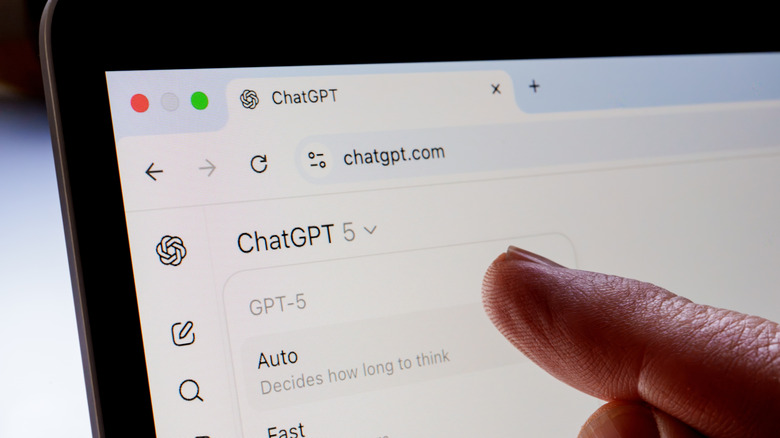
- Free Plan: Provides access to GPT-5.5, its mid-tier model, but notably includes advertisements, impacting the user experience.
- $8/month Plan: A unique offering that provides increased usage limits compared to the free tier but still includes ads. This tier seems positioned to capture users who need more capacity but are unwilling to commit to the full premium price.
- $20/month, $100/month, and $200/month Plans: These plans align closely with Claude’s Pro, Max 5x, and Max 20x tiers, offering progressively higher usage limits and access to flagship models like GPT-5.6 Sol. Access to Codex (the specialized coding environment) is technically free but comes with such low usage limits that practical application often necessitates a paid subscription.
The key differentiator in pricing lies in the free and entry-level paid tiers. Anthropic’s ad-free approach for its free tier and its focus on a clear upgrade path based purely on usage and model access contrasts with OpenAI’s strategy of integrating ads even into a low-cost paid plan. This choice reflects different philosophies regarding user experience and monetization, with Anthropic emphasizing an uncompromised experience and OpenAI prioritizing revenue generation across more user segments.
Broader Implications and Future Outlook
The competition between Claude and ChatGPT in 2026 is more than a technological race; it’s a battle for user trust, market share, and the very definition of ethical AI. Anthropic’s consistent commitment to AI safety and its refusal to engage in controversial military applications have carved out a significant niche, attracting users who prioritize ethical considerations alongside performance. This stance, while potentially limiting immediate revenue streams from government contracts, has bolstered its reputation as a responsible AI developer. The surge in Claude’s downloads following the US Department of War incident underscores the growing consumer awareness and demand for ethically aligned AI.
OpenAI, on the other hand, faces the complex challenge of balancing rapid innovation, massive operational costs, and increasing shareholder expectations. Its strategic choices, such as integrating ads and engaging in government contracts with "safeguards," reflect a pragmatic approach to sustain its leadership position and fund its ambitious research and development. However, these decisions carry the risk of alienating segments of its user base who are sensitive to privacy concerns, ad intrusion, or the broader ethical implications of AI deployment.
The future of these AI assistants will likely be shaped by several factors:
- Continued Multimodal Expansion: Both platforms are expected to further enhance their multimodal capabilities. While ChatGPT leads in photorealistic image generation and advanced voice/video interaction, Claude’s focus on dynamic, interactive visuals and real-time data integration through Artifacts and MCP connectors presents a strong alternative for enterprise and developer use cases.
- Ethical AI Governance: The "ethical AI" debate will undoubtedly intensify. As AI becomes more integrated into critical infrastructure and daily life, public scrutiny over data privacy, bias, and the potential for misuse will grow. Companies that can demonstrate transparent, responsible, and ethical AI practices will likely gain a significant competitive advantage.
- Enterprise Adoption: Claude’s Cowork and advanced Artifacts position it strongly for enterprise adoption, where workflow automation, document management, and secure, reliable AI assistance are paramount. ChatGPT, with its broader consumer appeal and robust API, continues to be a strong contender for embedding AI into a wide array of applications and services.
- Accessibility and Monetization: The evolution of free and low-cost tiers will be crucial. Anthropic’s ad-free approach could maintain a loyal user base, while OpenAI’s ad-supported model might attract a different demographic willing to tolerate ads for powerful AI. The balance between accessibility and profitability will remain a delicate act for both companies.
In conclusion, while ChatGPT initially dominated the AI assistant market, Claude has emerged as a formidable competitor, particularly in areas of ethical AI, hallucination reduction, and advanced productivity features for work-related tasks. The competitive landscape in 2026 is no longer a simple contest of features but a multifaceted struggle encompassing technological superiority, business strategy, and profound ethical considerations that will ultimately determine the long-term leader in the artificial intelligence revolution.